
Most fountain projects don’t fail because the water doesn’t come out.
They fail because everything around the water has to work at the same time.
The pump gets noisy.
The battery does not last as long as the product promise suggested.
The filter becomes a maintenance problem.
The water-level sensor behaves differently as the reservoir empties.
WiFi works perfectly in the engineering room, then becomes a source of support tickets after launch.
A premium stainless-steel body looks great in product photography while the components underneath it create the real reliability risk.
And perhaps the most expensive problem of all:
The prototype works.
The first production run does not behave exactly the same way.
That is why we do not look at a pet water fountain as a bowl, a tank and a pump.
We look at it as a pet hydration system.
For a manufacturer, the difficult part is not making water move.
The difficult part is making all of those decisions work together — and then making the same result repeatable at production scale.
This is the difference between making a fountain and manufacturing a fountain platform.
And it changes what buyers should actually look for when choosing among pet water fountain manufacturers.
What Makes a Pet Water Fountain Manufacturer Different From a Pet Fountain Supplier?
The word “manufacturer” gets used very loosely in the pet product industry.
A company may show a factory photograph, offer a catalog, put your logo on the packaging and call the service OEM.
That does not automatically tell you who is responsible for the engineering behind the product.
When we use the term pet water fountain manufacturer, we mean something more specific.
We mean the manufacturing entity that has responsibility for the product as an engineered system — not simply the company shipping a finished product.
A Manufacturer Should Control More Than the Final Assembly
A real pet fountain manufacturer needs to be connected to the decisions that determine whether the product works.
That includes:
- Product development
- Engineering
- Component selection
- Prototype development
- Assembly
- Functional testing
- Quality control
- Production change management
- Reliability validation
- Certification and compliance
- Mass production
The point is not that every manufacturer must make every component in-house.
That is not how modern manufacturing works.
The issue is whether someone is actually accountable for how those components perform together.
A pump is not just a pump.
A filter is not just a filter.
A battery is not just a battery.
A sensor is not just a sensor.
Once these components become one fountain, changing one can affect the others.
Change the pump and you may change water flow.
Change the flow and you may change pump noise.
Change the reservoir geometry and you may change the usable water level.
Change the battery and you may change runtime, charging behavior, weight and cost.
Change the filter structure and you may change flow resistance.
That is why pet fountain production is not simply an assembly exercise.
The real responsibility sits in the system between the components.
OEM Capability Starts Before Mass Production
Here is one sentence we believe every buyer should remember:
OEM does not begin when you send a logo.
A serious pet water fountain OEM project starts much earlier.
It starts with product architecture.
Then prototype work.
Then engineering validation.
Then tooling where required.
Then certification and compliance.
Then pilot production.
Then pet fountain mass production.
Only after that does the product become a repeatable manufacturing program.
A buyer asking for a logo, packaging and color change is asking for one type of service.
A buyer asking for a new reservoir structure, cordless architecture, smart sensors, a custom pump system, new tooling and a target retail price is asking for something very different.
That is OEM pet fountain manufacturing.
The commercial risk is different too.
If the factory is only comfortable changing packaging, it should not pretend that it is managing a full product development project.
That distinction matters long before the first large purchase order.
What Are You Actually Buying From a Pet Water Fountain Manufacturer?
When a buyer requests a fountain, the initial specification often looks simple:
4L tank.
Pump.
Filter.
USB charging.
WiFi.
Maybe stainless steel.
Maybe an app.
But that list describes components.
It does not describe the product.
What you are really buying is a system that has to behave predictably after it leaves the factory.
You Are Not Just Buying a Fountain
A fountain is a physical pet water fountain system built around a particular pet hydration experience.
That experience is affected by:
- Where the water sits
- How it moves
- How quickly it recirculates
- How the animal interacts with it
- How often the owner cleans it
- How the filter is maintained
- How the pump behaves
- Whether the product is plugged in or cordless
- Whether sensors are used
- Whether the product connects to an app
Veterinary guidance also treats access to multiple water sources, including fountains or running water where appropriate, as one possible way of encouraging voluntary water intake in cats.
That is why we use the term smart pet hydration carefully.
Smart does not simply mean adding WiFi.
The intelligence has to make sense within the physical hydration system.
You Are Buying a System That Has to Survive Real Use
The product has to survive more than the factory test.
It has to survive real drinking habits.
It has to handle changing water levels.
It has to tolerate normal cleaning and filter replacement.
It has to maintain acceptable pump lifespan.
It has to deliver consistent water circulation.
And if it is connected, the software layer has to remain useful rather than becoming another source of after-sales support.
For a brand owner, this becomes a commercial question.
Poor product reliability does not remain inside the engineering department.
It becomes:
product returns → customer complaints → support tickets → warranty claims → replacement parts → negative reviews → margin pressure
That is why a fountain should be judged as a product business, not just a hardware sample.
Prototype Performance Is Not Mass-Production Performance
This is one of the easiest mistakes to make in OEM purchasing.
A prototype can work beautifully.
That proves that the concept can work.
It does not automatically prove that the factory can manufacture 5,000, 10,000 or 50,000 units with the same result.
A working prototype proves possibility. Mass production proves manufacturing.
The question changes from:
Can you make one?
to:
Can you repeatedly make the same one?
That is where engineering, component sourcing, tooling, assembly control, functional testing and production consistency become commercially important.
A Pet Water Fountain Is a Hydration System, Not Just a Water Bowl With a Pump
This is the central idea behind how we approach fountain projects.
A pet hydration system is not defined by how many features appear on the product page.
It is defined by how reliably the complete system delivers usable water to the animal and remains practical for the owner to maintain.
Water Quality Starts With the Whole System
Water quality is not created by one marketing feature.
It is influenced by the reservoir, circulation path, filter structure, pump, materials, cleaning routine and how the owner actually maintains the product.
A pet fountain filtration system can remove certain types of particles or contaminants depending on its design and filter media.
But filtration performance is only one part of the system.
The owner still has to replace the filter.
The pump still needs access for cleaning.
The reservoir still needs cleaning.
The water still needs to be changed according to the product’s intended maintenance routine.
This is why pet water quality cannot be separated from product maintenance.
A technically capable filter inside a poorly maintained fountain does not automatically create a good hydration experience.
A filter does not make a fountain hygienic. A cleanable system does.
Drinking Behavior Changes How the Fountain Should Be Designed
The animal is the final user.
That sounds obvious, but product development sometimes focuses so heavily on the owner and the feature list that actual pet drinking behavior gets pushed into the background.
Cats may interact differently with still and moving water, but fountain design should not be built around the assumption that moving water automatically means higher water intake.
Recent feline hydration research also shows that dietary moisture can substantially affect free and total water intake. That matters because fountain performance should never be treated as an isolated “water consumption” variable.
The location of the drinking surface, water movement, sound, accessibility and cleanliness can all affect how an animal interacts with the product.
The engineering question is therefore not simply:
“How much water does the tank hold?”
It is:
“How does the animal encounter the water?”
That changes the way we think about cat water fountain design.
If you are designing around the assumption that cats simply prefer running water, it is worth looking more closely at what fountain design actually gets right — and what that assumption can get wrong.
Every Component Changes the Hydration Experience
Once the product is viewed as a system, the trade-offs become easier to see.
A stronger pump may improve flow but increase power consumption or noise.
A larger battery may extend runtime but increase size, weight and cost.
More sensors may improve monitoring but increase firmware complexity and support requirements.
A tighter filtration system may improve filtration performance but increase resistance in the water path.
A more complicated structure may add functionality while making cleaning harder.
That is why fountain engineering is a chain of decisions rather than a feature checklist.
The Pet Hydration Engineering Chain: From Water Quality to Mass Production
We call this the Pet Hydration Engineering Chain:
Water Quality
→ Drinking Behavior
→ Filtration
→ Water Circulation
→ Pump
→ Power
→ Battery
→ Sensors
→ Connectivity
→ Cleaning
→ Product Platform
→ Mass Production
This is not a content framework we invented for this article.
It is how we break down the engineering responsibility behind a fountain project.
What does the system need to deliver?
How will the animal actually encounter that water?
What should the filter do, and what maintenance does it require?
How does the water move through the system?
What flow rate, pressure, noise and operating conditions are required?
Is the product plugged in or cordless?
If cordless, what does the required operating pattern mean for capacity, charging and runtime?
Does the product actually need a water-level sensor, motion sensor or other monitoring function?
Does WiFi or a mobile app solve a real problem?
Can the owner realistically maintain the product?
Can the same architecture support different versions, markets or configurations?
Can the factory repeatedly manufacture the same engineering result?
That final step is where many “working products” stop being simple.
From this point forward, we do not need to repeat the whole chain every time.
When we refer to the hydration engineering chain, we mean the complete system above.
Water System
Flow · Filter · Reservoir
→
Pump & Power
Noise · Runtime · Duty cycle
→
Smart Functions
Sensors · WiFi · App
Materials
Steel · Plastic · Seals
→
Maintenance
Cleaning · Access · Replacement
→
Production
Validation · Repeatability
Cordless Pet Water Fountains: Convenience Comes With an Engineering Trade-Off
Cordless products are attractive for an obvious reason.
No permanent cable.
More placement freedom.
Cleaner appearance.
Potentially easier installation.
But a cordless pet water fountain is not simply a normal fountain with a battery added to the BOM.
Cordless operation changes the product architecture.
For a brand deciding whether cordless freedom is worth the added power architecture and charging requirements, comparing cordless and plug-in designs before the product architecture is fixed can prevent an expensive decision from being made too early.
Cordless Changes the Power Architecture
With a plug-in fountain, the pump has access to continuous external power.
With a battery-powered pet water fountain, every function competes for a limited energy budget.
Pump operation.
Sensors.
Indicator lights.
Wireless communication.
Standby consumption.
Charging.
Control logic.
Everything matters.
That is why rechargeable pet water fountain designs require a different engineering discussion from conventional plug-in products.
The battery is now part of the product experience.
Battery Capacity Is Not the Same as Battery Life
This distinction causes a surprising amount of confusion in product discussions.
A bigger battery does not fix a badly designed power system.
Actual pet fountain battery life depends on how the product operates.
Pump duty cycle matters.
Pump efficiency matters.
Power consumption matters.
Sensor activity matters.
Connectivity matters.
Standby power matters.
Charging strategy matters.
If the product is going to make a runtime promise to customers, the battery specification should be engineered around actual operating behavior rather than capacity alone.
The same nominal battery capacity can behave very differently in two products.
So when evaluating a cordless pet fountain battery, ask about the operating assumptions behind the claimed runtime.
How often does the pump run?
At what flow?
How often does the device wake up?
Is WiFi continuously active?
What is the expected charging cycle?
What happens when the battery becomes low?
These questions are more useful than simply asking:
“How many mAh?”
Pump, Battery and Sensors Share the Same Power Budget
This becomes even more important when a cordless fountain includes sensors or connectivity.
The pump may be the largest continuous power consumer.
Sensors may operate periodically.
Wireless connectivity can create additional power demand.
The control system has to decide when each function operates.
That is where low-power pet fountain engineering becomes relevant.
A cordless product should therefore be designed from the power architecture outward, not from the battery label inward.
Cordless is not a feature. It is a different power architecture.
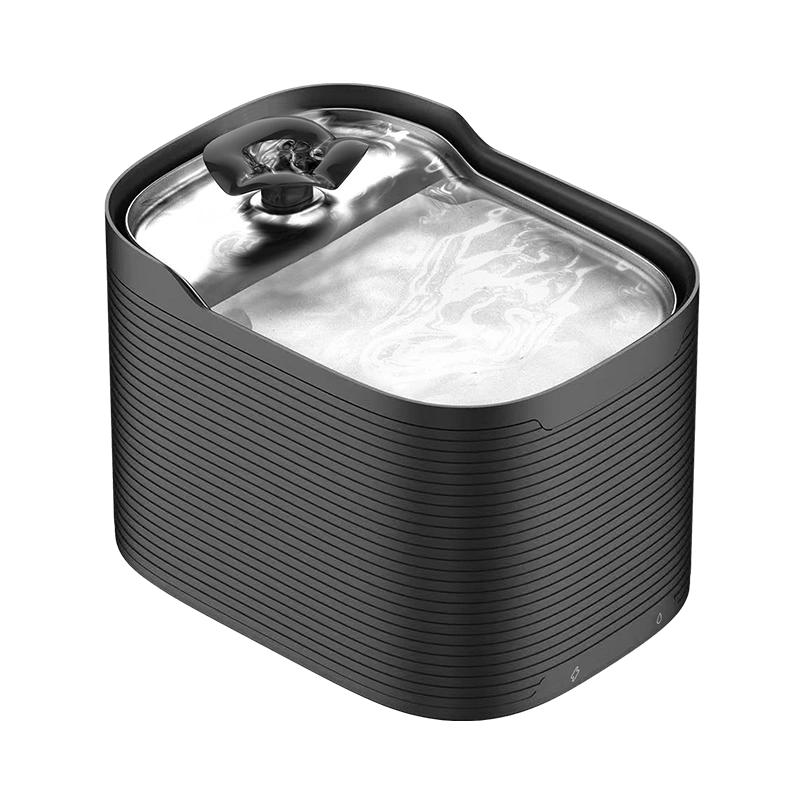
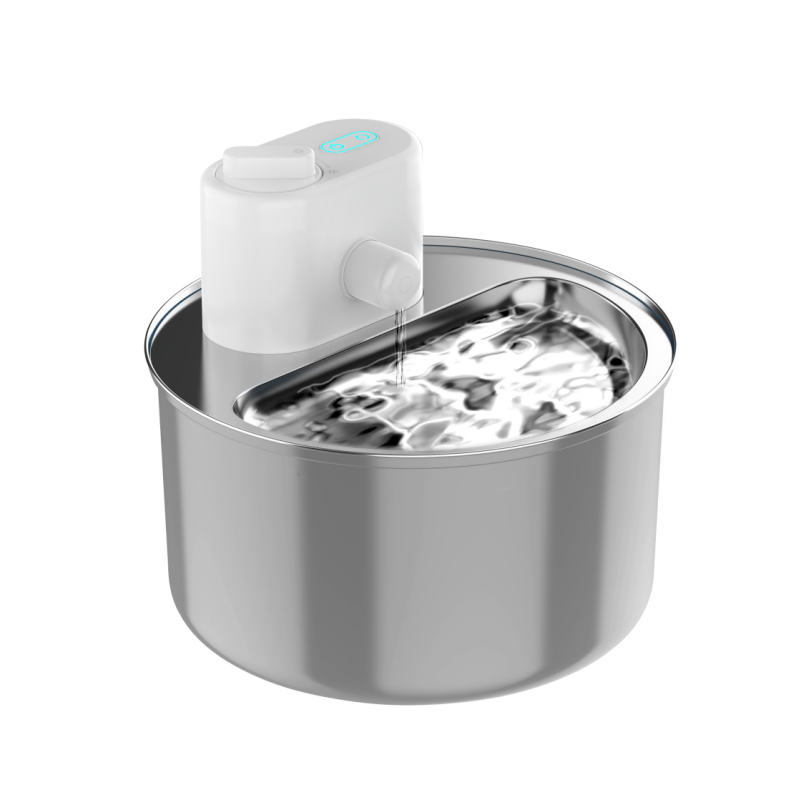
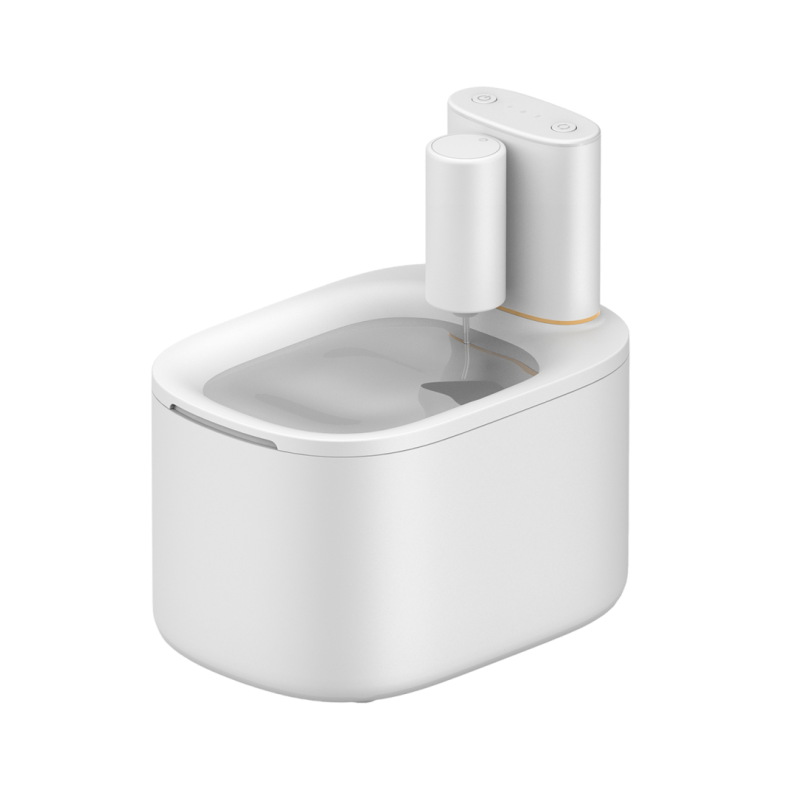
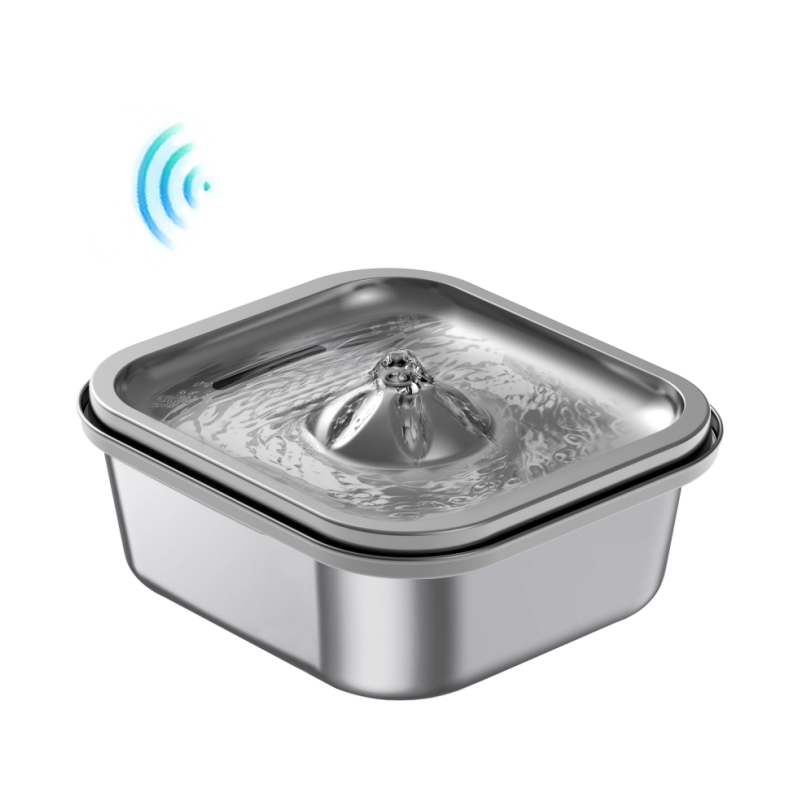
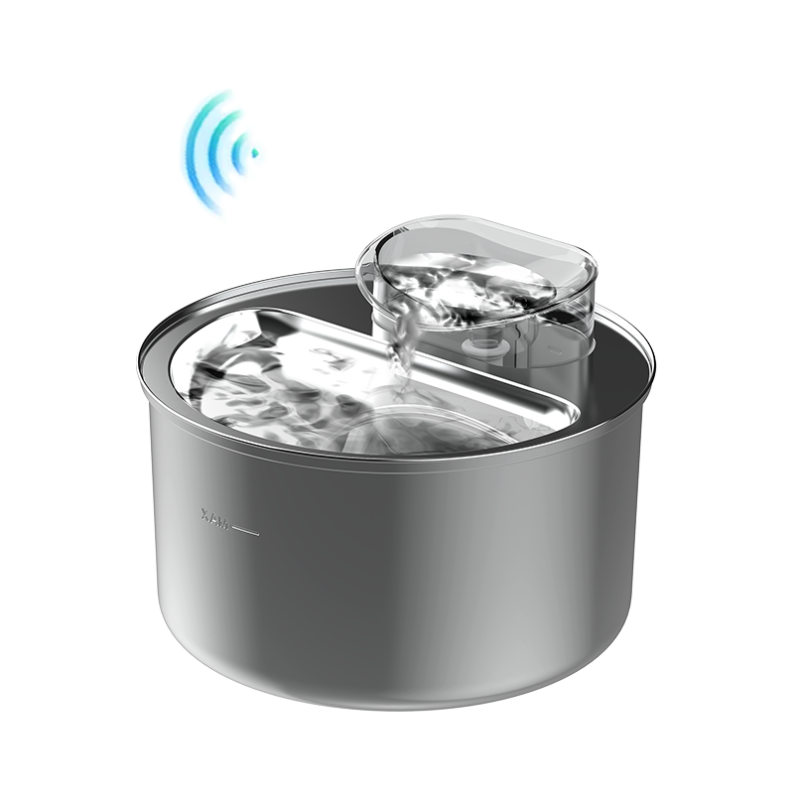
Cordless & Sensor Platforms
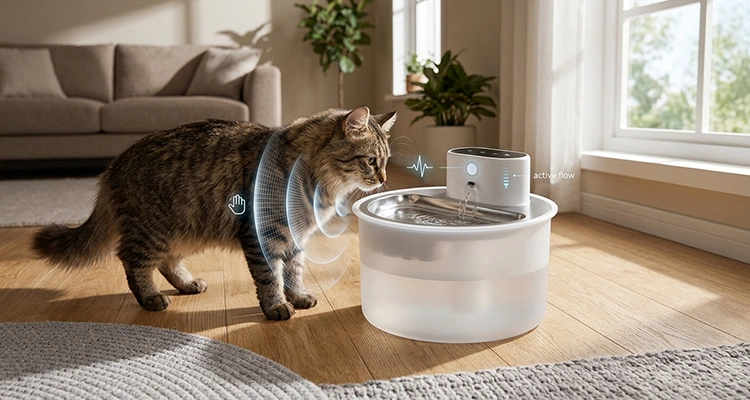
Cordless Freedom Comes With a Power Budget
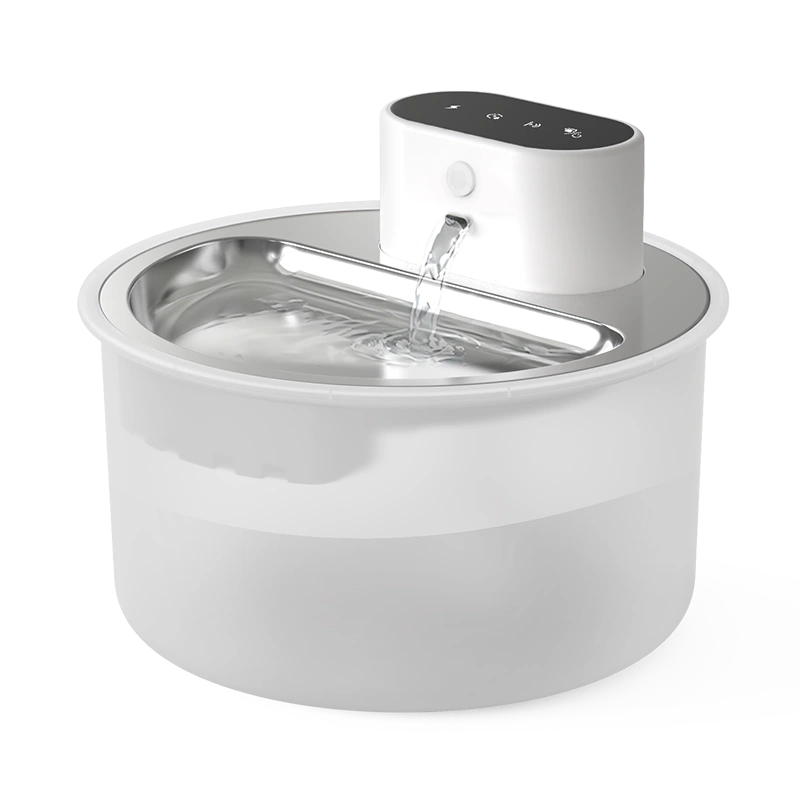
Removing the power cable changes more than where a fountain can be placed. Pump operation, sensor activity, standby consumption and charging all affect the product's real-world behavior. For brands considering cordless or sensor-driven designs, the right starting point is not the longest feature list, but the operating experience the product needs to deliver.
Explore the cordless and sensor-driven platforms below.
Smart Pet Water Fountains: When Does Connectivity Actually Add Value?
“Smart” is one of the easiest words to put on a product.
It is also one of the easiest ways to make a product more complicated without making it more useful.
Before adding connectivity simply because the market expects a “smart” fountain, brands should first decide whether the extra complexity creates enough customer value to justify its BOM, development and support burden.
WiFi, Sensors and App Control Solve Different Problems
WiFi, app control and water-level sensing solve different problems.
Treating them as one “smart” feature is how unnecessary complexity gets into the BOM.
WiFi may connect a product to a network.
App control may allow the owner to interact with the product.
A water-level sensor may detect a physical condition.
An alert may notify the user that something needs attention.
Those are different jobs.
If a fountain is starting to accumulate WiFi, sensors and app functions simply because it is supposed to be “smart,” separating real product value from feature accumulation becomes an important design decision.
A useful connected product starts with the problem.
For example:
- Is the owner away from home?
- Does the owner need a low-water alert?
- Does the product need to report a maintenance condition?
- Does a brand have a broader connected pet ecosystem?
Those are reasonable questions.
Adding connectivity simply because “smart products sell better” is not engineering.
Smart Features Should Follow the Hydration Problem
The physical system comes first.
The product still needs reliable water circulation.
The pump still needs to work.
The reservoir still needs to be usable.
The filter still needs maintenance.
The owner still needs to clean the product.
A sensor that reports the wrong water level is worse than no sensor.
An app that sends unnecessary notifications is not automatically an improvement.
A connected fountain that creates more support questions than useful information may have increased product complexity without increasing product value.
Smart does not automatically mean more valuable. It means more responsibility.
More Smart Features Also Mean More Things to Support
A connected product creates another responsibility chain:
hardware → firmware → connectivity → app → mobile operating systems → cloud services where applicable → customer support
That can affect:
- Onboarding
- Troubleshooting
- Firmware updates
- Customer expectations
- Support tickets
- After-sales support
- Warranty experience
This is particularly important for smart pet product OEM projects.
The buyer should not only ask:
“Can the factory add this function?”
The better question is:
“What responsibility does this function create after the product is sold?”
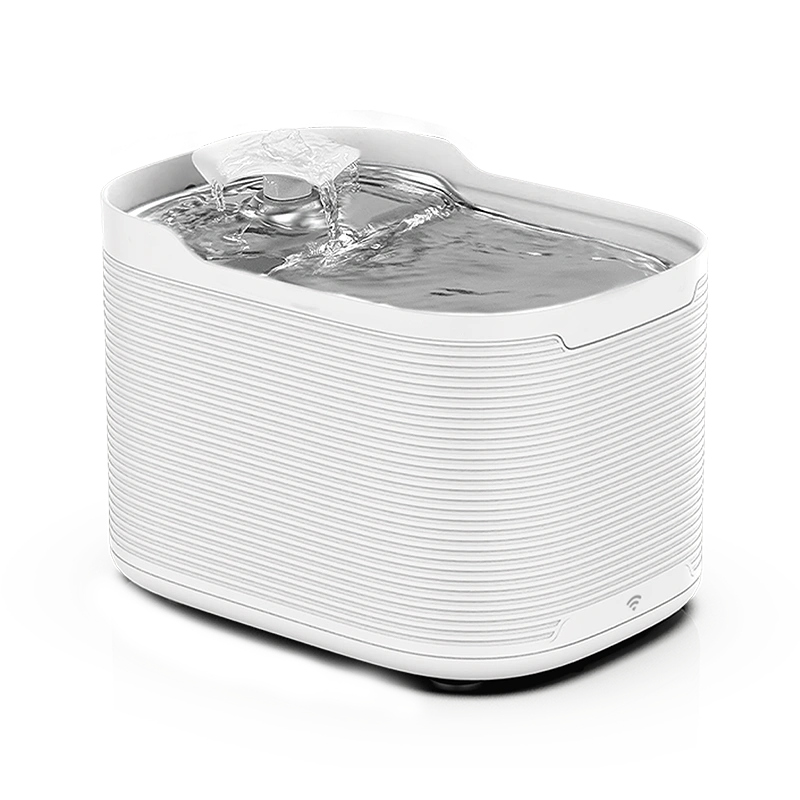
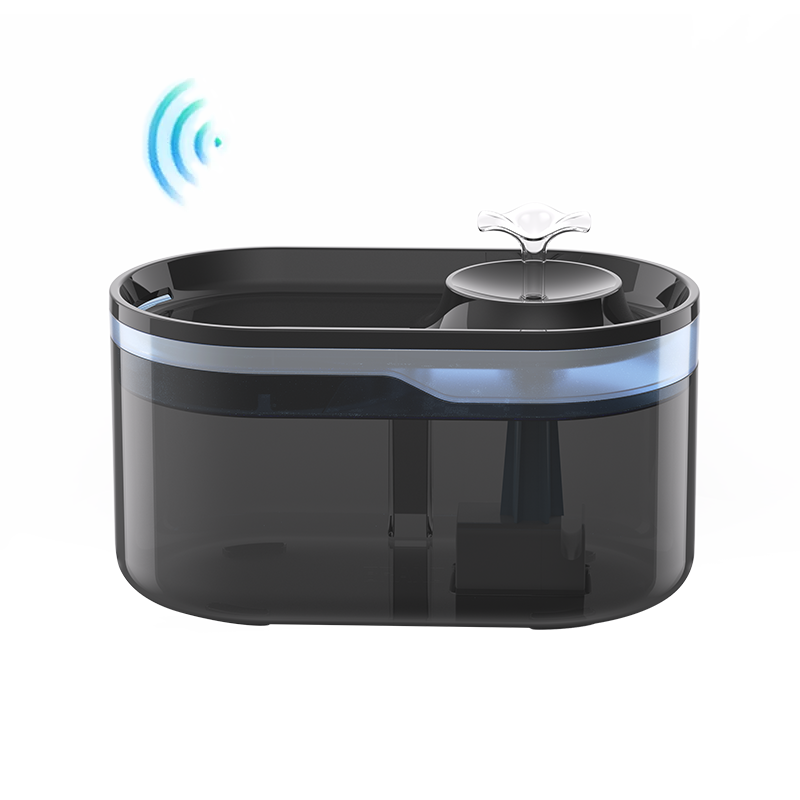
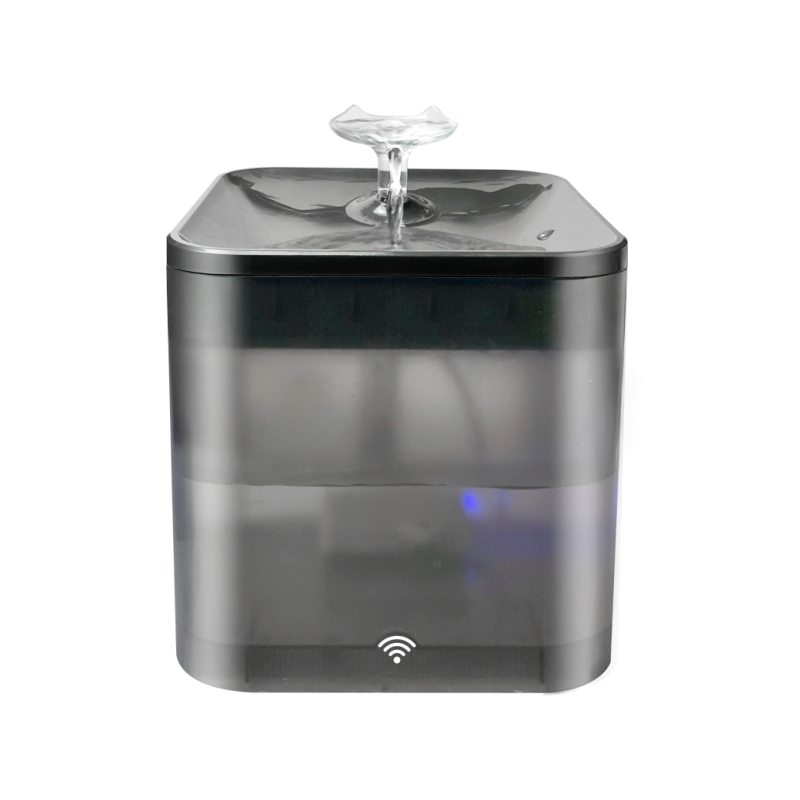
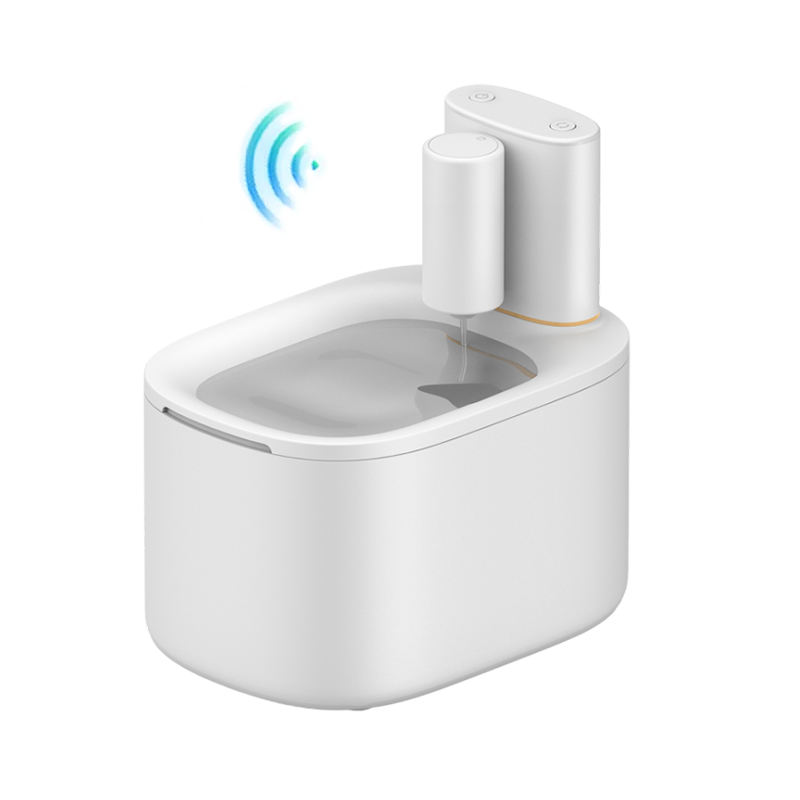
Connected & Smart Hydration
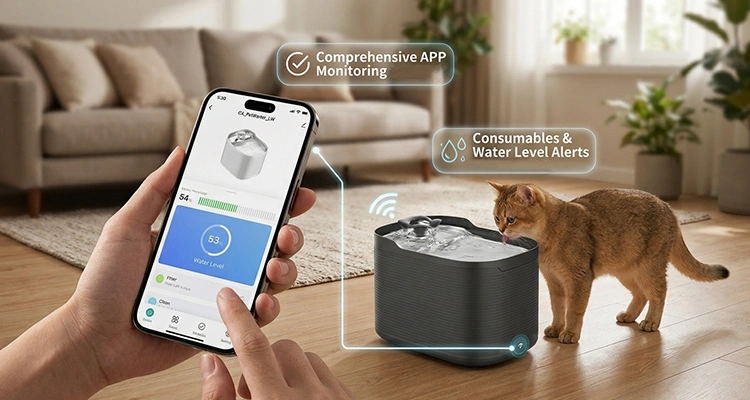
Smart Features Should Earn Their Place
WiFi, app control, water-level monitoring and UV technology do different jobs. Combining them may create a more differentiated product, but it can also increase development and after-sales responsibilities. Before choosing a connected fountain platform, decide which functions solve a genuine customer problem—and which ones add complexity without enough value.
Compare the connected platforms and their intended functions.


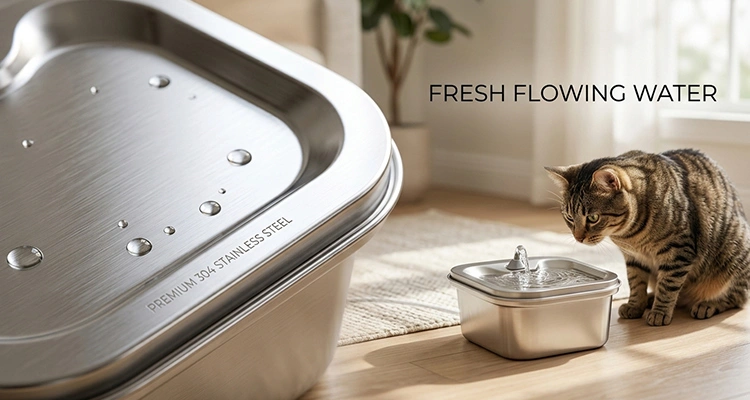
Stainless Steel Pet Water Fountains: Premium Material or Real Engineering Choice?
Stainless steel photographs well.
It feels premium.
It can support a different product position.
But a stainless-steel exterior does not automatically make a fountain a better fountain.
Stainless Steel vs Plastic: What Actually Changes?
The choice between a stainless steel pet water fountain and a plastic pet water fountain can affect:
- Material cost
- Weight
- Forming and manufacturing processes
- Component integration
- Cleaning
- Product positioning
- Packaging
- Shipping economics
- BOM
For brands deciding whether stainless steel creates enough real product value to justify the additional material, manufacturing and logistics implications, the material decision should be made before the tooling and cost structure are locked.
That does not mean stainless steel is automatically more hygienic.
Material is one part of the hygiene equation.
The design of the water path, removable components, surfaces, pump access and cleaning routine still matter.
So the correct question is not:
“Which material is better?”
It is:
“Which material and construction make sense for this product, this market and this manufacturing plan?”
The Parts You Don't See Still Matter
A fountain can have a beautiful metal drinking surface and still depend on a small pump, seals, connectors, tubing and plastic internal structures.
Those components determine much of the real product behavior.
That is why pet fountain components deserve engineering attention even when customers never see them.
The pump, pump housing, impeller, seals and internal water path all influence the final experience.
The visible material is only one layer of the product.
A specification sheet can make a fountain look expensive. It cannot make it reliable.
Material Choice Affects Cost, Cleaning and Manufacturing
For a stainless steel pet fountain OEM project, the material decision should happen alongside the manufacturing plan.
What process is required?
How does the material interface with the internal components?
How will the assembly be controlled?
How easy is the finished product to clean?
What happens to the BOM?
What happens to packaging and shipping?
What happens to the target retail price?
A premium material can support premium positioning.
But it should have a product reason behind it.
A stainless-steel body does not make a premium fountain.
The engineering underneath it does.
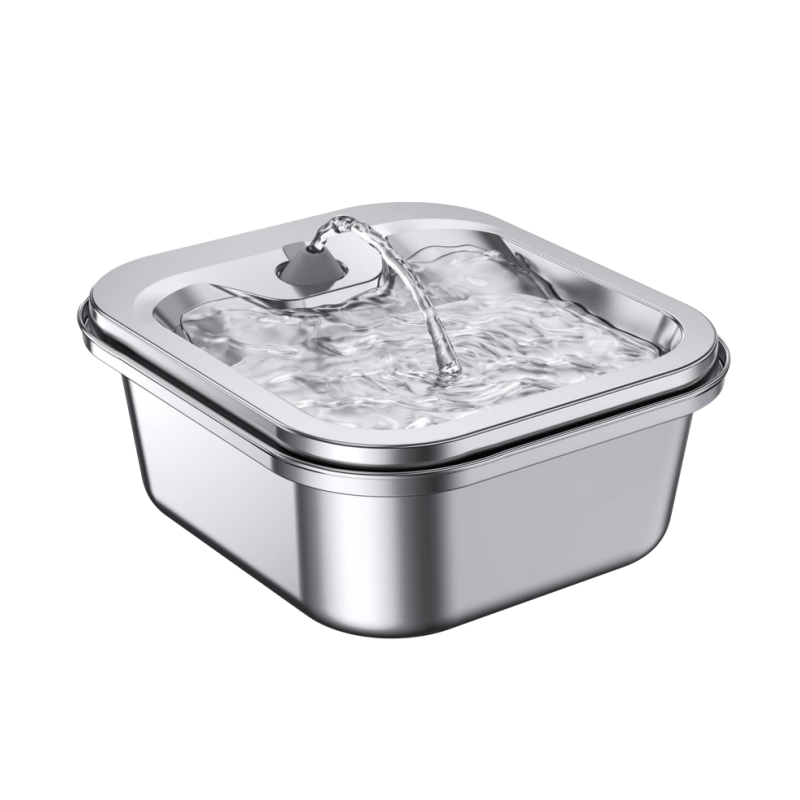
Stainless Steel & Premium Platforms
Premium Materials Need a Product Reason
Stainless steel can support premium positioning, but the material alone does not determine product quality. Internal components, pump access, removable parts and cleaning convenience still influence the ownership experience. For brands developing a premium hydration line, the real decision is whether the material, construction and target price work together.
Review the stainless steel platforms for your target market.
The Pump Is the Part That Can Make or Break a Pet Water Fountain
Here is where fountain projects become less glamorous.
Everyone likes talking about apps, stainless steel and smart features.
The pump is less exciting.
The pump is also one of the components most capable of ruining the user experience.
A pet water fountain pump has to move water repeatedly, quietly enough for the intended environment, with the expected flow, while dealing with real maintenance conditions.
Noise is only one part of the problem.
Dry running, blockage, leakage, wear and shortened lifespan can turn a seemingly small pump problem into returns, support tickets and a product-quality problem.
For that reason, buyers evaluating a fountain platform should look beyond the pump’s headline specification and understand the failure modes that can emerge inside the complete water system.
Noise Is More Than a Comfort Problem
A pet fountain pump noise issue can become a customer experience issue very quickly.
The pump itself can generate sound.
Vibration can transfer through the pump housing.
Water movement can create additional noise.
The surrounding structure can amplify vibration.
A product advertised as a quiet pet water fountain therefore cannot be evaluated only by looking at the pump specification.
The complete system matters.
Pump mounting.
Housing.
Water path.
Flow.
Vibration.
Operating condition.
Even the surrounding reservoir structure can affect what the owner hears.
This is why “silent pet fountain” should be treated carefully as a product claim, not simply a marketing phrase.
Dry Running, Blockage and Wear Are Different Failure Modes
A pump does not have one generic “failure” mode.
Dry running is one condition.
A blocked water path is another.
Debris entering the pump is another.
Normal wear is another.
A seal problem is another.
These conditions can produce different symptoms and require different design responses.
A good pet fountain pump maintenance strategy therefore starts with understanding the failure modes.
The product may need access to the pump.
The filter or pre-filter may need to protect the water path.
The owner may need clear cleaning instructions.
The system may need protection against certain operating conditions, depending on its architecture.
The point is not to pretend that a pump never fails.
The point is to design the product so predictable failure modes can be controlled.
Pump Selection Has to Match the Entire Water System
A pump should not be selected in isolation.
It has to match the required pet fountain water circulation.
That includes:
- Reservoir geometry
- Required flow rate
- Water-path resistance
- Filter structure
- Head requirements
- Operating duty
- Noise target
- Power budget
What we actually check is not just the pump datasheet.
We look at the pump inside the intended water path, with the intended filter, reservoir level and operating cycle.
That is where noise, flow and power behavior become meaningful.
A pump that looks impressive on a specification sheet may not be the right pump for the complete system.
A pump is not a specification. It is part of a system.
Filtration, UV and Water Circulation Solve Different Problems
Product pages often compress several different technologies into one sentence.
They should not be treated as the same thing.
A pet water fountain filtration system, UV technology and water circulation each address different engineering questions.
What Does a Pet Fountain Filter Actually Do?
A pet fountain filter may contain different types of filter media depending on the intended function.
A system can include a pre-filter for larger particles such as hair and debris, followed by additional filtration media.
Some designs may use activated carbon.
An activated carbon filter is one component of a filtration system, but its actual performance depends on the media, structure, water conditions and replacement schedule.
For brands that do not want “multi-stage filtration” to become just another line on the product page, understanding how the filtration system actually works is worth doing before the filter specification is finalized.
The practical question for a buyer is not simply:
“Does it have a filter?”
Ask:
What does the filter do?
How quickly does it load?
How often is filter replacement expected?
How does filter condition affect flow?
How accessible is it?
What is the ongoing filter maintenance burden?
This is where filtration becomes a product-ownership issue rather than just a specification.
UV Is Not a Replacement for Filtration
UV and filtration should not be presented as interchangeable technologies.
A UV system operates differently from a mechanical or media-based filtration system.
It may have a specific role within a fountain architecture, but that does not mean it replaces filtration.
When a product specification starts treating UV as a shortcut for “better water quality,” it is worth separating what UV actually does from what filtration is designed to do before choosing either technology.
Likewise, adding UV does not eliminate the need for cleaning.
Water Circulation Is a Separate Engineering Problem
Water recirculation is about how water moves through the product.
The reservoir, pump, filter, tubing or channels and dispensing area all participate in the system.
The target is not simply movement.
It is controlled water delivery under the intended operating conditions.
That means flow resistance matters.
Filter loading matters.
Pump selection matters.
Water level matters.
Cleaning matters.
The same fountain can behave differently as the reservoir approaches low water.
That is why pet fountain water circulation deserves its own engineering consideration.
The deeper lesson is simple:
Filtration, UV and circulation are not three names for the same thing.
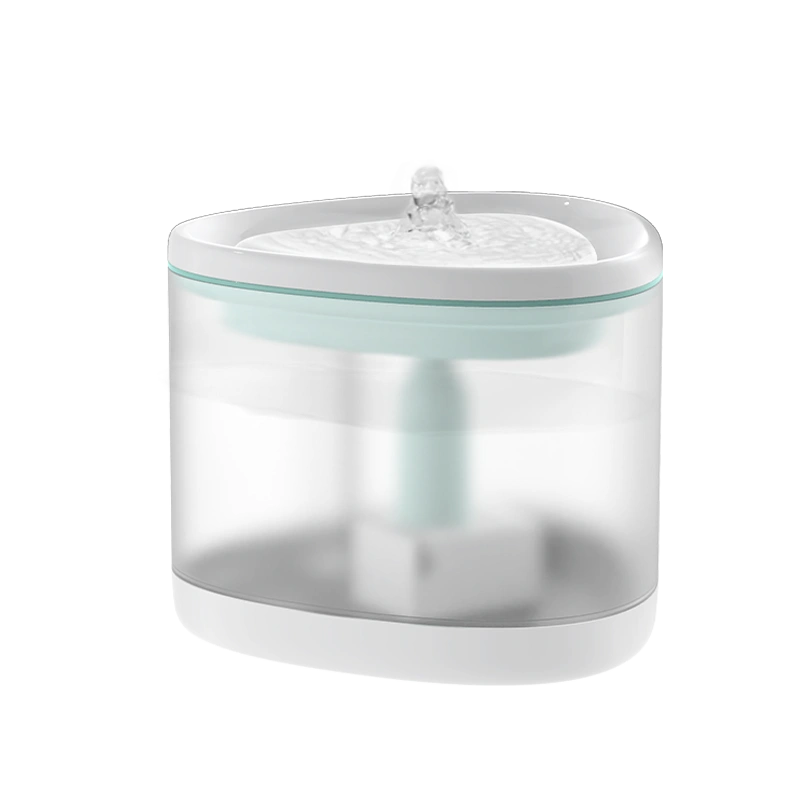
Core Hydration & Capacity
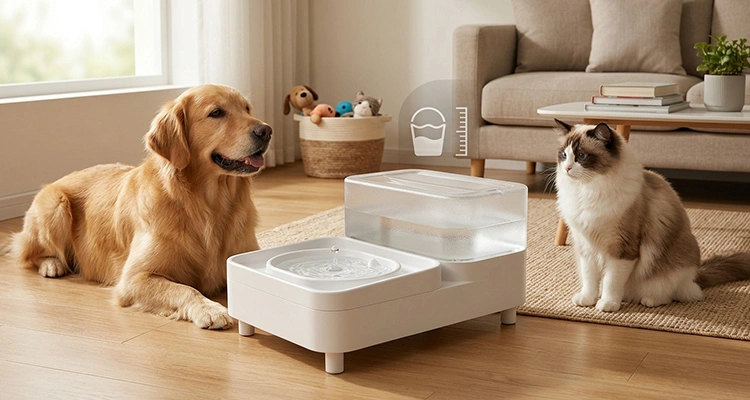
A Simpler Fountain Can Be the Smarter Product
Not every brand needs WiFi, a battery or multiple sensors. Depending on the target customer and price point, dependable water circulation, practical cleaning and straightforward daily use may matter more than additional electronics. A focused core platform can also help brands avoid unnecessary product complexity during an initial launch.
Compare the core hydration platforms for everyday use.
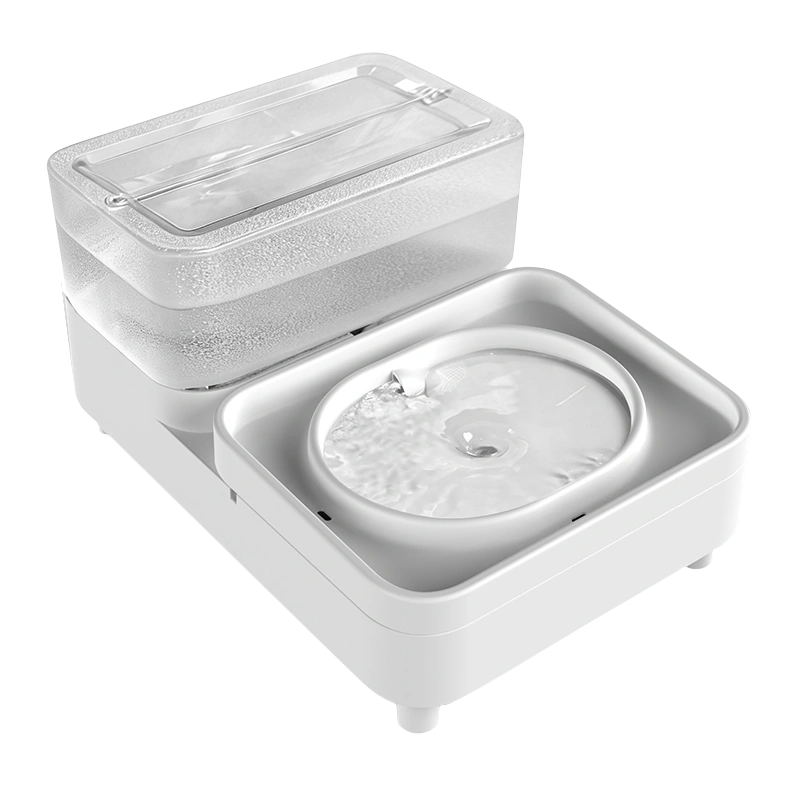
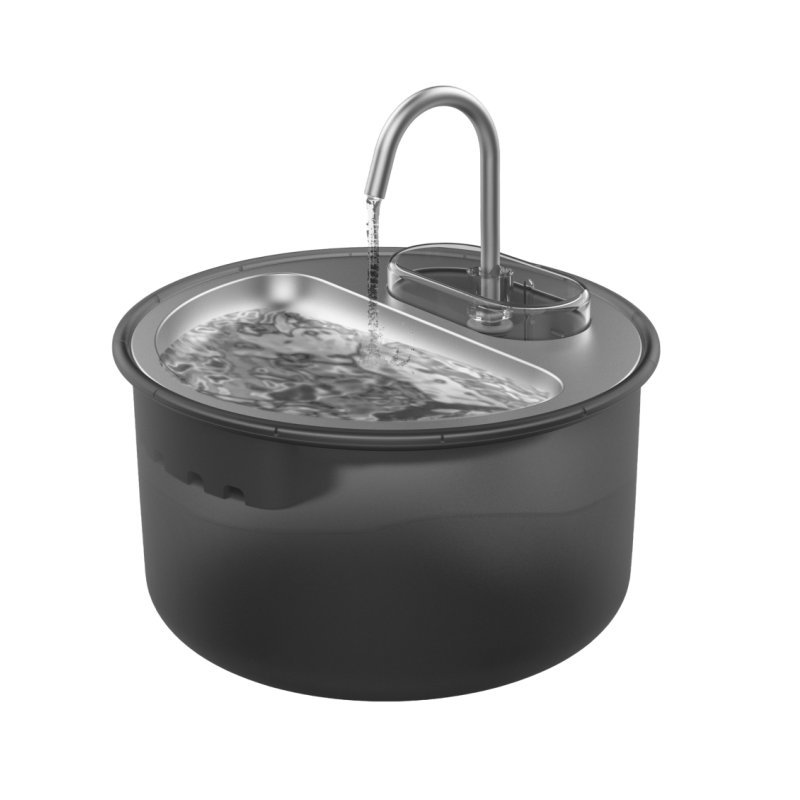
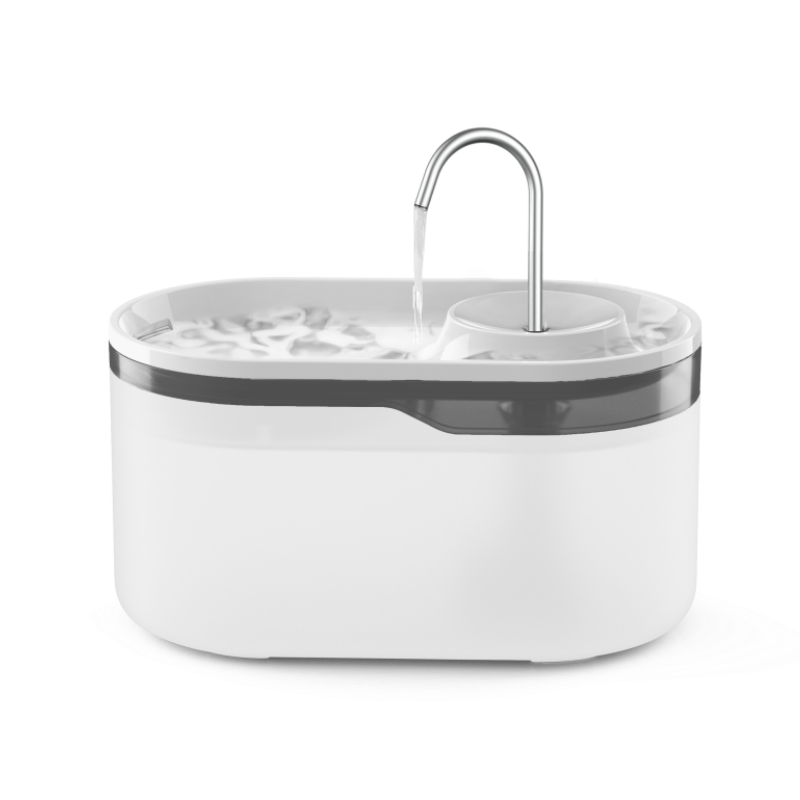
Cleaning Is Part of the Product, Not an Afterthought
This may be the least exciting section on a product brochure.
It may be one of the most important sections for a brand owner.
Because somebody has to clean the fountain.
And that person is not your engineering team.
Current CDC guidance for pet supplies reinforces the practical importance of regular cleaning, including daily cleaning for water bowls. That matters because the hygiene of a water product depends partly on what happens after it leaves the factory.
A Fountain That Is Difficult to Clean Will Eventually Become a Support Problem
A fountain can be technically impressive and still be annoying to own.
If the pump is difficult to access, cleaning becomes harder.
If the reservoir has awkward corners, residue can accumulate.
If components are difficult to remove, owners may clean less frequently.
If filter replacement is inconvenient, owners may delay it.
Eventually the issue can move from pet fountain cleaning to pet fountain maintenance, then to customer complaints and potentially returns.
That is why pet fountain hygiene is not only a materials question.
It is also a usability question.
The product should be designed around realistic cleaning frequency, not an imaginary owner who performs laboratory-grade maintenance every day.
Design for the Owner Who Has to Clean It Every Week
The person cleaning the fountain every week is not your engineering team.
Design for that person.
Ask:
- Can the main reservoir be removed easily?
- Can the pump be accessed?
- Are the relevant components removable?
- Are the surfaces practical to clean?
- Can the filter be replaced without frustration?
- Is the cleaning process obvious?
- Does the product need special tools?
These details influence the real cost of ownership.
They can also influence reviews.
And reviews influence sales.
And sales influence the number of people who eventually contact customer service.
This is why cleanability belongs inside product design.
A fountain that is difficult to clean is not merely a maintenance inconvenience.
It can become a support problem.
Choosing a Pet Water Fountain Manufacturer Means Choosing a Product Platform
At this point, the manufacturer discussion comes back.
Because the product decisions are connected.
A buyer may start with:
“We want a stainless-steel fountain.”
Then add:
“Make it cordless.”
Then:
“Add WiFi.”
Then:
“Add water-level monitoring.”
Then:
“Keep the BOM low.”
Then:
“Make the battery last a month.”
Then:
“Keep the retail price competitive.”
None of these requests is unreasonable by itself.
The problem is whether they are reasonable together.
That is why choosing a pet water fountain manufacturer is also choosing a product platform and an engineering capability.
Standard Product, Modified Product or New OEM Development?
Not every project needs full custom development.
Sometimes a standard platform is the smartest choice.
Sometimes a private-label pet fountain with controlled modifications is enough.
Sometimes the buyer needs a genuinely custom pet water fountain.
And sometimes the correct route is ODM development based on an existing engineering platform.
These are different commercial projects.
A buyer should understand the difference before discussing MOQ and unit price.
A standard product may reduce development time.
A modified platform may provide differentiation without carrying the full burden of new development.
A new pet fountain ODM or OEM project can create stronger differentiation, but it also introduces more engineering, validation and production risk.
What Has to Be Validated Before Mass Production?
Before pet fountain mass production, the product should move beyond “the sample works.”
The development process may involve:
- Prototype evaluation
- Engineering validation
- Functional testing
- Component validation
- Tooling validation
- Reliability testing
- Certification
- Compliance checks
- Pilot production
- Production quality control
The exact validation plan depends on the product.
A simple fountain and a connected cordless fountain do not carry the same risk profile.
That is precisely why the OEM conversation should begin with product requirements rather than only unit price.
Can the Factory Repeat the Same Product at Scale?
This is the question that matters most.
The factory can build one working sample.
Good.
Can it build the next one?
And the next hundred?
And the next thousand?
And can the same performance be maintained when components arrive in production quantities, operators change, tooling is used repeatedly and the product moves through a real production line?
This is where pet fountain manufacturing becomes a discipline of repeatability.
The question is not whether the factory can build one working sample.
The question is whether it can build the same product correctly again and again.
That is the difference between a demonstration product and a manufacturing product.
At this point, the buyer’s question should become more specific: not simply who has this fountain, but who can take responsibility for the product through development, validation, change management and production.
That is also why a more practical way to evaluate a pet water fountain manufacturer is to look at what the manufacturer is actually responsible for before committing to OEM.
What the Manufacturer Should Actually Own
A buyer does not need a manufacturer that physically produces every screw, pump or electronic component under one roof.
The buyer needs someone accountable for the result.
This is the responsibility model we use when looking at a fountain project.
| Area | Manufacturer Responsibility |
|---|---|
| Water system | Flow, reservoir and filtration interaction |
| Pump | Noise, flow, duty cycle and failure modes |
| Power | Consumption, charging and runtime assumptions |
| Battery | Capacity versus actual operating behavior |
| Sensors | Accuracy and operating consistency |
| Connectivity | Hardware, firmware and support implications |
| Cleaning | Accessibility and maintenance design |
| Production | Repeatability and process control |
| Compliance | Market-specific validation |
| Change Management | Component and design changes before and during production |
This is not a supplier scorecard.
It is a manufacturing responsibility system.
And it is also how we judge our own responsibility.
The question is not:
“Can we provide this feature?”
The question is:
“Can we take responsibility for what this feature does to the rest of the product?”
That is a much harder question.
It is also a much more useful one.
What We Have Learned Building Pet Water Fountain Products
This is where we prefer to speak from our own work rather than from a generic supplier-evaluation perspective.
Petrust is an OEM/ODM manufacturing entity with its own factory, engineering, production and mass-production capabilities.
So our responsibility is not to sit outside the industry and score factories.
Our responsibility is more uncomfortable:
We have to live with the engineering decisions we make.
If a pump decision creates a problem, it is a manufacturing problem.
If a component change affects the product, it is a manufacturing problem.
If a design is difficult to assemble consistently, it is a manufacturing problem.
If a feature creates unnecessary after-sales complexity, it becomes a product problem.
That changes how we look at fountain development.
What We Learned About Cordless Designs
A cordless fountain is never just a wired fountain with a battery inserted into the BOM.
The battery affects the architecture.
The pump affects the energy budget.
The operating schedule affects runtime.
Sensors and connectivity affect consumption.
Charging behavior affects the user experience.
That is why cordless projects have to be evaluated as a complete power system.
The useful question is not:
“How big is the battery?”
It is:
“What operating behavior are we designing the battery to support?”
What We Learned About Pump Noise
Pump noise cannot be solved by choosing a pump from a catalog and hoping for the best.
Flow conditions matter.
Pump mounting matters.
Vibration matters.
The housing matters.
The water path matters.
The impeller and motor matter.
The final product matters more than the isolated component specification.
This is why pump evaluation belongs inside the actual fountain architecture.
A product that looks quiet on a component datasheet can behave differently after it becomes a complete assembly.
What We Learned About Smart Connectivity
A connected product has two systems.
The physical product.
And the digital product.
The hardware may work correctly while the customer still has a poor experience because onboarding is confusing, connectivity is unreliable or the app does not communicate useful information.
So when we discuss a connected fountain, we do not treat WiFi as a decorative feature.
It is another layer of product responsibility.
What We Learned About Cleaning and Maintenance
Owners do not experience a fountain through its BOM.
They experience it through everyday use.
They fill it.
They empty it.
They wash it.
They replace the filter.
They clean the pump.
They notice noise.
They notice when the water flow changes.
That means maintenance has to be considered during product development.
The best engineering solution is not necessarily the one with the most components.
Sometimes the better solution is the one that the owner can actually maintain.
What We Refuse to Compromise on Before Mass Production
We do not believe “premium” means adding every available feature.
We also do not believe low cost means removing every engineering safeguard.
Before mass production, the important question is whether the product requirements can coexist.
That includes the things buyers may not see in product photographs:
- Pump behavior
- Water leakage control
- Sensor consistency
- Battery behavior where applicable
- Component consistency
- Cleaning access
- Assembly consistency
- Functional testing
- Quality control
- Certification and compliance requirements where applicable
These are not marketing features.
They are manufacturing responsibilities.
And they are exactly the things we do not want to discover for the first time after a large shipment has left the factory.
Which Pet Water Fountain Platform Fits Your Business?
There is no single “best” fountain platform.
There is only a better fit for a particular business model.
| Business Need | Better-Fit Direction | Main Trade-Off |
|---|---|---|
| Easy placement and cordless convenience | Cordless fountain | Battery and power management |
| Connected pet ecosystem | Smart fountain | Software and after-sales complexity |
| Premium material positioning | Stainless steel | Material and manufacturing cost |
The mistake is choosing features first and economics second.
The better approach is to start with the business.
For Amazon Sellers: Reduce the Features That Create Returns
Amazon sellers live close to customer reviews.
That changes the product priorities.
Noise matters.
Cleaning matters.
Reliability matters.
Setup matters.
Price matters.
And unnecessary complexity can become a product-returns problem.
A fountain does not become a better Amazon product simply because it has more features.
Sometimes removing one difficult feature is more valuable than adding two attractive ones.
The goal is not maximum specification.
It is a product customers understand, use and keep.
For Pet Brands: Build Differentiation Without Building a Support Nightmare
A pet brand may need stronger product differentiation than a commodity seller.
That can come from:
- Materials
- Form factor
- Smart functionality
- Industrial design
- Brand ecosystem
- Specific user experience
- Product platform strategy
But differentiation should not be confused with feature accumulation.
Every additional function creates another possible support question.
The objective is to build a product that gives the brand something meaningful to own without turning the product into an after-sales nightmare.
For Distributors: Balance SKU Complexity and Margin
Distributors usually care about a different equation.
How many SKUs?
What MOQ?
What is the expected margin?
How reliable is the product?
How much support is required?
How many replacement parts need to be stocked?
Too many variations can create SKU complexity without creating enough additional sales.
The best product portfolio is often not the one with the largest catalog.
It is the one with the clearest reason for each SKU to exist.
For Startups: Validate the Product Before Overengineering It
Startups often have the opposite problem.
They want to launch with everything.
Cordless.
Smart.
App.
Sensors.
Premium materials.
Custom shape.
Custom packaging.
Multiple markets.
All at once.
That can create a very expensive first experiment.
A better approach is to identify what must be differentiated and what can remain standardized.
The first product should prove the business model — not prove that the engineering team can build every feature imaginable.
When We Would Tell a Buyer to Simplify the Project
This is something a manufacturer does not always say.
We will.
If the first launch requires cordless operation, WiFi, multiple sensors, a new mold, stainless steel construction and a very aggressive target cost, we would not automatically say yes.
We would first ask which of those requirements actually creates customer value.
The same discipline applies when a brand is planning its first hydration product line. Adding more fountain variants can look like stronger market coverage, but it can also multiply development, tooling, inventory, quality-control and after-sales complexity.
For brands deciding how much product complexity they can realistically support in a first launch, simplifying the hydration portfolio before adding another SKU can be a much better manufacturing decision.
The best manufacturing decision is sometimes removing a feature before production rather than debugging it after launch.
That is not refusing an OEM project.
It is judging whether the project is actually ready for OEM development.
What We Won't Promise
This is an important part of our manufacturing philosophy.
Not every fountain project is a good OEM project.
And not every product requirement can be satisfied simultaneously.
Not Every Fountain Project Is a Good OEM Project
Imagine a specification asking for:
- Ultra-low unit cost
- Premium stainless steel
- Long cordless runtime
- Continuous pumping
- WiFi connectivity
- Multiple sensors
- Mobile app control
- Low maintenance
- High reliability
- Fast development
- Low MOQ
- High margin
Every individual requirement sounds reasonable.
The problem is the combination.
There are engineering trade-offs between battery capacity, pump operation, material cost, electronics, tooling, development time, testing and production volume.
At some point, the question is no longer:
“Can the factory make this?”
The better question becomes:
“Which requirement has to move?”
That conversation should happen before mass production.
Not after.
Trade-Offs Have to Be Solved Before Mass Production
We would rather resolve an engineering contradiction before production than explain it through customer support after launch.
That is manufacturing responsibility.
It also means saying no when necessary.
Not every project should be forced into the same platform.
Not every product needs WiFi.
Not every fountain needs cordless operation.
Not every brand needs stainless steel.
Not every startup needs a completely new mold.
And not every “premium” specification creates premium customer value.
The purpose of OEM manufacturing is not to say yes to everything.
It is to turn the right requirements into a product that can actually be built, tested and repeated.
Before You Request an OEM Quote, Define These Product Decisions
A useful RFQ starts before the RFQ.
If the product concept is still unclear, asking for a unit price too early usually creates a false sense of precision.
Before approaching a pet water fountain manufacturer for a serious pet water fountain OEM project, define the decisions below.
Decide:
- Cordless or plug-in
- Rechargeable battery or external power
- Target runtime
- Charging method
- Charging time
- Expected operating schedule
- Power-saving requirements
If cordless operation is important, define what “long battery life” actually means.
Runtime under what operating conditions?
Define:
- Water tank or reservoir capacity
- Pump architecture
- Target flow
- Water dispensing method
- Water circulation
- Filtration
- Filter replacement
- Water-level behavior
The water reservoir is not simply a capacity number.
Its geometry affects the system. The water level changes during use.
The filter changes condition. The pump sees different operating conditions. These details matter.
Decide whether you actually need:
- WiFi
- Sensors
- App control
- Low-water alerts
- Monitoring
- Filter reminders
- Connected pet-product functionality
Do not add a feature because it sounds good in a product listing.
Add it because it solves a problem worth supporting.
Define:
- Stainless steel
- Plastic
- Mixed construction
- Removable components
- Pump access
- Cleaning process
- Filter replacement
- Maintenance expectations
Ask the uncomfortable question:
Who will clean this product every week?
Then design for that person.
Define:
- Target market
- Certification requirements
- Compliance requirements
- Target price position
- Expected volume
- MOQ
- Launch schedule
- Production timeline
These decisions influence the entire development path.
A product intended for one market and a product intended for several regulated markets may require different validation and compliance planning.
The more clearly these requirements are defined, the more useful the OEM discussion becomes.
And if these decisions are still unclear, that is not necessarily a problem.
It simply means the first conversation should probably be about product fit rather than price.
The Best Pet Water Fountain Manufacturer Is Not the One With the Longest Feature List
A pet water fountain manufacturer is not simply a company that can produce a fountain.
It is not defined by how many models appear in a catalog.
It is not defined by how many smart features can be added.
And it is not defined by the appearance of the finished product.
A fountain is easy to sell as a list of features.
It is much harder to manufacture as a repeatable system.
That is the difference we care about.
For us, a pet water fountain manufacturer is the manufacturing entity that can take the complete hydration system — from water quality and drinking behavior through filtration, circulation, pump, power, battery, sensors, connectivity and cleaning — and remain accountable for what happens in between.
Then comes the part that separates product development from manufacturing:
Can the same result be built repeatedly at scale?
That is the standard we use at Petrust.
We build the product.
We engineer the system.
We validate the details.
And then we ask the harder question:
Can we manufacture the same result consistently at scale?
Because that is where an OEM project stops being a sample and becomes a real product business.
A fountain is not just a bowl with a pump.
It is not a battery with a water tank.
It is not a WiFi device with a filter.
And it is certainly not a feature list.
It is a connected manufacturing system.
That is what we mean by Smart Pet Hydration Engineering.
And that is the standard we believe a real pet water fountain manufacturer should be held to.
Send us your requirements.
We will first look at whether the product concept, engineering requirements and production expectations actually fit.