
More features don’t always make a better pet fountain. Imagine an Amazon seller preparing to launch a private-label pet water fountain.
Competitor products already offer WiFi connectivity, app control, water-level monitoring, low-water notifications, UV treatment and cordless operation.
The seller looks at the specifications and starts asking an uncomfortable question:
If my fountain doesn’t have these features, will customers think it’s outdated?
It’s a reasonable concern. In a crowded category, product differentiation matters. A fountain with app control and remote monitoring may look more attractive on a comparison page than a basic model with a pump, filter and water reservoir.
But there is something missing from that comparison.
Adding a feature is not simply a matter of adding another line to a product specification sheet.
It can change the electronic architecture, power design, internal layout, software requirements, validation process and long-term after-sales responsibilities. What looks like a small upgrade from the outside may require coordinated work across several engineering disciplines.
Meanwhile, customers may still be asking much more basic questions:
- Is the water pump quiet enough for everyday use?
- Does water circulate consistently?
- Is the filtration system practical?
- Can the reservoir be disassembled and cleaned without frustration?
- Does daily maintenance feel manageable?
A WiFi connection doesn’t compensate for a noisy pump. An app notification doesn’t make a fountain easier to clean.
The question isn’t whether smart technology is good or bad. It is whether the additional technology creates enough customer and commercial value to justify the development, manufacturing and support responsibilities that come with it.
A fountain should not become more complicated simply because competitors have added more features.
If your customers don’t need the extra technology, why should your brand pay to develop, manufacture and support it?
Let’s look at the decision from the perspective of product design, engineering and the realities of selling pet products.
What Actually Separates a Basic Pet Water Fountain from a Smart One?
The difference between a basic pet water fountain and a smart pet water fountain is not necessarily the pump, filtration system or water circulation design.
It is primarily the addition of connected and monitoring capabilities.
A basic fountain is designed to deliver and circulate water. A connected pet water fountain adds the ability to monitor certain conditions, communicate with a mobile application or provide information remotely.
That distinction sounds simple. In product development, however, it matters quite a lot.
What a Basic Pet Water Fountain Is Designed to Do
A basic fountain focuses on the fundamental job: providing a consistent source of circulating water for pets.
Its core system generally includes:
- A water reservoir that stores water.
- A pump that moves water through the system.
- A water circulation structure that creates the intended flow.
- A filtration system, depending on the product configuration.
- A structure that allows users to refill, disassemble and clean the fountain.
The quality of the product depends on how well these elements work together.
For example, a pump may operate normally when tested outside the product, but its performance inside the assembled fountain also depends on the water path, installation position, operating conditions and structural design.
Likewise, a filter may look impressive on a specification sheet, but the overall user experience still depends on how easily the filter can be replaced and how conveniently the surrounding components can be cleaned.
A basic fountain is not automatically a cheap or inferior product.
A well-designed basic model can be a better commercial choice for a brand that wants to prioritize straightforward operation, practical maintenance and a controlled product specification.
What Makes a Pet Water Fountain Smart?
A smart pet water fountain adds monitoring, communication or remote interaction to the basic hydration system.
Depending on the design, these capabilities may include:
- Mobile app control.
- WiFi connectivity.
- Remote device status monitoring.
- Water-level detection.
- Low-water notifications.
- Connected device management.
- Operating status alerts.
The important word here is may.
Not every smart fountain needs every feature. Some products provide basic monitoring, while others offer a more complete connected experience.
For example, a fountain may use a water-level sensor to detect a low-water condition and send a notification to the owner’s phone. Another model may provide app-based device management without offering every type of sensor or alert.
The actual definition depends on the product architecture.
This distinction becomes particularly important when a brand starts deciding which connected functions belong in its product. WiFi, app control and sensors do not automatically need to be developed as one package.
Before adding them to a specification, it is worth examining whether a smart pet water fountain actually needs WiFi, sensors and app control, or whether a smaller set of functions would deliver the same practical value with less development and support complexity.
A connected pet water fountain should therefore be evaluated by what it allows the user to do, not simply by how many electronic components it contains.
Basic vs. Smart Pet Water Fountain: What Are You Actually Getting?
When buyers compare a smart vs. basic pet water fountain, they often put every available technology into one comparison.
That creates a problem: some features define connectivity, while others belong to entirely different parts of the product.
A pump is not a smart feature. Cordless operation is not automatically a smart feature. UV treatment does not make a fountain smart.
These distinctions matter when you are planning a product rather than simply browsing one.
| Product dimension | Basic fountain | Smart fountain |
|---|---|---|
| Continuous water flow | Core function | Core function |
| Filtration | Optional configuration | Optional configuration |
| Water pump | Required | Required |
| App control | Not included | Optional |
| WiFi | Not included | Optional |
| Water-level sensor | Optional | Common in some models |
| Notifications | Not included | Optional |
| Remote monitoring | Not included | May be included |
| Cordless operation | Possible | Possible |
| UV treatment | Optional | Optional |
One distinction deserves more attention: cordless operation and smart connectivity solve different problems.
Cordless describes the fountain’s power arrangement, while smart functionality describes its monitoring and communication capabilities. A brand can develop a cordless basic fountain or a plug-in smart fountain, depending on the intended product architecture.
For brands still comparing these configurations, the trade-offs between cordless and plug-in pet water fountains are worth evaluating separately, because the power choice can affect product layout, operating requirements and development priorities.
This is not a fixed industry standard. It illustrates how these features can be configured independently.
A smart fountain does not automatically need UV treatment or cordless operation. A basic fountain can also be cordless or use a UV-related water-treatment configuration without becoming a connected product.
The distinction becomes clearer when we separate the product into four technical categories:
- Core hydration system: pump, filtration and water circulation.
- Connected features: WiFi, app control and cloud connectivity.
- Monitoring features: sensors, notifications and water-level monitoring.
- Additional design choices: cordless power and UV treatment.
This separation matters because each category creates a different development responsibility.
The Core Hydration System Still Comes First
Both basic and smart fountains depend on the same fundamental system.
The water circulation system determines how water moves through the fountain. Water pump performance affects the flow, operating noise and consistency of circulation under the intended conditions.
These are not secondary specifications.
A pump that performs well in isolation may behave differently once installed inside a complete product. The surrounding water path, reservoir geometry, installation position and operating conditions all need to be considered together.
Filtration is another important part of the experience.
A filtration system should be evaluated according to its intended function, filter structure, replacement requirements and compatibility with the water path. Brands should avoid assuming that a more complicated filter arrangement automatically creates a better product.
However, filtration is not just a question of how many layers a filter contains. Filter structure, water flow, replacement frequency and compatibility with the fountain’s internal design all affect the actual maintenance experience.
Brands evaluating different filtration configurations may benefit from understanding how pet water fountain filtration systems actually work, especially before committing to a filter design that looks impressive on paper but creates unnecessary maintenance or replacement complexity.
There is another assumption worth challenging: moving water does not automatically mean a cat will drink more.
A 2025 review of factors affecting water consumption in domestic cats, published in the Journal of Animal Science, examined 32 publications on feline water intake and hydration. It found that factors such as diet format, nutritional composition and water viscosity influenced water consumption, while the reviewed evidence did not show an effect of water source type—static or flowing.
For product developers, this is an important distinction. A circulating water system has to deliver consistent performance, but it should not be marketed as a guaranteed way to increase a cat’s water intake.
The pump, filtration, water path and cleaning experience still need to work as a complete system.
The same applies to maintenance.
A fountain that requires frequent disassembly or has difficult-to-reach areas may create frustration even if its filtration specification looks impressive.
For both basic and smart products, the fundamental questions remain:
- Does water circulate as intended?
- Is the pump suitable for the product's operating conditions?
- Is the filter practical to replace?
- Can users access the relevant parts for cleaning?
- Does the structure support consistent daily use?
These questions deserve attention before the brand starts debating how many app functions to include.
What Smart Features Actually Add to Product Development
Here is where a product comparison becomes a product development decision.
A smart feature may occupy one line in a specification sheet. Behind that line, however, several engineering systems may need to work together.
The development cost of a smart pet water fountain is therefore not simply the price of an additional electronic component.
It can include hardware integration, structural changes, power management, software development, validation, manufacturing tests and ongoing support.
The exact impact depends on the existing product platform and the complexity of the feature. There is no responsible universal percentage that can describe the cost increase for every project.
More Electronic Components Mean More Integration Work
Adding a sensor or wireless function can affect much more than the component itself.
The engineering team may need to consider:
- Sensor placement and detection conditions.
- Electronic component selection.
- PCB integration and internal layout.
- Mechanical-electronic compatibility.
- Power consumption.
- Protection of electronic components from the water environment.
- Firmware behavior and system communication.
This is why sensor integration should be considered during the product architecture stage rather than treated as a last-minute addition.
For example, adding a water-level sensor may require changes to the reservoir structure, the sensor’s installation position and the electronic control logic.
The electronic control board must support the intended functions. Its layout must also work within the available internal space and the product’s structural requirements.
The point is not that every added component will cause a problem. It is that every added component creates an integration requirement that must be understood and tested.
A feature that is easy to demonstrate on a development sample may still require substantial work before it can be manufactured consistently.
WiFi and App Control Create Long-Term Responsibilities
A connected product is not finished when the first app connection succeeds.
WiFi pairing, application compatibility, firmware behavior and device communication all contribute to the customer’s experience.
Depending on the product architecture, the project may also involve cloud services, platform dependencies and ongoing software maintenance.
This creates responsibilities that continue after the first production shipment.
Consider a customer who changes their home router and needs to reconnect the fountain. Or a customer whose phone operating system changes and who expects the application to continue working.
These are examples of the situations a connected-product team should consider. They are part of planning for a connected user experience, not necessarily defects in a particular product.
Before development begins, the brand should understand who is responsible for:
- Application maintenance.
- Firmware updates.
- Device compatibility.
- Connection troubleshooting.
- Platform or cloud dependencies.
- Technical support when users cannot connect their devices.
This is an important commercial distinction.
The manufacturer may be responsible for defined hardware and integration deliverables, while the brand or its designated software provider may need to manage application operations and long-term platform responsibilities.
Those boundaries should be agreed upon before launch.
Launching an app-connected product is not just a hardware decision. It is also a commitment to maintaining the connected experience.
Sensor Accuracy, Power Consumption and Waterproofing
Sensors and electronics need to operate within a physical product that stores and circulates water.
That sounds obvious, but it has real design implications.
A water-level sensor needs an appropriate detection position. Its behavior should be evaluated under the water-level conditions the product is designed to support.
The relationship between the water path, reservoir, electronic components and internal structure also needs to be considered.
For cordless models, power consumption becomes another important factor. Wireless communication, sensor operation and other electronic functions can influence the overall power requirements.
This becomes especially important when a cordless fountain also includes WiFi, sensors or other electronic functions. Battery life cannot be judged by battery capacity alone; the actual operating requirements, communication behavior, charging design and expected usage conditions all need to be considered together.
Before finalizing a cordless smart fountain, the battery-life requirements and engineering trade-offs of cordless pet water fountains deserve a separate review, since an attractive feature set is of little value if the power architecture cannot support the intended user experience.
The power architecture should therefore be considered alongside the intended operating experience rather than added after the feature list has been finalized.
Electronic components also need suitable protection for their operating environment. The selection and placement of electronic components, enclosure design and protection methods should be evaluated as part of the complete product system.
Here is how several common feature decisions can affect development:
| Added feature | Engineering considerations |
|---|---|
| Water-level sensor | Detection position, accuracy, false alerts and missed detection |
| WiFi | Antenna layout, connectivity, pairing and compatibility |
| App control | Software compatibility, updates and maintenance |
| Notifications | Trigger logic, alert accuracy and user communication |
| Cordless operation | Battery capacity, charging and power consumption |
| UV treatment | Intended function, safety considerations and performance validation |
Notice that none of these features exists independently.
A change in one area may affect the space available for another component, the power requirements or the way the complete product is tested.
That is why smart pet product engineering needs to begin with the overall architecture.
More Features Can Complicate Testing and After-Sales Support
A working sample is an important milestone. It is not the end of product development.
For a smart fountain, development and manufacturing need to account for more than whether the pump starts and the app opens.
The project may need defined procedures for:
- Checking sensor responses under intended conditions.
- Confirming electronic component consistency across production batches.
- Testing wireless connection and device pairing.
- Verifying communication between hardware and software.
- Checking that the intended notification logic works.
- Controlling the assembly of electronic and mechanical components.
- Reproducing and investigating reported issues.
This is where engineering validation and production control become closely connected.
A product may work correctly on one approved sample, but mass production involves repeated assembly, component variation and the need for consistent test procedures.
The manufacturer needs to understand which functions must be checked, how they are checked and what constitutes an acceptable result.
Otherwise, the product may leave the sample stage without a sufficiently clear manufacturing standard.
A feature that works on one sample is not automatically a feature that is ready for mass production.
That distinction matters to every brand that expects to sell the product at scale.
For OEM buyers, this is also where the manufacturer’s actual engineering and production capabilities become important. A supplier may be able to demonstrate a working sample, but the more relevant question is whether the product’s key functions can be integrated, tested and controlled consistently during production.
Before committing to a project, the manufacturing capabilities and evidence buyers should examine when choosing a pet water fountain OEM partner deserve careful consideration, particularly when the product combines pumps, sensors, electronics and connected functions.
When a Basic Pet Water Fountain Is the Better Commercial Choice
There is a common assumption in the smart pet product market:
More technology means a better product.
It sounds convincing in a product presentation. It is not always convincing in daily use.
A basic pet water fountain can be the better choice when the target customer values straightforward operation, practical cleaning and dependable core performance more than connected functions.
Simpler Operation and Practical Daily Maintenance
A fountain is a product that customers interact with repeatedly.
They refill it, clean it, replace filters and check its operating condition.
For many users, those everyday interactions matter more than the number of functions available in an application.
An easy-to-clean pet water fountain may be attractive because users can access the relevant components without unnecessary steps.
A practical design should consider:
- How easily the reservoir can be accessed.
- Whether the pump can be removed for cleaning.
- How conveniently the filter can be replaced.
- Whether the structure contains difficult-to-reach areas.
- Whether routine maintenance is understandable.
The broader question is pet water fountain maintenance.
A product that is difficult to maintain can become inconvenient regardless of how many smart functions it offers.
A basic model may be able to deliver the experience its target customers want without requiring app installation, network setup or connected-device management.
That is not a technological disadvantage if those functions are not important to the intended user.
Fewer Connectivity Dependencies
A product without WiFi or app connectivity does not need to support the same connected-device experience.
There is no app pairing process to manage and no connected application experience to maintain.
This can simplify parts of the product specification and support responsibilities.
However, it would be misleading to claim that a basic fountain is automatically more reliable.
Its mechanical system still needs proper design and validation. Pump performance, water leakage, sealing, filtration and structural durability remain important.
A basic product can still have poorly designed mechanical components.
The absence of WiFi does not excuse weak engineering.
The advantage is more specific: when connected functions are not required, the brand and manufacturer can concentrate resources on the parts of the product that directly support the intended drinking experience.
When Core Product Performance Matters More Than Feature Count
A basic fountain may be a sensible choice for:
- Entry-level product positioning.
- Price-sensitive customer groups.
- Customers who prefer straightforward operation.
- Brands focused on core hydration rather than smart-home integration.
- Startups entering the pet fountain category for the first time.
Consider a brand that has not yet established a clear reason for customers to choose its fountain over existing products.
Adding app control may make the product specification look more competitive. But if the core product experience is not sufficiently differentiated, the additional technology may not solve the brand’s real problem.
The brand may be better served by improving the pump configuration, cleaning structure, filter replacement experience or overall product usability.
This is not an argument against smart products.
It is an argument against developing technology before understanding what the customer is actually buying.
Some brands don’t need a smarter fountain. They need a better fountain.
When Is a Smart Pet Water Fountain Actually Worth Selling?
Smart features can create real value. The mistake is assuming that their value is universal.
The benefits of smart pet water fountains depend on whether the technology solves a meaningful problem for the target customer and whether the brand can deliver the complete experience reliably.
When Remote Water Monitoring Solves a Real Problem
Remote monitoring may be useful for customers who:
- Spend long periods away from home.
- Have multiple pets sharing a fountain.
- Want to check certain device conditions remotely.
- Prefer receiving an alert rather than discovering an issue during a routine check.
In these situations, a WiFi pet water fountain with appropriate monitoring functions may offer meaningful convenience.
But the value depends on what the product can actually detect and communicate.
A remote status display is only useful if the information is accurate enough for its intended purpose and the user understands what action to take.
The brand should also consider whether the target customer is comfortable with connected devices and whether the product’s setup process is appropriate for that market.
There is also a distinction between collecting behavioral data and providing a useful consumer feature.
A 2026 study published in the Journal of Animal Science examined water intake and consumption behavior in domestic cats across different diets and research and home environments. Connected fountains were used to record water intake volume, drinking duration and drinking-event frequency.
For product developers, the study demonstrates how connected fountains can be used to collect drinking-related data. It should not be interpreted as proof that every commercial fountain needs WiFi, that consumer-facing app notifications improve feline health outcomes, or that remote monitoring is valuable to every customer.
* Research-grade behavioral monitoring and everyday consumer notifications are not the same thing. The product still needs a clear reason for collecting information and a useful way to communicate it.
When App Notifications Improve the User Experience
Notifications can be useful when they communicate something that requires attention.
A low-water alert, for example, can remind users to refill the reservoir before the fountain reaches an undesirable operating condition.
Other device-status notifications may also be useful, depending on what the hardware can reliably detect.
But there is a difference between useful alerts and simply having more alerts.
A notification should answer three questions:
- What happened?
- Does the user need to take action?
- Is the information sufficiently reliable to justify sending the notification?
If the application repeatedly sends alerts that users cannot understand or do not trust, the feature may become a source of frustration.
The goal of an app-controlled pet fountain should be to reduce uncertainty, not create another interface that customers have to manage.
When Smart Features Support Your Brand Positioning
Smart technology can make sense when a brand is building a connected product portfolio.
For example, a company that already offers smart feeders, connected pet cameras or other IoT products may have a clear reason to introduce a connected fountain.
The fountain may become part of a broader product ecosystem rather than an isolated device.
In that situation, the brand may already have an application, a software development process and a customer base familiar with connected products.
This changes the commercial calculation.
Smart features may support product differentiation, reinforce the brand’s positioning and create a more coherent product line.
However, the brand still needs to ask whether customers value the additional functions and whether the expected commercial return justifies the development and support work.
Smart features should strengthen your product positioning, not simply decorate your specification sheet.
The Commercial Decision: Who Is This Product Really For?
The same fountain can be a sensible product for one business and a poor investment for another.
The difference is not necessarily the product itself. It is the commercial model around it.
For Amazon Sellers: Does the Feature Justify the Selling Price?
For Amazon sellers, product differentiation and unit economics need to be considered together.
A smart fountain may appear more competitive because it includes app control, WiFi or water-level monitoring.
But those features do not automatically justify a higher selling price.
The seller needs to evaluate the relationship between:
- Target selling price.
- Product BOM cost.
- Marketplace and fulfillment fees.
- Advertising expenditure.
- Expected return and replacement exposure.
- Customer expectations and support requirements.
- How clearly the feature difference can be communicated on the product listing.
A feature that increases the product cost but is difficult for customers to understand may not create the expected commercial advantage.
Likewise, a feature that genuinely addresses a customer problem may help support product positioning and pricing.
The right question is not, “Can we add WiFi?”
It is, “Will customers understand why this product is worth choosing, and can the business support the cost of delivering that experience?“
That needs market validation, not assumptions.
The Feature That Helps You Sell May Also Cost You After the Sale
Here is where the commercial calculation gets uncomfortable.
A feature may help a product stand out on an Amazon listing, but the cost does not stop at the BOM. It can also affect development time, testing requirements, customer setup, troubleshooting and long-term support.
A WiFi function that helps win the click is not necessarily a profitable feature if the brand has no clear plan for maintaining the connected experience.
That does not mean connected features are a bad investment. It means the selling benefit and the ownership cost need to be evaluated together.
A product can be easier to sell on paper and harder to support in the real world.
For Pet Brand Founders: Are You Building a Smart Product Ecosystem?
For a pet brand founder, the decision may be broader than the fountain itself.
If the company already has a connected product portfolio, introducing another app-enabled product may strengthen the overall ecosystem.
But if the brand does not yet have an established software platform, the development decision becomes more complicated.
The founder should consider:
- Does the brand already operate an application?
- Can the existing platform support another product?
- Can the fountain integrate with the current device ecosystem?
- Who will maintain the software and firmware?
- Is there a meaningful reason to offer both basic and smart versions?
- Will the additional product create a clear position within the product portfolio?
A smart fountain can make sense as part of a long-term strategy. It should not become a software project that the brand has no practical plan to maintain.
For Importers and Distributors: Does the Product Fit Your Market?
Importers and distributors often have a different set of priorities.
They may be serving multiple retail channels, customer segments or regional markets.
A connected fountain may appeal to one channel but create unnecessary complexity for another.
Before choosing a product, consider:
- The purchasing power of the target market.
- The price range of competing products.
- The channel's expectations for product differentiation.
- Customer familiarity with connected devices.
- The availability of local after-sales support.
- The brand's ability to handle product setup and troubleshooting.
A feature that works well in one market may not create the same value in another.
The objective is to select a product that fits the channel and customer base, rather than importing the most complicated specification available.
Smart Fountain Project-Fit Framework
Five Questions to Ask Before Developing a Connected Fountain
Understanding the differences between Basic and Smart is one thing. Deciding whether a specific project should become a connected product is another.
At Petrust, we believe that decision should be made before the development scope is finalized.
That is why we use the Smart Fountain Project-Fit Framework* as a way to structure the project discussion.
* It is not a third-party factory rating system. It is a decision framework that should first constrain our own product development work and help brands determine whether a connected fountain is appropriate for their market, engineering requirements and long-term business responsibilities.
Does the feature solve a real problem for the target customer?
Start with the customer, not the component.
If the target user has no meaningful need for remote water monitoring, why add WiFi, an application and a sensor?
A feature should have a clear user purpose.
Ask:
- What problem does the feature solve?
- When would the customer actually use it?
- Does it make the product easier or more useful to operate?
- Would the customer notice its absence?
If the answer is unclear, the feature needs further justification.
Is there evidence that the target market values the additional function enough to support its price and complexity?
Competitors offering a feature does not prove that customers are willing to pay for it.
A product listing may show that a feature is available in the market. It does not automatically show how much customers value it, whether it influences purchasing decisions or whether it supports the intended price position.
Ask:
- Does the target customer actively look for this function?
- Is the feature relevant to the intended sales channel?
- Can the brand communicate its value clearly?
- Does the expected selling price support the additional development and manufacturing scope?
If user value is plausible but willingness to pay remains unvalidated, market validation should come before additional engineering investment.
Can the feature be integrated into the mechanical, electronic and power architecture?
A sensor, PCB, pump, reservoir, battery and wireless system do not operate independently.
Their physical and functional relationships need to be considered together.
Ask:
- Can the sensor be positioned appropriately?
- Does the PCB fit the available internal space?
- Are the mechanical and electronic layouts compatible?
- Can the power architecture support the intended functions?
- Can electronic components be appropriately protected in the water environment?
- Does the feature affect cleaning, assembly or maintenance?
A feature may be attractive commercially but unsuitable for the current product architecture.
That does not necessarily mean the idea should be abandoned. It may mean the product needs a different design or a revised development scope.
Can the function be assembled, tested and controlled consistently during mass production?
A working sample is not proof of repeatable production.
The manufacturer needs to define how the relevant functions will be checked, what conditions apply and what constitutes an acceptable result.
Ask:
- Can the function be tested using a defined procedure?
- Can the assembly process be repeated consistently?
- Are the critical components and installation requirements understood?
- Can production teams identify unacceptable results?
- Can relevant issues be traced and investigated?
If the function cannot be translated into a practical manufacturing control process, the project needs more work before mass production.
Who will maintain the product after launch?
This is the question that is easiest to overlook during product planning.
A connected fountain may involve firmware, applications, device compatibility, cloud services and customer troubleshooting.
Those responsibilities do not disappear after the first production shipment.
Ask:
- Who maintains the application?
- Who handles firmware updates?
- Who manages connectivity or platform dependencies?
- Who investigates connection-related customer complaints?
- What support can the brand provide after launch?
- Which responsibilities belong to the manufacturer, the brand or a designated software provider?
A project is not commercially ready simply because the hardware can be manufactured.
The connected experience also needs an owner.
What Should the Five Dimensions Tell You?
The framework should lead to a practical development decision, not an automatic recommendation to build a smart product.
| Project condition | More appropriate next step |
|---|---|
| Core customer needs are unclear | Validate demand for a Basic fountain first |
| User value is clear, but willingness to pay is unproven | Conduct market validation before adding connected functions |
| User need and commercial value are clear, and the engineering architecture is feasible | Proceed to Smart product development |
| The brand already has an IoT ecosystem and software support capability | Evaluate a Smart First strategy |
| Both Basic and Smart versions have clear market demand, but the shared architecture is not yet defined | Evaluate the feasibility of a Modular Platform |
There is one important point here.
Passing all five dimensions does not automatically mean that a project should become Smart.
If the customer does not need connected functions, the commercial value is not there, or the additional responsibility does not support the product strategy, the right engineering decision may simply be not to develop those functions.
That is not a missed opportunity.
It is a product development decision.
The purpose of the framework is to prevent unnecessary complexity, not to make every fountain more technologically advanced.
How We Approach Basic and Smart Fountain Development at Petrust
At Petrust, we approach pet fountain development from the perspective of a manufacturer involved in product engineering, development and production.
We are not evaluating product complexity from the outside. We need to consider how a design can be developed, assembled, tested and manufactured consistently.
That changes how we look at the decision between basic and smart products.
The question is not simply whether a feature can be added.
It is whether the feature has a clear purpose, fits the product architecture and can be controlled through the manufacturing process.
We Prioritize the Core Hydration System Before Adding Smart Features
At Petrust, we don’t treat connectivity as a substitute for mechanical reliability.
A smart fountain must first deliver a dependable hydration experience.
That means the core system deserves attention before additional electronic functions are introduced.
We consider the relationship between:
- Water circulation and pump operation.
- Filtration and the water path.
- Reservoir structure and cleaning access.
- Mechanical layout and component installation.
- Smart functions and their interaction with the basic hydration system.
A connected feature should support the product rather than distract from weaknesses in its fundamental design.
For example, adding water-level monitoring should not be treated as an isolated electronics task. Its detection method and installation position need to work with the reservoir structure and the intended user experience.
The same principle applies to app control and wireless connectivity.
The product needs to function as a complete system.
Every Additional Feature Must Have an Engineering Purpose
We believe additional features should be evaluated against the actual product requirements.
| Development consideration | Question we need to answer |
|---|---|
| User Value | What real customer problem does the feature solve? |
| Engineering Fit | Does it fit the product architecture? |
| Power and Structure | How does it affect power, internal space and mechanical design? |
| Validation | Can we define how the function will be tested? |
| Commercial Fit | Is the feature worth the additional development and manufacturing responsibility? |
* This is a development principle we apply to our own work, not a third-party factory rating system.
These questions help prevent a familiar product development mistake: adding functions before understanding their implications.
A feature may look attractive during the concept stage. But if its purpose is unclear, its testing requirements are undefined or its long-term support responsibility has not been considered, the project is not ready to move forward simply because the sample can demonstrate it.
A Working Sample Is Not the Same as Mass Production Readiness
This is an important distinction in pet water fountain product development.
A development sample demonstrates that a product concept can work under the conditions in which it has been built and tested.
Mass production requires something more.
The design needs to be understood as a repeatable manufacturing process. Mechanical and electronic components need to be integrated into a controlled assembly. Functional checks need to be defined. Production teams need to know what to inspect and what results are acceptable.
For smart pet fountain OEM projects, this becomes especially important because the product may combine water circulation, electronic components, sensors, wireless communication and software-related functions.
Our approach to pet fountain engineering needs to account for those interactions before the project reaches full production.
We also consider manufacturing consistency as part of the product design and validation process, not simply as a final inspection activity.
A product that works on an approved sample but has no clear method for checking its key functions during production has not completed the work required for mass production readiness.
We don’t consider a feature finished just because it works on an approved sample. It must also be understood, tested and controlled as part of the manufacturing process.
What This Means in Actual Manufacturing Work
For an OEM buyer, manufacturing responsibility should be visible in the work being performed—not just in a statement about quality.
The following are the areas where project-specific manufacturing evidence should be presented.
* The objective is not to claim that every product follows an identical process. Different product architectures require different validation and production controls. The objective is to demonstrate how manufacturing responsibility is handled for the specific project. That is what a serious OEM buyer needs to see.
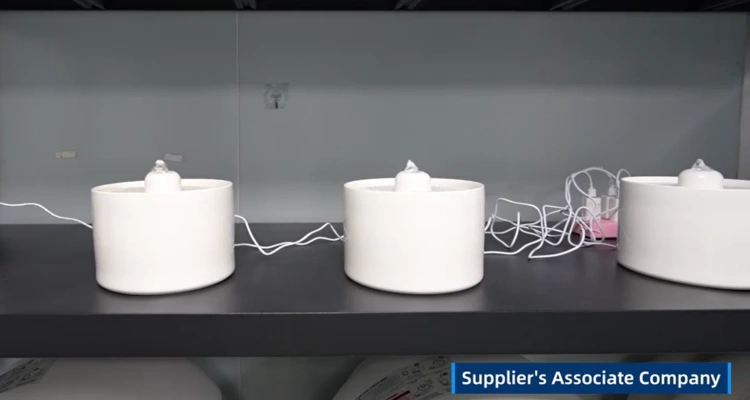
Show the actual pump installation and assembled fountain operating under the relevant test conditions.
The evidence should help buyers understand:
- What pump and water circulation configuration was evaluated?
- What operating behavior was checked?
- How was the assembled product evaluated rather than just the pump component?
- Why does this matter to repeatable product performance?
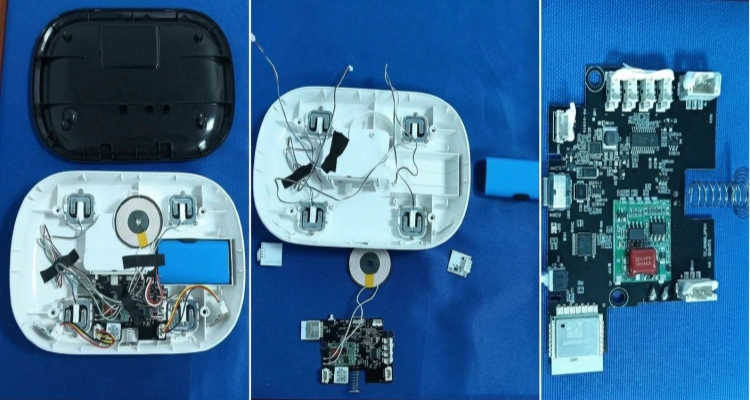
Show the actual PCB, sensor installation or electronic integration work for the relevant product configuration.
The evidence should help buyers understand:
- Which electronic components were integrated?
- Where were the relevant sensors or components installed?
- Which functions were checked?
- How does the integration relate to the mechanical structure and intended product behavior?
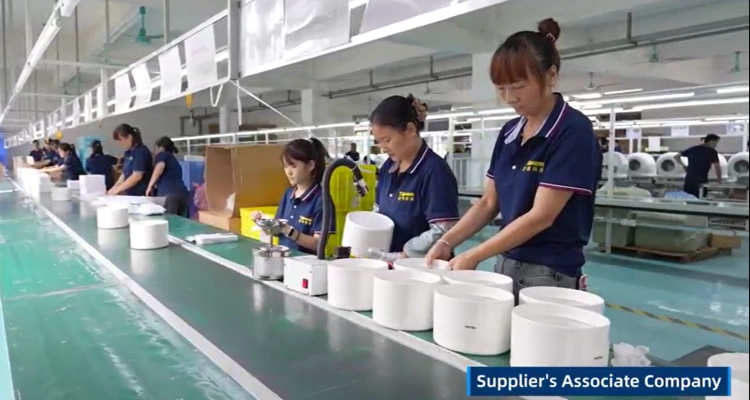
Show the actual assembly and functional inspection activities used for the relevant product.
The evidence should help buyers understand:
- Which assembly or functional inspection steps were performed?
- Which product functions were checked?
- What inspection criteria were used?
- How were production results recorded or controlled?
The objective is not to claim that every product follows an identical process. Different product architectures require different validation and production controls. The objective is to demonstrate how manufacturing responsibility is handled for the specific project. That is what a serious OEM buyer needs to see.
Basic, Smart or Modular: Which Platform Should Your Brand Launch?
The choice is not simply between a product with more features and one with fewer features.
It is about selecting a product platform that fits the brand’s target market, technical requirements and commercial capacity.
There are three practical directions to consider.
Choose a Basic Fountain When Core Product Experience Comes First
A basic fountain may be the right starting point when:
- Your brand is entering the category for the first time.
- Your target customers prioritize straightforward operation.
- You want to focus on core hydration performance.
- You have not validated demand for connected functions.
- You want to keep the initial development scope controlled.
This does not mean compromising on quality.
A basic product still needs suitable pump performance, filtration, structural design and practical maintenance.
The goal is to build a product that does its intended job well without adding functions that do not support its positioning.
Choose a Smart Fountain When Connectivity Creates Real Value
A smart fountain may be the better choice when:
- Smart functionality is central to your brand positioning.
- Your target customers have a clear need for remote monitoring.
- Your brand already has an application or IoT ecosystem.
- You can support ongoing software and connected-device responsibilities.
The additional functions create meaningful product differentiation.
In this situation, connected features should be considered from the beginning of smart pet product development and product architecture planning.
That allows hardware, software, power and mechanical requirements to be considered together rather than treated as separate additions.
Consider a Modular Fountain Platform When Your Product Line Needs Room to Grow
Some brands may want to offer both basic and smart versions.
Once the Basic, Smart or Modular direction becomes clearer, the next decision is how the complete hydration product should be configured.
A fountain’s connectivity, power source, material, filtration system and pump design cannot be treated as isolated choices when they eventually need to work together in one manufacturable product.
For a broader view of these connected decisions, the pet water fountain product platforms and OEM manufacturing considerations provide a useful next step.
Our pet water fountain hub brings together the key areas of Smart Pet Hydration Engineering, including water quality, filtration, circulation, pump performance, cordless power, smart connectivity, materials and OEM mass production.
It is designed to help brands connect individual product decisions with the requirements of a complete pet hydration product line.
Choose the Product Your Market Can Actually Support
A basic fountain can be the right product. A smart fountain can be the right product. A modular platform can be the right long-term strategy.
The decision depends on what your customers need, what your business can support and what the product can reliably deliver.
The most expensive feature is not necessarily the one with the highest component cost.
Sometimes it is the feature that enters the product without a clear customer purpose, a defined validation method or an owner for its long-term support.
At Petrust, we believe technology should solve a problem, not create a selling point without a purpose.
If you are planning a new pet fountain, don’t start with a list of features copied from competing products.
Start with your target customer, your market position and the product experience you want to deliver.
Then work backward to the engineering and manufacturing requirements.
Before adding WiFi, app control or water-level monitoring, make sure the product architecture fits your target market, price positioning and long-term support capabilities.
At Petrust, we work with brands on pet fountain product development, engineering integration and OEM manufacturing.
Whether you are evaluating a basic fountain, developing a connected model or planning a multi-version product platform, let’s discuss what your project actually needs.
Share your target market, expected order volume, preferred features and development requirements. We’ll discuss the product direction and manufacturing considerations with you.
Add Your Heading Text Here
Not necessarily.
A smart pet water fountain can provide app control, remote monitoring and selected notifications. These functions may be valuable for customers who want to monitor their fountain remotely.
A basic fountain may be a better choice for customers who prioritize straightforward operation, practical maintenance and core hydration performance.
The better option depends on the target customer, product positioning and the value of the additional functions.
Not always.
Some smart functions require WiFi or an internet connection, particularly when they involve remote monitoring or app-based communication.
Other functions may operate locally without continuous internet access, depending on the product architecture.
Brands should clarify which functions require WiFi, which operate locally and what happens when the connection is unavailable.
Not automatically.
Water-path cleaning and filter replacement are separate from electronic and connected-device maintenance.
A smart fountain can still have a practical cleaning structure. However, its electronic components, sensors and connected functions introduce additional design and support considerations.
Brands should evaluate both everyday cleaning and the maintenance requirements of the connected system.
It can introduce additional hardware, software integration, testing and ongoing maintenance requirements.
The actual impact depends on the existing product platform, electronic architecture, application requirements and development scope.
There is no universal cost increase that applies to every project. A proper OEM quotation should consider the complete development and manufacturing requirements rather than the cost of an individual electronic component alone.
It depends on the brand's market position, target customer, technical capabilities and development objectives.
Basic First can be a practical approach for brands that want to validate the core product experience before investing in connected functions.
Smart First may be more appropriate for brands with an established IoT ecosystem, a clear customer need for remote monitoring and the resources to support connected products.
The right starting point is the product that best fits the business strategy, not the one with the longest feature list.