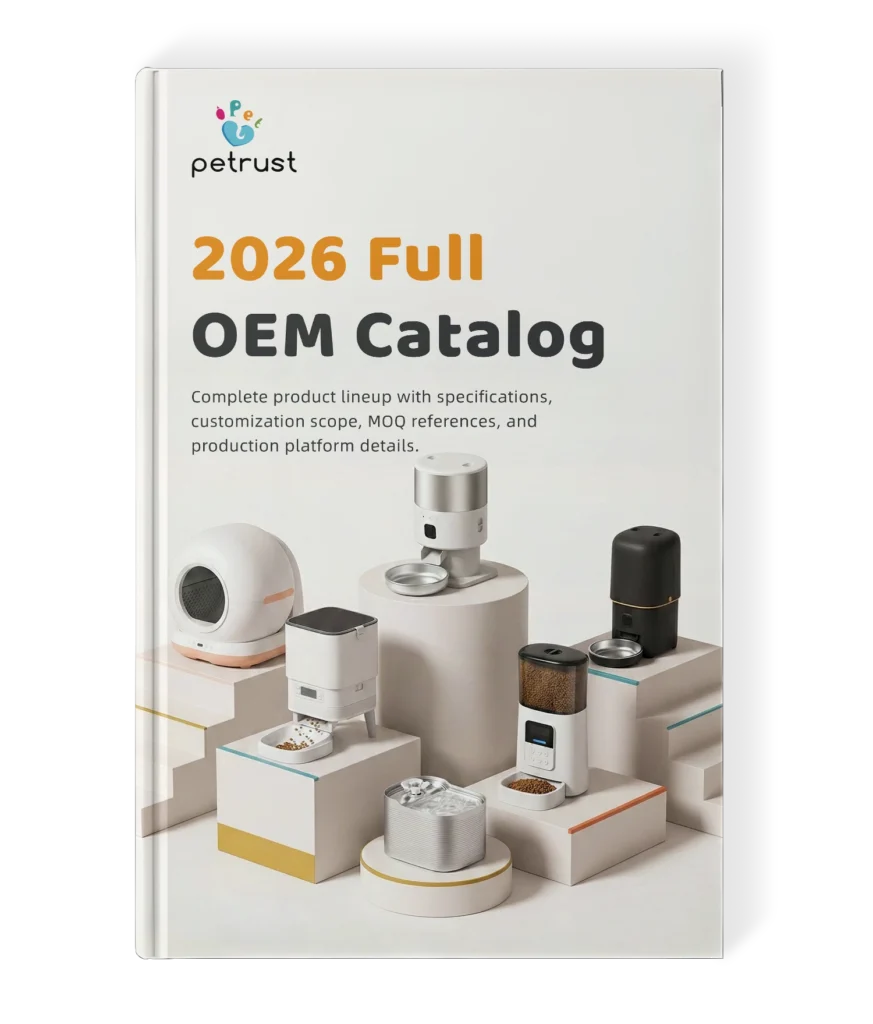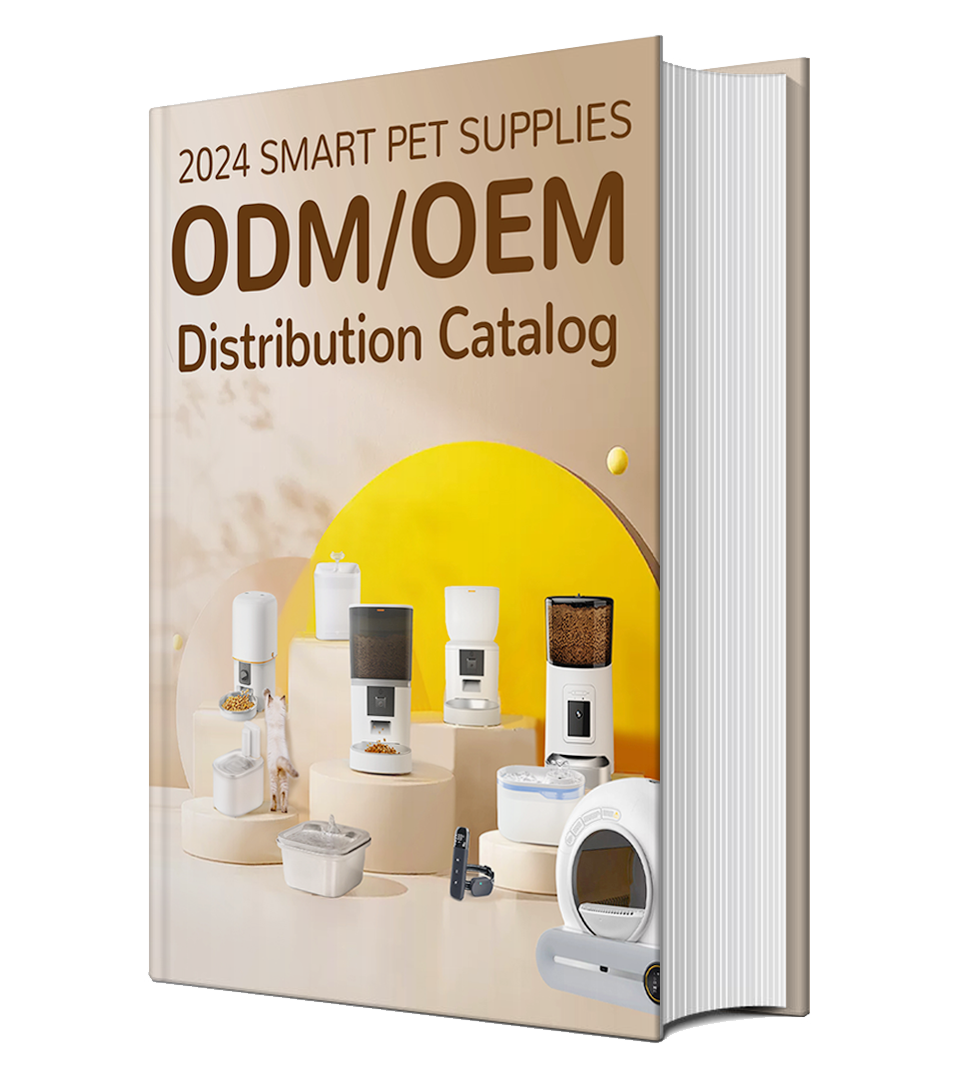
When a brand approaches a smart pet product manufacturer, the first questions are often predictable:
- What is your OEM price?
- What is your ODM MOQ?
- Can you customize the product?
- Can you put our logo on it?
These are reasonable questions. But there is another question that should come first:
Do you need a manufacturer to develop a product around your requirements, or do you need an existing product platform that can be adapted for your brand?
Both routes can get a product into the market. They do not necessarily involve the same engineering work, development investment, responsibilities, or long-term control.
A brand may request an OEM quotation before its product requirements are properly defined.
Another may choose an ODM product because the initial price looks attractive, without understanding which parts of the platform can actually be customized or controlled.
The problems often begin before the first production order.
The wrong manufacturing model can cost a brand more than the wrong product.
This is not unusual.
Some brands treat OEM, ODM, and Private Label as three interchangeable ways to buy products, without first understanding the development responsibilities and commercial limitations behind each model.
We have explored why most smart pet product brands choose the wrong manufacturing model and how that decision can create problems long before production begins.
This is why OEM vs ODM for pet products should not be treated as a simple comparison of two manufacturing terms.
It is a decision about what your business needs to develop, what your team can manage, and what responsibilities you expect your manufacturing partner to take.
Let’s look at that decision from the perspective of the product, the engineering work, and the business behind it.
The First Decision Is Not What to Make. It Is How to Make It.
A product idea is not an engineering brief.
A brand may know that it wants to launch a smart feeder, an automatic cat litter box, or a cordless pet water fountain. It may even have a clear market position, target price, and list of features.
But that does not automatically mean it is ready for independent product development.
The first decision is often whether the project should begin with an existing product platform or with a product that needs to be developed around new requirements.
That choice affects almost everything that follows.
Why the manufacturing model matters before product development
Consider two brands entering the automatic pet feeder market.
The first wants a reliable Wi-Fi feeder with a camera, scheduled feeding, and a branded mobile app experience. It does not need a completely new feeding mechanism. An existing platform may already cover most of its requirements.
The second wants a different feeding mechanism, a specific portion-control system, a redesigned housing, new electronics, and a different software experience. Its requirements may go beyond what an existing platform can reasonably support.
They are entering the same product category. They do not necessarily need the same manufacturing model.
The first may be better served by an ODM project with a clearly defined customization scope. The second may need deeper custom product development, with more engineering work and a different investment plan.
This distinction matters in smart pet product manufacturing, where a change to one feature can affect several connected systems.
A different sensor may require a PCB change. A new mechanical component may affect assembly. A modified app function may require firmware or cloud-side development.
For connected pet products, the development discussion should also include software maintenance and device security.
A smart feeder is not finished from an engineering perspective simply because its Wi-Fi connection and app functions work during initial testing.
Manufacturers and brand owners also need to consider how vulnerabilities are handled, how updates are delivered, and how connected devices protect user data.
The ETSI EN 303 645 V3.1.3 (2024-09) standard provides baseline cybersecurity provisions for consumer IoT devices, including software updates, secure communication, and vulnerability management. It is a useful reference for connected-product discussions, not a pet-product certification.
The manufacturing model therefore influences:
- Where product development begins.
- How much engineering work is required.
- Which party defines and approves product requirements.
- How development costs and tooling investment are handled.
- How design changes are managed.
- What can be upgraded, accessed, or controlled later.
For brands considering OEM manufacturing for pet products, these are not administrative details. They shape the actual project.
What pet brands should decide before approaching a manufacturer
Before requesting quotations, try to answer four basic questions.
First: Do you have a product specification or only a product idea?
“I want a smart feeder with better portion control” is a useful starting point. It is not yet a complete engineering requirement.
Second: Do you need an existing product platform or an independently developed product?
If an existing design already meets your core requirements, starting from scratch may add unnecessary work.
Third: What level of customization do you actually need?
A logo, color, and packaging change are very different from a new mechanical structure, electronic architecture, or software system.
Fourth: Are you prepared for the investment and responsibilities involved?
Independent development may require engineering resources, prototypes, tooling, testing, and additional validation. Those costs should be understood before the project begins.
One point is worth remembering:
A manufacturing quotation cannot solve an undefined product requirement.
A manufacturer can quote against an agreed scope. It cannot reliably price an idea that has not yet been translated into a workable product brief.
OEM and ODM Are Not Just Two Different Ways to Place an Order
OEM and ODM are often used as if they describe two completely standardized services. In actual manufacturing projects, the boundaries can be less straightforward.
The terms are useful. They do not replace a clear agreement about product development scope and responsibility.
What OEM means in pet product manufacturing
OEM is commonly associated with a project in which the brand provides product requirements, design inputs, or technical direction, while the manufacturer undertakes agreed engineering and production work.
In practice, the brand does not necessarily need to complete every technical drawing or engineering decision before approaching an OEM pet product manufacturer.
Depending on the project, the manufacturer may support:
- Industrial and structural design.
- Mechanical engineering.
- Electronic development.
- PCB design and integration.
- Mold and tooling development.
- Prototype production.
- Testing and design verification.
- Manufacturing process preparation.
The exact scope needs to be agreed.
For example, a brand may define the required feeding capacity, meal scheduling, portion-control behavior, connectivity, and target product dimensions.
The manufacturer may then work with the brand to translate those requirements into a workable design.
This can still be an OEM-style development arrangement, even when the manufacturer contributes substantial engineering work.
The important question is not whether the brand or factory draws every design file.
It is who is responsible for defining, developing, approving, and validating each part of the product.
A serious OEM project needs more than a product concept and a quotation. It needs an agreed development scope.
What OEM means in pet product manufacturing
ODM usually starts from the manufacturer’s existing product design, technical solution, or established product platform.
The brand selects a suitable product and agrees with the manufacturer on what can be adapted.
This does not mean ODM products can only carry a different logo.
Depending on the platform and agreed development scope, ODM customization may include:
- Product colors and exterior appearance.
- Housing details and selected structural changes.
- Accessories and product configurations.
- Functional options.
- Sensor configurations.
- Firmware features.
- App interface or selected software functions.
- Packaging and branding.
However, not every requested change is equally straightforward.
A color change may be relatively simple in one project but require material or process validation in another. A sensor change may affect the PCB, firmware, product behavior, and testing requirements.
The right question is not simply, “Can you customize it?”
It is:
Which parts of the existing platform can be changed without turning the request into a new engineering project?
A capable ODM manufacturing partner should be able to explain those boundaries before the project scope is confirmed.
OEM vs ODM: What actually changes?
Lorem ipsum dolor sit amet, consectetur adipiscing elit. Ut elit tellus, luctus nec ullamcorper mattis, pulvinar dapibus leo.
| Project dimension | OEM | ODM |
|---|---|---|
| Development starting point | Brand requirements or design inputs | Manufacturer's existing design or platform |
| Product definition | Usually more brand-led | Usually more manufacturer-led |
| Engineering development | Defined by the agreed project scope | Focused on platform selection and agreed modifications |
| Initial investment | May be higher when substantial independent development is required | Can be lower when the existing platform already fits |
| Development speed | Depends on product complexity and development scope | Can be faster when the platform meets requirements |
| Product differentiation | Can support deeper product-specific development | Depends on platform flexibility and customization scope |
| Technical control | Depends on contracts, design ownership, and access to technical files | Depends on platform rights and the customization agreement |
These are common project characteristics, not absolute rules.
An ODM project can involve significant engineering work. An OEM project can also use existing components, modules, or proven technical solutions.
The terms themselves do not determine who owns the product, tooling, or intellectual property. Those matters must be agreed separately.
This is the distinction buyers should remember:
OEM and ODM are not simply different ordering methods. They are different starting points for product development and different ways of allocating responsibilities.
Private Label Is Not Simply Another Version of OEM or ODM
There is a common source of confusion in the pet product business: OEM, ODM, and Private Label are often presented as three competing manufacturing options.
They do not describe exactly the same thing.
OEM and ODM generally describe how product development and manufacturing are organized. Private Label describes how a product is branded and sold.
What Private Label means for pet product brands
A Private Label product is sold under the buyer’s own brand, even when the underlying product design or manufacturing platform comes from a manufacturer.
For example, a brand may select an existing pet water fountain, apply its own logo, choose an agreed color, and use branded packaging.
The product is sold under that brand’s name. But the manufacturing arrangement may be based on an existing ODM platform.
Private Label is therefore not automatically a separate alternative to OEM or ODM.
For brands considering this route, the manufacturing decision is only one part of the picture.
Product selection, branding, packaging, market positioning, and the ability to build a consistent customer experience all affect how an existing factory product becomes a commercially viable branded product.
Our discussion of how private label smart pet products move from factory production to brand development looks at this process in more detail.
Can Private Label products include custom features?
Yes. Depending on the manufacturer and product platform, a Private Label project may include different colors, accessories, selected functional configurations, or other agreed modifications.
But there is an important distinction between branding a product and developing a product.
Changing packaging does not necessarily require engineering development. Changing the pump, electronic configuration, or control logic may.
A manufacturer should identify which requested changes are standard options, which require additional development, and which fall outside the existing platform’s capabilities.
How OEM, ODM, and Private Label can work together
| Example | Likely arrangement |
|---|---|
| Existing product + brand logo + packaging | Private Label using an existing platform |
| Existing product platform + agreed functional customization + brand sales | ODM + Private Label |
| Brand-defined product requirements + manufacturer engineering and production + brand sales | OEM + branded product |
A simple way to remember it:
- OEM/ODM: How the product is developed and manufactured.
- Private Label: How the product is branded and brought to market.
The Right Model Depends on What Your Brand Can Actually Take Responsibility For
Many buyers compare OEM and ODM by looking at unit price, MOQ, or development speed.
Those numbers matter. But they do not tell you whether the project is a good fit.
A brand can request a fully customized product and still lack the resources to define, develop, validate, and manage it.
Another brand may have a strong engineering team but no reason to develop a new platform because an existing ODM product already meets its market requirements.
Neither situation should be judged by the label attached to the manufacturing model.
At Petrust, we believe the better starting point is to examine what the project requires and what the brand is prepared to support.
For this purpose, we use the Petrust Manufacturing Model Fit Framework.
It examines five areas:
- Product Definition.
- Engineering Readiness.
- Investment Capacity.
- Differentiation Needs.
- Long-Term Product Control.
This is not a scoring game in which five equal points automatically produce an OEM or ODM recommendation. Some requirements are non-negotiable.
A lack of technical ownership, for example, cannot always be compensated for by a larger marketing budget.
The purpose is to identify a manufacturing route that the project can realistically support.
Product definition: Do you already know what you want to build?
A product idea is not the same as a product specification.
“We want a premium automatic feeder” tells a manufacturer very little about what needs to be developed.
A more useful product brief might define:
- Feeding capacity and food compatibility.
- Number of scheduled meals.
- Portion-control requirements.
- Connectivity requirements.
- Camera or sensor functions.
- Power supply.
- Target dimensions and materials.
- Target market and compliance requirements.
The level of detail does not have to be perfect at the first meeting. But the brand and manufacturer need a shared understanding of what the product must do.
This is also where a clear product brief becomes important. Once you have a better idea of the manufacturing model, the next challenge is translating your expectations into requirements a manufacturer can actually evaluate and quote against.
A well-prepared OEM product brief with clear technical and commercial requirements can reduce quotation misunderstandings and help both sides identify development work before committing to a project.
If the requirements are still broad, an existing ODM platform may help the brand understand what is technically available and commercially practical.
If the requirements are already clear and cannot be met by an existing platform, an OEM project may be more appropriate.
The key is to distinguish between a feature the brand wants and a requirement the product must satisfy.
Engineering readiness: Can your team support product development?
A brand does not need to employ a complete engineering department to develop a custom pet product.
But someone must be able to make technical decisions, review proposals, approve requirements, and participate in validation.
That responsibility may sit with the brand’s product manager, an internal engineering team, or an agreed development partner.
The important thing is that it cannot remain undefined.
If a brand requests a new feeding mechanism, for example, who decides whether the mechanism meets the required portion-control behavior? Who approves the prototype? Who confirms the final product specification?
If the manufacturer is expected to handle these tasks, that support must be included in the development scope.
If the brand wants to retain technical control, it must be prepared to provide the necessary decisions and approvals.
The question is not simply whether your company has engineers. It is whether the project has a clear process for making and approving engineering decisions.
Investment capacity: Can your brand support the full project investment?
Comparing only the unit prices of OEM and ODM products is a mistake.
A project may involve more than the production cost of each finished unit.
Depending on the scope, the investment may include:
- Product design and engineering.
- Prototype development and sample iterations.
- Mold and tooling development.
- Electronic components and PCB work.
- Firmware and software development.
- Testing and certification.
- Production preparation.
- Future engineering changes and product maintenance.
A more independent development project may require greater upfront investment.
But this is not a universal rule. A complicated ODM modification can also require substantial engineering work.
Likewise, a relatively straightforward OEM project may use proven components and existing technical solutions.
When comparing OEM development cost and ODM development cost, ask what each quotation actually includes.
Does it include engineering? Are prototypes charged separately? Who pays for tooling? Are testing and certification included? What happens if the specification changes?
A lower initial quotation does not necessarily mean a lower total project cost.
The development budget should reflect the complete project scope, not just the first production order.
Differentiation needs: How much customization do you actually need?
Not every brand needs a completely new product.
Sometimes the market opportunity is in product positioning, packaging, distribution, customer service, or a carefully selected combination of features.
In other cases, the product itself needs to be different.
Consider the difference between:
- Selecting an existing color.
- Changing the housing design.
- Adding an accessory.
- Changing a sensor configuration.
- Modifying the mechanical structure.
- Redesigning the PCB.
- Changing firmware behavior.
- Developing a different app experience.
These are not simply more or fewer customization requests. They affect different product systems.
A useful principle:
ODM customization should be judged by which product systems a change affects, not simply by how many changes a buyer requests.
A single change to a core control system may require more engineering work than several exterior modifications.
Before choosing a model, identify what actually creates differentiation for your brand.
If the difference is mostly commercial or visual, a mature platform may be enough.
If it depends on a different product architecture or operating behavior, deeper development may be necessary.
Long-term control: What does your brand need to own or control?
This question is often postponed until a buyer is already committed to a product.
That is too late.
Some brands need a reliable product they can sell under their own name. Others need exclusive product features, control over the design, access to technical files, or the ability to move production in the future.
These are different requirements.
You should know whether your business needs:
- The right to sell the product under its own brand.
- Exclusive use of certain configurations or features.
- Ownership of specific designs or tooling.
- Access to engineering documentation.
- Control over firmware or software.
- A defined route for future product development.
- The ability to transfer manufacturing to another supplier.
These rights are not automatically included in an OEM or ODM arrangement.
A brand that only needs to commercialize a proven product may not require complete ownership of its underlying technical platform.
A brand building a long-term proprietary product line may need a much more detailed agreement.
This is why product design ownership, intellectual property rights, and tooling ownership should be discussed before development begins, not after a disagreement arises.
What does the framework tell you?
The five dimensions help identify the most realistic project direction.
| Project situation | Direction worth considering |
|---|---|
| Clear product requirements, defined engineering scope, and resources for independent development | OEM |
| Existing platform meets the core product requirements | ODM |
| Market needs validation before deeper product investment | ODM → possible OEM development later |
| Product requirements, budget, or engineering responsibilities remain unclear | Clarify the scope before committing to independent development |
One result is especially important: sometimes the right decision is not to start independent development yet.
That is not a failure. It may prevent a brand from committing to a project it cannot properly define or support.
The Petrust Manufacturing Model Fit Framework is intended to guide our own project assessment first.
If a requirement exceeds the capabilities of an existing platform or the engineering scope we can responsibly undertake, we need to identify that boundary rather than promise everything to secure an order.
A manufacturing partner should be willing to explain what is feasible, what needs further development, and what cannot be responsibly confirmed yet.
The Difference Becomes Clear When You Look at the Product
OEM and ODM can sound abstract until you look inside an actual product.
Smart pet products are not just plastic housings with electronics added afterward. Their performance depends on how mechanical, electrical, software, and user-facing systems work together.
This is why the right manufacturing model can differ significantly between an automatic feeder, an automatic cat litter box, and a pet water fountain.
Smart pet feeders: When an existing platform is enough
An automatic feeder may include a food storage container, feeding mechanism, motor, control board, sensors, connectivity, and mobile app functions.
A brand may only need a proven automatic feeding system with scheduled meals, adjustable portion control, and a reliable feeding mechanism.
If an existing platform already supports the required food type, feeding behavior, and connectivity, ODM may be a sensible starting point.
The brand could focus on its target market, product configuration, exterior appearance, or selected software features.
But the project changes when the requirements move deeper into the product.
For example:
- A different food outlet or dispensing mechanism may require mechanical changes.
- A new portion-control requirement may affect the feeding logic.
- Additional sensor integration may require changes to the electronics and firmware.
- New camera or connectivity requirements may affect the PCB and product configuration.
- A different app experience may require firmware, software, or cloud-side work.
The important point is that a feature cannot be evaluated in isolation.
A buyer may request a different feeding behavior and assume it is a small software change. In reality, the behavior may depend on the mechanical design, motor control, sensor input, and firmware logic working together.
This is where a manufacturer needs to distinguish between an available configuration and a new development requirement.
Automatic cat litter boxes: When mechanical and safety changes affect the whole system
Automatic cat litter boxes involve a different set of engineering challenges.
Their operation may depend on:
- Mechanical structure and movement.
- Rotation or cleaning mechanisms.
- Motor control.
- Weight or presence sensors.
- Waste separation.
- Anti-pinch protection.
- Safety logic and firmware control.
A small-looking mechanical change can affect more than the part being modified.
Changing the structure may affect movement, clearance, load distribution, sensor positioning, cleaning behavior, or the way waste is separated.
A new safety requirement may also affect how sensors, motor control, and software respond to a detected condition.
These systems need to be considered together.
Adding a new sensor is not enough to establish safe operating behavior. The product must also respond correctly to the sensor input, and that response needs to be checked against the actual mechanical operation.
This is why automatic cat litter box OEM development often requires coordination between mechanical design, electronics, control logic, and validation.
An existing ODM platform may be suitable when the brand’s requirements fit the established structure and operating logic.
But if the brand needs a different mechanical architecture or substantially different safety behavior, it should not be treated as a simple exterior customization.
The development scope needs to account for the engineering work behind the change.
Pet water fountains: When pump and filtration requirements demand customization
Pet water fountains may look mechanically simpler than automatic litter boxes. That impression can be misleading.
A fountain’s user experience depends on the relationship between its water path, pump, filtration, power supply, water-level detection, noise, and cleaning requirements.
The water circulation system is not just a pump placed inside a container.
The pump must work with the water path.
The filtration system must be compatible with the intended circulation arrangement.
Water flow must suit the product design.
The structure must also allow practical cleaning and maintenance.
If an existing platform already meets the brand’s requirements for capacity, water flow, filtration, power, and cleaning, ODM may be the more efficient route.
But a request to change the pump, redesign the water path, alter the filtration arrangement, or introduce a different power configuration can affect several parts of the product.
A new pump performance requirement may require a review of the water path and operating conditions.
A different battery arrangement may affect the internal layout and power management. A new water-level sensing requirement may involve both hardware and firmware.
The brand should not assume these changes are automatically available simply because the manufacturer already produces water fountains.
For a pet water fountain OEM project, the manufacturer needs to understand the actual water-system requirements before confirming what can be developed.
Across all three product categories, the lesson is the same:
A product modification should be evaluated by the systems it affects, not by how small it looks in a product brief.
At Petrust, our work in smart pet product manufacturing involves products with mechanical, electronic, and connected-product requirements. That manufacturing perspective matters when deciding whether an existing platform is sufficient or whether a project needs deeper development.
The Part Buyers Often Overlook: Who Actually Controls the Product?
A product can be developed for your brand without every part of its technology automatically belonging to your brand.
This is one of the most important commercial distinctions in an OEM or ODM project.
Some buyers focus heavily on product appearance, unit price, MOQ, and delivery schedule. They discuss ownership only when they want to change manufacturers, develop a new version, or negotiate exclusivity.
By then, the available options may be limited by agreements signed much earlier.
The exact rights depend on the contracts, applicable law, development history, and the specific assets involved.
The following questions are practical issues to settle with your manufacturing partner and legal advisers.
Who owns the product design and engineering files?
A manufacturer may create product drawings, structural designs, PCB layouts, or other engineering documentation during development.
But the fact that a party created a design does not, by itself, answer every question about ownership or permitted use.
The agreement should identify:
- Which designs and documents are pre-existing.
- Which designs are created specifically for the project.
- Who owns or licenses each item.
- Which party may modify or reuse the files.
- What technical documentation will be delivered.
- What happens when the project ends.
A useful way to clarify these rights is to separate background IP from foreground IP.
Background IP refers to technology, designs, and other intellectual assets that a party already owns before the project begins. Foreground IP refers to assets developed through the project itself.
The agreement should also explain who can access, use, modify, or commercialize each category.
The UK Intellectual Property Office’s KAM Guide: IP in agreements, updated in August 2026, provides practical guidance on addressing these issues before collaborative work begins. It is a useful reference for thinking about IP provisions in agreements, not a substitute for legal advice on a specific OEM contract or jurisdiction.
For a custom project, the brand should understand whether it is purchasing a finished product, receiving a license to use certain designs, or obtaining ownership of agreed development outputs.
These arrangements are not interchangeable.
Who owns the molds and tooling?
Paying for a mold does not automatically answer every question about its ownership, storage, use, or transfer.
A tooling agreement should clarify:
- Who owns the mold or tooling.
- Which products it can be used for.
- Whether the manufacturer can use it for other customers.
- Who is responsible for maintenance and repairs.
- Where the tooling is stored.
- What happens if the production relationship ends.
- Under what conditions it can be transferred.
This is particularly important when the brand makes a significant tooling investment.
Mold ownership, the right to use a mold, and responsibility for maintaining it should be addressed separately.
A buyer should not assume that one payment settles all three issues.
Can your brand control firmware, software, and app development?
Smart pet products introduce another layer of complexity.
A physical product may be manufactured by one company, while its app, firmware, cloud services, or connectivity infrastructure involve different technical assets and service arrangements.
Depending on the product, buyers may need to clarify:
- Who controls the PCB design files.
- Whether the brand receives access to firmware source code.
- Whether firmware is licensed or transferred.
- Who operates the mobile app and cloud platform.
- What level of cloud platform access the brand receives.
- Who maintains the software.
- Whether accounts, data, and connected services can be transferred.
- What happens if a cloud service or software provider changes.
Buying a smart feeder does not automatically mean owning the software system behind it.
Likewise, a manufacturer providing an app does not automatically mean the brand has unrestricted rights to modify, transfer, or independently operate it.
These questions should be part of the product agreement, especially when the connected experience is central to the brand’s long-term value.
Are custom features exclusive to your brand?
A feature developed for one project is not automatically exclusive to that buyer.
The agreement should define the actual scope of exclusivity, if any.
That may include:
- The specific product or configuration.
- The relevant feature or design.
- The territory.
- The exclusivity period.
- The permitted customer or market scope.
- Any restrictions on reuse or modification.
A statement such as “this is your custom product” is not a substitute for a clear exclusivity agreement.
The brand needs to know whether it has exclusive use of a feature, a specific product configuration, or a complete product design.
Those are very different commercial arrangements.
What happens when you want to change manufacturers?
This question is not only about legal rights. It is also about technical transferability.
A product may depend on tooling, specialized components, firmware, cloud services, test procedures, or manufacturing documentation that are not easily transferred.
A practical supplier-transfer plan should consider:
- Product drawings and technical files.
- Approved BOM and component specifications.
- Tooling access and transfer conditions.
- Firmware and software rights.
- Test procedures and product acceptance criteria.
- Manufacturing and quality records.
- Supplier-specific components and process dependencies.
A brand does not need to plan to change manufacturers tomorrow.
But it should understand what would be required if its business grows, product requirements change, or the manufacturing relationship ends.
One principle deserves particular attention:
Custom-made does not mean brand-owned.
This is true whether the project is described as OEM, ODM, or a combination of both.
The manufacturing label is not a substitute for clear technical and commercial agreements.
How We Approach OEM and ODM Projects at Petrust
We are not outside observers evaluating manufacturing companies. Petrust is a smart pet product OEM/ODM manufacturer with its own manufacturing, engineering, and production operations.
That changes how we approach the OEM/ODM decision.
We have to consider not only what a customer wants to sell, but also what needs to be developed, what can be manufactured, and what responsibilities we can genuinely undertake.
For us, the manufacturing model is not something to select before understanding the product.
It is something to determine through the project requirements and engineering scope.
We define product requirements before confirming the manufacturing route
The first step is to understand the actual product requirement.
We need to know:
- What product the brand wants to develop.
- Which functions are essential.
- Which functions are optional.
- Whether an existing ODM product platform can meet the core requirements.
- Which requested changes affect mechanical, electronic, or software systems.
- What the target market and commercial requirements are.
When reviewing an ODM request, it is useful to separate the requested changes into three groups:
Changes already supported by the existing product platform.
These may include available colors, configurations, accessories, or functions that the platform already supports.
Changes that require engineering review or additional validation.
A sensor, pump, motor, or firmware change may be technically possible but still affect other parts of the product.
Changes that require a new development scope.
A different mechanical architecture, new electronic design, or substantially different software behavior may go beyond ordinary platform customization.
This distinction matters. A brand may ask for a different sensor, feeding behavior, or app function, but the answer depends on how that change interacts with the existing product architecture.
We would rather define that boundary before confirming the scope than discover halfway through development that the original request involved more engineering work than expected.
If an existing platform already meets the brand’s main requirements, there is no reason to add unnecessary development work just to use the OEM label.
If the requirements cannot be met by the existing platform, the additional work needs to be identified before a development commitment is made.
That is the purpose of an initial product feasibility assessment.
We check engineering feasibility before making development promises
A feature request is not proof that a feature is ready for production.
For a smart feeder, we need to consider the feeding mechanism, portion-control requirements, motor behavior, sensors, electronics, and connectivity.
For an automatic cat litter box, the assessment may involve the mechanical structure, movement, sensors, motor control, safety logic, and firmware.
For a pet water fountain, the relevant questions may concern pump selection, water circulation, filtration, power supply, water-level sensing, and cleaning.
The engineering questions differ by product category.
A request may be technically possible but require additional design work. It may be feasible in a prototype but need further validation before it can be considered ready for mass production.
That is why engineering validation matters.
When a project requires new development, prototype work provides an opportunity to examine the proposed solution and identify issues that need attention before production preparation.
We do not consider a requested function confirmed simply because it appears in a product brief or quotation.
It needs to be evaluated against the actual product design and the agreed requirements.
We validate samples before moving toward mass production
A sample is an important milestone. It is not the end of manufacturing preparation.
Sample approval confirms that a particular sample has been reviewed and accepted against the agreed criteria.
It does not automatically prove that every production unit will be consistent or that the production process is ready.
Depending on the project, the next steps may include:
- Checking key product functions.
- Reviewing mechanical and structural performance.
- Confirming critical components.
- Verifying assembly methods.
- Reviewing production processes.
- Establishing inspection criteria.
- Confirming how product changes will be controlled.
This is where production validation and mass production readiness become important.
The objective is not simply to make one good sample. It is to prepare a manufacturing process capable of producing products that consistently meet the approved requirements.
Manufacturing consistency depends on understanding how production processes perform, how variations are detected, and how process conditions are monitored over time. The National Institute of Standards and Technology (NIST) research on monitoring, diagnostics and prognostics for manufacturing operations highlights the importance of measurement science, monitoring, verification, and validation in manufacturing process performance.
This NIST work is a reference for manufacturing process monitoring and measurement, not a pet-product certification or an assessment of Petrust.
A successful sample is evidence of a product at one point in development. It is not, by itself, evidence of a consistently controlled production process.
This connects directly to a principle we apply across manufacturing:
Quality Control Is Not an Inspection Event. It Is a Manufacturing System.
Inspection is necessary, but consistency also depends on the product specification, approved components, manufacturing processes, assembly controls, testing requirements, and how changes are managed.
A sample that works well on a development table is a starting point. The next question is whether the manufacturing process can reproduce the approved result.
We do not treat a sample approval as permission for uncontrolled changes
Sample approval should establish a reference, not create an assumption that every later production change is acceptable.
For a smart pet product, changes to a motor, sensor, pump, PCB, material, or firmware may affect the approved product behavior.
The impact needs to be reviewed before the change is introduced into production.
That is why the approved specification, critical components, sample reference, and change-control responsibilities need to be clear before mass production begins.
A product that passes sample approval is not automatically protected from problems caused by uncontrolled changes afterward.
When a change is proposed, the practical questions are straightforward:
- What exactly is changing?
- Why is the change needed?
- Which product functions or systems could be affected?
- Does the change require additional testing or validation?
- Who reviews and approves it?
- Does the approved product reference need to be updated?
The level of review should match the impact of the change. A packaging adjustment and a motor substitution should not be treated as the same kind of decision.
We define manufacturing responsibilities before production begins
Before production starts, the responsibilities behind the product need to be clear.
For example:
- Who confirms the final product specification?
- Who approves engineering changes?
- What sample defines the approved product standard?
- Which components and processes are critical?
- What tests must be completed?
- What inspection requirements apply?
- Who investigates and addresses production issues?
These questions are part of a responsible OEM manufacturing process.
They also matter in an ODM project, particularly when the buyer requests changes to an existing platform.
Without clear responsibilities, disagreements can emerge over whether a problem is caused by an approved specification, a design change, a component, an assembly process, or an unconfirmed requirement.
The goal is not to assign blame after something goes wrong. It is to establish how the product will be defined, approved, manufactured, and checked before production begins.
The Petrust Manufacturing Responsibility Principle
Our approach can be summarized in one principle:
We do not treat every customer request as a manufacturing promise.
We first need to understand the requirement, evaluate its engineering feasibility, determine the development scope, and establish how the result will be validated.
If a requested feature requires additional development, that work needs to be explained.
If an existing platform is sufficient, unnecessary customization should not be recommended.
If a requirement cannot be responsibly confirmed within the proposed scope, we should say so.
There are situations where the available information is simply not enough to make a production commitment. A requested function may need additional testing.
A new component may require compatibility checks. A customization may affect more of the product system than initially expected.
In those cases, the next step is to identify what remains unconfirmed, what additional work is required, and what evidence is needed before making a commitment.
For us, a responsible manufacturing decision is not simply about finding a way to say yes. It is about knowing when the available information is not yet enough to say yes.
This principle is intended to constrain our own project decisions as much as it helps customers understand the boundaries of a manufacturing partnership.
Petrust is responsible for the manufacturing work we agree to undertake. The brand is responsible for the decisions and obligations defined on its side. The project needs a clear agreement about where those responsibilities meet.
That is what we mean by Petrust Experience · Manufacturing Responsibility.
So, Should Your Brand Choose OEM or ODM?
After looking at the product, engineering work, investment, and long-term control, the decision becomes more practical.
There is no universal answer for every pet brand.
For some businesses, the decision may extend beyond choosing between OEM and ODM. They may also need to consider Private Label arrangements, the level of customization required, their internal capabilities, and how much product development responsibility they are prepared to take on.
A broader look at choosing the right pet product manufacturing model for your brand can help put these options into the context of your business stage and commercial objectives.
The right model depends on what you are trying to build and what your business can support.
When OEM makes more sense
OEM may be the better route when:
- Your product requirements are clearly defined.
- Existing platforms cannot meet your core product needs.
- You need substantial structural, electronic, or software development.
- You have the resources to support engineering and development investment.
- You need a specific product architecture or agreed technical rights.
- You have a long-term plan for product differentiation and development.
OEM is particularly relevant when the product itself is central to your competitive advantage.
But choosing OEM does not automatically make a product better. Independent development creates more decisions and responsibilities. Those decisions must be managed properly.
When ODM is the more practical choice
ODM may be more suitable when:
- An existing product platform already meets your essential requirements.
- You want to validate a market opportunity before investing in independent development.
- The required customization is clear and technically manageable.
- You want to reduce unnecessary development work.
- Your brand's differentiation does not depend on a completely new product architecture.
For many businesses, using an established platform is a sensible commercial decision.
There is no business advantage in paying to redesign a product system that already performs the required function.
The important thing is to understand what the platform can do, what can be customized, and which rights and responsibilities are included in the agreement.
When starting with ODM and moving to OEM makes sense
Some brands do not need to make every product-development decision at the beginning.
They may start with an ODM platform to test product positioning, pricing, customer response, and market demand.
As the business grows, it may identify requirements that an existing platform cannot support. Those requirements could justify deeper customization or independent product development.
A possible route looks like this:
Market Validation → ODM Platform Selection → Product Customization → Sales and Feedback → Independent Product Development → Engineering Validation → Mass Production
This is one possible development path, not a mandatory upgrade process.
A brand may continue using ODM products for years if the platform meets its needs and the commercial arrangement remains suitable.
The purpose of starting with ODM is not necessarily to graduate to OEM. It is to make a better investment decision at each stage.
A practical decision table
| Your brand's current situation | Direction worth considering |
|---|---|
| Startup looking to validate a market | ODM / Private Label |
| Product idea but limited engineering resources | ODM or agreed joint development |
| Clearly defined product requirements | OEM |
| Need for an independent product architecture | Deeper OEM development |
| Existing product needs selected upgrades | ODM customization or OEM development |
| Existing platform continues to meet long-term needs | Continue with ODM |
These are starting points, not fixed rules.
The actual decision should be based on product requirements, engineering scope, commercial plan, and responsibilities agreed by both parties.
Three things should be clear by now:
- OEM is not automatically better than ODM.
- ODM is not automatically inferior to OEM.
- The right manufacturing model is the one that matches the product requirements, brand resources, and manufacturing responsibilities.
Do not choose OEM because it sounds more advanced. Do not choose ODM simply because it looks cheaper.
Choose the model your brand can develop, finance, control, and scale responsibly.
FAQ About OEM and ODM Pet Products
The main difference is the starting point of product development and how responsibilities are allocated.
OEM generally starts with the brand's product requirements or design inputs, while ODM generally starts with the manufacturer's existing design or product platform.
However, a manufacturer may provide substantial engineering support in an OEM project, and an ODM project may involve significant customization. The actual development scope and responsibilities should be defined in the agreement.
Not necessarily.
OEM may involve more independent engineering, tooling, prototyping, testing, and development work. But a complex ODM customization project can also require substantial investment.
A meaningful comparison should include the complete project cost, not just the unit price. Consider engineering fees, tooling, sample iterations, testing, certification, production preparation, and future maintenance.
The cost depends on what needs to be developed, not simply on whether the project is called OEM or ODM.
ODM can be a practical choice when an existing product platform already meets the brand's core requirements.
It may help a startup avoid unnecessary development investment while validating its market opportunity.
But company size alone should not determine the manufacturing model. A small brand with a clearly defined and well-funded product development plan may be ready for OEM. A larger brand may still benefit from ODM if the existing platform is suitable.
Yes. Depending on the product platform and agreed development scope, ODM products may support changes to appearance, color, accessories, configurations, selected functions, electronics, firmware, or software.
However, not every change is a simple customization.
A modification may affect the product's mechanical structure, electronic design, firmware, testing requirements, or manufacturing process. Buyers should ask which parts can be changed, what engineering work is required, and whether the modification needs additional validation.
Ownership depends on the design source, development agreement, technical assets, licensing arrangements, and applicable legal terms.
The OEM or ODM label alone does not determine ownership.
Brands should clarify rights relating to product designs, engineering files, molds, tooling, PCB layouts, firmware, software, and exclusive features before development begins. Where necessary, the agreement should be reviewed by qualified legal advisers.
Yes, but the transition is not automatic.
A brand may begin with an existing ODM platform, validate the market, and later invest in an independently developed product when its requirements justify the additional work.
However, the transition may depend on access to technical documentation, design rights, tooling, firmware, software, and other platform-related assets.
If future independent development is part of the business plan, these issues should be discussed during the initial ODM agreement rather than postponed until the brand wants to change direction.
The Right Manufacturing Model Starts With the Right Responsibilities
When a brand asks for an OEM quotation or an ODM product, the most important question is not which option sounds better.
It is whether the chosen model can support the product the brand actually needs.
The right manufacturing model is not the one that gives your brand the most control on paper. It is the one your business can actually develop, manage, and support.
A reliable manufacturing partner should not promise every requested feature before understanding the engineering work behind it.
It should be able to explain:
- What can be developed.
- What can be customized.
- What needs additional validation.
- What is already supported by the existing platform.
- Which responsibilities it is prepared to take.
- What cannot yet be responsibly confirmed.
At Petrust, we believe a good manufacturing decision starts long before production.
It starts with understanding what your brand needs, what your product requires, and what your manufacturing partner is genuinely prepared to take responsibility for.
The goal is not simply to make a product with your logo on it. It is to turn product requirements into something that works, can be manufactured consistently, and can support your brand as it grows.
A reliable manufacturing partner does not promise everything. It takes responsibility for what it agrees to develop, validate, and manufacture.
Not sure whether your project should start with OEM or ODM?
You do not need to make that decision before contacting us.
Share your product idea, essential functions, customization requirements, and expected order quantity.
We can review whether an existing product platform is suitable, what additional engineering work may be needed, and which development route makes sense for your project.
If you are planning a smart pet product project, share a few details with our team:
- Product category: Smart pet feeder, automatic cat litter box, pet water fountain, or another product.
- Target functions: The essential features and performance requirements.
- Customization requirements: Branding, appearance, mechanical design, electronics, firmware, or app functions.
- Expected order quantity: Your estimated initial order volume and future demand.
- Target market: The countries or regions where you plan to sell.
We can use this information to understand your product requirements, review whether an existing platform is suitable, and discuss the engineering and manufacturing scope involved.
Let’s determine the right development route before committing to the wrong one.