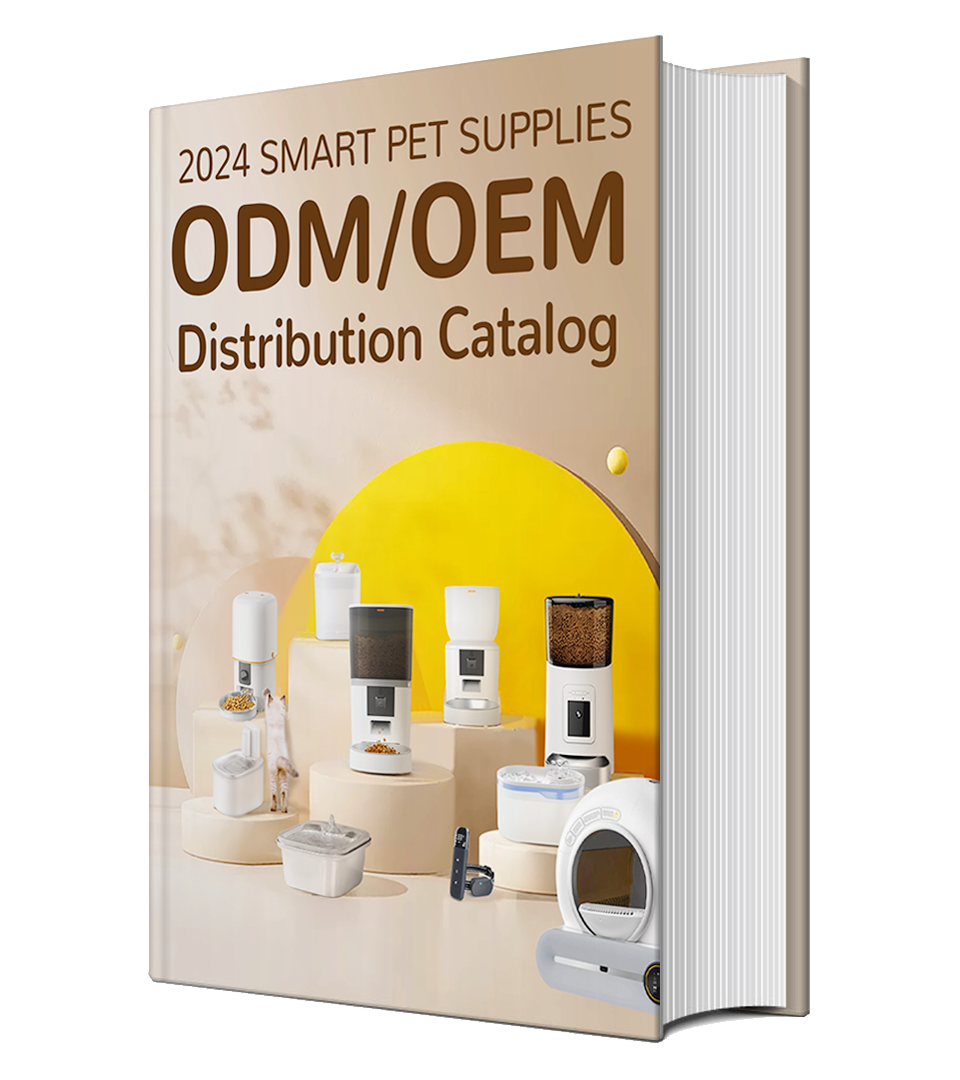

Searching for automatic cat litter box manufacturers in Japan sounds like a simple way to find Japanese factories.
In practice, the search results are much more complicated.
The Japanese market includes:
- Japanese pet technology brands
- Japanese consumer product manufacturers
- Traditional litter system companies
- International automatic litter box brands
- Importers and local distributors
- Overseas OEM and ODM factories serving Japanese buyers
These companies do not all manufacture the same kind of product.
Some sell fully automatic self-cleaning litter boxes.
Some focus on weight, urine and health monitoring rather than automated waste separation.
Some manufacture traditional litter trays or two-layer toilet systems that remain highly relevant to Japanese consumer habits but are not automatic.
Others sell advanced international products in Japan without manufacturing them domestically.
That distinction matters.
A Japanese retailer buying an established branded product needs a different partner from a company building its own private label smart litter box.
A distributor looking for a proven premium brand has different priorities from an OEM buyer who needs:
- Japanese packaging
- App localization
- Custom colors
- Camera or non-camera platforms
- Stable sensors
- Reliable motors
- Safety validation
- Odor-control systems
- Long-term spare-parts support
- Repeatable mass production
This guide compares ten companies relevant to Japan’s automatic and smart cat litter box market.
It explains:
- Where each company comes from
- What role it plays in the Japanese market
- Whether its core products are automatic or traditional
- Which technologies it represents
- Which buyer types it may suit
- Where its limitations begin
- When a Japanese brand or distributor makes sense
- When direct OEM sourcing becomes more practical
- What buyers should verify before approving a smart litter box supplier
This is not a ranking based only on brand popularity.
It is a sourcing guide built around product type, market role and manufacturing fit.
A Japanese Brand, a Product Sold in Japan and a Japanese Manufacturer Are Not the Same Thing
The word “manufacturer” is often used too loosely in online supplier lists.
Four different concepts are frequently mixed together.
| Term | What It Actually Means |
|---|---|
| Japanese brand | The company or brand identity is based in Japan |
| Made in Japan | The product or substantial manufacturing process is completed in Japan |
| Available in Japan | The product is sold through Japanese retail, distribution or cross-border channels |
| OEM supplier for Japan | A factory manufactures products for Japanese brands, importers or distributors |
A company can be Japanese without manufacturing every product in Japan.
A product can be popular in Japan while being designed or manufactured elsewhere.
An overseas factory can have no Japanese consumer brand of its own while producing private label products for Japanese companies.
These business models should not be evaluated in the same way.
A Finished-Brand Buyer Usually Wants
- Existing products
- Recognized branding
- Local retail availability
- Local-language support
- Lower development responsibility
- Faster replenishment
A Private Label or OEM Buyer Usually Wants
- Brand ownership
- Custom packaging
- Japanese manuals
- Product differentiation
- Exclusive configurations
- Direct production communication
- Compliance support
- Controlled BOM
- Repeat-order consistency
- Engineering access
The correct question is therefore not only:
Which company is Japanese?
It is:
Which company controls the product, technology and manufacturing system required for my project?
Quick Comparison of Companies Serving Japan’s Cat Litter Box Market
| Company | Origin | Market Role | Core Product Type | Automatic Cleaning | Camera or Health Data | OEM / Private Label | Best For |
|---|---|---|---|---|---|---|---|
| Toletta | Japan | Pet health technology brand | Health-monitoring litter box | Limited automation focus | Strong health monitoring | Not publicly positioned as general OEM | Japanese health-monitoring applications |
| Petrust | China | Factory-backed OEM/ODM manufacturer | Automatic and smart litter box platforms | Yes | Available by platform | Yes | Private label, OEM and multi-category projects |
| IRIS Ohyama | Japan | Consumer goods manufacturer | Traditional litter boxes and pet toilets | Mostly no | No | Requires direct verification | Mainstream Japanese retail and compact product benchmarking |
| PETKIT | China | Smart pet consumer brand | Rotating self-cleaning litter boxes | Yes | Available on selected models | Case-dependent | Premium smart-product benchmarking |
| CatGenie | USA | Specialized automatic litter system brand | Self-washing reusable-granule system | Yes | Limited | Not its primary public model | Buyers evaluating non-traditional washable systems |
| Unicharm | Japan | Consumer and pet care manufacturer | Two-layer litter toilet systems | Mostly no | No | Not its primary public model | Japanese odor-control and consumable ecosystem insight |
| Richell | Japan | Consumer product manufacturer | Traditional and space-efficient litter boxes | Mostly no | No | Requires verification | Japanese home-use design and traditional retail |
| PetSafe | USA | Established pet product brand | Rake-based and crystal-litter systems | Yes | Limited by model | Not its primary public model | Finished branded retail products |
| Whisker | USA | Premium smart pet brand | Rotating self-cleaning litter boxes | Yes | Strong on newer platforms | Not its primary public model | Premium technology and consumer-experience benchmarking |
| Aimicat | China | Smart litter box brand and supplier | Automatic enclosed litter box | Yes | Radar and smart sensing | Requires direct verification | Safety, odor-control and compact smart-product benchmarking |
Important: Where OEM availability is not publicly established, buyers should confirm directly rather than assuming that a consumer brand offers private label manufacturing.
1. Toletta
| Origin | Japan |
| Business type | Pet health technology brand |
| Core product direction | Cat toilet and health-monitoring system |
| Primary value | Weight, urination and behavior data |
| Market positioning | Preventive health monitoring for cats |
Toletta represents a distinctly Japanese approach to cat toilet technology.
Instead of focusing only on automatic waste removal, the system emphasizes health information.
Depending on the product version and connected service, Toletta can monitor indicators such as:
- Cat weight
- Toilet visit frequency
- Urine volume
- Length of stay
- Changes in normal behavior
- Multi-cat identification
- Long-term health trends
This reflects an important market insight.
A smart cat toilet does not have to compete only on convenience.
It can also compete on early health awareness.
Cats often hide discomfort, and changes in urination, frequency or weight can provide useful signals for owners. A product that turns toilet behavior into understandable data may therefore appeal to Japanese consumers who prioritize preventive care.
Toletta also reflects broader Japanese product preferences:
- Clear functional purpose
- Compact design
- Data presented in a simple way
- Health relevance
- Subscription or service integration
- Compatibility with existing household routines
Toletta is particularly relevant to:
- Japanese health-tech benchmarking
- Veterinary-related retail concepts
- Senior-cat monitoring
- Multi-cat data applications
- Brands exploring preventive pet care
- Buyers studying subscription-based smart pet services
- Product teams interested in weight and urination data
Toletta should not automatically be compared with a large rotating self-cleaning litter box.
Its central value is health monitoring, not necessarily full automatic waste separation.
It is also not publicly positioned as a general-purpose OEM factory offering:
- Logo replacement
- Private label packaging
- Buyer-owned App systems
- Custom hardware platforms
- Open factory audits
- Multiple automatic cleaning structures
A company wanting to build its own health-monitoring litter box may need a separate OEM or ODM partner capable of integrating weight sensors, identification logic, App functions and mass-production controls.
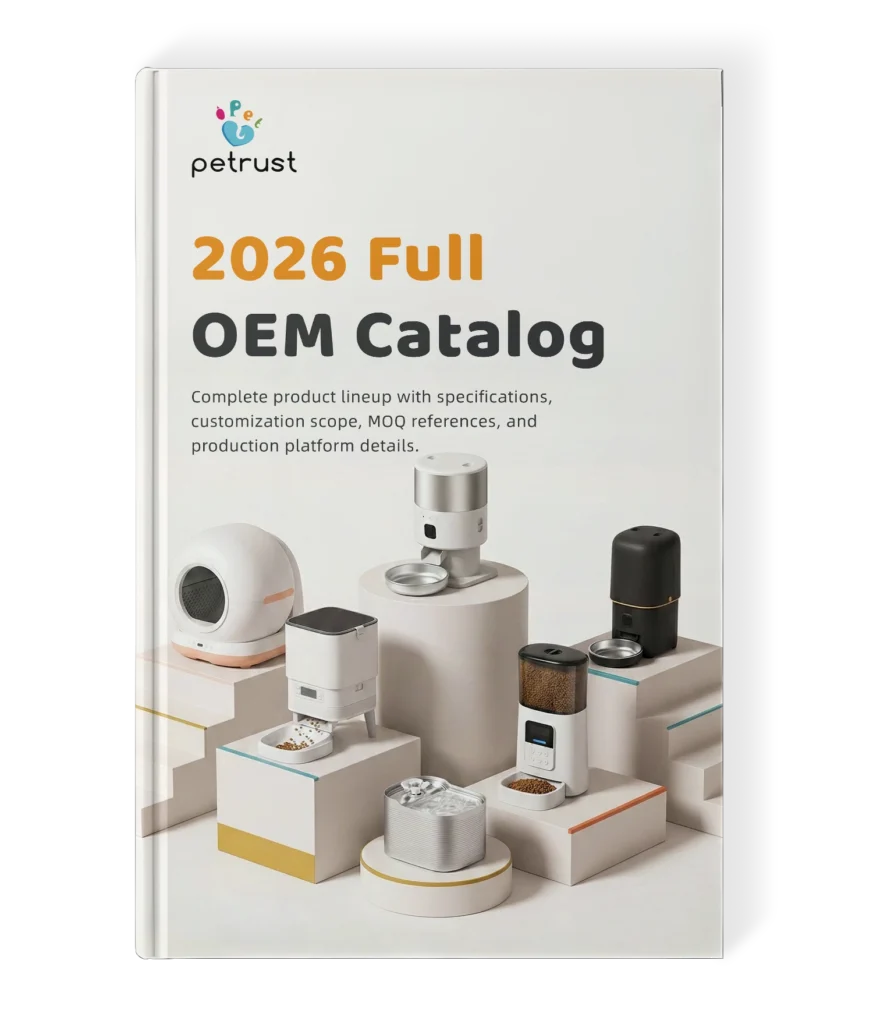
2.Petrust
| Origin | Shenzhen, China |
| Business type | Factory-backed smart pet product OEM/ODM manufacturer |
| Core product direction | Self-cleaning and smart cat litter box platforms |
| Services | OEM, ODM, private label, wholesale and custom development |
| Relevant markets | Japan, the United States, Europe, Korea and other international markets |
Petrust appears in this Japan-focused comparison for a different reason from Toletta, IRIS Ohyama or Unicharm.
It is not presented as a Japanese consumer brand.
It is included as a factory-backed manufacturing option for Japanese brands, importers, retailers and distributors that want to develop or private label automatic cat litter boxes.
Petrust works across several smart litter box directions, including platforms that may offer:
- Automatic waste separation
- Enclosed rotating structures
- Camera or non-camera configurations
- Weight detection
- Infrared sensing
- Radar or multi-sensor safety systems
- App connectivity
- Usage records
- Multi-cat monitoring
- Odor-control functions
- Large-capacity waste drawers
- Removable internal parts
- Custom colors
- Private label packaging
- Japanese manuals and labels
- Market-specific product configuration
The central value of a factory-backed supplier is not simply that it can print a logo.
A serious smart litter box project requires coordination across:
- Mechanical structure
- Motor and transmission
- Sensors
- Safety logic
- Waste separation
- Litter compatibility
- Odor control
- Electronics
- Firmware
- App
- Packaging
- Testing
- Production inspection
A product may look complete in a showroom while still carrying hidden risks in mass production.
For example:
- A sensor may work correctly on one sample but drift across a production batch.
- A motor may complete short demonstrations but become noisy after litter enters the transmission area.
- A drum may rotate smoothly with one litter type and jam with another.
- A waste drawer may look sealed but release odor after repeated opening.
- A camera may function while the App connection remains unstable.
- A safety system may detect an adult cat but respond poorly to a kitten entering from an unusual angle.
These are manufacturing and engineering problems, not marketing problems.
Japanese-market projects often require more than a standard export product.
Japanese-market projects often require more than a standard export product.
- Japanese-language packaging
- Japanese user manuals
- Localized App text
- Compact placement
- Quiet nighttime operation
- Clear cleaning instructions
- Senior-cat accessibility
- Reliable odor control
- High-quality surface finishing
- Stable spare-parts supply
- Accurate product labels
- Target-market documentation
A direct manufacturing relationship gives the buyer more control over these details.
Petrust is better suited to:
- Japanese private label brands
- Importers wanting direct factory communication
- Distributors seeking exclusive configurations
- Buyers comparing camera and non-camera platforms
- Companies building premium smart litter box ranges
- Brands needing Japanese packaging and manuals
- Projects requiring engineering review
- Multi-category brands developing feeders, fountains and litter boxes
- Buyers planning repeat orders rather than one-time spot purchases
- Buyer Limitation
Petrust may not be the best fit when a buyer:
- Needs only a few retail units
- Wants an existing Japanese consumer brand
- Has no target market or product definition
- Refuses to validate samples
- Chooses suppliers only by the lowest quotation
- Expects major ODM development without tooling or volume commitment
- Needs immediate domestic inventory without import planning
A factory can help turn defined requirements into a stable product.
It cannot replace the buyer’s product strategy.
3. IRIS Ohyama
| Origin | Japan |
| Business type | Large consumer goods manufacturer |
| Core litter category | Traditional litter boxes, top-entry boxes and pet toilet products |
| Automatic cleaning | Generally not the company’s primary litter-box direction |
| Market relevance | Mainstream Japanese household products and space-efficient design |
IRIS Ohyama is a well-known Japanese consumer goods company with a broad pet product range.
Its cat litter products often focus on practical household requirements such as:
- Compact footprints
- High walls
- Top-entry designs
- Litter-scatter reduction
- Easy cleaning
- Simple materials
- Affordable retail positioning
- Suitability for apartments
These products are not usually the same as a rotating automatic self-cleaning litter box.
That distinction should be stated clearly.
IRIS Ohyama remains relevant because traditional Japanese litter box design reveals what local consumers may value:
- Products that fit limited living space
- Easy movement and cleaning
- Controlled litter tracking
- Simple assembly
- Clear function
- Reasonable pricing
- Familiar use
A smart litter box developed for Japan should not ignore these expectations simply because it has more technology.
These are manufacturing and engineering problems, not marketing problems.
IRIS Ohyama is useful for:
- Benchmarking mainstream Japanese retail
- Studying compact product design
- Understanding local consumer price expectations
- Evaluating litter-scatter control
- Comparing traditional toilet formats
- Retailers seeking established household products
IRIS Ohyama’s traditional litter products should not be presented as equivalent to full automatic self-cleaning platforms.
Buyers requiring:
- Automatic waste separation
- Camera monitoring
- App control
- Multi-sensor safety
- Remote health data
- Buyer-owned private label platforms
should confirm whether suitable commercial programs exist or work with a specialized smart litter box manufacturer.
4. PETKIT
| Origin | Shanghai, China |
| Business type | Smart pet technology brand |
| Core litter box direction | Premium self-cleaning and connected litter boxes |
| Technology direction | App, sensors, deodorization, camera and health information |
| Japanese-market role | International smart brand available to Japanese consumers |
PETKIT is one of the most visible international companies in the smart cat litter box category.
Its product families have included rotating self-cleaning systems with functions such as:
- Automatic waste separation
- Weight monitoring
- App connectivity
- Usage records
- Multi-cat recognition
- Odor-control modules
- Waste-drawer monitoring
- Safety sensors
- Camera functions on selected models
- Remote status information
PETKIT is useful as a product benchmark because it demonstrates how premium smart litter boxes are becoming more than cleaning machines.
They are becoming connected household devices.
The buyer is no longer evaluating only:
- Whether the drum rotates
- Whether waste is separated
- Whether the drawer is large enough
The buyer may also evaluate:
- App experience
- Data presentation
- Camera usefulness
- Industrial design
- Notification logic
- Multi-cat identification
- Odor-control consumables
- Firmware stability
- Product ecosystem
PETKIT is useful for:
- Premium smart litter box benchmarking
- Retailers purchasing established smart products
- Buyers studying App-connected products
- Camera and health-monitoring comparisons
- Multi-cat feature analysis
- Product teams studying smart pet ecosystems
- Japanese distributors seeking finished global brands
PETKIT is a consumer technology brand.
It should not automatically be treated as an open OEM factory willing to provide:
- Logo replacement
- Buyer-owned firmware
- White-label App access
- Exclusive tooling
- Open BOM control
- Factory audits
- Product modification for outside brands
Commercial partnerships may be possible, but the scope must be verified directly.
A buyer inspired by PETKIT’s features may still require a separate OEM/ODM manufacturer to build an independent brand.
5. CatGenie
| Origin | United States |
| Business type | Specialized automatic cat toilet brand |
| Core product architecture | Self-washing reusable granule system |
| Cleaning method | Waste removal, washing and drying |
| Market distinction | Plumbing-connected alternative to rotating litter boxes |
CatGenie uses a fundamentally different approach from most automatic litter boxes.
Instead of rotating and separating clumped litter into a waste drawer, CatGenie uses reusable granules and connects to household water and drainage.
The system is designed to:
- Remove solid waste
- Wash reusable granules
- Flush waste
- Dry the granules for reuse
This architecture eliminates the traditional waste drawer, but it introduces different installation and maintenance requirements.
The product may require:
- Access to a water connection
- Access to drainage
- Suitable household layout
- Cleaning solution or consumables
- Installation understanding
- Acceptance of a more complex cleaning cycle
This makes CatGenie a useful reminder that automatic litter boxes are not one product type.
They include several technologies with very different user experiences.
CatGenie may suit:
- Buyers exploring non-traditional automatic toilet systems
- Consumers wanting to reduce disposable litter use
- Homes with suitable plumbing access
- Product teams studying wash-and-dry architectures
- Buyers comparing waste-drawer systems with direct disposal
CatGenie may be less suitable for:
- Small apartments without suitable plumbing
- Users wanting simple plug-and-play placement
- Retail programs requiring minimal installation
- Consumers uncomfortable with reusable granules
- Buyers wanting a standard rotating OEM platform
It is also not publicly positioned as a general private label manufacturing solution.
6. Unicharm
| Origin | Japan |
| Business type | Consumer hygiene and pet care manufacturer |
| Core litter category | Deo-Toilet and two-layer cat toilet systems |
| Automatic cleaning | Generally no |
| Market relevance | Odor control, consumables and Japanese cat-care habits |
Unicharm is highly relevant to the Japanese cat toilet market, although its best-known systems are not fully automatic self-cleaning machines.
Its Deo-Toilet concept typically separates liquid from solid waste through a two-layer structure using specialized litter and absorbent pads.
The system competes through:
- Odor control
- Low-maintenance daily use
- Consumable replacement
- Clean visual design
- Familiar Japanese retail distribution
- Clear user instructions
- Repeat purchases of litter and pads
This matters because automatic litter box developers often focus so heavily on electronics that they underestimate the consumable ecosystem.
A toilet product is not only a machine.
It may also include:
- Litter
- Waste liners
- Deodorizing cartridges
- Filters
- Cleaning agents
- Replacement pads
- Spare parts
Unicharm shows how recurring consumables can become central to product acceptance and long-term revenue.
Unicharm is useful for:
- Understanding Japanese odor-control expectations
- Benchmarking consumable-based business models
- Traditional retail
- Studying two-layer toilet structures
- Comparing low-technology convenience with full automation
- Buyers researching local cat-care habits
Unicharm’s toilet systems should not be described as full automatic self-cleaning litter boxes.
They do not solve the same problem as:
- Rotating automatic drums
- Camera-equipped litter boxes
- App-connected health-monitoring platforms
- Automated waste drawers
Buyers looking for private label smart hardware should evaluate a specialized automatic litter box manufacturer.
7. Richell
| Origin | Japan |
| Business type | Consumer product manufacturer |
| Core litter category | Traditional litter boxes and pet toilet products |
| Design direction | Practical, compact and home-friendly |
| Automatic cleaning | Generally no |
Richell is another Japanese company whose value comes primarily from traditional product design rather than advanced automation.
Its pet toilet products often emphasize:
- High walls
- Easy entry
- Litter-scatter reduction
- Compact dimensions
- Simple cleaning
- Stable construction
- Household practicality
For an automatic litter box buyer, Richell is useful as a design benchmark.
A smart product can contain cameras, sensors and an App while still failing because:
- The entrance is too high
- The internal space feels restrictive
- The step is difficult for an older cat
- The product is hard to clean
- The waste drawer cannot be opened in a narrow room
- The product occupies too much floor space
- Litter escapes around the entrance
Traditional manufacturers often understand these physical-use details well.
Smart product teams should not dismiss them.
Richell is relevant to:
- Japanese retail benchmarking
- Compact home-use products
- Senior-cat access considerations
- Litter-scatter reduction
- Traditional product design
- Buyers studying simple, practical cat toilet formats
Richell is not primarily known as an automatic self-cleaning litter box platform provider.
Buyers requiring automatic cleaning, App integration, cameras or OEM smart hardware should verify whether an appropriate program exists.
8. PetSafe
| Origin | United States |
| Business type | Established pet product brand |
| Core automatic litter category | ScoopFree and related self-cleaning systems |
| Cleaning architecture | Rake-based waste movement and disposable tray systems |
| Market role | Finished branded products sold internationally |
PetSafe has long been associated with automatic litter products, particularly ScoopFree systems.
Unlike rotating drum platforms, ScoopFree models traditionally use a rake mechanism and crystal litter.
The system is designed around:
- Automatic rake movement
- Disposable or reusable tray options
- Crystal litter
- Odor control
- Reduced daily scooping
- Familiar branded support
This architecture has different advantages and limitations from rotating systems.
Potential advantages include:
- Familiar rectangular form
- No large rotating globe
- Simpler entry
- Established consumable system
- Recognized brand
Potential limitations can include:
- Dependence on specific litter or tray systems
- Rake maintenance
- Track contamination
- Recurring consumable cost
- Less product flexibility for private label buyers
PetSafe may suit:
- Retailers seeking an established branded product
- Consumers preferring rake-based cleaning
- Buyers studying crystal-litter business models
- Product teams comparing rotating and non-rotating systems
- Japanese distributors sourcing finished international brands
PetSafe is primarily a finished consumer brand.
It is not publicly positioned as a general OEM platform for companies requiring:
- Custom branding
- Buyer-owned packaging
- Custom App functions
- Exclusive industrial design
- Factory-direct production control
Private label buyers should evaluate specialized OEM manufacturers separately.
9. Whisker
| Origin | United States |
| Business type | Premium smart pet product brand |
| Core product | Litter-Robot series |
| Cleaning architecture | Rotating self-cleaning globe |
| Technology direction | App, sensors, waste monitoring and premium user experience |
Whisker’s Litter-Robot is one of the most recognized premium automatic litter box products globally.
The product line has helped establish several category expectations:
- Automatic rotating cleaning
- Large internal space
- Multi-cat use
- App connectivity
- Waste-drawer monitoring
- Weight data
- Premium industrial design
- Strong direct-to-consumer support
- Accessories and liners
- Long-term brand ecosystem
For buyers, Whisker is an important benchmark not because every project should copy it, but because it shows what a mature premium product system looks like.
The product is not judged only by hardware.
It is also judged by:
- Setup
- Packaging
- App onboarding
- Customer education
- Troubleshooting
- Replacement parts
- Warranty
- Content
- Community trust
Whisker is useful for:
- Premium product benchmarking
- Large-capacity platform comparison
- Multi-cat use analysis
- App and user-experience research
- Direct-to-consumer positioning
- Buyers studying mature after-sales systems
- Japanese premium retail concepts
Whisker may not fit every Japanese household.
Potential considerations include:
- Large external footprint
- Space needed around the product
- Premium retail price
- Import and service requirements
- Product weight
- Suitability for smaller rooms
Whisker is also a finished premium brand, not a general private label factory.
10. Aimicat
| Origin | China |
| Business type | Smart litter box brand and product supplier |
| Core product direction | Enclosed automatic litter boxes |
| Technology direction | Radar sensing, safety and odor control |
| Market relevance | International smart litter box alternative |
Aimicat represents another branch of the smart litter box market.
Its products have been positioned around features such as:
- Automatic cleaning
- Enclosed waste separation
- Millimeter-wave radar
- Cat presence detection
- Safety monitoring
- Odor-control systems
- App functions
- Compact enclosed design
Radar-based detection can be valuable because it does not depend on only one sensor type.
However, the presence of radar in a specification does not automatically prove that the safety system is reliable.
Buyers still need to understand:
- Detection range
- Blind spots
- Cat-entry direction
- Kitten detection
- Sensor response speed
- Software logic
- Recovery after power loss
- Motor stopping behavior
- How multiple sensors interact
Aimicat may be useful for:
- Radar-safety benchmarking
- Compact enclosed product research
- Odor-control comparisons
- International smart litter box retail
- Buyers evaluating alternatives to larger premium brands
Private label, factory ownership, customization and engineering scope should be verified directly.
Do not assume that a product brand automatically provides:
- Open OEM access
- Custom firmware
- Exclusive tooling
- Full BOM control
- Factory audits
- Japanese App localization
What Japanese Buyers Should Compare Beyond the Brand Name
The company list is only the beginning.
For Japan, the product must work in real homes, not only in a supplier presentation.
Product Footprint
Japanese homes often provide less free floor space than large suburban houses.
Buyers should check:
- Overall width
- Overall depth
- Required wall clearance
- Space needed to remove the waste drawer
- Space needed to open the lid
- Space required for disassembly
- Whether the drum can be removed in a narrow room
- Whether the entrance faces the correct direction for the intended placement
A product may technically fit the room but still be impossible to maintain comfortably.
Internal Space
A compact exterior can hide an overly restrictive interior.
Buyers should compare:
- Drum diameter
- Entrance size
- Turning space
- Usable internal volume
- Step height
- Ceiling clearance
- Suitability for long-bodied cats
- Suitability for larger breeds
- Suitability for senior cats
The product should not force the cat to adapt to the machine.
Operating Noise
Noise is not one measurement.
A smart litter box may generate noise from:
- Motor
- Gearbox
- Drum movement
- Waste dropping
- Fan
- Deodorizer
- Drawer movement
- Vibration against the floor
App notifications
Buyers should test:
- Daytime cleaning
- Nighttime cleaning
- Delayed cleaning
- Empty drum
- Full litter load
- Different floor materials
- New product
- Product after repeated use
A quiet sample is useful.
A product that remains quiet after months of litter exposure is more valuable.
Odor Control
Odor management may involve:
- Sealed waste drawer
- Drawer gasket
- Carbon filter
- Deodorizing cartridge
- Negative pressure
- Fan
- UV-C
- Ionization
- Waste bag
- Cleaning frequency
No single feature guarantees good odor control.
The entire waste path matters.
A product can have a deodorizer while still leaking odor through:
- Drawer gaps
- Waste openings
- Bag folds
- Unsealed joints
- Dirty internal surfaces
Litter Compatibility
Japan has multiple cat litter preferences and material types.
Buyers should verify performance with:
- Bentonite
- Tofu litter
- Mixed litter
- Mineral litter
- Small particles
- Larger particles
- Lightweight litter
- Fast-clumping litter
- Slow-clumping litter
Testing only one ideal litter type creates false confidence.
Different litter changes:
- Clump strength
- Sifting speed
- Dust
- Tracking
- Motor load
- Waste volume
- Drawer capacity
- Internal contamination
Cat Safety
Safety should never be reduced to the phrase “multiple sensors.”
Buyers should understand:
- Which sensors are used
- Where they are located
- What each sensor detects
- What happens if one sensor fails
- Whether the motor stops immediately
- How the machine behaves after power recovery
- Whether kittens are detected
- Whether a cat reaching inside is detected
- Whether the product restarts automatically
- Whether manual rotation is possible
- Whether pinch points exist
Safety must be verified through behavior, not marketing icons.
Cleaning and Disassembly
The owner will eventually need to clean:
- Drum
- Screen
- Waste path
- Drawer
- Entrance
- Step
- Sensors
- Seals
- Camera window
- Internal corners
Ask:
- Which parts are removable?
- Can they be washed?
- Are electronic parts clearly separated?
- Can the owner reassemble them incorrectly?
- Are there hidden areas that trap wet litter?
- Does cleaning require tools?
- Can a small-framed user lift the drum safely?
Japanese App and Documentation
A technically functional translation is not enough.
Japanese localization should include:
- Natural UI language
- Correct warnings
- Clear sensor explanations
- Useful troubleshooting
- Accurate push notifications
- Local time and units
- Consistent terminology
- Japanese manual
- Packaging labels
- Customer-support scripts
Poor localization makes a premium product feel unfinished.
Spare Parts
Buyers should identify which parts may require replacement:
- Motor
- Gearbox
- Sensor module
- Camera
- Power adaptor
- Cable
- Waste drawer
- Drum screen
- Seals
- Step
- Odor cartridge
- Waste bags
- Main control board
A product launch without spare-parts planning transfers future problems to the distributor.
The Brand on the Japanese Listing Is Not Always the Factory Behind the Product
A product can be sold by a Japanese company while being manufactured elsewhere.
Another product can be designed in one country, use an App from another technology provider and be assembled by a third-party factory.
That is normal in global manufacturing.
The problem begins when the buyer does not know who controls the critical decisions.
For a smart litter box, those decisions include:
- Motor
- Gearbox
- Sensor combination
- Safety logic
- Drum geometry
- Sifting screen
- Waste path
- Drum screen
- Drawer seal
- Camera module
- Wi-Fi module
- Firmware
- App
- Odor system
- Assembly process
- Testing standard
When a field failure occurs, the buyer needs a clear answer to one question:
Who owns the root-cause analysis?
Weak supply chains often produce a chain of blame:
- The brand blames the distributor.
- The distributor blames the trading company.
- The trading company blames the factory.
- The factory blames the motor supplier.
- The motor supplier blames litter contamination.
- The App provider blames the user’s Wi-Fi.
The customer does not care.
The customer returns the product.
That is why experienced buyers continue beyond brand research and start verifying self-cleaning litter box manufacturers in China by engineering ownership, safety validation, BOM control and mass-production discipline.
The purpose of that comparison is not to claim that every Chinese factory is strong.
Many are not.
The purpose is to identify who actually controls the product after the sample leaves the showroom.
Good Samples Still Fail in Mass Production
Automatic litter boxes are particularly vulnerable to the “good sample” problem.
A sample can be:
- Hand-assembled
- Carefully adjusted
- Tested with ideal litter
- Cleaned before presentation
- Loaded with selected components
- Operated only a few times
Mass production is different.
It introduces variation in:
- Molded parts
- Motor batches
- Gear alignment
- Sensor sensitivity
- Cable routing
- Assembly pressure
- Drawer fit
- Drum balance
- Seal installation
- Firmware versions
A project can pass sample approval and still fail after launch.
Typical delayed problems include:
- Increasing motor noise
- Litter entering the transmission
- Incomplete clump separation
- False cat detection
- Missed cat detection
- Camera disconnection
- App instability
- Waste-drawer odor
- Drum misalignment
- Cracked internal parts
- Difficult cleaning
- Cat refusal
Many of these problems become visible only after weeks or months of use.
This is why supplier evaluation must include production discipline—not only sample appearance.
Which Smart Cat Litter Box Platform Fits the Japanese Market?
Choosing the factory first and accepting whichever model the factory wants to sell is backward.
The buyer should define the platform first.
| Platform | Best For | Main Strength | Main Risk |
|---|---|---|---|
| Compact enclosed drum | Small homes and mainstream households | Space efficiency and odor containment | Internal space may be too restrictive |
| Large enclosed drum | Large cats and multi-cat homes | Better comfort and capacity | Larger footprint |
| Camera-equipped platform | Premium health and behavior monitoring | Strong differentiation | Privacy, App and support complexity |
| Non-camera smart platform | Mainstream private label | Simpler positioning and lower complexity | Less premium differentiation |
| Open self-cleaning design | Easier entry and nervous cats | Accessibility | Litter scatter and weaker odor containment |
| Rake-based system | Familiar rectangular architecture | Lower entry barrier | Rake tracks and litter compatibility |
| Self-washing system | Reduced disposable litter use | Alternative waste handling | Plumbing and consumable requirements |
| Health-monitoring toilet | Preventive care and senior cats | Useful data | May not provide full automatic cleaning |
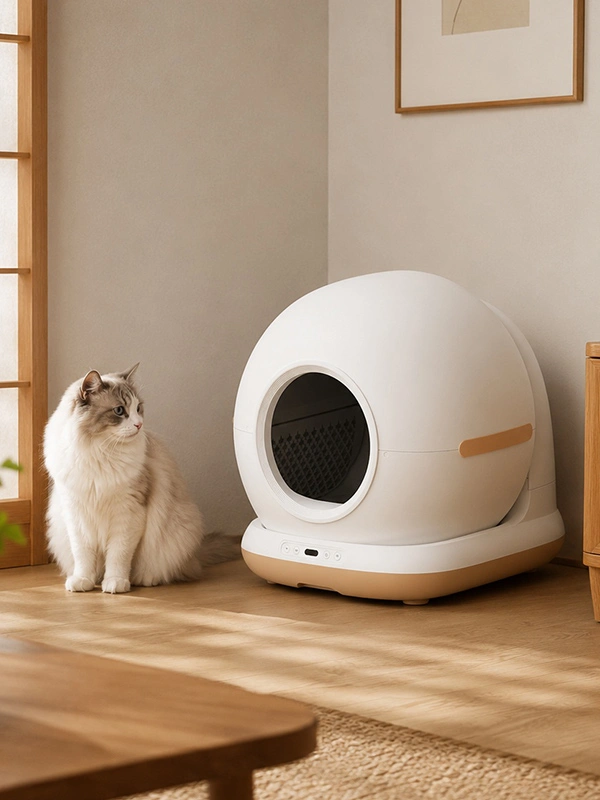
Best suited to:
- Small apartments
- Mainstream Japanese retail
- Buyers emphasizing odor control
- Consumers who prefer hidden waste
Verify:
- Internal volume
- Entrance size
- Step height
- Drawer access
- Wall clearance
- Cleaning access
Best suited to:
- Large cats
- Multi-cat homes
- Premium retail
Verify:
- Footprint
- Shipping volume
- Packaging strength
- Product weight
- Motor load
- Stability
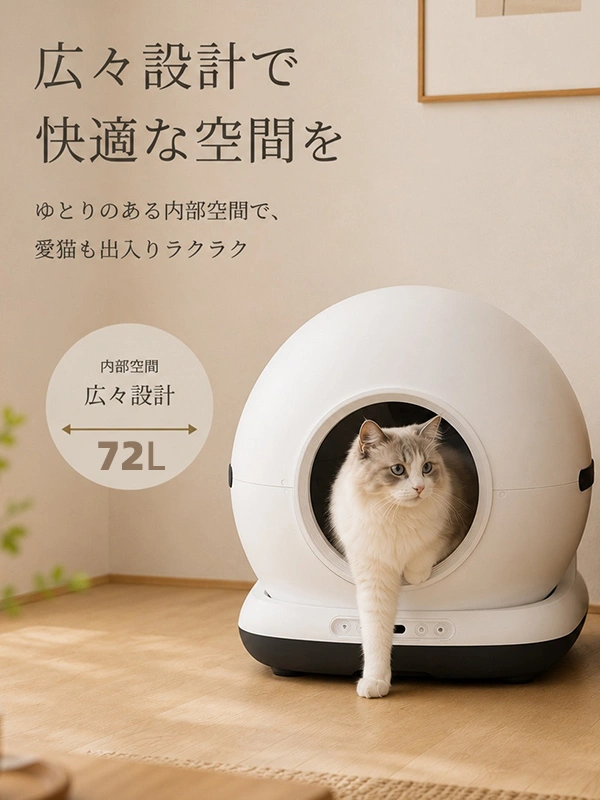
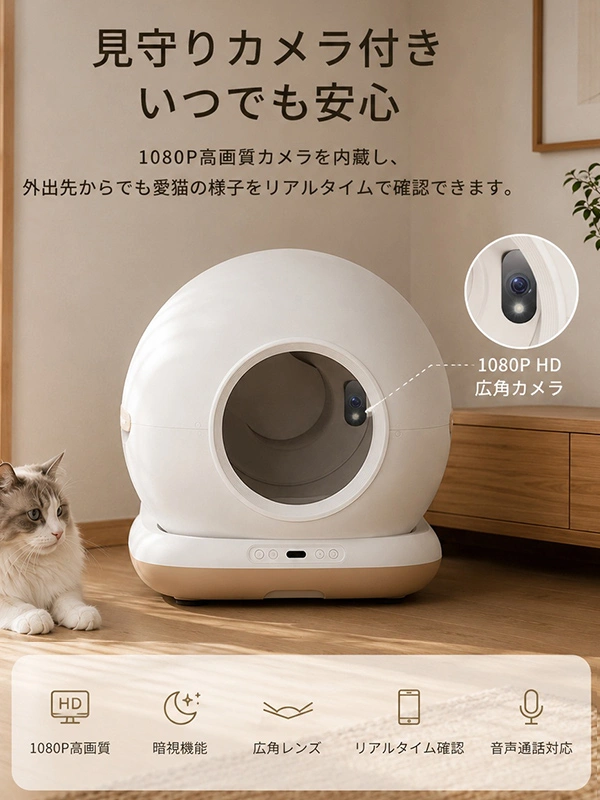
Best suited to:
- Premium smart pet brands
- Health monitoring
- Multi-cat identification
- Behavior tracking
- Subscription or cloud models
Verify:
- Camera angle
- Night performance
- App stability
- Data handling
- Privacy language
- Cloud cost
- Firmware support
- Customer-service burden
Best suited to:
- Simpler private label launches
- Multi-cat homes
- Buyers wanting lower software complexity
- Consumers uncomfortable with indoor cameras
Verify:
- Sensor accuracy
- App value without video
- Product differentiation
- Safety logic
- Weight data accuracy
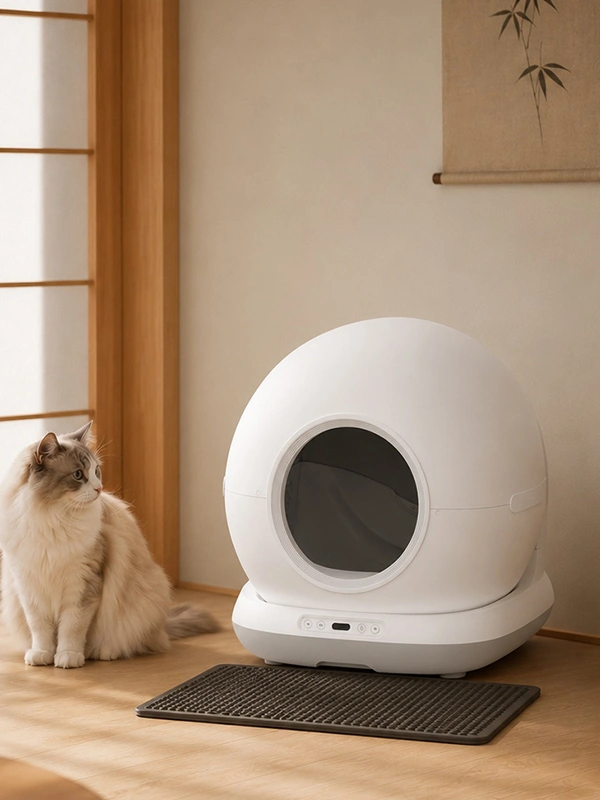
Best suited to:
- Cats that reject enclosed spaces
- Senior cats
- Easier entry
- Lower psychological barrier
Verify:
- Litter scatter
- Odor
- Safety around moving parts
- Waste visibility
- Product footprint
A more detailed comparison of these structures, buyer types and OEM configurations is available in:
That platform decision should be made before requesting a quotation.
Otherwise, the buyer is comparing prices for products that solve different problems.
Japanese Brand, Local Distributor or Direct OEM Factory?
| Decision Factor | Japanese Brand | Local Distributor | Direct OEM/ODM Factory |
|---|---|---|---|
| Existing branded product | Strong | Strong | Not the main purpose |
| Local stock | Usually strong | Strong | Requires import planning |
| Small quantity | Often possible | Often possible | MOQ-dependent |
| Japanese customer support | Strong | Usually available | Buyer manages local service |
| Custom logo | Rare | Limited | Common |
| Japanese packaging | Existing brand only | Sometimes limited | Customizable |
| Hardware changes | Rare | Usually unavailable | Possible after engineering review |
| App localization | Controlled by brand | Usually fixed | Possible with capable supplier |
| Camera configuration | Fixed | Fixed | Platform-dependent |
| Direct production visibility | Limited | Low | Higher |
| Unit economics at scale | Higher | Medium | Often more competitive |
| Exclusive SKU | Uncommon | Sometimes | Possible |
| Best use case | Reselling known products | Local wholesale | Private label and product development |
- Local brand recognition matters
- You want an established product
- You need Japanese customer service
- You do not require your own branding
- You want domestic inventory
- You prefer lower product-development responsibility
- Orders are small
- Fast delivery is important
- You need mixed brands
- You do not want to manage import procedures
- Existing product specifications are acceptable
- You need your own brand
- You want Japanese packaging
- You need exclusive colors or configurations
- You require camera or non-camera choices
- You need App localization
- You want direct production communication
- You are building a long-term product line
- You need better scale economics
- You want control over spare parts and repeat orders
When Petrust Is a Better Fit
Petrust should not be selected simply because it appears in this article.
It should be evaluated when its manufacturing model matches the project.
Petrust May Be a Strong Fit If You Need
Customization may include:
- Logo
- Color
- Packaging
- Japanese manual
- Labels
- Accessories
- Waste bags
- Insert cards
- Retail barcode
- Product photography direction
Buyers can evaluate different structures depending on the project:
- Camera
- Non-camera
- Larger internal capacity
- Compact exterior
- Different odor-control systems
- Different sensor combinations
- Different waste-drawer capacities
This may include:
- Japanese packaging
- Japanese manuals
- App text
- Warning labels
- Troubleshooting content
- Customer-support documentation
- Market-specific configuration
A real smart litter box project may require review of:
- Motor torque
- Gear structure
- Drum balance
- Sifting screen
- Litter compatibility
- Sensor logic
- Anti-pinch protection
- App behavior
- Camera positioning
- Waste sealing
- Cleaning access
Petrust also works across:
- Automatic pet feeders
- Camera feeders
- Cat water fountains
- Smart cat litter boxes
- Related accessories
This can help a brand coordinate:
- Product appearance
- Packaging
- App ecosystems
- Quality systems
- Shipment planning
- Spare parts
- Product roadmap
Petrust May Not Be the Right Fit If
- You need only a few retail units
- You want to resell an existing Japanese brand
- You need immediate domestic inventory
- You have no product definition
- You are unwilling to test samples
- You do not want a production-verification process
- You choose suppliers only by the lowest price
- You expect extensive ODM without realistic order commitment
Supplier Verification Checklist for Japan
Before approving any smart litter box supplier, verify the following.
- What is the legal company name?
- Who owns the factory?
- Where is final assembly performed?
- Which processes are outsourced?
- Can the supplier show the production line live?
- Is the quotation issued by the factory or a trading company?
- What motor is used?
- What is the gearbox structure?
- How is litter prevented from entering the drive system?
- What torque margin is available?
- How is drum balance checked?
- What happens if a clump blocks rotation?
- Can the product reverse safely?
- How is mechanical wear tested?
- Which sensors are installed?
- Where are they positioned?
- What does each sensor detect?
- What happens if one sensor fails?
- How quickly does the motor stop?
- Can the system detect kittens?
- What happens after power returns?
- Does the machine restart automatically?
- How are anti-pinch risks tested?
- Which litter types were tested?
- What particle-size range is supported?
- How does tofu litter perform?
- How does bentonite perform?
- How does mixed litter perform?
- What happens with soft clumps?
- What happens with oversized clumps?
- How much clean litter is lost during sifting?
- Is the drawer sealed?
- Which deodorizing method is used?
- Are consumables required?
- How often must they be replaced?
- Does the system create noise?
- Are claims supported by testing?
- What happens when the drawer is nearly full?
- Who owns the App?
- Which servers are used?
- Is Japanese localization available?
- Can firmware be updated?
- What happens if Wi-Fi disconnects?
- Can the product clean without the App?
- What data is stored?
- How are privacy concerns handled?
- Who provides long-term App support?
- Which parts are removable?
- Can the drum be washed?
- Are electronic parts protected?
- Are hidden corners accessible?
- Can the buyer clean the waste path?
- Are instructions clear?
- Can the product be reassembled incorrectly?
- Is there an approved BOM?
- Is there a golden sample?
- Are incoming motors inspected?
- Are sensors calibrated?
- Is every unit function-tested?
- Is every unit safety-tested?
- How long is aging performed?
- Is there batch traceability?
- How are component changes approved?
- Which spare parts are available?
- How long will they remain available?
- Can the buyer stock them locally?
- Who performs failure analysis?
- How are field returns reported?
- What is the corrective-action process?
- Can parts be replaced without replacing the entire unit?
FAQ About Automatic Cat Litter Box Manufacturers in Japan
No.
Products sold in Japan may be:
- Designed in Japan
- Manufactured in Japan
- Imported by a Japanese distributor
- Produced by an overseas OEM factory
- Sold cross-border by an international brand
Buyers should verify the actual manufacturing entity for the specific product.
Petrust is explicitly positioned around OEM, ODM and private label manufacturing.
Other companies may offer distribution or commercial partnerships, but buyers should verify the exact scope directly.
A consumer brand should not automatically be treated as an OEM supplier.
Common priorities may include:
- Compact footprint
- Quiet operation
- Strong odor control
- Easy disassembly
- Japanese documentation
- Reliable safety systems
- Senior-cat accessibility
- App localization
- Good surface finishing
- Stable spare-parts supply
The final priorities depend on the buyer’s target segment.
They can be, especially for:
- Premium smart pet brands
- Health monitoring
- Multi-cat households
- Behavior tracking
However, buyers must consider:
- Privacy
- App quality
- Camera angle
- Data storage
- Cloud cost
- Customer support
- Product complexity
A camera should solve a clear user problem rather than exist only as a specification.
At minimum, buyers should test the litter types commonly used in their intended market.
These may include:
- Bentonite
- Tofu litter
- Mixed litter
- Mineral litter
- Lightweight litter
- Different particle sizes
The product should be tested under realistic litter loads and moisture conditions.
Do not rely only on the number of sensors.
Verify:
- Sensor positions
- Detection range
- Kitten detection
- Blind spots
- Motor stopping speed
- Power-recovery behavior
- Failure mode
- Manual obstruction tests
- Real-cat testing under controlled conditions
Requirements depend on the final configuration.
A basic non-connected product, a Wi-Fi product, a camera product and a battery-powered product may have different requirements.
Relevant areas can include:
- Electrical components
- Power adaptor
- Wireless module
- Battery transport
- Materials
- Product labels
- User instructions
- Importer responsibility
Buyers should evaluate the exact configuration with qualified compliance specialists.
A certificate from a similar model is not enough.
MOQ depends on:
- Existing model or new tooling
- Logo method
- Packaging
- Color
- Camera
- App
- Firmware
- Certification
- Component purchasing
- Exclusive requirements
Simple private label projects usually require less commitment than structural ODM development.
Do not check only the product dimensions.
Also consider:
- Wall clearance
- Drawer-removal space
- Lid-opening space
- Cat entry
- Cleaning
- Drum disassembly
- Ventilation
- Power cable
A product that fits physically may still be difficult to use in a small room.
Choose local distribution when:
- Quantities are small
- Speed matters
- Existing products are acceptable
- Local support is important
Choose direct OEM sourcing when:
- You need your own brand
- You need customization
- You require Japanese packaging
- You need direct production control
- You are planning larger or repeat orders
- You are building a long-term product line
The Best Supplier Depends on Whether You Are Buying a Brand, a Product or a Manufacturing System
There is no universal winner among these ten companies.
Toletta is important for Japanese health-monitoring innovation.
IRIS Ohyama, Unicharm and Richell reveal how Japanese consumers think about space, odor, litter tracking, simplicity and consumables.
PETKIT and Whisker are valuable benchmarks for premium connected products.
PetSafe represents a mature rake-based automatic system.
CatGenie offers a fundamentally different self-washing architecture.
Aimicat provides another reference point for radar sensing, enclosed cleaning and odor control.
Petrust becomes relevant when the buyer is not simply purchasing an existing brand.
It becomes relevant when the project needs:
- OEM or ODM
- Private label
- Camera or non-camera options
- Japanese packaging
- App localization
- Direct factory communication
- Engineering review
- Safety validation
- Mass-production control
- Spare-parts planning
- Multi-category product development
The expensive mistake is not choosing the company ranked lower in a list.
The expensive mistake is choosing the wrong type of company.
A Japanese consumer brand, a traditional toilet manufacturer, an international premium brand and an OEM factory solve different problems.
Define the problem first.
Planning a Smart Cat Litter Box Project for Japan?
Before requesting a quotation, define:
- OEM or ODM
- Private label
- Camera or non-camera options
- Japanese packaging
- App localization
- Direct factory communication
- Engineering review
- Safety validation
- Mass-production control
- Spare-parts planning
- Multi-category product development
Petrust can then help compare suitable platforms, explain realistic customization options and identify which parts of the project require engineering validation.
A useful project does not begin with:
What is your cheapest automatic litter box?
It begins with:
Which product can Japanese customers actually use, trust, clean and continue using after the first three months?
If you found this guide helpful…
You might also be interested in our other insightful articles on top pet care manufacturers worldwide:
- Top 10 Best Cat Water Fountain Manufacturers in Japan
- Top 10 Best Automatic Cat Feeder Manufacturers in Japan
- Top 10 Best Automatic Cat Litter Box Manufacturers in USA
- Top 10 Best Automatic Cat Litter Box Manufacturers in Italy
- Top 10 Best Automatic Cat Litter Box Manufacturers in Germany
- Top 10 Best Automatic Cat Litter Box Manufacturers in Korea
- Top 10 Best Automatic Cat Litter Box Manufacturers in Brazil
- Top 10 Best Automatic Cat Litter Box Manufacturers in Turkey
- Top 10 Best Automatic Cat Litter Box Manufacturers in UK
- Top 10 Best Automatic Cat Litter Box Manufacturers in UK
- Top 10 Best Automatic Cat Litter Box Manufacturers in China