
Two buyers can ask for almost the same smart cat litter box.
One plans to sell it on Amazon.
Another plans to put it through retail distribution.
Their RFQs may look almost identical:
- Wi-Fi.
- Self-cleaning.
- Odor control.
- An app.
- Maybe a camera.
On paper, they are asking for the same machine.
But something important has already changed.
The machine is the same.
The consequences are not.
For the Amazon seller, a poor experience can become a negative review, a refund, a return, a support ticket—and another problem visible to the next customer.
For the retail buyer, the same problem may become a store complaint, replacement request, warranty case, distributor escalation, or a damaged retail relationship.
A wholesaler may be worrying about something else entirely: margin, batch consistency, component availability, lead time, and whether the factory can still make the same product six months later.
And a private label brand has another layer of exposure.
Once its logo is on the box, the customer usually stops caring which factory made the machine.
They see the brand.
So the first question in a smart cat litter box OEM project should not always be:
“Which litter box should we buy?”
There is a question that comes earlier:
“What kind of product responsibility can our business actually carry?”
That question changes almost everything that follows.
Your Business Model Changes the Product Requirement
If you are looking for a smart cat litter box for business, it is tempting to begin with specifications.
Capacity.
Camera.
Wi-Fi.
App.
Cleaning cycle.
Odor control.
Price.
That is how most RFQs begin.
It is not necessarily how an OEM engineering team should begin.
Because specifications describe the machine.
They do not describe what happens after the machine reaches the customer.
A useful way to look at the decision is:
Business Model → Customer Expectation → Failure Cost → Product Complexity → Manufacturing Requirement → Platform Fit
The business model comes first because it changes what the product has to survive.
An Amazon seller may need to absorb returns and reviews.
A retailer may need a product that is easy to demonstrate, understand and support.
A wholesaler may care intensely about repeatability and supply continuity.
A private label brand may end up owning almost the entire customer experience.
The product has not necessarily changed.
The responsibility around the product has.
That is the part an RFQ often hides.
A Product Specification Is Not a Business Requirement
Imagine a buyer sends an RFQ that says:
“72L capacity. Automatic cleaning. Wi-Fi. Camera. App. Odor control. MOQ 500.”
To a buyer, that may look like a reasonably detailed product specification.
To an OEM engineering team, it is the beginning of a conversation.
What sensors are required?
How is the motor load handled?
How does the system detect waste?
What happens if the cat interrupts a cleaning cycle?
What happens when Wi-Fi is unavailable?
What happens when the app cannot connect?
How are firmware changes controlled?
Which components are critical?
How will those components be validated?
What happens if the same component is unavailable six months later?
And perhaps the least glamorous question of all:
Can 500 units behave like the approved sample?
That is where commercial requirements become manufacturing requirements.
Nobody buys firmware.
They buy the expectation that the product will simply work.
And that expectation eventually comes back to the company whose name is on the product.
Amazon Changes the Risk Equation
For a smart cat litter box for Amazon, the product experience becomes unusually visible.
The customer journey is often brutally simple:
Listing → Purchase → Unbox → Setup → Daily Use → Review
There is very little distance between the product and public customer feedback.
That makes Amazon attractive for smart pet products.
It also makes product inconsistency difficult to hide.
Automatic Cat Litter Box for Amazon Sellers: Conversion Is Only Half the Equation
For an automatic cat litter box for Amazon sellers, conversion obviously matters.
A camera can create differentiation.
An app can make a product look more sophisticated.
A stronger cleaning system can support a premium positioning.
Better industrial design can improve click-through and perceived value.
But underneath the conversion equation is another one:
Product Promise → Customer Expectation → Product Experience → Review → Return → Support
This is where product development gets uncomfortable.
A listing that presents the machine as an intelligent household device raises expectations.
Customers may reasonably expect:
- reliable automatic cleaning
- stable Wi-Fi connectivity
- dependable sensors
- understandable app controls
- accurate notifications
- predictable cleaning cycles
- consistent waste detection
The problem is not Amazon.
The problem is the gap between what the product promises and what the production product consistently delivers.
Research published in the Journal of Business Logistics has also examined the relationship between return-policy conditions and online product reviews, finding that return conditions can influence review likelihood, tone and detail.
That does not mean every return produces a negative review. It does show why the post-purchase experience should not be treated as completely separate from the review environment.
For an Amazon seller, that connection matters.
A product decision made during an RFQ can eventually show up as a customer review.
More Features Can Mean More Things Customers Can Complain About
Here is an opinion we have developed from the manufacturing side:
Camera is not the risk. Uncontrolled complexity is the risk.
A camera cat litter box can create meaningful differentiation.
So can Wi-Fi.
So can an app.
So can multi-cat monitoring.
None of these features is automatically a bad decision.
The question is whether the complete system can be engineered, validated, manufactured and supported reliably.
That is why the camera question deserves to be treated as a camera-or-no-camera product decision, rather than simply another feature choice; the wrong decision can add years of software, support and after-sales responsibility without creating proportional customer value.
A camera is easy to add to an RFQ.
It is harder to own for the next three years.
Consider the chain:
Camera → Hardware → Firmware → App → Network → User Expectation → Support
For brands considering a camera-enabled platform, the more important commercial question is whether the camera feature justifies the additional after-sales responsibility it creates, especially once connectivity, firmware and customer support become part of the product experience.
The same applies to a WiFi automatic litter box.
It is not simply an automatic litter box with a connectivity module attached.
Now the product has to survive different networks, software interactions, account issues, firmware updates and customer troubleshooting.
This is why we do not look at smart cat litter box features as a shopping list.
We look at them as systems.
And then we ask who has to own those systems.
Feature → System → Responsibility
This is one of the most useful ways to evaluate connected pet products.
A feature creates a system.
A system creates failure modes.
Failure modes create responsibility.
That responsibility eventually belongs to someone.
Usually, the customer does not care whether the problem started with a sensor, firmware, Wi-Fi module or cloud service.
They just know the litter box did not behave as expected.
That is the commercial reality behind product complexity.
And not every feature carries the same commercial weight. Some directly influence how customers judge the product after launch—especially when they affect reviews, return rates and buyer trust. That distinction is worth examining before turning a feature list into a product specification.
What Amazon Sellers Actually Need From the Factory
An Amazon seller does not simply need an OEM cat litter box manufacturer that can produce a working sample.
The harder question is whether the manufacturer can repeatedly produce the product that was approved.
That means looking beyond the first unit.
The factory needs to manage things such as:
- engineering validation
- production validation
- production testing
- component stability
- BOM control
- firmware consistency
- quality control
- replacement parts
- mass production consistency
- warranty support
A beautiful prototype is useful.
It is not the finish line.
One thing we have learned from smart pet OEM projects is that the first working sample is often the least interesting unit in the entire project.
The difficult part comes later.
The BOM gets frozen.
Production begins.
Operators repeat the assembly process.
Components arrive from another batch.
Thousands of units have to behave the same way.
That is where engineering assumptions meet manufacturing reality.
A working sample proves that the idea works. It does not prove that the business can support it.
Retail Is Less About Feature Count Than Customer Friction
A smart cat litter box for retail follows a different customer journey.
It may look more like:
Shelf → Demonstration → Purchase → Setup → Daily Use → Warranty
That changes the meaning of reliability.
An automatic litter box for retail stores has to make sense to someone who may not have spent twenty minutes researching the product before buying it.
Packaging matters.
Demonstration matters.
Instructions matter.
Setup matters.
The perceived complexity of the product matters.
A technically impressive machine can still create friction if the customer cannot understand what it does or how to use it.
That is why retail product design has to balance:
Feature Value + Usability + Customer Education + Reliability
not simply feature count.
A Premium Feature Is Worth Less If the Customer Cannot Use It
A premium smart cat litter box does not become premium simply because more functions were added.
A camera may create value.
An app may create value.
Automated odor control may create value.
But those features only create durable commercial value when customers can understand them and use them reliably.
The customer does not buy sensor logic.
They buy a cleaner, easier daily experience.
They do not buy a firmware architecture.
They expect the product to behave consistently.
That distinction sounds obvious.
It is surprisingly easy to lose during product development.
Retail Buyers Eventually Ask the Question Behind the Product
A retail buyer may ask about the machine itself.
A more mature discussion eventually moves to:
“What happens after the customer takes it home?”
That brings in:
- warranty handling
- replacement parts
- customer support
- serviceability
- product reliability
- troubleshooting
- packaging and instructions
This is where the factory’s role becomes important.
A factory can be capable of making a product without being capable of supporting the product business built around it.
Manufacturing capability ≠ business-model fit.
The right OEM relationship is not simply about whether a factory can manufacture the SKU.
It is about whether the manufacturing system can carry the responsibilities created by the way that SKU will be sold.
Wholesale Has a Different Problem: Can You Make It Again?
For smart cat litter box wholesale, the product is only half of the equation.
The other half is supply.
A wholesaler or distributor needs to know whether the product can be purchased, delivered, supported and reordered without the commercial system changing underneath them.
An automatic cat litter box wholesale project may initially look straightforward:
Choose a product.
Agree on price.
Confirm MOQ.
Place an order.
But the first order is not the interesting part.
The second, third and fifth orders are.
Can the same critical components still be sourced?
Will the BOM remain controlled?
Will the production process remain stable?
Can the packaging be reproduced?
Are replacement parts available?
Can lead time be maintained?
Can the next batch meet the same quality level?
These are not glamorous questions.
They are the questions that determine whether a wholesale product remains commercially manageable.
The Real Wholesale Question
One of the simplest questions we use in manufacturing is:
Can the factory make the same product again?
Not a similar product.
Not a “new and improved” product.
The same product.
The same critical components.
The same functional behavior.
The same production standards.
The same agreed specifications.
This is where mass production consistency becomes more important than prototype performance.
A component becomes unavailable.
A supplier changes.
A BOM gets modified.
An assembly process shifts.
A tooling problem appears.
Production variance increases.
None of those events necessarily make the product impossible to manufacture.
But they can make the product different from the one the buyer approved.
That is why manufacturing consistency matters so much in wholesale.
The target is not simply:
“Can we manufacture this?”
It is:
“Can we manufacture this consistently, repeatedly and at the required scale?”
More SKUs Can Quietly Become a Service Problem
More SKUs can give a distributor more products to sell.
They can also give the distributor more products to maintain.
Every additional variant can introduce another:
- BOM
- replacement-part requirement
- packaging configuration
- inventory commitment
- supplier dependency
- production schedule
- service scenario
We are often more concerned about SKU complexity than buyers are during the first RFQ.
The first order can make additional variants look attractive.
The fifth replacement-part request can make the same decision look very different.
Sometimes the commercially sensible move is not another variant.
It is making the existing platform easier to repeat.
Private Label Means Your Brand Owns More of the Problem
A private label smart cat litter box changes one fundamental thing.
The customer sees your brand.
That means your product responsibility grows with the degree of customization and ownership.
A basic private label automatic litter box may involve:
Logo → Packaging → Branding
A deeper project may involve:
Industrial Design → Hardware → Firmware → App → Accessories → Product Architecture
Those are very different levels of ownership.
And they should not be priced or evaluated as if they were the same thing.
For brands that are still building their product range and want to keep that ownership manageable, the economics and operational logic behind a private label self-cleaning cat litter box are worth examining before moving into deeper hardware or software customization.
The More You Customize, the More You Own
Customization can create differentiation.
It can also create maintenance responsibility.
A custom automatic litter box may involve industrial design changes.
A customized smart litter box may involve software changes.
An OEM smart cat litter box may involve changes to hardware, components or manufacturing specifications.
An ODM smart cat litter box project can go deeper into product architecture and engineering development.
Then come:
- custom packaging
- app customization
- firmware customization
- accessories
- tooling
- product validation
- long-term component management
None of this means customization is wrong.
It means customization should have a reason.
If a change creates differentiation that customers value, the additional engineering and support responsibility may be commercially justified.
If it only makes the RFQ more complicated without changing customer value, it deserves another look.
That is the difference between customization for differentiation and customization for its own sake.
When Your Logo Is on the Box, the Customer Sees Your Brand
This is the uncomfortable part of private label.
When something goes wrong, the customer usually does not ask:
“Which factory assembled this component?”
They ask:
“Why doesn’t my product work?”
The brand is what they see.
That can affect:
- customer support
- warranty claims
- returns
- replacement parts
- brand reputation
- repeat purchases
Private label therefore becomes more than a branding exercise.
It becomes a product ownership decision.
Once that ownership question is clear, the next step is not necessarily to add more customization. It can be more useful to compare the CB001 and CB002 platform differences against your brand’s positioning, target customer and acceptable support complexity.
Business Model → Product Architecture
At this point, the four sales models should not be treated as four perfectly symmetrical boxes.
Real projects are messier than that.
An Amazon seller can also operate wholesale.
A retail brand can sell direct-to-consumer.
A private label brand can distribute through Amazon and physical stores.
The important variable is not the label attached to the business.
It is the responsibility created by the business model.
A useful working model is:
Business Model → Customer Expectation → Failure Cost → Product Complexity → Manufacturing Requirement → Platform Fit
That chain helps explain why the same smart cat litter box platform can make sense for one business and create unnecessary exposure for another.
The decision is not:
“Which sales model is best?”
It is:
“What product system can this business realistically sell, support and scale?”
Feature → System → Responsibility
This is the second model we use when evaluating smart pet products.
A feature may look small in an RFQ.
Its system implications may not be.
- hardware
- firmware
- image processing
- app
- network
- privacy expectations
- customer support
- motor
- mechanical structure
- sensors
- cleaning logic
- safety logic
- litter behavior
- waste handling
- production calibration
- physical airflow
- deodorization method
- consumables or components
- user expectations
- performance consistency
The feature is only the visible part.
The system underneath it is what has to survive production and customer use.
And the responsibility is what the business ultimately has to carry.
That is why we ask:
Can this feature survive the entire product lifecycle?
Not merely:
Can we add it?
A Camera Is Easy to Sell in an RFQ
A camera can look impressive in a specification sheet.
But once it becomes part of a commercial product, the question changes.
Can the hardware remain stable?
Can the firmware behave consistently?
Can the app handle the function?
What happens when connectivity fails?
What happens when customers cannot configure it?
What happens when software changes?
What happens when support tickets arrive six months after launch?
The same principle applies to Wi-Fi, multi-cat monitoring, app control and other connected functions.
A feature may be small on the BOM. The responsibility it creates may not be.
Research on complex product-service supply chains also treats after-market activities such as maintenance, replacement and technical support as part of the broader product system rather than something completely separate from manufacturing.
That is consistent with what we see in connected pet products.
A camera may begin as a feature.
Later, it can become a firmware issue, an app issue, a connectivity issue, a replacement-part issue, or a customer-support issue.
That is why connected features have to be evaluated as systems.
The Prototype Is Not the Product
This is one of the most important distinctions in OEM manufacturing.
A prototype can demonstrate that an idea works.
Mass production has to demonstrate something harder:
that it keeps working.
One thing we learned after putting products into production is that the gap between a working sample and a repeatable production product is where many assumptions get exposed.
In practice, many smart cat litter box failures that appear during mass production are not really “production problems” at all; they can be traced back to decisions, tolerances, component choices or validation gaps that were already present before mass production began.
The BOM becomes real.
Suppliers become real.
Operators become real.
Tolerance becomes real.
Production variation becomes real.
And suddenly the product has to behave the same way hundreds or thousands of times.
That is why:
A working sample proves that something can work. Mass production proves that it can keep working.
For a smart cat litter box, that means engineering validation is only one part of the job.
The production program also needs:
- production validation
- production testing
- quality control
- component control
- assembly consistency
- firmware consistency
- manufacturing repeatability
When something fails early, the project may require rework, redesign, tooling changes, component replacement or production delay.
The earlier the issue is exposed, the easier it usually is to control.
The purpose of validation is not to make the sample impressive.
It is to make the production product predictable.
Petrust Business-Model Fit Framework
At Petrust, we use a practical framework when discussing smart pet product OEM/ODM projects:
1. How You Sell
Amazon / Retail / Wholesale / Private Label
↓
2. What Customers Expect
Reviews / Reliability / Margin / Differentiation / Convenience
↓
3. What Failure Costs You
Returns / Warranty / Support / Distributor Friction / Brand Impact
↓
4. What the Manufacturing System Must Handle
Engineering / QC / Components / Firmware / App / Validation / Mass Production
↓
5. Which Product Architecture Fits
Core Self-Cleaning / Connected / Camera / Custom
This is Petrust’s working framework, developed from our own smart pet product OEM/ODM experience.
It is not an industry standard.
It is not a supplier-rating system.
And it is not intended to tell buyers which factory they should choose.
We use it to ask a more practical question:
Does the product architecture fit the business that will have to sell, support and scale it?
Importantly, we apply the same thinking to our own projects.
If a feature cannot be properly validated, consistently manufactured or reasonably supported after launch, we have a manufacturing problem—not a marketing opportunity.
Because we are not standing outside the industry judging factories.
We are the manufacturer that has to make the product.
When we approve a feature, we are not only approving something that can be marketed.
We are accepting the engineering, production and after-sales responsibility that comes with it.
That distinction matters.
So Which Smart Cat Litter Box Platform Fits Your Business?
There is no useful platform decision without the commercial context.
The choice is not simply between “basic” and “advanced.”
It is between different levels of product responsibility.
When a Stable Self-Cleaning Platform Makes Sense
A self-cleaning cat litter box or automatic self-cleaning litter box may fit a business strategy centered on:
- core automatic cleaning
- a simpler customer journey
- focused hygiene positioning
- manageable support requirements
- lower connected-system complexity
That does not make a simpler platform universally better.
It means simplicity can have commercial value when the business does not need additional connected functionality.
For some projects, reducing unnecessary complexity is itself a form of product differentiation.
When a Connected or Camera-Enabled Platform Makes Sense
A camera-enabled litter box, WiFi cat litter box or app-controlled litter box can make sense when the business has a clear reason to build a more connected customer experience.
That may include:
- remote monitoring
- multi-cat data
- connected notifications
- camera functionality
- digital differentiation
- broader smart-hygiene positioning
Again, the question is not whether connected technology is “better.”
The question is whether the business can support what it introduces.
More technology is not automatically more product value.
It becomes value when the customer wants it, understands it, uses it and can rely on it.
Petrust Experience: We Build What We Have to Support
This is where our perspective differs from a sourcing article or a generic product comparison.
We don’t treat a camera, sensor, motor, app or odor-control system as an isolated feature.
Once a product enters mass production, every added system becomes something our engineering, QC and after-sales teams have to live with.
That changes how we evaluate an OEM project.
A feature is not finished because it works on a prototype.
For us, it needs to move through:
Validate → Manufacture Consistently → Support After Launch → Repeat at Scale
We therefore look beyond the sample.
We look at engineering validation.
Production validation.
Component stability.
BOM stability.
Assembly.
Quality control.
Firmware consistency.
Replacement requirements.
And what happens after the product has already been shipped.
This is also why our Business-Model Fit Framework is not something we use only to evaluate a buyer’s project.
It is a way to challenge our own projects.
Because once thousands of units are in customers’ homes, there is nowhere for manufacturing assumptions to hide.
Before You Ask a Factory for a Quote, Answer These Five Questions
Before sending an RFQ for an automatic litter box OEM project, answer these internally.
Amazon?
Retail?
Wholesale?
Private label?
The sales channel changes the commercial pressure around the product.
Your brand?
A retailer?
A distributor?
A marketplace?
This determines where complaints, returns and warranty pressure eventually land.
Return?
Replacement?
Warranty?
Support ticket?
Store complaint?
Distributor escalation?
Failure is not just a technical event.
It is a commercial event.
Camera?
Wi-Fi?
Sensors?
Firmware?
App?
Cloud connectivity?
Do not ask only:
“Can we afford this feature?”
Ask:
“Can our business afford to own this feature?”
This is the question many RFQs never ask.
A single shipment is a transaction.
A repeatable product platform is a business.
The manufacturing requirements are very different.
The harder commercial challenge is what happens after launch: how do you build a product line that can generate margin without turning every added feature, SKU and customer complaint into another support burden? That is where product architecture and business economics have to be considered together.
The Right Question Is Not “Which Litter Box Is Best?”
There is no useful answer to:
“Which smart cat litter box is best?”
without knowing how the product will be sold, supported and scaled.
A more useful question is:
What level of product complexity can this business successfully sell, support and manufacture at scale?
That changes the decision.
You stop comparing features in isolation.
You start connecting:
Business Model
↓
Customer Expectation
↓
Failure Cost
↓
Product Complexity
↓
Manufacturing Requirement
↓
Platform Fit
That is the real B2B decision.
You are not simply choosing a litter box.
You are choosing the product responsibility your business is prepared to carry.
Still Deciding Which Platform to Build?
If you are comparing a self-cleaning platform, connected platform or camera-enabled platform, don’t start by picking a SKU.
Start with the business.
Where will you sell?
Who is the customer?
What experience are you trying to create?
Which features are genuinely necessary?
What happens when something fails?
How much complexity can your organization realistically support?
Once those answers are clear, the platform decision becomes much easier to evaluate.
That is where the product architecture matters. A closer comparison of self-cleaning, connected and camera-enabled smart cat litter box platforms can help clarify the trade-offs between functionality, support responsibility and OEM scalability.
Already Have Product Requirements?
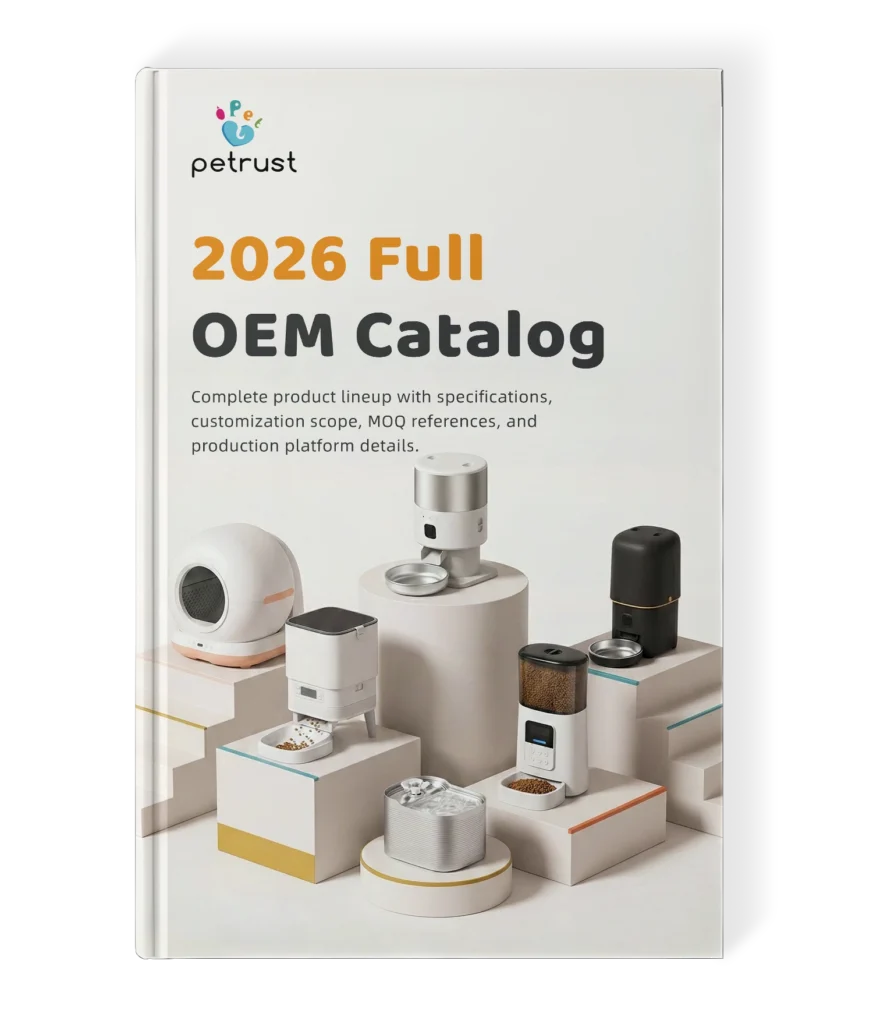
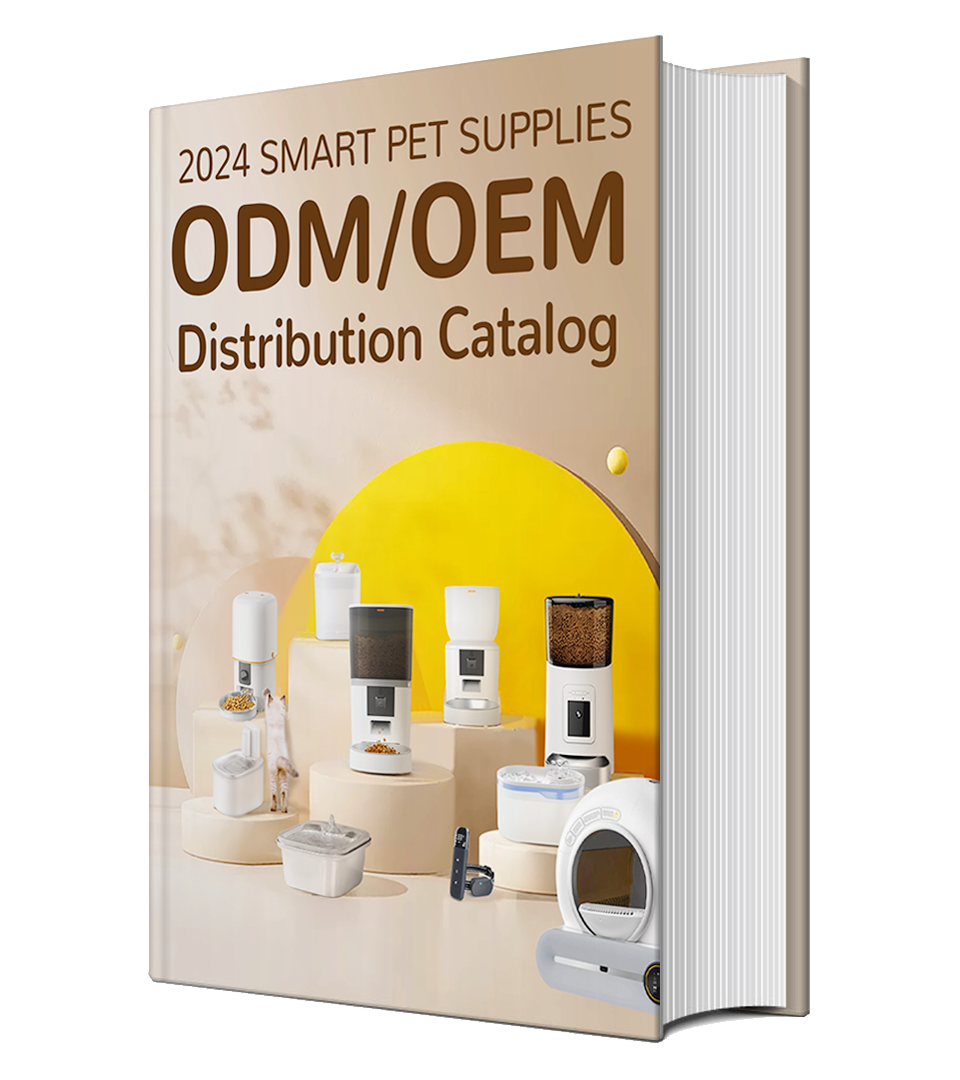
Send the requirements rather than simply asking for a catalog.
Useful information includes:
- target sales channel
- target market
- preferred platform
- essential features
- expected quantity
- customization requirements
- app or connectivity requirements
- target positioning
- timing
From there, the discussion can move from product selection → requirements → OEM/ODM development.
Questions Buyers Ask Before Choosing a Smart Cat Litter Box Platform
It can.
The camera itself is not necessarily the problem. The additional hardware, firmware, app, connectivity and customer-support requirements are what increase system responsibility.
The relevant question is whether the additional customer value justifies the additional responsibility.
Do not stop at price and MOQ.
Ask how the manufacturer handles engineering validation, production validation, component stability, BOM control, production testing, firmware consistency, replacement parts and mass-production consistency.
A working sample is evidence that the concept works.
It is not proof that the production program will remain stable.
Look beyond the first quotation.
Ask whether the factory can maintain the same critical components, BOM, production standards, packaging, lead time and quality level across future batches.
For wholesale, repeatability can matter more than another feature on the product page.
Customize for a reason.
Logo and packaging create relatively limited product ownership.
Industrial design, hardware, firmware, app and product architecture create progressively deeper ownership and long-term maintenance responsibility.
The right level of customization depends on what the brand is trying to differentiate and what it is prepared to support.
Not automatically.
A simpler platform can reduce connected-system complexity.
A more advanced platform can create meaningful differentiation.
The decision depends on the business model, customer expectations, margin structure, support capability and the level of product responsibility the business can realistically carry.
Final Takeaway
You may have started this search thinking you were choosing a cat litter box.
You’re actually choosing something bigger:
the product responsibility your business is prepared to carry.
A camera is not automatically a problem.
A simpler product is not automatically the answer.
More features are not automatically more value.
The real test is whether the product can survive the entire journey:
Engineering → Validation → Mass Production → Customer Use → After-Sales → Repeat Orders
Because the product your customer buys is not the prototype you approved.
It is the thousands of units that come after it.
And sometimes, the commercially smarter product is the less complicated one.
Not because it has fewer features.
Because your business can actually sell it, support it and scale it.