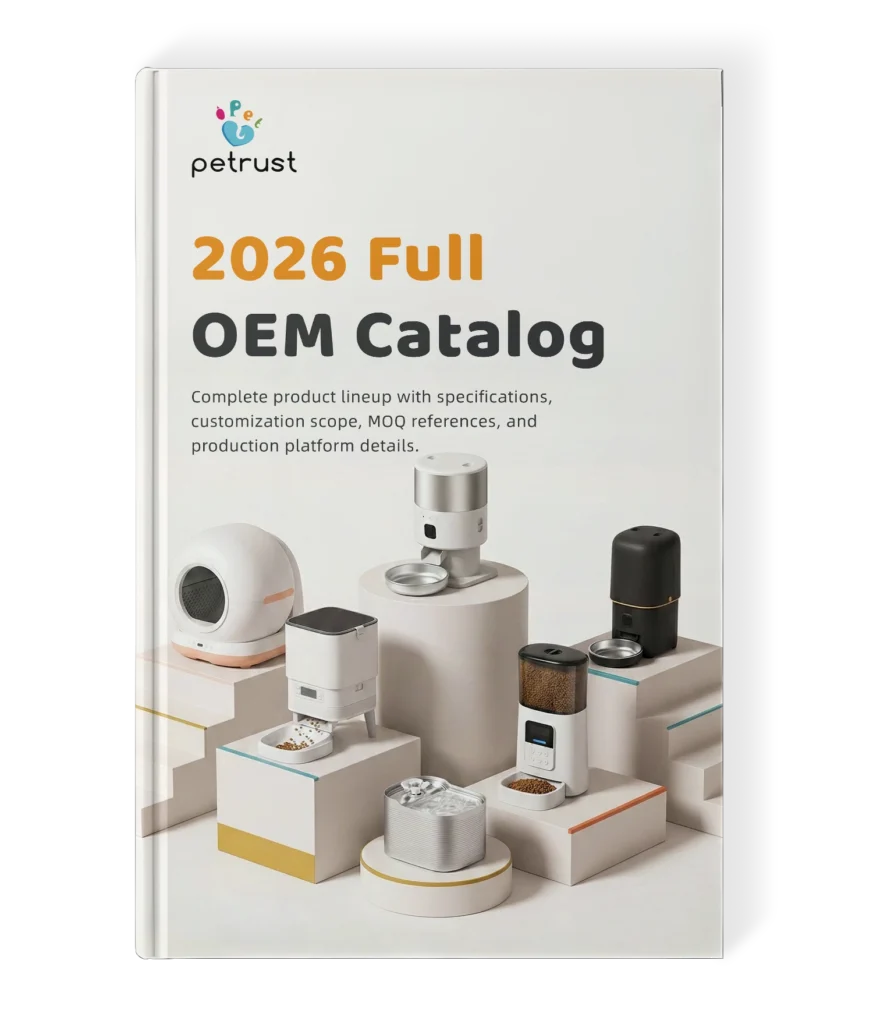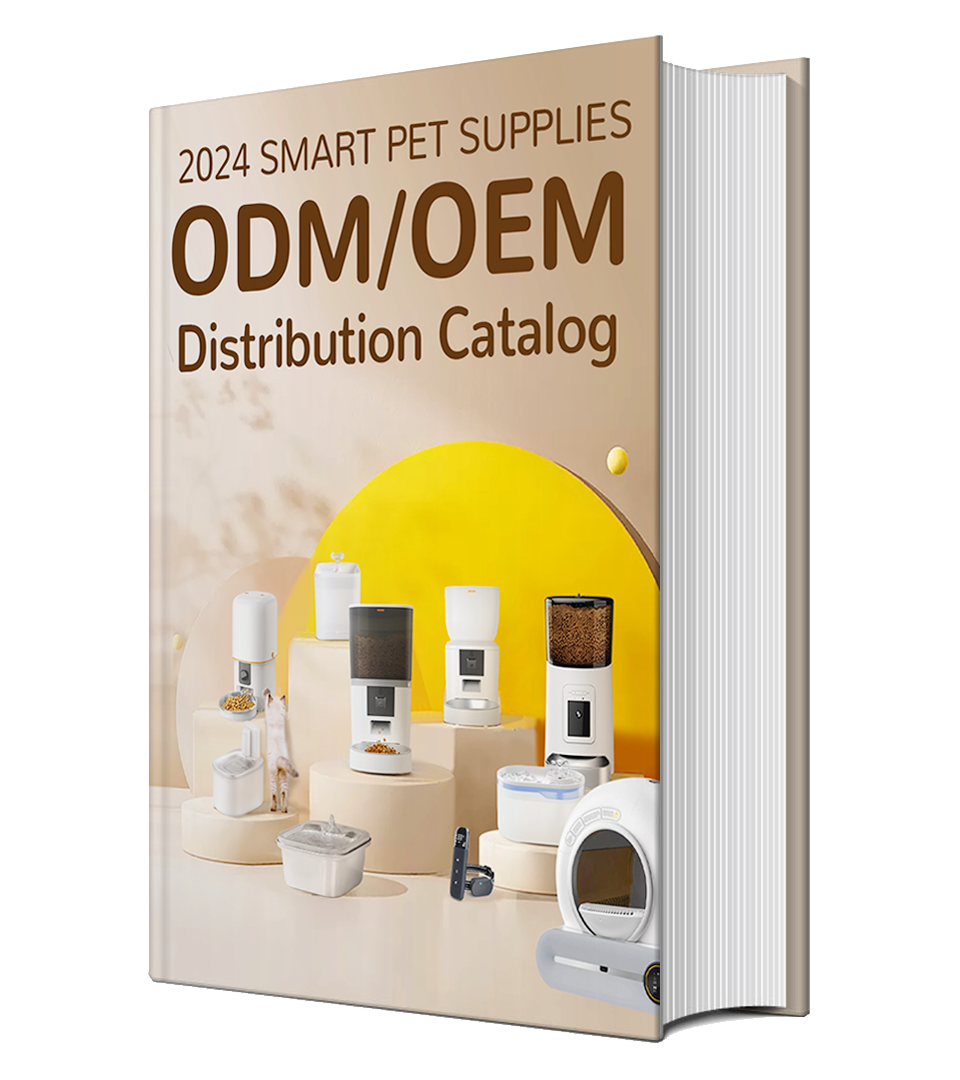

The search for a reliable private label cat feeder manufacturer can feel overwhelming, especially with so many options and the high stakes of quality, branding, and timely delivery. In 2025, demand for private-label automatic cat feeders is skyrocketing, fueled by smart pet devices, remote feeding solutions, and a global surge in e-commerce pet brands.
According to Grand View Research, the global smart-pet feeder market was valued at approximately USD 1.466 billion in 2024 and is projected to grow at a compound annual growth rate of around 8.5% through 2030.
This growth reflects not just more households owning cats, but also the increasing desire for automated, health-focused pet care solutions that offer portion control, remote feeding scheduling, and connected app features.
Despite this opportunity, many buyers encounter costly setbacks—selecting the wrong supplier, paying unexpected fees, or receiving products that fail to meet quality expectations. This is where a well-chosen private label cat feeder manufacturer can make all the difference, giving your brand control over design, packaging, and unique product features without the overhead of in-house production.
This guide takes you through the entire buyer journey—from selecting a manufacturer, requesting and evaluating samples, customizing your product, overseeing mass production, to successfully launching your cat feeder in stores or online.
Choosing the right private label cat feeder manufacturer is not just a first step—it’s the foundation for a profitable and sustainable product line that resonates with your target customers.
What Is a Private Label Cat Feeder? (2025 Overview)
Private Label vs OEM vs ODM: What’s Actually Different?
Grasping the differences between private label, OEM, and ODM cat feeder manufacturing helps you make informed decisions that save time, reduce risks, and maximize brand impact.
- Private label allows your brand to personalize existing designs with your logo, colors, and packaging, providing a fast route to market without heavy upfront investment.
- OEM typically involves small modifications, exclusive tooling, or tweaks to better align with your brand identity.
- ODM means the manufacturer designs and develops the product entirely, offering less flexibility but a fully turnkey solution.
For a more detailed comparison between OEM and ODM approaches, the OEM vs ODM comparison for pet products guide offers actionable insights for B2B buyers.
When Should a Pet Brand Choose Private Label Manufacturing?
Private label works best for startups and established brands seeking faster time-to-market, lower upfront investment, and full control over branding. It is particularly effective in the smart pet feeder niche, where features like food dispensing accuracy, anti-jamming mechanisms, and APP firmware stability are critical for standing out in a competitive market.
Why Smart Cat Feeders Become the #1 Private Label Opportunity in 2025
Global trends in pet humanization and health-focused care are driving demand for smart feeders. Key differentiators for private label brands include dual-power supply reliability, APP response time testing, and dry food compatibility, creating opportunities for unique positioning.
For guidance on sourcing and partnering with leading suppliers, the leading automatic feeder suppliers in China resource offers a curated overview of trusted manufacturers.
How to Choose the Right Private Label Cat Feeder Manufacturer
Key Evaluation Standards for a Reliable Private Label Cat Feeder Manufacturer
When identifying a trustworthy supplier, you can consider:
- Robust production capabilities and automation
- Proven tooling capacity and injection molding expertise
- Electronics and firmware development capabilities for smart pet feeders
- Consistent quality assurance systems and compliance certifications
Tip: Smart pet feeders and their food containers must meet strict sanitary and safety standards—FDA guidelines ensure pet food is stored and dispensed safely, protecting both pets and brand reputation.
Factory Capabilities to Look For (Tooling, R&D, Testing Lab)
Verify whether the manufacturer has:
- In-house PCB development for smart devices
- Testing labs for cat feeder sample quality checklist
- R&D capabilities for automatic feeder customization
- Advanced production lines enabling mass production quality control steps
Red Flags to Avoid When Selecting a Cat Feeder OEM Supplier
Beware of suppliers that claim to be factories but operate as trading companies, offer unrealistic lead times or unusually low prices, or lack clear tooling and sample testing capabilities. For guidance on spotting such risks, the spotting fake pet product factories guide provides practical steps for B2B buyers.
How to Verify Whether a Cat Feeder Factory Is Real (Avoid Trading Middlemen)
How to Conduct a Simple Online Factory Audit
Start by reviewing online profiles, checking business registration, and reading previous client reviews to ensure legitimacy.
How to Read a Chinese Business License + Factory Certificates
Verify legal entity information, check production scope, and confirm ISO / CE / FCC / FDA certifications.
For a step-by-step methodology, the remote factory audit process guide offers structured guidance for buyers who cannot visit in person.
How to Verify a Cat Feeder Manufacturer’s Production Line & Real Output
Request photos or videos of assembly lines, automated injection molding, dual-color injection, and quality inspection processes. Reviewing recent shipment records helps confirm the supplier is a real OEM rather than a trading intermediary. For additional verification strategies, refer to the evaluating OEM capabilities of suppliers resource.
Sample Testing Process Before Private Label Production (From Function to Safety)
Bringing a new feeder to market becomes far more predictable once your private label cat feeder manufacturer provides samples that truly reflect what mass production will deliver.
Many buyers rely heavily on this stage because it’s the moment potential issues surface—before large payments, long lead times, and container loads are committed. A thoughtful, structured sample-testing stage not only reduces risk but also helps you communicate more clearly with your factory throughout the OEM cycle.
The Full Sample Checklist for Automatic Cat Feeders (2025 Standard)
Step-by-Step Cat Feeder Sample Evaluation for OEM Orders:
- Step 1: Test motor lifespan and noise
- Step 2: Verify food tank sealing performance
- Step 3: Inspect anti-jamming mechanism
- Step 4: Test APP response time and firmware stability
For buyers who want deeper guidance, the how to request and evaluate pet product samples from China resource offers practical examples and checklists that support decision-making.
Functional Tests: Motor, Food Dispensing Accuracy, Anti-Jam
Functional stability is one of the biggest indicators of long-term customer satisfaction. Work closely with your manufacturer to examine food dispensing accuracy, motor reliability, dual-power supply performance, and hopper anti-jamming mechanisms, making sure real-life use cases are reflected in the test environment. This prevents early failures that often appear only after weeks of daily operation.
Safety & Reliability Tests: Drop Test, Aging Test, Power Stability
Safety testing adds another layer of confidence before scaling production. Evaluate whether your feeder can tolerate drops, prolonged use, and power fluctuations, especially in households with inconsistent voltage. Confirm dry food compatibility and verify that smart-device connectivity remains stable over time.
Some responsible pet-food manufacturers implement microbial testing, traceability systems, and strict packaging integrity, as recommended by FEDIAF safety guidelines, which is particularly valuable for EU-focused brands.
Tip: Always request dual-power supply testing for smart pet feeders to avoid preventable field complaints.
Packaging & Printing Review Before Mass Production
Packaging is often your first touchpoint with the customer, so it deserves its own evaluation stage. Review the strength of the box, assess logo clarity, and confirm alignment with your chosen Pantone colors and printing methods.
Retail brands—especially those on Amazon—benefit from confirming that packaging meets marketplace handling and display requirements. For more inspiration, you can refer to custom automatic cat feeder solutions for Amazon brands when planning their packaging strategy.
The Hidden Structural Risks Inside Cat Feeders (What Most Buyers Don’t Know)
Small design flaws can cause big business headaches later. A reliable private label cat feeder manufacturer will help uncover issues early, but understanding them yourself strengthens your evaluation process and gives you an edge during OEM negotiations.
Motor Gearbox Weak Points & Long-Term Failure Causes
The gearbox has a direct impact on product lifespan. Lower-grade materials and inconsistent molding often lead to early breakdowns. Inspect gear tolerances carefully while assessing samples, as these small details greatly influence repeat purchase rate and warranty cost.
IR Sensor Blind Angle Issues That Cause Overfeeding
Sensor placement can make or break the feeding experience. Poor calibration leads to food over-dispensing, confusing customers and risking poor reviews. Confirm sensor alignment during prototyping to avoid this common issue.
Hopper Shape Defects That Increase Jamming Risk
Smooth angles help dry food slide consistently. Irregular or narrow structures increase food clumping. A proactive review of hopper design ensures stable dispensing and fewer customer complaints.
Electronics Layout Issues Affecting Product Lifespan
Electronics quality determines long-term reliability. Review PCB design, waterproofing, and firmware stability to avoid hidden problems that show up months after launch. For added support, many buyers refer to this avoiding common OEM production mistakes guide when preparing for mass production.
Customization Options: Logo, Color, Packaging & App Workflow
Customization is where your brand identity truly comes alive. A capable private label cat feeder manufacturer helps transform these ideas into production-ready solutions that stay true to your unique positioning.
Logo Methods: Silk Print, UV, Laser — How to Choose
Logo presentation affects perceived value. Select a method based on durability, desired finish, and production volume. Silk print works well for cost-effective orders, while UV and laser methods create a more premium appearance.
Custom Colors & Material Options (Food-Grade Requirements)
Color selection defines how your product stands out in a crowded market. Review custom Pantone colors and confirm the use of food-safe materials.
For brands targeting higher durability and premium feel, dual-material injection molding offers premium finishes and durability. Insights from the impact of MOQ and material choice on pricing guide can help optimize cost.
Packaging Customization for Retail & Amazon Brands
Packaging strongly influences conversion—both online and in-store. Customized inserts, retail-ready boxes, and detailed labels elevate your brand’s presentation. Confirm that packaging withstands shipping stress, especially for global distribution.
APP Customization & UI Workflow for Smart Cat Feeders
Smart cat feeders are becoming a customer expectation, and app experience plays a huge role. Work with your manufacturer to tailor firmware, UI, and app features.
Petrust® supports full APP firmware customization and UI workflow optimization, helping smart pet feeders reflect your brand identity. More details can be found under the Petrust® OEM smart pet feeder partnership advantages.
Request a free consultation and OEM quote for your custom app-enabled pet feeder whenever you’re ready to begin.
OEM Workflow Explained (From Inquiry to Mass Production)
Building a strong partnership with a private label cat feeder manufacturer becomes much easier when the workflow is transparent. The steps below give you a realistic picture of how your idea develops into a finished product ready for retail or online stores.
Step 1: Initial Inquiry & Requirement Confirmation
A productive start begins with outlining feeder specifications, customization requirements, target markets, and expected volume. Manufacturers gain a clearer picture of your brand direction, while you gain reassurance that your expectations are fully understood.
For teams preparing their documents, the OEM brief for pet product manufacturers provides guidance on crafting providing clear OEM requirements that prevent misunderstandings later in the process.
Step 2: Sample Creation + Function Adjustment
Once requirements are aligned, the manufacturer creates functional prototypes tailored to your requested features. These early samples help you gauge build quality, motor performance, and app functions.
Using a cat feeder sample quality checklist gives buyers a fair and consistent way to evaluate each prototype, especially when comparing multiple manufacturers.
Step 3: Tooling / Mold Development (If Needed)
For brands aiming to differentiate with a custom exterior or structural upgrade, the next step involves developing molds for exclusive designs. Clear communication about mold fee vs unit cost avoids confusion during budgeting and ensures you understand exactly how tooling expenses influence long-term pricing.
Step 4: Pilot Run, Stability Test & Pre-Production Approval
Before moving to full-scale production, a pilot run provides reassurance that the final product performs consistently. These small batches undergo thorough testing, including motor reliability, anti-jamming, and APP firmware stability checks. Pre-production approval at this stage helps you catch issues early and maintain your timeline.
Step 5: Mass Production, Packaging & Shipment
When everything is approved, the factory begins full-scale manufacturing supported by IQC, IPQC, FQC, OQC quality steps. Each phase protects your brand from defects that could affect customer satisfaction or increase return rates.
Additional insights are available in the OEM workflow from design to delivery, offering a broader perspective on quality assurance and logistics planning.
Cost Breakdown for Private Label Cat Feeders (2025 Updated)
Managing costs with clarity builds trust between you and your private label cat feeder manufacturer, especially as smart pet feeders involve multiple components and specialized electronics. The sections below provide a realistic view of where your budget goes and how to optimize it without compromising performance.
Cat Feeder OEM Cost Breakdown: Components, Electronics, Assembly
A complete feeder includes a mix of mechanical parts and smart electronics such as motor, PCB, hopper, sensors, dual-power supply, assembly, and smart electronics systems.
Component costs typically range from $35–$80 per unit depending on capacity, app functions, and hardware complexity. Brands reviewing actual pricing examples often refer to the smart pet feeder cost breakdown guide for a more detailed breakdown.
MOQ Requirements for Private Label Orders
MOQ influences cost, production efficiency, and lead time. Most private-label feeder orders begin at 300–500 units, while lower volumes remain possible but may increase per-unit pricing. Setting expectations early helps your factory allocate production resources more effectively.
Tooling / Mold Fees: When They Are Required & How to Reduce
Custom feeders that require injection molds can incur tooling costs between $500 and $2000. Pairing mold development with larger orders allows the cost to be spread across more units, making customization accessible even for small and mid-sized brands.
Hidden Costs to Watch Out For (3 Common Pricing Traps)
Unexpected expenses can affect your margins, especially during international procurement. Common risks involve low-grade materials that reduce product lifespan, supplier bait-and-switch tactics, and overlooked fees such as freight, certifications, and insurance.
These risks are explained in the guide on addressing hidden costs when importing smart pet products, which many buyers reference when planning new product lines.
Sample-to-Store Timeline: How Long It Actually Takes (Realistic 2025 Schedule)
A realistic timeline helps brands plan launches, marketing schedules, and inventory decisions with confidence. Working closely with your private label cat feeder manufacturer ensures both sides stay aligned from concept to delivery.
Standard Timeline: Design → Sample → PP Sample → Mass Production
Typical development cycles follow a 30-day, 60-day, 90-day OEM schedule, depending on the complexity of customization and the number of components requiring validation. This framework helps buyers maintain predictable launch windows while accommodating design refinements.
How to Reduce Delivery Lead Time (Without Increasing Costs)
Lead time shortens significantly when tasks progress in parallel. Many brands coordinate parallel workflows such as mold development, PCB firmware testing, and packaging design, ensuring no time is lost while waiting for individual stages to finish.
Shipping Options for Cat Feeders: Sea, Air, Rail, Courier
The right logistics plan depends on target markets, order volume, and urgency. Sea freight works well for large orders with flexible timelines, while air and courier services provide speed for new product launches or urgent replenishment. Rail freight offers a balanced option for Eurasian routes.
How to Reduce Supply Chain Risks When Working With a Private Label Cat Feeder Manufacturer
Working with a private label cat feeder manufacturer brings tremendous opportunity, yet many buyers still worry about delays, inconsistent quality, or unexpected costs. A well-planned structure around quality, communication, and long-term alignment makes your supply chain far more resilient and predictable.
Quality Control System: IQC → IPQC → FQC → OQC
A reliable QC flow is one of the most effective safeguards against shipping defective products. Strong factories follow a clear path—IQC for raw materials, IPQC for production-line checks, FQC before packing, and OQC before loading—ensuring each feeder meets performance and safety standards.
For teams wanting a deeper reference, the factory audit & quality checklist offers a structured way to evaluate a supplier’s real capabilities and internal systems.
How to Structure Contracts: Payment Terms, Penalties, Quality Clauses
Clear, protective contracts help both parties operate with confidence. Well-structured agreements typically outline MOQ, delivery schedule, and defect liability, while also defining payment milestones, compensation terms for delays, and QC specifications. These details protect your brand and guide your supplier relationship toward long-term stability.
Pre-Shipment Inspection Checklist for Cat Feeder Orders
Before any shipment is released, a thorough inspection helps avoid costly after-arrival problems. A complete checklist usually includes functional tests, smart feeder motor lifespan, and packaging verification, ensuring that every product performs well and survives freight handling.
Many buyers find additional reassurance through the sample request and evaluation guide, which explains how to validate a factory’s engineering strength from the very beginning.
How to Build a Long-Term Partnership With a Reliable Manufacturer
Strong partnerships rarely happen by chance. Regular communication, transparent project tracking, joint engineering discussions, and recurring audits create a relationship built on trust.
Over time, these habits allow your private label cat feeder manufacturer to anticipate your needs, improve predictability, and co-develop better products with you.
Case Study: How a Global Pet Brand Launched a Private Label Cat Feeder in 45 Days
This real-world case highlights how strategic communication and efficient factory collaboration can dramatically accelerate time-to-market.
Initial Requirement
The brand began with clear product goals, defining feeder type, desired features, and customization needs. Early clarity reduced redesign cycles and aligned both engineering and marketing teams from day one.
Sample Revision
During pilot testing, the team focused on food dispensing accuracy, motor noise, and APP responsiveness, which are the most common performance concerns for smart feeder buyers. Each round of feedback helped the factory refine internal components while keeping aesthetics aligned with the brand’s positioning.
Mass Production
Once tooling and samples were validated, the factory moved into full production. Their streamlined processes enabled fast scaling, resulting in 15% faster production than initial estimates—a competitive advantage during seasonal demand spikes.
Store Launch Results
The final product entered the market with strong momentum, earning high customer satisfaction, minimal returns (<2%), and healthy sell-through performance across online platforms. Consistency during production contributed heavily to post-launch success.
Why China Remains the Best Place to Find a Private Label Cat Feeder Manufacturer in 2025
Many global pet brands continue sourcing from China because the ecosystem supports rapid development, consistent quality, and scalable production—all crucial for competitive private-label growth.
Manufacturing Scale & Cost Advantage
China provides large-scale production with cost efficiency unmatched globally, helping brands achieve better margins without compromising quality.
Integrated Tooling + Electronics Supply Chain
The country’s manufacturing ecosystem brings all essential components together—from smart device PCB development to injection molding and assembly—reducing lead times and keeping development highly coordinated.
R&D + APP Development Ecosystem
Experienced suppliers such as Petrust® offer 12+ years of experience, R&D support, and firmware development for advanced smart feeders. For EU-bound products, compliance with CE-LVD and EMC standards (supported by JJR Testing Laboratory) is a key requirement.
Guidance on factory verification is also available through the verified methods for checking factories guide, which helps buyers confirm real OEM capability before signing contracts.
Fast Product Iteration for Global Brands
Speed remains a major advantage. Short prototyping cycles and efficient mass production cycles allow brands to launch new feeder models quickly and stay ahead in competitive markets.
Conclusion
Choosing the right private label cat feeder manufacturer like Petrust® shapes every outcome—from product performance and brand reputation to long-term profitability.
This guide offers a thorough view of the full sample-to-store process, helping buyers evaluate factories authentically, request reliable samples, run functional tests, customize design and app features, and manage mass production with confidence.
By applying these practices, brands can avoid hidden costs, reduce supply chain risks, and bring high-quality smart feeders to market efficiently—even during peak seasons.
Petrust® supports global buyers with:
- 230,000㎡ production base
- In-house R&D and firmware development
- 12 years of OEM/ODM experience
- Advanced injection molding, dual-color molding, silk-print, and automated assembly
- Proven track record with global pet brands
Contact us today for a free consultation, sample request, or custom automatic cat feeder solution, and begin building a private-label product line with long-term potential.