

Most remote factory audits fail before the call even begins.
The supplier chooses the route.
The production line is prepared.
The people have been told when to appear.
The records have already been selected.
What looks like a live audit of a pet product manufacturer may actually be a carefully managed live video factory tour with very little independent factory verification evidence.
The showroom is clean.
The line is running.
Everyone knows where to stand.
The salesperson knows which door to open, which machine to stop beside, and which document will look reassuring on camera.
The buyer leaves the call feeling better.
Almost nothing important has been verified.
That is the uncomfortable truth.
A remote audit where the salesperson controls the route, the camera, the questions, and the timing is not an audit. It is a factory video with live narration.
The problem is not video.
The problem is control.
A pre-recorded video obviously has limited value. It shows only what the supplier chose to record.
But a live call can create the same false confidence when the buyer is still following a prepared route, speaking only to selected people, and reviewing only preselected records.
Live does not automatically mean authentic.
A supplier-controlled factory tour can happen in real time.
That is why a remote factory audit should not be treated as a cheaper substitute for an on-site visit.
It is a different audit discipline.
An on-site audit relies partly on physical presence. The auditor can move, pause, return, observe, and ask follow-up questions while standing inside the manufacturing site.
A remote audit has to recreate that challenge function through deliberate control of:
- The route
- The camera
- The evidence requests
- The commercial response when evidence is missing
The real value of remote factory verification is not that the buyer can see a factory through a screen.
It is that the supplier’s identity, people, processes, records, and manufacturing claims are tested before every answer can be fully arranged.
This matters even more in smart pet products.
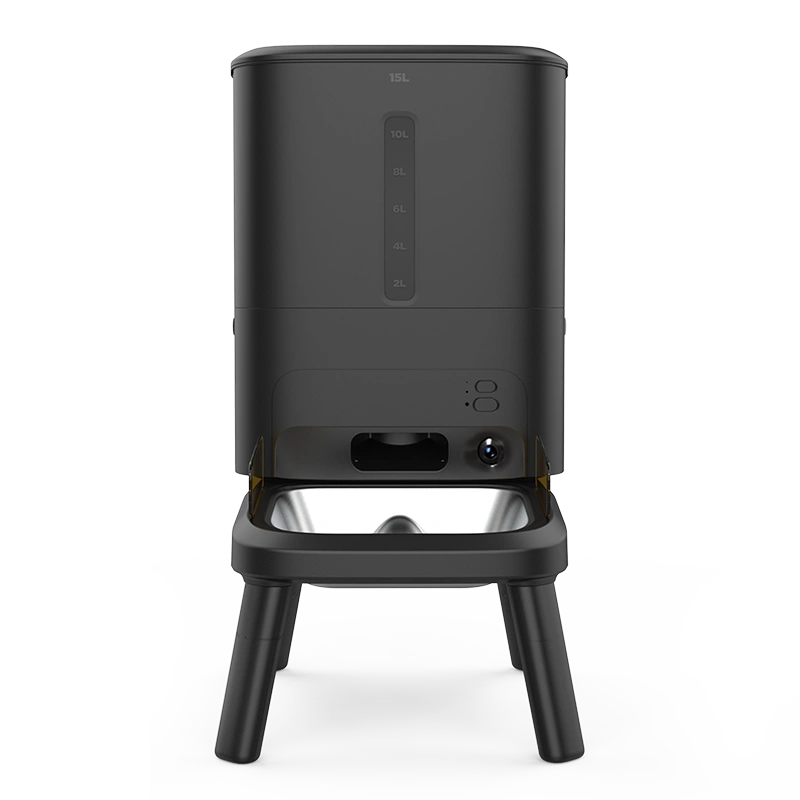
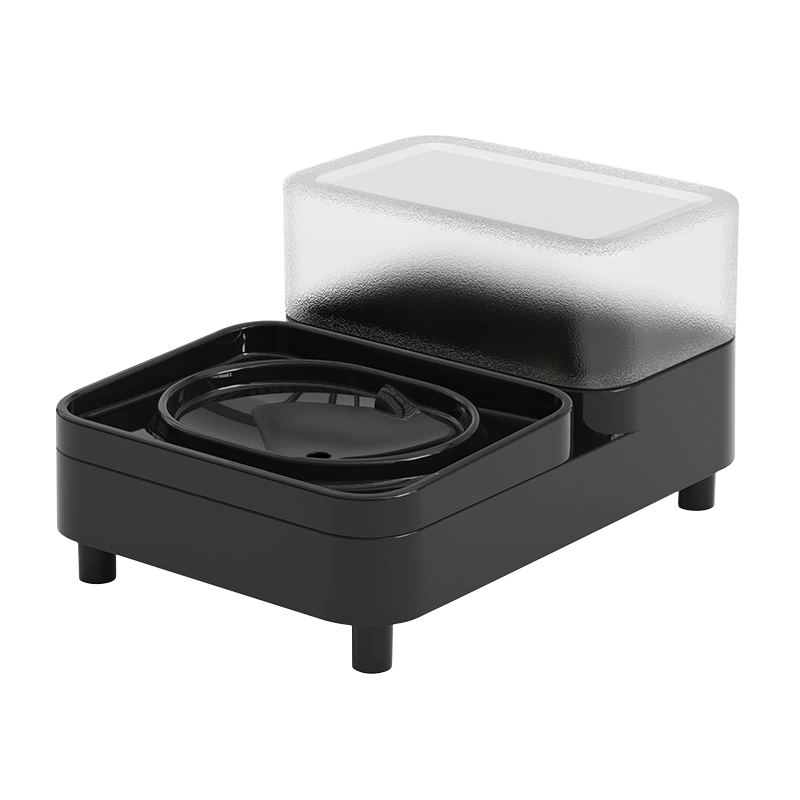

- Mechanical dispensing
- Motor and gearbox behavior
- Portion-control logic
- Firmware
- WiFi
- Camera functions
- App scheduling
- Power management
- Food-contact materials
- Pump durability
- Water-path design
- Waterproofing
- Filtration
- UV functions
- Battery charging
- Water-level detection
- Structural tolerances
- Motor loading
- Safety sensors
- Weight detection
- Waste separation
- Firmware logic
- App alerts
- Moving parts exposed to litter dust
These are not products made from one isolated system.
They are several mechanical, electrical, firmware, connectivity, material, and production systems forced to work together.
A clean showroom proves none of those systems are controlled.
A running line proves less than many buyers think.
A folder full of quality reports may prove only that somebody prepared a folder.
The audit must connect what the camera sees to the people, records, versions, processes, and decisions behind the product.
That is the standard used throughout this article.
The Short Answer
A credible remote factory audit must give the buyer control over the route, camera, evidence requests, and escalation decisions.
The evidence must be:
- Live
- Random
- Cross-Checked
- Recorded
The objective is not to decide whether the factory looks professional.
It is to determine whether its identity, people, production, engineering, quality, warehouse and traceability, and capacity claims can survive buyer-controlled verification.
Petrust® defines this approach as the:
Petrust® Remote Factory Verification System
It combines:
- Route Control
- Camera Control
- Evidence Control
- Escalation Control
- Live
- Random
- Cross-Checked
- Recorded
- Identity
- People
- Production
- Engineering
- Quality
- Warehouse & Traceability
- Capacity
The complete logic is:
4 Controls × 4 Verification Rules × 7 Verification Steps
The framework is not designed to make every supplier look suspicious.
It is designed to stop unsupported confidence from being mistaken for evidence.
If You Only Remember One Remote Audit Sequence
A buyer does not need to memorize every section of this article before the next supplier call.
Remember this sequence:
- Start outside the building.
- Change the supplier’s planned route.
- Select one product yourself.
- Trace it into the relevant records.
- Ask different departments the same question.
- Record every unverified or contradictory claim.
- Change the commercial decision when evidence does not close.
That last step is where many audits collapse.
The buyer sees a gap.
The supplier gives an explanation.
The launch schedule is already tight.
The quotation looks attractive.
The deposit is suddenly “urgent.”
Everybody moves on.
At that point, the audit has produced information but failed to control risk.
If the audit does not allow these seven actions, it may still be useful as a factory introduction. It should not be treated as supplier verification.
Why Most Remote Factory Audits Prove Less Than Buyers Think
A remote factory audit can be useful.
It can also create a dangerous level of confidence from very weak evidence.
The buyer sees:
- A real building
- A real production line
- Real workers
- Real machines
Everything on screen may genuinely exist.
That still does not prove:
- The supplier owns or controls the facility
- The line regularly produces the relevant product category
- The engineering team owns the product
- The records reflect normal practice
- The displayed components match the approved configuration
- The claimed capacity is sustainable
- The factory can control future production
The biggest weakness in many remote audits is not that every piece of evidence is fake.
It is that the evidence is incomplete, disconnected, and selected by the party being evaluated.
A machine is shown without its current work order.
A firmware screen appears without a release record.
A finished unit is displayed without batch traceability.
A quality report is opened without any connection to the line, product, date, or defect being discussed.
Each item may be real.
The buyer still does not have verification.
The Supplier Controls Everything the Buyer Needs to Verify
In a typical remote supplier audit, the supplier controls:
- The schedule
- The route
- The camera angle
- The production line
- The people
- The documents
- The timing
- The follow-up
Some preparation is necessary.
The factory needs to arrange access.
Managers may need to be available.
Confidential information may need to be protected.
Safety and ESD restrictions may apply.
Preparation itself is not the problem.
The problem begins when the supplier prepares not only the process—but also the buyer’s conclusion.
A supplier should prepare the audit process. It should not prepare the buyer’s conclusions.
Consider what happens during a heavily controlled tour.
The camera starts in the showroom.
The salesperson explains the company history.
A production line is already active.
The workers are expecting the camera.
A quality-control sign appears above a station.
Several reports are opened in advance.
The buyer asks a question.
The salesperson answers without involving engineering, quality, or production.
The tour ends on schedule.
It feels efficient.
It proves mainly that the supplier can organize a video call.
A credible buyer-controlled factory audit should allow the buyer to:
- Change the route
- Ask the camera to return
- Select an unplanned record
- Speak to different departments
- Follow one physical unit into its records
- Record unanswered questions
- Escalate unresolved evidence
Without those actions, the buyer is not conducting evidence-based supplier verification.
The buyer is consuming a presentation.
A Live Call Can Still Be Staged
Live does not automatically mean authentic.
A staged remote audit may still involve:
- A preselected route
- Prepared employees
- A borrowed production line
- Temporary operators
- Old samples
- Preselected records
- An active line unrelated to the buyer’s product category
- Camera angles that avoid weak areas
- A warehouse that is never shown
- An engineering team that is always “in another meeting”
This does not mean every smooth remote audit is dishonest.
Professional suppliers often prepare well.
The issue is whether the audit can survive unplanned requests.
A pre-recorded factory video has low verification value because the buyer cannot challenge it.
A live but supplier-controlled tour has more value, but remains limited.
A buyer-controlled live audit creates stronger evidence because the supplier does not know every next request in advance.
The real question is not:
Is the video live?
It is:
Can the supplier survive an unplanned change in what the buyer asks to see?
This distinction matters when buyers are trying to determine how to verify a Chinese factory remotely.
The most convincing footage is not always the most valuable evidence.
The valuable moment often comes when the buyer says:
- Go back.
- Show the label again.
- Open a different record.
- Speak to quality.
- Enter the warehouse.
- Select another unit.
- Explain why these two answers conflict.
That is when the audit stops following the supplier’s story and begins testing it.
What a Remote Audit Can and Cannot Prove
The limitations of remote factory audits should be made clear before the audit begins.
A remote audit can reduce uncertainty.
It cannot eliminate every risk.
| A Remote Audit Can Help Verify | t Cannot Fully Prove |
|---|---|
| Legal and operational identity | Long-term production consistency |
| Manufacturing location | Every future production shift |
| Presence of key departments | Complete financial stability |
| Live line activity | Absence of all hidden subcontracting |
| Selected process and quality records | Every upstream supplier practice |
| Product and batch traceability | Future mass-production performance |
| Current equipment and warehouse conditions | Long-term field reliability |
| Current organization and ownership roles | Permanent availability of the same people |
| Current testing practices | Every future batch will receive identical testing |
A virtual factory audit is useful for:
- Initial supplier screening
- Identity verification
- Department verification
- Process review
- Record sampling
- Targeted follow-up
- Repeat-order spot checks
- Deciding whether deeper verification is justified
It should not be used as automatic proof of:
- Permanent production stability
- Long-term product reliability
- Complete supply-chain transparency
- Every future order
- Every hidden defect
- Every shift or subcontractor
The purpose is to reduce uncertainty enough to make the next decision responsibly.
Sometimes the next decision is:
- Continue supplier discussions
- Order samples
- Approve a small pilot
- Request more evidence
- Conduct a third-party audit
- Visit on-site
- Reject the supplier
Remote verification is useful when its findings change what happens next.
The Petrust® Remote Factory Verification System
Petrust® is not an outside audit agency.
We develop and manufacture smart pet products ourselves.
That means we know how easily a remote factory tour can be made to look smooth.
We also know which requests immediately reveal whether the audit is testing reality or simply following a presentation route.
A showroom can be cleaned.
A line can be prepared.
Documents can be selected.
People can be briefed.
That does not automatically mean the supplier is hiding something.
It means the buyer needs a method that does not depend entirely on prepared evidence.
The Petrust® Remote Factory Verification System uses four controls:
- Route Control
- Camera Control
- Evidence Control
- Escalation Control
These controls apply to Petrust® too.
When a buyer audits us remotely, the process should not require them to accept only the evidence we selected in advance.
The framework is first an internal discipline.
Not a sales badge.
A framework becomes credible only when it limits what the company that created it is allowed to claim.
Control 1: Route Control
Route Control means the buyer can determine where the audit goes next.
The supplier may propose an initial route.
The buyer should not be trapped inside it.
A serious remote audit may require access to:
- The building entrance
- Reception
- The production floor
- IQC
- Testing stations
- Engineering offices
- The warehouse
- The quarantine area
- Rejected materials
- Rework areas
- Finished goods
- Returned-unit analysis areas
The buyer may ask to:
- Leave the showroom
- Enter a different production area
- Visit the warehouse before production
- View IQC after seeing a component
- Return to a line shown earlier
- Inspect an area not included in the prepared tour
This is the practical meaning of an unplanned camera route and random factory area selection.
The route should follow the risk.
Not the presentation.
If the route cannot change, the audit cannot challenge the story.
Route Control is especially important when the buyer needs:
- Factory floor access
- Warehouse access
- Showroom-to-production verification
- Verification of rejected materials
- Verification of returned products
- Confirmation that departments are physically present
Not every request can always be accepted immediately.
There may be legitimate restrictions involving:
- Customer confidentiality
- ESD control
- Safety requirements
- Intellectual property
- Data security
- Active production restrictions
A refusal does not automatically prove risk.
But the supplier should explain the restriction and propose another way to verify the claim.
For example:
- Sensitive customer labels may be covered
- Confidential records may be redacted
- A live view may be replaced by a controlled document review
- An area may be shown after production stops
- A second call may be arranged with proper protective controls
“Access is restricted” can be legitimate.
“Access is restricted and no alternative evidence will be provided” is different.
Route Control establishes the buyer’s right to redirect the audit.
The detailed identity checks—starting outside, verifying signage, and connecting the legal entity to the manufacturing site—come later in the seven verification steps.
Control 2: Camera Control
Camera Control means the buyer decides what the lens must prove.
The camera should follow the buyer’s questions.
Not the supplier’s presentation script.
During the audit, the buyer may request:
- Rotate the camera
- Zoom in
- Stop
- Return
- Show the wider area
- Show factory signage
- Show a machine nameplate
- Show the surrounding floor
- Show today’s production order
- Show the current date and time
- Move continuously between rooms
- Compare a device screen with a firmware revision
- Show the same object from different angles
These actions support:
- Camera angle control
- Live zoom verification
- Continuous video walkthrough
- Machine nameplate verification
- Real-time location confirmation
A practical audit may ask the camera to begin outside the building and move continuously to reception and production.
It may ask the camera to follow a finished product from the line to packaging.
It may ask the operator to return to an area that was passed too quickly.
It may ask to see the back of a machine, not only the front panel.
These requests help reduce the risk of:
- Edited footage
- Switched locations
- Borrowed images
- Partial equipment views
- Misleading signage
- A production area shown without context
A supplier may need reasonable time to move safely or protect confidential information.
That is acceptable.
What matters is whether the camera remains a verification tool or becomes a controlled window.
Control 3: Evidence Control
Evidence Control means the buyer—not the supplier—selects at least part of the evidence.
A folder of prepared reports proves that someone prepared a folder.
It does not prove the system operates every day.
During a credible audit, the buyer may request:
- One current production order
- One bill of materials revision
- One firmware release record
- One IQC report
- One OQC report
- One calibration record
- One CAPA case
- One rejected material batch
- One finished-unit traceability record
- One engineering change record
- One supplier corrective-action case
This is live document review combined with random sampling.
The important question is not:
Does the factory have documents?
It is:
Can the factory retrieve a buyer-selected record and connect it to real production activity?
Preselected evidence proves the supplier prepared.
Random evidence helps prove the system operates.
Evidence Control is particularly useful for:
- Real-time BOM verification
- Batch record verification
- Factory inspection record verification
- Firmware ownership verification
- PCB revision control audit
- Supplier corrective-action verification
- Finished-goods traceability
Commercial confidentiality still matters.
Buyers do not need unrestricted access to:
- Other customer names
- Customer pricing
- Complete confidential BOMs
- Private source code
- Proprietary design details
Sensitive information can be redacted.
But redaction should not make the core claim impossible to verify.
The supplier should still be able to demonstrate:
- Version
- Ownership
- Date
- Approval
- Batch relationship
- Process status
- Closure status
Confidentiality should protect information.
It should not protect unsupported claims.
Evidence Control answers one question:
Who selected the evidence?
Cross-Checking, which appears later, answers a different question:
Does the selected evidence connect coherently with other records, people, products, and production events?
That distinction matters.
Control 4: Escalation Control
Escalation Control means missing evidence changes the next commercial decision.
This is the part many buyers avoid.
Finding a gap is easy.
Acting on it is harder.
The launch date is approaching.
The supplier’s price is attractive.
The samples look good.
Sales keeps following up.
The deposit deadline suddenly feels urgent.
The buyer does not want to restart sourcing.
This is where many remote audits become meaningless.
The buyer identifies open risks and then proceeds as though nothing happened.
A remote audit is useful only when missing evidence changes the commercial decision.
Possible escalation actions include:
- Requesting follow-up documents
- Conducting a second live verification
- Ordering independent sample testing
- Requesting a third-party factory audit
- Visiting on-site
- Reducing the pilot quantity
- Delaying tooling payment
- Delaying the deposit
- Requiring a remote audit conditional approval
- Rejecting the supplier
The correct action depends on the risk.
A missing calibration record does not always justify rejection.
A contradiction between the legal entity, bank account, and manufacturing site may require immediate escalation.
A factory unable to show a current production order may simply not be running that model today.
A factory unable to identify who owns firmware is a different problem.
Escalation Control forces buyers to separate:
- Minor evidence gaps
- Material open findings
- Contradictory claims
- Deal-breaking risks
The point is not to make every issue fatal.
The point is to make sure every material issue has a consequence.
This matters in a remote factory audit before paying a deposit and in supplier verification before tooling payment.
Once deposits, tooling, and launch schedules begin locking the buyer into the project, evidence gaps become harder to act on.
The Audit Passed. The Evidence Never Did.
The following is a composite scenario based on recurring patterns seen across OEM projects. It does not describe one identified customer or supplier.
A buyer reviewed a smart feeder supplier through a live video call.
The factory showed:
- A running production line
- A firmware screen
- Several quality reports
- Finished products in the warehouse
The buyer did not:
- Select the product being inspected
- Trace the firmware version into the batch
- Speak directly with engineering
- Verify who approved component changes
- Record unresolved claims
- Define what would delay payment
The call looked professional.
The factory appeared real.
The order moved forward.
During repeat production, a wireless module became unavailable.
Purchasing accepted an alternative.
The product still powered on.
It still paired during a short factory check.
In real homes, app connection became unstable.
Customers did not care that the replacement module was commercially available or physically compatible.
They saw failed connections.
Missed schedules.
Support tickets.
Refunds.
The supplier replaced units.
Reviews declined.
The buyer paid for:
- Refunds
- Replacement units
- Customer support
- Expedited freight
- Listing recovery
- A delayed repeat order
- More internal time spent proving where the failure began
The remote audit had shown a factory.
It had not verified change control.
It had not established:
- Who approved the wireless-module substitution
- Whether firmware compatibility was revalidated
- Whether the changed configuration remained traceable
- Whether the buyer’s approval was required
- What evidence should stop the order from moving forward
The failure was not that the buyer used video.
The failure was that the video evidence was never connected to ownership, configuration, and escalation.
That is what Escalation Control is designed to prevent.
The Four Verification Rules: Live, Random, Cross-Checked, Recorded
The four controls define who directs the audit.
The four verification rules define the quality of the evidence.
Evidence should be:
- Live
- Random
- Cross-Checked
- Recorded
A document or video does not become strong evidence simply because it exists.
Its value depends on how it was selected, connected, challenged, and preserved.
That principle is consistent with the International Accreditation Forum’s 2025 requirements for the use of ICT in conformity assessment.
The IAF recognises remote interviews, document access, video evidence, and visual access to remote locations as valid uses of technology, but it also stresses the need for controls that protect the integrity, validity, and objectivity of the information gathered.
The document applies to accredited conformity-assessment activities. It does not impose rules on ordinary commercial buyer-led factory audits. However, its requirements for maintaining audit integrity when ICT is used offer a useful methodological benchmark: technology supports an audit only when its risks, limitations, evidence quality, and effectiveness are actively managed.
A video connection is therefore not the audit method by itself.
It is only one tool inside the method.
Live
Live factory verification means critical evidence should not rely entirely on pre-recorded material.
Useful live evidence may include:
- A continuous video walkthrough
- Same-day production activity
- A live employee interview
- A current work order
- Live equipment status
- Current warehouse conditions
- A current product-version screen
- A real-time record request
Not every document must appear instantly.
Some records may be archived.
Some require internal permission.
Some may contain confidential customer information.
A complex CAPA record may need to be prepared after the call.
That does not automatically weaken the audit.
The buyer should record:
- What was requested
- What was unavailable
- Why it was unavailable
- Who owns the follow-up
- When it will be provided
- How it will connect to live evidence
This prevents a later document from floating outside the audit context.
The rule is not:
Everything must be shown immediately.
The rule is:
Critical claims should be connected to real-time evidence, and missing records should remain visible as open findings until they are closed.
Random
Random audit sampling is what separates remote verification from a factory performance.
The buyer may randomly select:
- A product
- A production line
- An employee
- A production order
- A warehouse location
- A component batch
- A test record
- A rejected material lot
Random does not mean hostile.
It means the supplier cannot rehearse every answer.
A credible virtual factory audit should include some unplanned evidence requests.
For example:
- Select the second finished unit, not the sample prepared beside the camera
- Open a different inspection record
- Speak to the quality manager without the salesperson answering first
- Enter another warehouse aisle
- Show a component lot selected on camera
- Trace a product chosen by the buyer
Random checks help reveal whether the process exists outside the exact examples prepared for the call.
A supplier may need time to retrieve a randomly selected record.
That is acceptable.
What matters is whether the request produces:
- A traceable response
- An honest open finding
- A clear owner
- A follow-up deadline
rather than a substitute document selected by sales because it looks more complete.
Cross-Checked
Important supplier claims should be tested against another form of evidence.
This is the practical meaning of cross-checking supplier claims.
| Supplier Claim | Evidence to Cross-Check |
|---|---|
| “We are producing this model today.” | Work order + line activity + WIP |
| “This is the approved motor.” | BOM + physical component label |
| “Firmware is controlled.” | Release record + device version screen |
| “Every unit is tested.” | Test station + test record + line output |
| “Returned products are analysed.” | Return record + CAPA + engineering owner |
| “Capacity is 50,000 units.” | Line loading + cycle time + test capacity |
| “We own the engineering.” | Engineer interview + revision history + approval record |
| “This warehouse belongs to this facility.” | Continuous route + signage + inventory records |
One claim is information.
Two connected forms of evidence begin to create verification.
Cross-checking is especially important when buyers need to understand:
- How to verify current production orders
- How to verify component suppliers
- How to verify factory engineering capability
- How to verify factory production capacity
- How to verify CAPA records
- How to confirm a supplier owns or controls the factory
A claim should not be accepted simply because it sounds plausible.
It should connect to the surrounding system.
The buyer is not trying to create paperwork for its own sake.
The buyer is testing whether:
- The physical product
- The record
- The responsible person
- The version
- The production event
tell the same story.
Recorded
A remote audit must create an audit trail.
Memory is not an audit record.
Screenshots alone are not enough either.
The buyer should record:
- Date and time
- Participants
- Areas viewed
- Documents reviewed
- Evidence screenshots
- Statements made
- Open questions
- Contradictions
- Follow-up requirements
- Commercial next step
Useful classifications are:
- Verified
- Partially Verified
- Not Verified
- Contradicted
These terms are more useful than a simple yes or no.
Verified means connected evidence supports the claim.
Partially Verified means some evidence exists, but material gaps remain.
Not Verified means the claim could not be supported.
Contradicted means the available evidence conflicts with the claim.
“Not Verified” does not automatically mean false.
It means the buyer should not treat the claim as proven.
This distinction matters when recording:
- Open findings
- Time-stamped records
- Follow-up evidence
- Conditional approvals
- Escalation decisions
A supplier may close an open finding later.
But the gap should not disappear simply because the meeting ended.
The Remote Evidence Strength Ladder
The four status labels explain the audit conclusion.
They do not fully explain the strength of the evidence behind that conclusion.
A supplier claim may be technically “shown” and still remain weak.
That is why Petrust® uses a second, lighter model:
The Remote Evidence Strength Ladder
It helps buyers distinguish between a statement, a visual display, a connected record, and a system that survives challenge.
Level 1 — Claimed
The supplier says the capability, process, or control exists.
Example:
“We control firmware.”
This is information.
It may be true.
Nothing has been verified yet.
Other Level 1 claims include:
- “Every product is tested.”
- “We never change components without approval.”
- “Our capacity is 50,000 units per month.”
- “Our engineering team developed the product.”
- “All batches are traceable.”
A confident answer does not move the evidence beyond Level 1.
Level 2 — Shown
The supplier shows a document, screen, machine, person, or production activity.
Example:
A firmware release record appears on camera.
Other Level 2 evidence may include:
- A test station is shown
- An engineer joins the call
- A BOM file is opened
- A warehouse label is displayed
- A CAPA report is shared
This is stronger than a verbal claim.
But it may still be preselected, outdated, unrelated, or disconnected from the product being audited.
Most polished remote factory tours can reach Level 2.
That is why “shown” is not enough.
Level 3 — Connected
The evidence connects to a real product, batch, owner, version, or production event.
Example:
The firmware version matches the randomly selected unit and its production batch.
Other Level 3 evidence may include:
- A work order matches the product currently on the line
- A motor label matches the controlled BOM
- A test report connects to the selected batch
- A rejected material lot connects to the quarantine record
- A machine calibration record connects to the fixture being shown
- A named engineer owns the revision displayed
This is where isolated evidence becomes usable verification.
Most staged audits can reach “Shown.” Real verification begins at “Connected.”
Level 4 — Cross-Verified
A second department, physical item, or independent record confirms the same claim.
Example:
The engineering release, production record, and device version screen agree.
Other Level 4 evidence may include:
- Purchasing and engineering describe the same substitution-approval process
- The warehouse component lot matches IQC and production records
- Capacity claims align with cycle time, shifts, yield, and test throughput
- A returned-unit record connects to CAPA and an engineering change
- The legal entity, bank account, exporter, factory signage, and site explanation align
Cross-verification reduces the risk that one polished document is carrying the entire conclusion.
Level 5 — Stress-Tested
The system survives an unplanned request, contradiction, historical failure example, or exception.
Example:
The supplier can explain a prior firmware failure, the affected batch, corrective action, release update, validation evidence, and recurrence monitoring.
Other Level 5 evidence may include:
- The buyer selects a different product and the traceability system still works
- Different departments answer a change-control question consistently
- The supplier can show the last rejected batch rather than only passed reports
- A missing record remains an open finding and is later closed with connected evidence
- The factory explains what it cannot prove remotely and accepts independent verification
- A capacity claim remains coherent when the buyer tests the bottleneck assumptions
Level 5 does not mean the supplier is perfect.
It means the system can survive a question it was not specifically prepared to answer.
How to Use the Ladder
The evidence level should match the risk.
A low-risk logo and packaging project may proceed with some Level 2 and Level 3 evidence.
A new connected litter box with custom firmware, new tooling, safety logic, and a large deposit should require stronger Level 3, Level 4, and Level 5 evidence across critical areas.
The purpose is not to demand maximum proof for every claim.
It is to stop weak evidence from supporting a high-risk commercial decision.
| Evidence Level | What the Buyer Has | Appropriate Interpretation |
|---|---|---|
| Claimed | Supplier statement | Unverified |
| Shown | Visual or document evidence | Exists, but relevance and control remain unclear |
| Connected | Evidence tied to a product, batch, owner, or event | Usable verification begins |
| Cross-Verified | Multiple sources support the claim | Strong evidence |
| Stress-Tested | System survives an unplanned challenge or failure example | Highest remote confidence |
The ladder also prevents a common audit mistake:
Treating every document as equal.
A prepared quality report and a randomly selected product traced through production records are not equivalent forms of evidence.
A running line and a line connected to a current work order, product configuration, test record, and batch are not equivalent.
An engineer appearing on camera and an engineer demonstrating revision ownership are not equivalent.
The remote audit becomes useful when the buyer can tell the difference.
Step 1: Verify the Factory’s Identity Before Looking at Production
Buyers usually want to see machines first.
That is understandable.
Machines feel tangible.
They are easy to photograph.
Easy to count.
Easy to discuss in an internal sourcing report.
But before evaluating production, the buyer should establish something more basic:
Who exactly is being audited?
A factory may exist.
That does not yet prove that it is the factory responsible for the quotation, contract, payment, engineering decisions, production, or after-sales obligations being discussed.
Before examining the line, buyers should verify:
- Registered company
- Legal name
- Business license
- Factory address
- Manufacturing location
- Website identity
- Email domain
- Bank account name
- Export entity
- Factory signage
This is supplier legal-entity verification.
The objective is not to insist that every supplier must operate through one company name, one bank account, one export entity, and one building.
Chinese manufacturing structures can legitimately involve:
- Parent companies
- Subsidiaries
- Export companies
- Sister factories
- Contract manufacturing
- Shared facilities
- Specialist subcontractors
Those structures are not automatically a problem.
The problem begins when nobody can explain them clearly.
A buyer should be able to understand:
- Which company signs the agreement
- Which company receives payment
- Which entity exports the goods
- Which site performs production
- Which team owns engineering
- Which entity carries quality and after-sales responsibility
Complexity can be acceptable.
Unexplained complexity is risk.
Ask the Camera to Start Outside
If the audit begins inside the showroom, the buyer may already have missed the first identity check.
A stronger remote audit can begin at:
- The road or industrial park entrance
- The building exterior
- The factory sign
- The floor number
- Reception
- The production entrance
The camera should move continuously where practical.
This helps verify:
- Factory address
- Manufacturing location
- Reception identity
- Site continuity
- Factory signage
- The relationship between the building and the company being presented
The live view can then be cross-checked against:
- Map listings
- The business-license address
- The supplier’s website
- The email domain
- The legal entity
- The bank account name
- The export entity
This does not need to become detective theatre.
The buyer is not trying to manufacture a dramatic confrontation.
The buyer is trying to determine whether the companies and locations involved in the transaction have a clear, explainable relationship.
That distinction matters.
A supplier may have:
- One entity for manufacturing
- Another for export
- A parent company that owns the site
- A subsidiary that manages the project
That can be legitimate.
But the explanation should survive basic cross-checking.
The buyer should not need to guess who is carrying the commercial and manufacturing obligation.
Verify Who Actually Owns or Controls the Facility
The buyer should distinguish between:
- Factory-owned site
- Sister-company facility
- Shared production facility
- Subcontractor factory
- Trading office
- Rented production line
- Borrowed factory
Shared production or subcontracting is not automatically unacceptable.
Many legitimate manufacturers rely on external specialists for:
- Injection moulding
- PCB assembly
- Tooling
- Firmware services
- Packaging
- Laboratory testing
- Peak-capacity support
The real question is not:
Does the supplier outsource anything?
It is:
Does the manufacturing reality match the commercial story, and who controls the risk when work crosses company boundaries?
A supplier may say:
We manufacture everything ourselves.
But the audit may reveal that:
- Production occurs at another site
- Engineering is external
- The displayed line belongs to a partner
- Final assembly is internal but critical processes are subcontracted
- The factory shown is a sister company not named in the contract
Those arrangements may still be workable.
But buyers need to understand who owns:
- Product configuration
- Quality control
- Engineering changes
- Supplier approval
- Failure investigation
- Corrective-action closure
This is why hidden-subcontracting verification, borrowed-factory detection, and the distinction between a real factory and a trading company matter.
A trading company can coordinate a mature product successfully.
A factory can still be the wrong supplier for a complex connected project.
The label alone does not decide suitability.
The relationship must be understood.
Conflicting factory addresses, repeated production footage, borrowed manufacturing areas, or an exporter that cannot clearly explain its relationship with the site on camera should not be dismissed as minor presentation problems.
They may indicate that the commercial identity being sold to the buyer does not match the manufacturing reality carrying the order.
Buyers seeing those patterns may find the deeper review of online factory identity red flags and fake smart pet product factories useful before sending a deposit. It helps distinguish ordinary corporate complexity from warning signs that justify another live check, legal-entity verification, or an independent site audit.
The objective is not to assume that every sister company, subcontractor, or shared facility is fraudulent.
It is to prevent an unexplained manufacturing relationship from becoming the buyer’s problem after payment.
Step 2: Verify the People Behind the Supplier Profile
Remote factory audits should not become a long interview with one salesperson.
The salesperson can coordinate the call.
The salesperson should not become the entire organization.
Depending on the project, buyers may need access to:
- Project manager
- Mechanical engineer
- Electronics engineer
- Firmware representative
- Quality manager
- Production supervisor
- Purchasing or supply-chain representative
- Compliance contact
- After-sales engineering representative
This helps verify:
- Engineering ownership
- Quality ownership
- Production authority
- Change-control responsibility
- Failure-closure responsibility
An organization chart is useful.
Meeting the people who actually own decisions is more useful.
The Salesperson Should Not Answer Every Technical Question
When one salesperson answers for engineering, quality, production, firmware, compliance, and after-sales, the problem is not efficiency.
It is unverifiable ownership.
Sales can explain the project.
But certain questions should be answered by the responsible function:
- Who releases firmware?
- Who approves a motor change?
- Who can stop the line?
- Who owns CAPA?
- Who reviews certification impact?
- Who investigates returned units?
- Who approves a PCB revision?
- Who decides whether an alternative component is acceptable?
If sales answers everything, the buyer cannot determine whether the process exists outside the sales narrative.
This matters when trying to verify:
- Whether firmware is internal or outsourced
- Whether R&D ownership is real
- Whether production management has authority
- Whether quality can stop shipment
- Whether after-sales complaints reach engineering
- Whether component changes require technical approval
A technical interview during a factory audit does not need to become an interrogation.
A few direct questions usually reveal enough.
For example:
Which firmware version is currently released?
Who approved the last motor substitution?
What problem caused the latest engineering change?
What happens when the same defect appears repeatedly during one shift?
A real process owner usually answers with:
- Sequence
- Responsibility
- Records
- Escalation conditions
- Approval logic
Someone outside the process usually answers with adjectives:
- Professional
- Stable
- Strict
- Experienced
- No problem
Adjectives are not ownership.
Ask Different Teams the Same Question
One of the strongest remote-audit techniques is to ask different departments the same operational question.
For example:
What happens when an approved motor becomes unavailable?
Ask:
- Purchasing
- Engineering
- Quality
- Production
A controlled process may sound like this:
Purchasing proposes an alternative.
Engineering evaluates technical impact.
Quality defines the validation plan.
The customer is informed where required.
Production uses the alternative only after formal release.
The departments do not need to use identical words.
That would look rehearsed.
But the ownership chain should be compatible.
Useful cross-functional questions include:
- What happens after sample approval?
- Who can stop production?
- How is a firmware revision released?
- How are returned units analysed?
- Which changes affect certification?
- Who approves rework?
- Who owns the latest BOM?
- What happens when a defect repeats?
- Who decides whether the customer must be notified?
The objective is not to catch employees making minor wording differences.
It is to determine whether the factory has one operating process—or several incompatible versions of the truth.
A supplier with real ownership may not answer perfectly.
But the responsible people should know:
- What they own
- When they become involved
- Which records they create
- Who approves the next step
That is far more important than whether every department appears polished on camera.
The Line Is Running. That Still Proves Less Than You Think
This is Step 3: remote production-line verification.
A production line should be examined as a working manufacturing system.
Not photographed as factory decoration.
A useful remote production review may examine:
- Current production order
- Model being assembled
- Operator count
- Work instruction
- Fixtures
- Functional testing
- Work in progress
- Rework area
- Rejected-product area
- Production date
- Line output
The buyer should understand:
- What is being produced
- Under which order
- Using which configuration
- With which test requirements
- At what actual output
- Under whose production control
A Running Line Is Not Proof of Your Product Capability
A running line looks convincing.
It does not automatically prove:
- The product belongs to the supplier
- The product matches the buyer’s category
- The line operates regularly
- The product was developed internally
- Output is sustainable
- Testing is adequate
- The supplier can produce the buyer’s future configuration
The line may be:
- Producing an unrelated product
- Running a temporary setup
- Completing a borrowed order
- Prepared specifically for the audit
- Producing a basic model while the buyer requires a more complex one
The buyer should not ask only:
Is the line running?
Ask:
What is this line producing, under which work order, with which specification, and with which test requirements?
That question connects the visual activity to:
- Production work order
- Product configuration
- Test criteria
- Current WIP
- Output records
- Production ownership
A line assembling a basic gravity feeder does not prove capability for a camera-enabled smart feeder.
A line packaging a standard fountain does not prove expertise in:
- Battery management
- Wireless pump control
- App connectivity
- Water-level sensing
- UV control logic
A litter-box assembly line does not prove that the supplier controls:
- Safety-sensor logic
- Weight detection
- Firmware behaviour
- Motor loading
- Mechanical tolerances
- Dust exposure
The category matters.
The configuration matters more.
Ask to Move From One Unit to Its Records
This is one of the strongest actions in the entire remote audit.
The buyer selects one physical product on camera.
Not the sample already positioned beside the salesperson.
Not the unit chosen in advance.
One product selected by the buyer.
Then ask the supplier to connect it to:
- Product model
- Work order
- BOM or controlled specification
- Firmware version
- PCB revision
- Batch number
- Test record
- Production date
- Packaging configuration
This creates:
Physical unit → work order → configuration → test → batch → packaging
That is product-to-record factory verification.
It supports:
- Unit-to-record traceability
- Product-to-BOM verification
- Firmware-to-device verification
- Batch-to-test linkage
- Work-order traceability
- Random product verification
If the supplier claims complete traceability but cannot connect one physical product to its records, traceability remains a claim.
The process does not need to be instantaneous.
Records may sit in different systems.
A production supervisor may need to involve quality or engineering.
That is acceptable.
The question is whether the factory can reconstruct the relationship clearly.
A connected record should answer:
- What product is this?
- Which approved configuration does it use?
- When was it produced?
- Which batch does it belong to?
- Which firmware and PCB revisions were installed?
- Which tests were completed?
- Which packaging specification applies?
That reconstruction is what gives traceability commercial value.
A line can look active while the surrounding control system remains weak.
The physical unit exposes whether production activity and production evidence actually belong together.
Step 4: Verify Engineering Ownership, Not Engineering Headcount
A remote audit cannot fully prove engineering depth in one call.
It can still reveal whether engineering ownership appears real.
Buyers may request:
- Live engineer interview
- CAD environment
- PCB design environment
- Revision history
- Issue list
- DFM record
- Test fixture
- Prototype history
- Firmware release record
- Validation-failure closure
The buyer is not trying to collect confidential design files.
The buyer is trying to determine whether engineering decisions leave evidence.
Ask for a Problem the Team Found Before Production
Do not ask only:
How many engineers do you have?
A better question is:
What problem did your engineering team identify before production, and what evidence changed the design?
A credible answer may involve:
- Tolerance interference
- Motor overload
- Sensor location
- Waterproofing
- Kibble compatibility
- Pump resistance
- Firmware timing
- Assembly risk
- Packaging damage
- WiFi reconnection
- Battery runtime
The buyer can then ask for:
- The problem record
- Test evidence
- The design change
- The approval owner
- Validation results
This is more useful than headcount because it shows whether engineering can prevent a problem before production makes it expensive.
It helps buyers understand:
- Whether DFM records exist
- Whether validation failure leads to change
- Whether technical ownership continues after sample approval
- Whether engineers make product decisions
- Whether production problems return to engineering
A factory may have many engineers.
The more important question is whether those engineers own the product.
A room full of CAD screens proves engineers are present.
A documented design decision proves ownership.
Ask Who Owns the Latest Revision
Every connected pet product has multiple versions.
There may be:
- Mechanical-drawing revisions
- PCB revisions
- Firmware releases
- BOM versions
- App versions
- Test-standard revisions
- Packaging revisions
The buyer should ask:
- Who owns the latest BOM?
- Who releases firmware?
- Who approves the PCB revision?
- Who owns the mechanical drawing?
- Who approves engineering changes?
- Who releases the product to production?
The core question is:
Who decides which version is real?
If sales, production, engineering, and quality provide different answers, version control may be weak.
This is where the buyer begins to see:
- Firmware ownership
- PCB revision control
- Engineering-change management
- BOM ownership
- Production-release control
A remote audit can show that engineers, records, and revision systems exist.
It cannot automatically tell the buyer whether those pieces form a mature manufacturing system.
A supplier may identify a firmware owner during the call and still lack:
- Controlled sample transfer
- Component-change discipline
- Pilot validation
- Production scaling
- Field-failure closure
Buyers who need to interpret what the evidence actually says about manufacturing maturity may find the framework on OEM capabilities in Chinese pet product suppliers useful. It connects engineering ownership with DFM, production release, BOM control, scaling, traceability, and failure accountability—the capabilities that determine whether a working sample can remain controlled after volume begins.
The purpose is not to find the factory with the largest engineering department.
It is to determine whether the supplier’s demonstrated capability matches the project risk.
Step 5: Verify Quality Control Through Records, Not Labels
Almost every factory says it has strict quality control.
Many can show signs for:
- IQC
- IPQC
- OQC
- QA
- Reliability testing
- Final inspection
The signs may be real.
The departments may be real.
The inspectors may be standing exactly where the organization chart says they should be.
None of that proves the quality system can:
- Detect a defect
- Contain it
- Explain it
- Correct it
- Prevent recurrence
A credible remote quality-control audit should move beyond labels and ask what happens when production does not go according to plan.
Buyers should examine:
- Latest inspection record
- Rejected incoming lot
- Current defect trend
- Corrective-action case
- Quarantine area
- Test standard
- Calibration record
- Supplier complaint
- Evidence that corrective action worked
- Whether the defect returned
The objective is not to prove defects exist.
Every real factory has defects.
The objective is to understand what the factory does with them.
Ask to See the Last Rejected Batch
A factory that only shows passed reports is showing quality marketing.
Not quality control.
Ask to see:
- The last rejected incoming-material lot
- A nonconforming-material tag
- The physical quarantine stock
- The reason for rejection
- The responsible supplier
- The disposition decision
- Any supplier corrective action
- The record showing whether the material was returned, reworked, accepted under deviation, or scrapped
A strong incoming-quality system should be able to explain:
- What was rejected
- What was rejected Why it failed
- Which specification applied
- How the material was isolated
- Who decided what happened next
- Whether the supplier was corrected
- How the material was prevented from entering production
The most dangerous factory is not necessarily the one with rejected material.
It may be the one that claims nothing is ever rejected.
Real production creates variation.
Real quality control creates evidence of how that variation is managed.
A rejected batch may involve:
- Motor outside current limits
- Pump with unstable flow
- Sensor with inconsistent readings
- PCB with the wrong revision
- Battery cell outside specification
- Plastic part with excessive shrinkage
- Power adapter from an unapproved source
- Packaging that failed a drop requirement
The buyer does not need confidential supplier pricing or unrelated customer information.
The factory should still be able to demonstrate:
- Part identity
- Batch
- Inspection result
- Rejection reason
- Isolation
- Ownership
- Closure
That is meaningful quality evidence.
Trace One Defect From Detection to Closure
A complete CAPA report can look impressive.
The better audit question is:
Show me one real defect and walk me through what changed because of it.
Begin with:
- Where was the defect detected?
- Which batch was affected?
- How was it contained?
- Who owned root-cause analysis?
- What corrective action was taken?
- How was effectiveness verified?
- Did the defect recur?
The buyer should look for connections between:
- Defect record
- Batch number
- Containment action
- Root cause
- Responsible department
- Corrective action
- Updated process or design
- Verification result
- Recurrence monitoring
The form is not the result.
The changed system is the result.
A real corrective action may change:
- Supplier
- Incoming inspection
- Test fixture
- Work instruction
- Torque limit
- Operator training
- Component specification
- Firmware
- Mechanical design
- Packaging method
If the CAPA closes with:
Operators were reminded to be careful.
the buyer should keep asking questions.
“Be more careful” is not a robust control when the same risk can be reduced through:
- Error-proofing
- Fixture changes
- Automated checks
- Clearer limits
- Supplier correction
- Design change
- Version control
A useful corrective-action system should prove more than activity.
It should show that risk was reduced.
Check Whether Inspection Can Detect the Real Failure
A test station may be active.
That does not mean the test protects the product.
Ask:
- Which failure is this test designed to detect?
- What is the pass/fail limit?
- How was the limit established?
- Is the fixture calibrated?
- Can it detect the known field failure?
- How often is it maintained?
- What happens when it drifts?
This matters in smart pet products because the most expensive failures are often invisible during a short demonstration.
A feeder may appear normal but have:
- Weak motor-current margin
- Unstable dispensing accuracy
- Incorrect firmware
- Poor WiFi reconnect behaviour
- Camera-configuration errors
A fountain may pass visual inspection but have:
- Reduced pump flow
- Leakage risk
- Charging instability
- Water-level sensor drift
A litter box may rotate correctly but still have:
- Weak safety detection
- Inconsistent weight readings
- Excessive motor load
- Poor dust tolerance
- Incorrect firmware logic
A test that checks appearance cannot protect against a firmware error.
A short functional check may not protect against repeated-cycle wear.
A camera showing a test station proves the station exists.
The audit must determine whether that station can detect the failure that matters.
The Warehouse Usually Tells the Less Polished Story
This is Step 6: warehouse, critical-component, and traceability verification.
The showroom presents the finished story.
The warehouse often reveals the operating reality.
A serious remote warehouse inspection may include:
- Incoming material storage
- Approved materials
- Quarantine stock
- Motors
- Pumps
- Sensors
- PCBs
- Wireless modules
- Batteries
- Adapters
- Packaging materials
- Finished goods
- Obsolete inventory
- Returned products
The buyer is not looking for a perfect warehouse.
The buyer is looking for controlled relationships between:
- Material identity
- Approval status
- Batch
- Storage condition
- Product use
- Production record
- Finished goods
The Warehouse Often Tells a Different Story Than the Showroom
A warehouse can expose:
- Mixed inventory
- Unlabelled materials
- Old stock
- Alternative components
- Inconsistent packaging
- Unrelated products
- Uncontrolled quarantine material
- Obsolete stock
- Material stored without batch separation
- Several component sources with unclear approval status
One mixed shelf does not prove the entire system is weak.
But the factory should be able to explain:
- Which materials are approved
- Which are awaiting inspection
- Which are rejected
- Which are customer-owned
- Which are obsolete
- Which require special storage
- Which products use them
That is where incoming-material verification becomes more meaningful than a general warehouse tour.
Buyers should pay particular attention to critical components such as:
- Motors
- Pumps
- PCBs
- Batteries
- Wireless modules
- Power adapters
- Safety switches
- Sensors
- Food- or water-contact materials
These parts may create disproportionate risk.
A low-cost motor change can affect:
- Noise
- Dispensing accuracy
- Lifespan
- Current draw
- Gear behaviour
A wireless-module change can affect:
- Firmware compatibility
- App connection
- EMC performance
- Certification assumptions
A battery change can affect:
- Charging
- Runtime
- Temperature
- Transport requirements
- Safety
That is why critical-component traceability matters.
The buyer should ask:
- Which suppliers are approved?
- Which alternatives have been validated?
- Who approves a change?
- Can old and new batches be separated?
- Which finished units received each batch?
This helps expose component-substitution risk.
Ask the Supplier to Trace One Finished Unit Backward
Select one finished unit.
Then trace it backward to:
- Finished-unit identification
- Production batch
- Production date
- Line
- Test record
- Firmware revision
- PCB revision
- Critical-component batch
- Approved supplier
This is backward traceability.
It supports:
- Batch traceability
- Finished-goods traceability
- Product-to-record verification
- Critical-component tracking
- Version confirmation
A batch number printed on a label is not enough.
The number must connect to records that help define the affected risk.
The 2025 second public draft of NIST’s manufacturing traceability meta-framework describes the same principle at a broader supply-chain level.
Its model links manufacturing events such as making, assembling, shipping, and receiving, while allowing supporting references to connect those events with test reports, quality-inspection results, audit summaries, operational logs, and engineering configuration baselines.
NIST’s manufacturing supply-chain traceability framework is more technically extensive than most pet product factories will need, and it remains a second public draft rather than a final standard. But the underlying lesson is practical: traceability becomes useful only when physical products and components remain connected to verifiable production and quality records.
For example, if a pump failure appears in the market, the factory should be able to identify:
- Which pump lot was involved
- Which finished batches used it
- Which production dates were affected
- Which customers or shipments received those batches
- Whether another pump source was used in parallel
- What containment is required
The same logic should work forward.
Select one component lot and trace it into:
- Incoming inspection
- Approved status
- Production orders
- Finished batches
- Shipment records
True traceability is not paperwork for its own sake.
It is damage control prepared before the damage occurs.
Verify Whether Alternative Components Are Actually Controlled
Factories sometimes say:
We have several suppliers, so supply continuity is strong.
That may be true.
It may also mean components move between sources without adequate validation.
Two supplier names do not automatically create supply security.
Ask:
- Are both sources approved?
- Were both used in validation?
- Do they share the same specification?
- Are performance limits identical?
- Are firmware or mechanical changes required?
- Does certification documentation cover both?
- Are component lots traceable?
- Does the buyer need to approve substitution?
The risk is not that an alternative exists.
The risk is that an unapproved component enters production because delivery pressure makes the change feel commercially necessary.
That is where supply-chain flexibility becomes product instability.
An alternative component should trigger a decision process.
Not a warehouse decision disguised as an urgent solution.
Monthly Capacity Is a Sales Number Until You Reconstruct It
This is Step 7: remote capacity verification.
“What is your monthly capacity?”
It is one of the most common factory-audit questions.
It is also one of the easiest questions to answer with a sales number.
A supplier may say:
- 30,000 units
- 50,000 units
- 100,000 units
The number sounds precise.
The evidence behind it may not be.
A meaningful remote factory capacity assessment should examine:
- Current output
- Line loading
- Operator count
- Shift pattern
- Cycle time
- Yield
- Test capacity
- Fixture capacity
- Component lead time
- Overtime
- Current backlog
- Peak-season plan
- Quality staffing
- Engineering support
The buyer is not asking how many units can physically move down a line.
The buyer is asking how many units the factory can produce without losing control.
Capacity Claims Should Be Reconstructed
A basic factory-output calculation may begin with:
Lines × operators × cycle time × shifts × yield
But this is only the visible part of capacity.
Real controlled output may be limited by:
- Test stations
- Aging time
- Programming fixtures
- Leak testing
- Motor-current testing
- Battery charging
- Critical-component supply
- Engineering review
- Quality response
- Warehouse flow
Suppose assembly can produce 2,000 units per day.
If test capacity is only 800 units, controlled output is not 2,000.
The remaining units must:
- Wait
- Receive shortened testing
- Move to another station
- Be sampled instead of fully tested
- Be processed through an unvalidated method
That is why test-capacity verification matters.
Buyers should ask:
- How many units can each test station process?
- How long does each test take?
- Which functions are checked on every unit?
- Which are sampled?
- What changes during peak periods?
- Is aging time reduced when volume rises?
- Are new fixtures validated before use?
Capacity claims should make operational sense.
If line output, test time, operator count, yield, and supplier lead times do not support the claimed number, the buyer may be looking at a sales estimate presented as safe capacity.
What Happens When Volume Doubles?
A capable supplier should not answer this question with:
We add more workers.
Volume increases affect more than labour.
The factory may need:
- Additional operators
- Training
- New fixtures
- More test stations
- More inspectors
- More engineering support
- Additional suppliers
- More warehouse space
- Additional shifts
- Subcontracting
Every change introduces risk.
New operators create variation.
New fixtures require validation.
New suppliers require approval.
New shifts require supervision.
More volume creates more abnormalities.
Ask the supplier:
- Which bottleneck appears first?
- Which fixtures must be added?
- Which critical components have long lead times?
- Which alternative suppliers are already approved?
- How will test coverage be preserved?
- Will any production be subcontracted?
- How will new operators be trained?
- How will quality staffing change?
- How will engineering respond to more open issues?
A strong answer should identify limits.
A weak answer promises unlimited flexibility.
The factory that knows where control breaks is often safer than the one that claims it never will.
Capacity is not how many units the line can move.
It is how many units the factory can control without quietly weakening materials, testing, traceability, or engineering response.
One More Capacity Question Buyers Rarely Ask
Ask:
At what output level does your current process stop being the same process?
This question matters because volume may change:
- Line speed
- Test coverage
- Operator skill mix
- Number of shifts
- Supplier base
- Fixture design
- Inspection frequency
- Engineering attention
- Subcontracting
A factory may be stable at 5,000 units and unstable at 30,000.
That does not make the original capability false.
It means capability has a boundary.
A responsible supplier should be able to discuss that boundary.
A factory that claims every volume is easy is not proving flexibility.
It may be proving that the commercial answer arrived before the operational review.
Remote Audit Red Flags Buyers Should Not Explain Away
Not every warning sign proves that a supplier is dishonest.
Video connections fail.
Managers may be unavailable.
Production schedules change.
Confidentiality restrictions are real.
One missing record may simply require follow-up.
The problem is not one imperfect moment.
The problem is a pattern in which every missing piece of evidence has a convenient explanation—and the buyer keeps supplying the benefit of the doubt.
| Remote Audit Red Flag | Why It Matters |
|---|---|
| Camera route cannot change | The supplier controls the evidence |
| Audit begins only in the showroom | Factory identity and operational continuity remain unclear |
| Engineers are unavailable | Technical ownership may be external or unverified |
| Only preselected records are shown | Documentation may have been staged |
| The warehouse cannot be shown | Component, inventory, and subcontracting risks remain hidden |
| No rejected materials can be shown | The quality system may exist mainly on paper |
| No live product-to-record trace is possible | Traceability remains an unsupported claim |
| The supplier refuses an unplanned follow-up | The audit has no challenge function |
| One salesperson answers every department | Responsibility may exist only in the sales narrative |
| Deposit pressure appears before evidence closes | Commercial urgency is replacing verification |
| The video repeatedly disconnects in sensitive areas | Location and continuity may require rechecking |
| Output claims cannot be linked to testing capacity | Capacity may be overstated |
| Different departments give incompatible answers | Process ownership may be unclear |
| Legal, bank, export, and factory entities cannot be explained | Commercial and manufacturing identity may not align |
| Current records repeatedly cannot be retrieved | Systems may not operate as described |
These are common remote factory audit red flags and remote supplier audit warning signs.
A single warning sign may justify a follow-up.
Several warning signs together may justify escalation.
A particularly risky pattern is:
- Route refusal
- No engineering access
- No random records
- No warehouse access
- Immediate deposit pressure
At that point, the buyer should stop asking:
How can I explain this?
and start asking:
What evidence would change my decision?
This matters in factory audit red flags before paying a deposit.
The commercial pressure to continue is often strongest exactly when evidence is weakest.
Do Not Confuse Smoothness With Credibility
A professional audit may be smooth.
But smoothness is not the objective.
The objective is consistency under challenge.
A staged factory audit performs well when:
- The route stays fixed
- The salesperson answers everything
- The buyer accepts prepared documents
- No one asks for random evidence
- No contradictions are recorded
The real test begins when the script stops.
A supplier that appears slightly less polished but can retrieve random records, involve the right technical owners, explain a prior failure, and accept an unresolved finding may provide stronger evidence than a supplier that performs a flawless ninety-minute tour.
That is one of the hardest lessons for inexperienced buyers.
Professional presentation creates confidence quickly.
Manufacturing control reveals itself more slowly.
Three Red-Flag Combinations That Matter More Than One Missing Document
Most procurement decisions are not determined by one isolated warning sign.
They are determined by combinations.
A missing calibration record may be a follow-up item.
A missing calibration record combined with no quality manager, no rejected-material evidence, and deposit pressure is a different risk.
The combinations below deserve more attention than one imperfect answer.
Pattern 1 — The Identity Gap
Warning signs:
- Factory address is unclear
- Bank-account entity is different
- Camera cannot start outside
- Export entity is not explained
- Manufacturing relationship is poorly described
- The factory shown is not named in the agreement
What it may mean:
The buyer may not know who is legally and operationally carrying the order.
This does not automatically prove fraud.
It does mean that contract, payment, production, export, and after-sales responsibility may sit across several entities without clear accountability.
Before moving forward, the buyer should clarify:
- Who signs
- Who receives payment
- Who manufactures
- Who exports
- Who owns engineering
- Who carries quality responsibility
- Who handles claims after shipment
If those answers remain vague, the buyer may be entering a project with a company profile rather than a clearly accountable manufacturing relationship.
Pattern 2 — Capability Theatre
Warning signs:
- Production line is visible
- Engineering is unavailable
- Only prepared records are shown
- No product-to-record trace is possible
- Sales answers every technical question
- No prior failure or rejected batch can be discussed
What it may mean:
The factory may be able to show activity without proving ownership or control.
This is one of the most common remote-audit traps.
The buyer sees:
- Machines
- Workers
- Finished goods
- Reports
But cannot establish:
- Who controls the configuration
- Who approves changes
- Which records belong to the product
- Whether defects reach engineering
- Whether the line can reproduce the approved result
The factory may be real.
The capability may still be unverified.
Pattern 3 — Commercial Pressure Override
Warning signs:
- Open findings remain
- Deposit deadline moves forward
- Supplier discourages independent verification
- Buyer fears restarting sourcing
- Launch date is used to justify incomplete evidence
- Pilot quantity stays unchanged despite unresolved risks
What it may mean:
The audit has identified risk, but the commercial process is neutralising the result.
This pattern does not belong only to suppliers.
Buyers create it too.
A sourcing team may know that evidence remains weak and still proceed because:
- Management expects the launch
- Samples already consumed time
- Marketing has committed dates
- The quotation is attractive
- Restarting supplier search feels expensive
That is how an audit becomes a ritual.
The audit reveals risk.
The commercial process ignores it.
The project moves forward unchanged.
Escalation Control exists to stop that pattern.
When to Reject a Supplier After a Remote Audit
A buyer should not reject a supplier because one document is missing.
Remote audits are imperfect.
Records may require preparation.
Some areas may be confidential.
A technical owner may not be available during the first call.
Rejection becomes more reasonable when material risks remain unresolved, such as:
- The supplier’s legal and manufacturing identity is contradictory
- The factory shown cannot be connected to the contracting entity
- Critical engineering ownership cannot be identified
- The supplier refuses reasonable verification
- Records conflict with physical production
- Unauthorised substitutions appear likely
- Traceability cannot be demonstrated for a high-risk product
- Capacity claims are impossible to reconstruct
- The supplier pressures payment while refusing evidence
- Hidden subcontracting affects the agreed manufacturing model
- Critical open findings repeatedly receive explanations but no evidence
The decision should be based on project risk.
A standard packaging project may tolerate more open questions.
A connected litter box with new tooling, firmware, safety logic, and a large deposit should not.
The buyer should also distinguish between three different outcomes:
The claim may be true, but proof is incomplete.
Possible response:
- Request follow-up
- Limit pilot scope
- Delay payment
- Recheck live
The supplier appears real and professional but lacks the demonstrated systems for this project.
Possible response:
- Reduce customisation
- Use a mature platform
- Select another supplier
- Change project scope
The evidence contradicts the supplier’s statement or the supplier resists reasonable verification.
Possible response:
- Independent audit
- Legal and payment checks
- Supplier rejection
A supplier can be honest and still be the wrong supplier.
That distinction matters.
The purpose of remote verification is not to create a moral judgment about every factory.
It is to determine whether the project should proceed under the current scope, risk, and commercial terms.
What a Remote Factory Audit Cannot Replace
Remote factory verification is useful.
It is not magic.
It cannot fully replace:
- A third-party factory audit
- An on-site visit
- Independent product testing
- Sample verification
- Pre-shipment inspection
- Social-compliance auditing
- Financial due diligence
- Legal review
- Certification verification
The strongest supplier-verification process often combines several methods.
Each method answers a different question.
| Verification Method | Main Question |
|---|---|
| Remote factory audit | Can the supplier’s claims survive live buyer-controlled evidence checks? |
| On-site audit | What can be verified through direct physical access and observation? |
| Third-party audit | What can an independent auditor confirm using a defined scope? |
| Sample verification | Does the approved product match the intended configuration and performance? |
| Independent testing | Does the product meet defined technical or compliance requirements? |
| Pre-shipment inspection | Does the finished shipment meet agreed standards? |
| Financial due diligence | Can the supplier support the commercial obligation? |
A remote audit should not be expected to prove everything.
It should make the next decision more intelligent.
That limitation becomes more important in connected pet products because the visible assembly factory may depend on upstream:
- PCB suppliers
- Battery suppliers
- Wireless-module suppliers
- Sensor suppliers
- Motor suppliers
- Pump suppliers
- Adapter suppliers
Those sub-tier relationships cannot all be verified during one video call.
The OECD’s 2025 case study on electronics and vehicle manufacturing describes similar supply-chain conditions: complex and non-linear supplier relationships, limited visibility beyond tier-one suppliers, and gaps in the transparency of due-diligence information.
While the study does not focus specifically on pet products, its analysis of due diligence in electronics manufacturing supply chains is highly relevant to smart pet devices that rely on multiple electronic and electromechanical component suppliers.
The practical consequence is simple:
A remote factory audit may verify how the direct supplier manages approved components and substitutions.
It cannot automatically prove every upstream supplier, material source, or sub-tier manufacturing practice.
When Remote Verification Is Enough
Remote verification may be appropriate for:
- Initial supplier screening
- A mature standard product
- A low-risk pilot
- A known existing supplier
- Document follow-up
- Repeat-order spot verification
- Clarification of one specific concern
- Early-stage supplier verification before placing an order
For example, a buyer considering a standard feeder with only logo and packaging customisation may use remote verification to confirm:
- Factory identity
- Existing production
- Quality records
- Packaging controls
- Spare-parts support
- Basic traceability
That may be enough to justify:
- Samples
- A small pilot
- Continued commercial discussion
It may not be enough to justify:
- New tooling
- Custom firmware
- A high-volume launch
- A major deposit
- A compliance-sensitive redesign
The depth should follow the risk.
When to Escalate to a Third-Party Audit
A more independent audit becomes valuable when the project involves:
- A new supplier
- A large deposit
- New tooling
- Complex connected functions
- Safety-related features
- Compliance-sensitive markets
- High production volume
- Conflicting evidence
- Restricted access
- Suspected hidden subcontracting
- An unclear relationship between legal entity and manufacturing site
- Critical records that cannot be verified remotely
The buyer may also need a third-party audit when:
- Time zones make a deep live audit impractical
- Language barriers prevent technical interviews
- A retailer requires an independent report
- Social or ethical requirements need specialist review
- The buyer lacks internal engineering or quality expertise
The next step should become more independent when material uncertainty remains.
Not more optimistic.
When legal identity, production ownership, critical records, traceability, or subcontracting concerns remain materially unresolved, another supplier-led video call may produce more explanation without producing more independence.
At that point, buyers may benefit from the decision framework for when a third-party factory audit becomes necessary. It helps separate cases where a targeted remote follow-up is enough from cases where physical access, independent sampling, specialist expertise, or a formal audit report is justified before more money is committed.
The purpose is not to escalate every minor gap into an expensive inspection.
It is to stop high-risk uncertainty from being treated as closed simply because the supplier has provided another reassuring answer.
Different Buyers Need Different Remote Audit Depth
A remote audit should not be identical for every buyer.
The evidence needed depends on:
- Product complexity
- Buyer maturity
- Sales channel
- Order size
- Customisation depth
- Compliance exposure
- Failure consequences
A buyer sourcing a mature standard fountain does not need the same audit depth as a brand developing a proprietary connected litter box.
The correct remote audit is not the longest one.
It is the one that tests the risks that matter.
Minimum Remote Evidence Before Moving Forward
| Buyer Type | Minimum Remote Evidence Before Moving Forward |
|---|---|
| Amazon seller | Current OQC, packaging controls, complaint or CAPA example, spare-parts plan |
| Startup pet brand | Factory identity, technical owner, customisation boundary, pilot plan |
| Established pet brand | BOM and firmware control, ECN evidence, traceability, field-failure closure |
| Retailer or high-volume buyer | Capacity reconstruction, multi-shift controls, test bottleneck, independent escalation plan |
This is not a complete audit scope.
It is the minimum evidence that should exist before the buyer treats the supplier as ready for the next stage.
Amazon Sellers
An Amazon private-label supplier audit should usually prioritise:
- Mature product platform
- Historical complaint patterns
- Return-risk control
- OQC evidence
- Packaging quality
- Spare-parts availability
- Corrective-action speed
- Repeat-order consistency
Amazon sellers live inside public feedback.
A small manufacturing issue can become:
- A one-star review
- A refund
- A ranking decline
- An advertising problem
- A support burden
They may not need a deep source-code review.
They do need evidence that:
- Packaging survives transport
- Core functions are tested
- Common failures are understood
- Replacement parts are available
- Repeat orders remain stable
A remote factory audit for Amazon sellers should spend less time admiring R&D claims and more time examining field performance and corrective action.
The minimum commercial question is:
Can this supplier protect the listing once real customers begin exposing defects publicly?
Startup Pet Brands
A remote supplier audit for startup pet brands should prioritise:
- Real factory identity
- MOQ reality
- Engineering feasibility
- Tooling ownership
- Customisation boundaries
- Pilot-production capability
- Commercial honesty
Startups are vulnerable to suppliers that say every request is easy.
The founder asks for:
- New tooling
- New firmware
- App changes
- Low MOQ
- Fast delivery
- Low price
The supplier says yes.
That is not always flexibility.
Sometimes it is the beginning of an undefined project.
A startup should ask:
- Which requests require new engineering?
- Which affect certification?
- Which require pilot production?
- Who owns tooling?
- Which parts are outsourced?
- What cannot be promised yet?
The safest answer may be:
Not under this timeline.
That can be more valuable than an enthusiastic quotation.
Established Pet Brands
An established brand should focus on:
- Firmware control
- BOM ownership
- PCB revision
- Engineering changes
- Compliance impact
- Batch traceability
- Failure analysis
- Supply continuity
For an established brand, one undisclosed component substitution may be more dangerous than an unimpressive showroom.
The brand already has:
- Customers
- Retail relationships
- Product expectations
- Compliance exposure
- Reputation to protect
A remote OEM audit for established pet brands should test whether the supplier can preserve the product configuration through repeat orders and changes.
The question is not only:
Can this supplier make the product?
It is:
Can this supplier prevent the product from quietly becoming a different product six months later?
Retailers and High-Volume Buyers
A remote factory audit for high-volume retail programmes should verify:
- Capacity validation
- Multi-shift control
- Statistical quality data
- Test capacity
- Supply continuity
- Escalation rules
- Subcontracting
- Repeat-order consistency
- Multi-market packaging control
- Spare-parts continuity
A 1% failure rate across a small order may be manageable.
Across a large retail programme, it becomes a commercial event.
High-volume buyers should ask:
- What changes at peak production?
- Which tests are shortened?
- Which suppliers become bottlenecks?
- Which work moves to other sites?
- How are additional shifts controlled?
- Who owns quality escalation?
Volume magnifies every control gap.
How Petrust® Prepares for a Remote Factory Audit
At Petrust®, preparing for a remote audit should mean preparing access.
Not scripting the buyer’s conclusions.
We are not a third-party audit company.
We are a smart pet product manufacturer.
That means the same verification logic in this article should apply to us.
Useful factory-audit cooperation can include:
- Accepting reasonable route changes
- Arranging separate interviews with engineering, quality, and production
- Allowing buyer-selected record checks where confidentiality permits
- Showing current production status honestly
- Explaining when the requested model is not currently on the line
- Distinguishing factory-owned work from third-party services
- Disclosing what cannot be verified remotely
- Recommending additional independent verification when the remaining risk justifies it
This is the behaviour behind a transparent factory-audit process.
A supplier should prepare the audit process.
It should not prepare the buyer’s conclusions.
What This System Requires From Petrust® Too
At Petrust®, this framework means:
- Sales cannot treat a prepared line as proof of the buyer’s exact product.
- If the requested model is not in production, we should say so.
- A record selected by us cannot be presented as random evidence.
- Engineering questions should reach engineering.
- Quality questions should reach quality.
- A component substitution should not be defended as “equivalent” without technical review.
- A missing record remains an open finding until it is closed.
- A remote audit should not be used to discourage a buyer from requesting independent verification.
- If project risk exceeds what can be proven remotely, the correct answer may be a third-party audit, pilot run, independent test, or on-site review.
- A smooth call should not be presented as proof of long-term production consistency.
- Confidentiality restrictions should be explained, not used as a blanket answer to every evidence request.
A framework becomes credible only when it limits what the company that created it is allowed to claim.
That is the difference between a branded model and a branded slogan.
The system should create obligations.
Not only marketing language.
When the Requested Product Is Not on the Line
In one remote review, a buyer wanted to verify a model that was not scheduled for production that week.
The easy answer would have been to show a similar line and allow the buyer to assume the rest.
That would have produced confidence.
Not evidence.
The correct response was to separate what could be verified immediately from what could not.
The buyer could review:
- Engineering ownership
- BOM control
- Tooling
- Test methods
- Previous production records
- Quality data
- Traceability procedures
But live production of that exact model required a later check.
Honest verification sometimes means saying:
This part cannot be proven today.
That answer may feel less impressive.
It is more useful.
What We Will Not Pretend a Remote Audit Can Prove
A remote audit cannot guarantee:
- Long-term reliability
- Every future order
- Every future component lot
- Every upstream supplier
- Every production shift
- Every hidden defect
- Every real-world use condition
- Permanent production consistency
A professional supplier should be clear about those limits.
It should not use one smooth video call to imply that future risk has disappeared.
The purpose of remote-audit transparency is not to weaken confidence.
It is to make confidence proportionate to evidence.
The Remote Factory Audit Checklist Buyers Can Use
The following remote factory audit checklist for Chinese suppliers is organised around the buyer’s decision path.
It is not a generic list of factory departments.
It is a tool for deciding what to verify before the call, during the call, and after the evidence is reviewed.
The remote process explains how evidence should be retrieved.
It does not, by itself, define every risk that deserves to enter the audit scope.
Buyers who have not yet mapped the broader exposure may find the pet product factory audit checklist covering 17 critical OEM risks useful before building the call agenda. It expands the scope beyond live video access to areas such as tooling, subcontracting, engineering ownership, quality systems, compliance, capacity, traceability, and after-sales responsibility.
Once the relevant risks have been identified, the Petrust® Remote Factory Verification System helps determine which claims can be tested live and which require documents, samples, third-party verification, or on-site access.
| Action | Purpose |
|---|---|
| Verify legal identity and address | Confirm who is being audited |
| Review the bank account and export entity | Understand the commercial relationship |
| Request an organisation chart | Identify relevant owners |
| Request a basic factory floor plan | Prepare route changes |
| Define critical product risks | Avoid generic sightseeing |
| Prepare random evidence requests | Reduce staged preparation |
| Identify confidentiality limits | Prevent avoidable access disputes |
| Define escalation rules | Know what happens if evidence is missing |
| Set recording and screenshot permissions | Preserve the audit trail |
| Decide who from the buyer’s team should attend | Cover commercial, technical, and quality risks |
| Action | Purpose |
|---|---|
| Start outside the building | Verify location continuity |
| Change the planned route | Test Route Control |
| Redirect and zoom the camera | Test Camera Control |
| Interview different departments | Verify ownership |
| Inspect production and testing | Verify process reality |
| Enter the warehouse and quarantine area | Verify material control |
| Select records randomly | Test system operation |
| Trace one product to its records | Verify traceability |
| Ask one question across several teams | Cross-check process ownership |
| Record contradictions and gaps | Preserve open findings |
| Action | Purpose |
|---|---|
| Classify each material claim | Separate evidence from confidence |
| List unresolved risks | Prevent forgotten gaps |
| Request targeted follow-up | Close evidence gaps |
| Link later documents to live findings | Preserve continuity |
| Decide the escalation level | Match the response to the risk |
| Link findings to payment decisions | Make the audit commercially meaningful |
| Decide pilot quantity | Limit exposure where evidence is incomplete |
| Determine whether a third-party audit is needed | Add independence when required |
| Record rejected claims or contradictions | Protect future decision-making |
| Status | Meaning |
|---|---|
| Verified | Sufficient connected evidence was observed |
| Partially Verified | Some evidence exists, but material gaps remain |
| Not Verified | The claim could not be supported |
| Contradicted | Available evidence conflicts with the supplier’s claim |
“Not Verified” does not automatically mean false.
It means the buyer should not treat the claim as proven.
| Audit Outcome | Possible Next Step |
|---|---|
| Most critical claims verified | Proceed to samples or controlled pilot |
| Material gaps but no contradictions | Request follow-up evidence or conditional approval |
| High-risk claims not verified | Delay deposit, tooling, or volume commitment |
| Important claims contradicted | Escalate to third-party or on-site audit, or reject |
| Supplier refuses reasonable verification | Reconsider project fit |
| Evidence supports only a mature standard product | Limit customisation and pilot scope |
| Strong engineering and control evidence | Continue deeper project-feasibility review |
This prevents the audit from becoming a report that nobody uses.
The outcome must influence:
- Deposit
- Tooling
- Pilot size
- Order volume
- Independent verification
- Supplier selection
Five Questions That Break a Staged Remote Audit
These are not trick questions.
They test whether the supplier can move beyond a prepared story.
1. Can You Start the Video Outside the Building and Walk In Continuously?
This tests:
- Location
- Factory signage
- Site continuity
- Reception identity
- Manufacturing-site relationship
A supplier may have legitimate connectivity or safety limitations.
But a clear alternative should be offered.
2. Can You Show a Production Area I Choose Rather Than the Planned Route?
This tests:
- Route Control
- Buyer-selected access
- Dependence on a staged area
- Real factory-floor availability
The purpose is not to disrupt production.
It is to see whether the audit can leave the presentation route.
3. Can I Select One Finished Unit and Trace Its BOM, Firmware, Test and Batch Records?
This tests:
- Product-to-record traceability
- Version control
- Production records
- Batch linkage
- Firmware and PCB ownership
This is often more valuable than viewing an entire line.
4. Can Engineering, Quality and Production Answer the Same Change-Control Question Separately?
This tests:
- Cross-functional ownership
- Process consistency
- Approval responsibility
- Whether sales owns the entire narrative
A controlled system should produce compatible answers.
5. Can You Show the Latest Rejected Material or Corrective-Action Case?
This tests:
- Quality-system reality
- Nonconforming-material control
- CAPA
- Failure closure
- Supplier correction
A staged audit performs best when the buyer follows the script.
These questions test what happens when the script stops.
These five questions are deliberately narrow.
Their job is to break a prepared remote-audit route and test whether the supplier can respond with live, connected evidence.
They do not cover every question needed to judge:
- Commercial fit
- Customisation boundaries
- Production responsibility
- After-sales support
- Long-term suitability
Once the audit itself has survived challenge, buyers may find the broader set of questions for finding the best pet product manufacturer useful for obtaining deeper evidence about project ownership, quality responsibility, production readiness, communication, and long-term fit.
The benefit is not asking more questions simply to appear thorough.
It is making sure that a supplier capable of handling a video call is also capable of carrying the product risk that begins after the call ends.
FAQ About Remote Factory Audits for Pet Product Manufacturers
A remote audit can provide strong initial evidence of the supplier’s:
- Location
- Legal and operational identity
- Facility
- Employees
- Production activities
- Records
It cannot by itself prove every ownership relationship, eliminate all hidden subcontracting, or guarantee future production performance.
Buyers should cross-check:
- Legal entity
- Business licence
- Bank details
- Export entity
- Manufacturing location
- Live factory evidence
A real factory may still be the wrong supplier for the project.
Identity verification should be followed by capability and project-fit verification.
No.
A live video is useful only when the buyer can influence:
- Route
- Camera
- Records
- People
- Questions
- Follow-up
A supplier-controlled live tour may still involve:
- Prepared production
- Selected employees
- Restricted camera angles
- Preselected documents
Live video creates an opportunity for verification.
Buyer control determines whether that opportunity becomes evidence.
There is no universal duration.
A focused initial screening may take 60–90 minutes.
A deeper audit covering engineering, production, quality, warehouse, traceability, and capacity may require several sessions.
Duration matters less than:
- Risk coverage
- Evidence quality
- Cross-functional access
- Random checks
- Open-finding closure
A three-hour scripted tour may prove less than a shorter audit with buyer-selected evidence and product-to-record traceability.
Relevant documents may include:
- Business licence
- Organisation chart
- Production order
- Controlled BOM information
- Firmware or PCB revision record
- IQC, IPQC, and OQC records
- Calibration records
- CAPA
- Rejected-material record
- Batch-traceability record
- Engineering-change record
- Approved-supplier evidence
The exact request should match the product risk.
Buyers do not need unrestricted access to confidential customer information.
Key claims should still be verifiable through redacted or controlled evidence.
A third-party audit becomes more valuable when:
- The supplier is new
- Deposits are large
- Tooling is involved
- The product is complex
- Compliance exposure is high
- Order volume is substantial
- Remote evidence remains contradictory
- Critical access is restricted
- Traceability cannot be demonstrated
- Undisclosed subcontracting is suspected
The objective is not to use the most expensive verification method every time.
It is to use enough independence for the risk.
Before You Pay the Deposit, Decide What the Audit Changed
A remote audit should not end with:
The factory looked good.
That conclusion is too vague to protect a project.
The buyer should leave with a clearer decision:
- Which claims were verified?
- Which were only partially verified?
- Which remain open?
- Which were contradicted?
- What evidence is still required?
- Does the project proceed?
- Should the pilot be smaller?
- Should tooling or deposit be delayed?
- Is a third-party audit necessary?
This is the commercial purpose of supplier verification before placing an order.
The audit should change something.
Otherwise, it was only content.
A remote factory audit can expose:
- Staged access
- Weak ownership
- Inconsistent records
- Unsupported capacity claims
- Gaps in traceability
It still represents only one part of payment-risk control.
Before releasing a deposit, tooling payment, or larger purchase order, buyers may also need the wider framework for how experienced buyers verify smart pet product manufacturers before sending money.
That broader review connects factory evidence with legal identity, payment details, product samples, certifications, tooling ownership, project responsibility, and contract risk before commercial commitment becomes difficult to reverse.
The commercial benefit is not delaying every project with more checks.
It is identifying which unverified assumption could become expensive once money, tooling, and launch deadlines begin locking the buyer into the supplier.
But verification and selection are not the same decision.
A supplier may be legally real, operate a functioning factory, provide valid records, and still be the wrong partner for the specific project.
One supplier may be reliable for mature private-label products but weak in firmware customisation.
Another may have strong engineering capability but be unnecessarily complex, slow, or expensive for a simple logo-and-packaging order.
Buyers who have completed the evidence review may therefore find the framework for choosing a reliable pet product manufacturer from the evidence collected useful.
It turns audit findings into a project-fit decision based on product maturity, customisation depth, order volume, technical ownership, after-sales exposure, and the buyer’s own stage of development.
The objective is not to reward the supplier with the most impressive remote audit.
It is to choose the supplier whose verified systems match the risks the project is asking it to carry.
The Camera Is Only Useful When the Buyer Controls the Questions
Remote factory audits do not fail because video calls are weak.
They fail because buyers allow suppliers to control the evidence.
A clean showroom proves almost nothing.
A running production line proves less than most buyers think.
A folder full of prepared documents proves that someone prepared a folder.
A credible remote audit begins when the buyer can:
- Change the route
- Redirect the camera
- Select the evidence
- Question different departments
- Cross-check claims
- Record contradictions
- Escalate when the evidence does not close
The goal is not to make the supplier uncomfortable.
It is not to catch every supplier making a mistake.
It is not to turn every commercial conversation into an investigation.
The goal is to make unsupported confidence impossible.
A professional supplier should not fear reasonable verification.
It should also be honest about what cannot be proven remotely.
That is why the Petrust® Remote Factory Verification System is built around:
- Route Control
- Camera Control
- Evidence Control
- Escalation Control
- Live
- Random
- Cross-Checked
- Recorded
- Identity
- People
- Production
- Engineering
- Quality
- Warehouse & Traceability
- Capacity
Remote factory verification is not about how much the camera can see.
It is about whether the supplier’s claims remain coherent when the buyer controls what happens next.
If the supplier controls everything you are allowed to see, you are not verifying the factory. You are watching the factory verify itself.
Petrust® defines remote factory verification as a controlled evidence system.
Not a live factory tour.
And that distinction is where better supplier decisions begin.