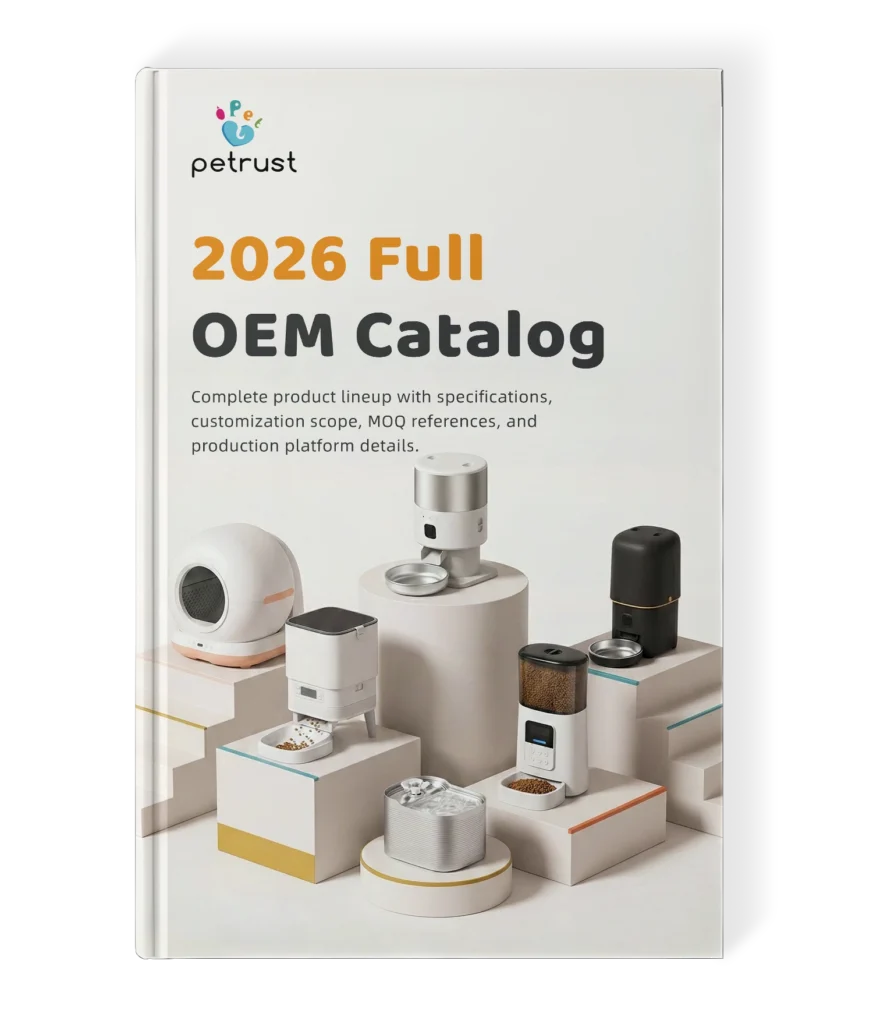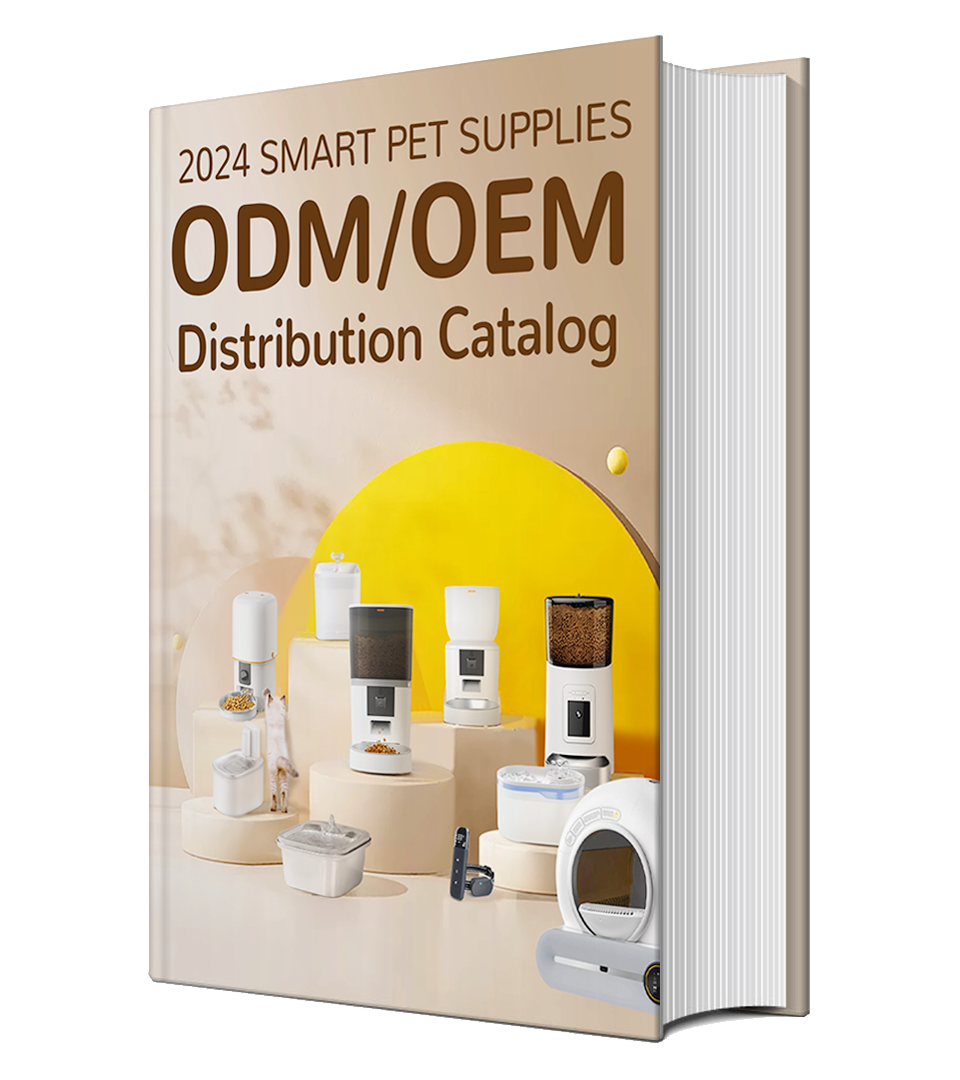

Automatic cat feeder OEM is often where ambitious pet brands either accelerate—or quietly lose months of time, budget, and momentum—especially when navigating how to start automatic cat feeder brand in a market that’s evolving faster than most buyers expect.
Because on the surface, it sounds simple: find a factory, customize a product, launch your brand. But once you step in, the reality hits differently.
You’re suddenly comparing suppliers who all look “similar,” reviewing quotes that don’t fully explain what’s included, and trying to make decisions that directly affect your margins, product quality, and long-term brand reputation.
Behind every successful product launch is a chain of decisions most people underestimate—product development, prototype testing, mass production, quality control, and meeting strict certification (CE, FCC, RoHS) requirements for global markets.
Miss one detail, and you’re not just facing delays—you’re risking returns, bad reviews, or even compliance issues.
This is where most “guides” fall short—they tell you what OEM is, but not how to make the right decisions under real-world pressure.
That’s exactly what this guide is built for.
It’s a practical, buyer-focused roadmap designed to help you:
- Understand OEM vs ODM decisions
- Plan your customization strategy with clarity (not guesswork)
- Control costs and avoid hidden risks that eat into your margins
- Learn how to import automatic cat feeder from China safely and efficiently
- Identify the best OEM pet feeder supplier for your specific business stage
By the time you finish reading, you won’t just “understand the process”—you’ll know how to move confidently from idea → supplier → launch, with fewer surprises and stronger control over your outcome.
Why More Brands Are Choosing Automatic Cat Feeder OEM in 2026
Momentum in the automatic cat feeder OEM space isn’t happening by accident—it’s being shaped by real shifts in how pet owners live, shop, and care for their animals.
For brands trying to stay competitive (or simply get a foot in the door), the decision is becoming less about whether to go OEM, and more about how to do it without wasting time or budget.
There’s a noticeable pattern among buyers who’ve already been through trial and error: those who move early with the right OEM strategy tend to build stronger margins and brand control, while others get stuck reselling products they can’t truly differentiate.
That gap is widening in 2026—and it’s worth understanding why.
Market Trends Driving Smart Pet Feeder Demand
The smart pet industry is no longer niche—it’s infrastructure.
What used to feel like a “premium add-on” is now part of everyday expectations. Pet owners aren’t just buying feeders—they’re buying convenience, visibility, and peace of mind.
Consumers expect:
- Remote feeding via app
- Camera monitoring
- Smart scheduling
These expectations are directly fueling the rise of private label smart pet feeder brands, particularly across platforms like Amazon and Shopify where differentiation is everything.
According to recent industry analysis by Grand View Research, the global pet care market continues to expand rapidly, driven by pet humanization and the growing adoption of smart technologies.
At the same time, improvements in global supply chain systems have quietly removed many of the barriers that once slowed down new entrants.
It’s now far more accessible to import from China with scalable production, better logistics visibility, and more flexible MOQs than even a few years ago.
This combination—rising demand and easier access to manufacturing—is exactly what’s pushing more brands toward OEM instead of traditional reselling models.
OEM vs Reselling: Profit Margin Comparison
Many sellers begin with reselling because it feels safer. No product development, no upfront complexity. But over time, the limitations become harder to ignore.
Margins stay tight. Pricing wars become unavoidable. And ultimately, you’re building someone else’s brand—not your own.
OEM shifts that dynamic in a meaningful way.
It gives you:
- Higher margins
- Brand ownership
- Custom differentiation
That’s why a growing number of sellers researching how to reduce OEM cost pet feeder eventually reach the same conclusion: once you scale, OEM often becomes more cost-efficient than reselling—while also giving you far more control.
It’s not just about saving money; it’s about deciding where your long-term leverage comes from.
Why Private Label Cat Feeder Is Winning on Amazon
Scroll through Amazon’s top-performing listings, and a clear pattern emerges—private label brands are dominating, even in highly competitive niches.
That’s not luck. It’s structure.
Private label brands outperform because they:
- Control reviews & branding
- Optimize product features
- Build long-term brand equity
Instead of competing purely on price, they shape the customer experience—from packaging to functionality to after-sales support.
This is exactly why more buyers are actively looking for the right pet product OEM supplier rather than relying on off-the-shelf products.
For brands focusing specifically on feeder-related SKUs, the execution side becomes just as important as the idea itself.
OEM vs ODM Pet Feeder: Which Model Fits Your Business?
Choosing between OEM and ODM often feels like a technical decision—but in reality, it’s a strategic one. It shapes how fast you launch, how much control you keep, and how your costs evolve over time.
Some buyers prioritize speed. Others prioritize control. Most are trying to balance both without making a costly misstep early on.
What Is OEM in Pet Feeder Manufacturing
OEM (Original Equipment Manufacturing) allows you to:
- Customize existing products
- Add branding
- Modify features
This model tends to appeal to brands that already have a clear positioning idea and want to differentiate without starting from scratch.
It offers a balance—enough flexibility to stand out, without the full cost and timeline of developing a product entirely from zero.
What Is ODM and When It Makes More Sense
ODM shifts more responsibility to the supplier. Instead of building on an existing product, you’re working with a ready-made design.
ODM means:
- Supplier handles design + development
- You customize branding
For many first-time buyers, ODM provides a lower-risk entry point. It simplifies decision-making and reduces the need for deep product knowledge in the early stages.
OEM vs ODM Automatic Cat Feeder: Cost, Speed, Control Comparison
A question that comes up frequently is:
The answer depends less on theory and more on your business stage and goals:
- OEM = long-term asset building
- ODM = fast validation tool
Both models work—just in different ways, at different times.
How to Start an Automatic Cat Feeder OEM Project (Step-by-Step Process)
Starting an automatic cat feeder OEM project often feels exciting at first—there’s the idea of building your own brand, shaping features, and entering a fast-growing smart pet market.
But once the process begins, most buyers quickly realize something important: success is rarely about one big decision. It’s about a series of smaller ones, each quietly influencing cost, timeline, and product stability.
There’s also a pattern many experienced buyers recognize later on—projects rarely fail at the end.
They usually go off track much earlier, during planning or supplier selection, when key assumptions are still untested. That’s why the early steps deserve more attention than they usually get.
Step 1–3: Product Planning & Supplier Selection for Automatic Cat Feeder OEM
This stage quietly determines whether your project becomes a scalable product—or a costly revision cycle later on.
Small decisions here often carry long-term consequences, especially when features, positioning, and supplier capability are not aligned from the beginning.
Define Product Positioning
Before discussing factories or pricing, it helps to clarify where your product is meant to sit in the market:
- Entry-level vs premium
- WiFi vs camera-enabled
These choices directly affect cost structure, hardware complexity, and even after-sales expectations.
Choose Base Model
One of the most common (and costly) mistakes is trying to build everything from scratch.
In most cases, it’s more efficient to start with a proven structure:
- Avoid starting from scratch—use proven designs
From there, customization becomes much more controlled and predictable.
For brands aiming for higher positioning, camera-enabled models are increasingly popular in competitive markets.
However, they also introduce more complexity in hardware stability, app integration, and user experience expectations.
Find Supplier
At this stage, the supplier is no longer just a vendor—they become a long-term product partner.
Choosing carefully here often prevents most downstream issues.
Look for:
- Proven smart pet feeder manufacturer
- Strong R&D capability
- Experience in automatic pet feeder OEM
Step 4–6: Prototype, Tooling & Certification Process
This stage is where ideas start turning into something real—something you can actually test, touch, and evaluate.
It’s also where most avoidable mistakes tend to surface, simply because this is the first time the product behaves outside of theory.
Sampling & Prototype Testing
It’s tempting to move quickly here, especially when the initial samples look “good enough.”
But in practice, skipping or rushing prototype testing is exactly where many common problems with automatic cat feeders quietly emerge and get discovered too late:
- Food jamming
- App disconnection
- Inaccurate portioning
These issues rarely show up on paper—they appear when real pets interact with the product in real conditions. That’s why structured testing matters more than first impressions.
A small but important mindset shift here:
Mold Development
Once the prototype direction is confirmed, mold development becomes the foundation of scalability and differentiation.
This is where your product starts moving from “a sample” to something repeatable at scale.
Tooling costs can vary significantly depending on complexity, but this step is rarely optional if you want true customization in design, structure, or branding.
It’s also one of the key areas where OEM cost structure for pet feeder products becomes more visible and easier to optimize over time.
In practical terms, this stage defines how far your product can be customized—and how efficiently it can be produced later without quality drift.
Certification
For global markets, certification is not just a formality—it directly affects whether your product can legally enter and sell in certain regions.
Essential requirements typically include:
- CE
- FCC
- RoHS
For brands targeting Europe specifically, CE compliance is not optional—it’s a legal requirement.
According to the European Commission’s official guidelines on CE marking, products must meet strict safety, health, and environmental protection standards before entering the EU market.
Step 7–9: Mass Production & Quality Control in Automatic Cat Feeder OEM
At this stage, decisions become less about concepts and more about execution under real manufacturing pressure.
This is where timelines, defect rates, and customer satisfaction are quietly shaped.
Mass Production
Once samples are approved, the project moves into mass production.
This is often the point where expectations and reality need careful alignment.
Even a well-designed product can face challenges when scaling—especially if communication with the factory isn’t precise or if production standards are not clearly defined in advance.
Small inconsistencies at this stage can turn into larger issues later, such as: packaging mismatches, component variation, or performance differences between batches.
That’s why experienced buyers usually treat this phase as a controlled transition rather than a simple “production start.”
It’s also the moment where coordination between your brand requirements and the factory’s actual capabilities becomes critical for long-term stability.
Quality Control
Strong quality control for pet feeder manufacturing ensures:
- Consistency
- Lower defect rate
But beyond these two outcomes, quality control is really about protecting your brand reputation after the product leaves the factory.
A single overlooked issue—whether in feeding accuracy, motor stability, or sensor response—can quickly translate into negative reviews once the product reaches end users.
That’s why structured inspections during production are far more effective than relying only on final-stage checks.
Many experienced buyers also rely on external evaluation frameworks, especially before scaling orders.
These early validations often prevent issues that are expensive to fix later, particularly when production volumes increase.
Shipping
Once production passes inspection, attention naturally shifts to logistics. This stage is often underestimated, even though it directly affects delivery timelines and customer satisfaction.
Understanding shipping conditions early helps avoid unexpected delays—especially when coordinating international freight, customs clearance, or consolidated shipments.
Small oversights here can disrupt entire launch schedules, even when production itself is running smoothly.
For many brands working with a pet product OEM supplier, aligning production timelines with shipping schedules is just as important as the manufacturing process itself.
When both sides are coordinated properly, the transition from factory to market becomes significantly more predictable and far less stressful.
Automatic Cat Feeder Customization Guide (Features, App & Branding)
Once a brand starts moving deeper into the automatic cat feeder OEM process, customization quickly becomes the point where ideas either turn into real differentiation—or stay stuck as “just another white-label product.”
It’s rarely about adding more features for the sake of it. It’s more about choosing the right combination of hardware, software, and branding that actually fits your target market and price positioning.
And in most real buyer journeys, this is where clarity saves both time and budget.
Hardware Customization Options for Automatic Cat Feeder
On the hardware side, the flexibility is usually broader than many first-time buyers expect.
But the key is knowing what actually impacts user experience versus what only looks good on a spec sheet.
You can customize:
- Housing material
- Food tank capacity
- Motor system
These decisions may seem technical, but they directly influence durability, feeding accuracy, and even perceived product quality on e-commerce platforms.
For brands targeting multi-pet households, RFID-based feeding is becoming a more premium direction.
App Customization for Smart Pet Feeder (WiFi / Camera / Voice)
In smart pet products, the app is often where users judge the entire product experience. Even a well-built feeder can feel “cheap” if the app is slow or unintuitive.
App features define user experience:
- Feeding schedule
- Camera monitoring
- Voice interaction
These features are no longer considered “extra”—they’re expected in mid-to-high-end products.
That’s why many brands investing in private label development focus heavily on app stability and UI design as part of their positioning strategy, not just hardware specs.
A smoother app experience often translates directly into better reviews, lower return rates, and stronger brand trust over time.
Logo and Packaging Customization for Private Label Pet Feeder
Brand perception doesn’t start when the product is used—it starts the moment the box arrives.
Packaging is often underestimated, yet it plays a quiet but powerful role in shaping customer expectations.
Branding typically includes:
- Logo printing
- Color box design
- Instruction manual
Even small adjustments in packaging quality can significantly influence how “premium” the product feels, especially in competitive marketplaces like Amazon, where first impressions are extremely fast and unforgiving.
Function Upgrades That Increase Retail Value
At a certain point, customization shifts from “design choices” to “pricing strategy.”
Some features don’t just improve usability—they directly move your product into a higher retail bracket.
High-value features:
- HD camera
- Night vision
- Multi-pet recognition
These upgrades significantly impact pricing and differentiation.
They also help brands justify premium positioning instead of competing purely on cost.
Automatic Cat Feeder MOQ, Pricing & Cost Breakdown
For most buyers stepping into the automatic cat feeder OEM journey, pricing rarely feels straightforward at the beginning.
The numbers may look simple on paper, but once MOQ, tooling, certification, and customization enter the conversation, the real budget picture becomes much more layered.
And it’s completely normal to feel a bit uncertain here—because this is usually the point where ideas start turning into real financial commitments, and every decision begins to matter more than expected.
Minimum Order Quantity for Automatic Cat Feeder Explained
MOQ is often the first real “reality check” in the OEM process.
It reflects not just factory policy, but also production economics—molding setup, material sourcing, and assembly efficiency all depend on scale.
Typical MOQ:
- Standard model: 300–500 units
- Custom model: 500–1000 units
At first glance, these numbers may feel high for a new brand. But in most automatic pet feeder OEM projects, MOQ is also where pricing becomes viable for both sides.
The key is knowing that flexibility often exists behind the scenes—especially when negotiation is structured correctly.
A well-prepared negotiation approach can sometimes adjust entry barriers without compromising factory cooperation.
And for brands trying to test the market before scaling, this becomes especially important.
Automatic Cat Feeder Production Cost Breakdown
Once MOQ is clearer, the next layer is understanding where your money actually goes.
Many first-time buyers focus only on unit price, but OEM costing is a combination of multiple moving parts.
Each of these elements contributes differently to your final margin.
For example, a lower unit cost may look attractive initially, but limited customization or weak certification support can create hidden risks later in the supply chain.
Tooling Cost for Pet Feeder OEM
Tooling is where product identity begins to take shape.
It’s not just a cost—it’s the foundation of how your product will physically exist in the market.
Brands that invest thoughtfully in tooling usually gain more control over design uniqueness, which becomes harder for competitors to replicate quickly.
In crowded marketplaces, this subtle advantage often matters more than expected.
Certification Cost for Pet Products (CE, FCC, RoHS)
Certification is one of those areas that doesn’t always feel urgent at the start—but becomes unavoidable once export markets are involved.
Mandatory for exporting:
- Europe → CE
- USA → FCC
These certifications are not just formalities; they directly influence whether your product can be legally sold and trusted in key markets.
Cutting corners here may reduce short-term costs, but it significantly increases long-term business risk.
Cheap vs Reliable Supplier: Real Cost Comparison
Cost comparison often goes beyond numbers—it reflects operational stability over time.
A pattern seen across many sourcing cases is that focusing only on unit price often leads to higher hidden costs later—returns, replacements, and brand damage included.
Research by McKinsey reinforces this: fragmented or inefficient supply chains often result in higher long-term operational costs due to quality failures and disruptions.
This is where a more strategic pet product OEM supplier selection mindset becomes essential—not just chasing the lowest quote, but balancing cost with consistency and risk control.
Automatic Cat Feeder OEM Cost Calculator (Example)
To make everything more tangible, here’s how a typical cost structure might look in a real 500-unit order:
This kind of breakdown helps bridge the gap between factory pricing and real market positioning, especially when planning margins for Amazon or Shopify.
How to Choose an Automatic Cat Feeder OEM Manufacturer
Choosing the right partner in an automatic cat feeder OEM project is less about finding “the cheapest option” and more about identifying who can support your product beyond production—especially when scaling or troubleshooting becomes necessary.
Factory vs Trading Company: What’s the Difference
One of the first decisions in the OEM journey is whether you’re working directly with a factory or through a trading company.
On paper, both can deliver products—but the experience, pricing structure, and level of control are quite different.
Working with a factory usually means fewer intermediaries, which helps reduce cost and improves clarity when discussing customization, tooling, or production adjustments.
Trading companies often simplify communication and project handling, especially for buyers new to China sourcing.
However, that convenience typically comes with added margin layers and less visibility into actual production processes.
Over time, many brands realize that the choice here directly impacts both profitability and product control—not just logistics convenience.
How to Verify a Pet Feeder Supplier in China
Once a supplier claims manufacturing capability, the next challenge is validation.
This step is where experienced buyers slow down and look beyond brochures or sales presentations.
A reliable pet feeder supplier in China should be able to consistently demonstrate operational transparency—not just promises.
Check:
- Certifications
- Client references
- Production videos
These signals help reduce uncertainty, especially when evaluating new partners remotely.
Certifications confirm compliance readiness, client references provide real-world validation, and production videos help you understand whether the factory actually operates at scale.
A small pause at this stage often saves significant correction costs later in production.
Audit Checklist for Pet Product Manufacturers
Once initial verification is complete, the focus naturally shifts to deeper operational capability.
This is where you assess whether the supplier can consistently deliver—not just once, but across multiple production cycles.
Key factors:
- R&D capability
- Production capacity
- Quality control system
Among these, quality control is often underestimated.
A supplier may have strong marketing and reasonable pricing, but without structured QC processes, product inconsistency becomes a recurring issue at scale.
It helps to think of this stage as evaluating not just what the factory can produce, but how reliably they can produce it over time.
Sample Evaluation: What Most Buyers Miss
Sampling is often treated as a formality, but in practice, it’s one of the most revealing stages in the entire OEM process.
The sample is not just a prototype—it’s a preview of production discipline, software stability, and mechanical consistency.
During evaluation, it’s important to test beyond appearance and focus on real-world performance:
- App stability
- Feeding accuracy
- Noise level
These three factors directly influence customer satisfaction and long-term product reviews.
An automatic cat feeder that looks good but performs inconsistently will almost always lead to returns or negative feedback once scaled.
Real Buyer Scenarios: How Brands Succeed with Private Label Cat Feeders
Behind every successful automatic cat feeder OEM launch, there’s usually a very practical story—not a perfect plan.
Most brands don’t start with clarity; they start with constraints: limited budget, tight timelines, and the pressure to make the “right first product” choice without wasting a cycle.
What separates successful launches from stalled ones is rarely the idea itself.
It’s how the product strategy is matched to the business stage—especially when working with a private label smart pet feeder model that needs to balance speed, differentiation, and cost control.
To make this more concrete, here are two very typical (and very real) buyer paths.
Amazon Seller Case: Low MOQ & Fast Launch Strategy
Some sellers don’t want complexity—they want speed and validation. Their goal is simple: get a product live, test demand, and refine later.
In this scenario, the focus is less about deep customization and more about execution efficiency.
A reliable pet product OEM supplier becomes critical here—not just for manufacturing, but for helping reduce delays during sampling, packaging alignment, and listing preparation.
This is also where many sellers start asking how to import from China more smoothly, especially when managing first-time logistics, compliance, and platform launch timing at the same time.
Premium Brand Case: Custom Smart Feeder with App Integration
On the other side of the spectrum are brands building long-term positioning. They are not just selling a feeder—they are building an ecosystem.
Here, decisions go far beyond hardware. App stability, user experience, firmware updates, and long-term scalability all become part of the product definition.
This is where product development, prototype testing, and iterative improvement matter as much as manufacturing itself.
Interestingly, many of these brands initially underestimate how much coordination is required between hardware and software teams during mass production scaling.
Once resolved properly, however, the payoff is significant: stronger pricing power and higher customer retention.
Common Mistakes When Working with Automatic Cat Feeder OEM Suppliers
Even experienced buyers sometimes run into avoidable issues—not because they lack knowledge, but because certain risks are easy to underestimate in early discussions.
Choosing the Cheapest Supplier Without QC
Lower pricing often looks attractive at first glance, especially when comparing multiple quotes.
But without proper quality control, the long-term cost can increase quickly.
What initially feels like cost-saving can turn into product returns, negative reviews, and unexpected rework cycles that delay scaling entirely.
Ignoring App Stability and Firmware Issues
Hardware gets most of the attention, but software quietly determines user experience.
In smart feeders, app performance, connectivity stability, and firmware reliability often define whether customers trust the product or abandon it after setup.
This is especially important for brands building private label smart pet feeder lines where user experience directly impacts reviews and ranking performance.
Skipping Certification and Compliance
Compliance is not a “later step”—it is a gatekeeper for market entry.
Missing or incomplete certification (CE, FCC, RoHS) can block shipments entirely, even if production is already completed.
For many first-time importers, this becomes an unexpected bottleneck that delays launch by weeks or even months.
OEM Supplier Checklist & Cost Calculator (Free Download)
Before committing to production, having structured tools can make decision-making far less stressful and far more objective.
Instead of relying on assumptions, you can evaluate suppliers and costs with clearer visibility.
Automatic Cat Feeder Supplier Evaluation Tool
Before you place an order, this tool can help you:
- Compare 3+ suppliers objectively
- Identify hidden risks early
- Avoid fake factories or trading intermediaries
- Choose the best OEM partner for your stage
Automatic Cat Feeder Cost Calculator
Before you place an order, this calculator can help you:
- Estimate your total landed cost
- Understand real profit margins
- Avoid underpricing your product in early listings
Automatic Cat Feeder Factory Audit Checklist
Before you place an order, this checklist can help you:
- Identify real manufacturers vs trading companies
- Evaluate production capability beyond surface-level claims
- Avoid hidden risks before making any payment
FAQ: Automatic Cat Feeder OEM, MOQ, Cost & Timeline
Conclusion
By this point, the picture becomes clearer: working with an automatic cat feeder OEM partner is not just a procurement decision—it’s a structured process of building something that can scale, compete, and sustain itself in a crowded market.
The difference between a product that struggles and one that performs consistently usually comes down to a few grounded decisions made early on:
- Choosing the right supplier
- Controlling cost and quality
- Making smart customization decisions
Each of these choices quietly shapes your margins, your brand perception, and your ability to grow beyond a single product listing.
Why Trust This Guide?
With 13+ years in smart pet product manufacturing, at Petrust®, we’ve supported 500+ global brands in launching automatic feeders across Amazon, Shopify, and retail channels.
From OEM customization and prototype development to compliance, logistics, and production scaling, these insights come directly from real buyer projects—not theoretical models or generic advice.
Next Step
At this stage, most brands are ready to move from planning into validation. That usually starts with a few practical steps:
And when you’re ready to map out product direction more clearly, the Automatic Cat Feeder Hub might be helpful for understanding which models align best with your brand positioning and market goals.