
The stainless steel upgrade sounds great. but does the math work?
Imagine your brand is preparing to launch a new pet water fountain.
The product concept looks promising. The market research suggests room for a more premium product. Then someone makes a familiar suggestion:
“We should use stainless steel. It looks better, and customers may be willing to pay more.”
It sounds reasonable.
Stainless steel has a strong association with cleanliness, durability, and quality. It can also give a pet fountain a more premium appearance than an ordinary plastic design.
But there is a question that often gets missed in product meetings:
Will the material upgrade actually make the product more profitable?
A stainless steel design can affect much more than the drinking bowl. It may change the manufacturing process, assembly requirements, product weight, packaging, shipping, OEM cost, and retail margin.
And if customers will not pay enough to cover those additional costs, what exactly has your brand gained?
Plastic is not automatically a compromise. Stainless steel is not automatically an upgrade. A hybrid design may offer a better balance.
At Petrust, we look at pet fountain development from a manufacturing perspective. Material selection has to work within the complete product structure and the commercial model—not just look attractive in a product photograph.
Let’s examine what brands are really paying for when choosing between stainless steel and plastic pet fountains.
Material is only one part of a pet fountain platform decision. The power system, filtration architecture, pump configuration, smart functions, and cleaning requirements also affect what a brand can realistically develop and sell.
If you are still comparing the overall product direction, our pet water fountain platform and OEM development guide offers a broader view of how these decisions fit together—and where an early design choice can create downstream manufacturing costs.
| Material strategy | Product Examples | Where it may fit | The question to answer |
|---|---|---|---|
| Plastic platform |
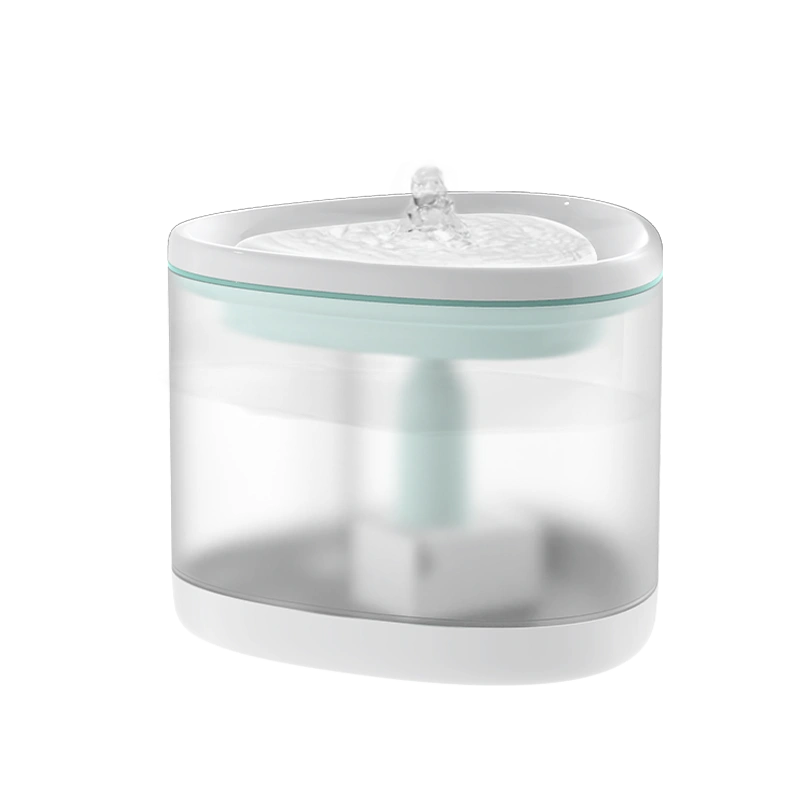 Petrust WF003 |
Cost control, lightweight construction, molded geometry, and entry-level product development | Can the product deliver the required experience at the target price? |
| Stainless steel platform |
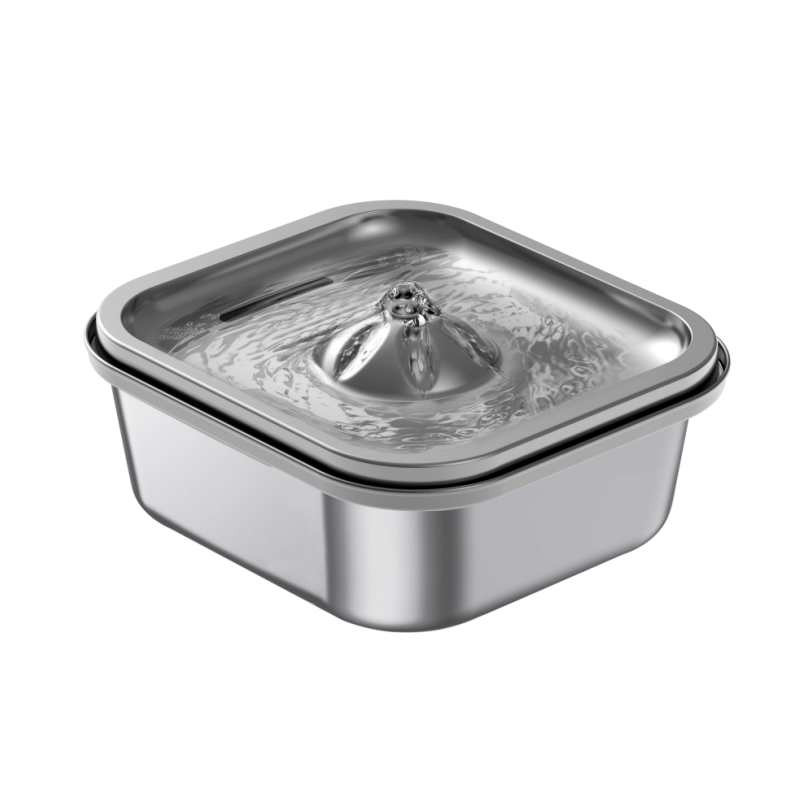 Petrust 008 |
Metal material experience, visible finish, and premium positioning | Will customers pay enough extra to justify the upgrade? |
| Hybrid platform |
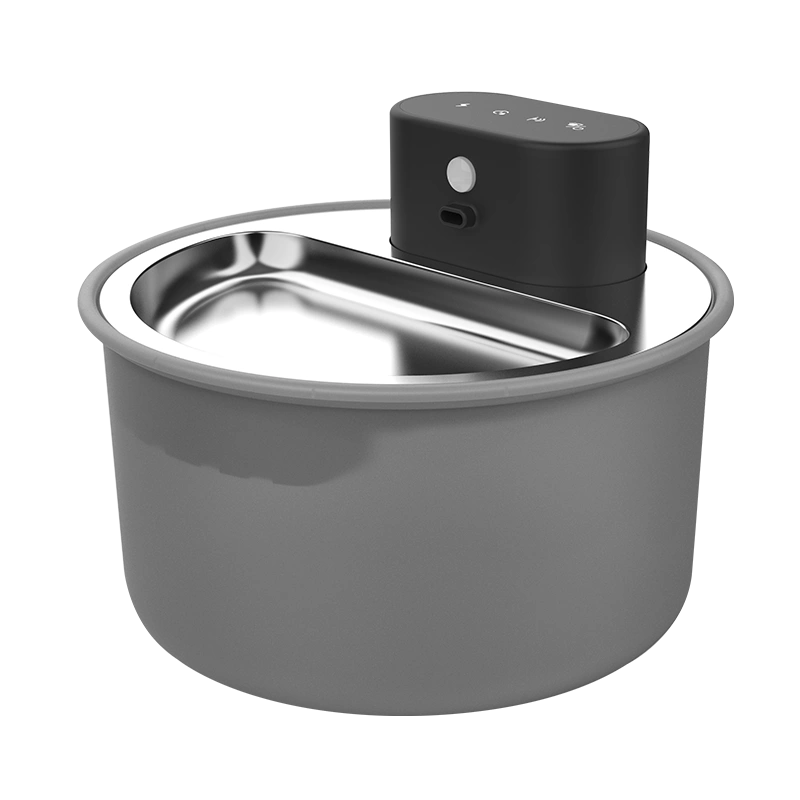 Petrust WF014 |
Stainless steel in the drinking area with a plastic housing or base | Can each material do the job it is best suited for? |
These are starting points, not automatic recommendations. The right choice depends on the product architecture, material specifications, OEM cost, target retail price, manufacturing requirements, and customer expectations.
Stainless Steel vs Plastic: The Difference Is Bigger Than Appearance
A pet water fountain is not simply a container holding water. It combines a drinking surface, reservoir, pump compartment, filtration system, electrical components, and parts that need to be assembled, maintained, and cleaned.
The materials used in those components affect how the product can be designed and manufactured.
Stainless Steel: A Premium Look with Different Engineering Requirements
Stainless steel is valued for its metallic appearance, rigidity, and corrosion resistance when the appropriate grade, finish, and manufacturing conditions are used.
It can be stamped, formed, welded, and finished into components suited to particular product designs.
For a pet fountain, it may provide the material experience expected from a premium drinking surface. But it also brings specific manufacturing considerations:
- Material grade and thickness
- Stamping and forming requirements
- Edge finishing and surface quality
- Welding or joining methods, where applicable
- Dimensional consistency
- Protection against scratches during packaging and transportation
The finish matters. A poorly finished metal component can have rough edges, visible processing marks, or an appearance that does not match the product’s intended price point.
Using stainless steel is one decision. Manufacturing a well-finished stainless steel component is another.
Plastic: Lightweight Doesn't Mean Low Quality
Plastic has an undeserved reputation for being the cheaper, less sophisticated option.
In product engineering, molded plastic can be extremely practical. It allows designers to integrate mounting points, reinforcing ribs, clips, channels, and other structural features into a component.
There is another detail worth remembering: plastic is not one material. Different resin types and grades offer different mechanical, chemical, and processing characteristics.
Comparing a stainless steel bowl with an unspecified “plastic fountain” is therefore not a complete engineering comparison. The resin specification needs to match the component’s function, operating conditions, and manufacturing requirements.
A properly specified plastic component can provide the rigidity, dimensional stability, and functionality required for its intended application.
Its potential advantages include:
- Lower product weight
- Greater freedom in molded geometry
- Integrated structural features
- Flexible color and appearance options
- Opportunities to consolidate components
- Competitive manufacturing economics at suitable production volumes
Neither material automatically produces a better fountain. The right choice depends on what the product needs to do.
Hygiene: Does Stainless Steel Actually Make a Pet Fountain Cleaner?
Let’s address one of the biggest reasons brands consider stainless steel: hygiene perception.
Many consumers associate stainless steel with cleanliness. They see it in kitchens, food-preparation equipment, and household products where cleaning matters. That association can make a stainless steel pet fountain attractive.
But there is a difference between looking hygienic and being easy to keep clean.
Does Stainless Steel Actually Reduce Bacterial Buildup?
Stainless steel is not self-cleaning or antibacterial simply because it is metal.
A 2025 study published in the International Journal of Food Microbiology compared biofilm formation by Vibrio parahaemolyticus on stainless steel and polypropylene food-contact surfaces.
Under the study’s controlled conditions, initial bacterial attachment was faster on polypropylene than on stainless steel, while environmental factors—particularly pH—also influenced biofilm formation.
The study is relevant to understanding how material and conditions can affect surface contamination. It was not a pet fountain test, however, and it does not establish that stainless steel prevents bacterial growth in a household fountain.
The practical point is straightforward: material choice alone does not guarantee microbial control.
Scratches, deposits, water residue, and accumulated organic material can still create cleaning challenges. The same principle applies to plastic. A damaged, heavily scratched, or difficult-to-clean component may become harder to maintain over time.
It helps to distinguish four things:
Hygiene perception: What customers believe the material represents.
Surface properties: How the material behaves under actual conditions.
Cleaning effectiveness: How easily residues and deposits can be removed.
Microbial control: What cleaning procedures and validated measures actually achieve.
These are related, but they are not interchangeable.
Why the Entire Water Path Matters More Than the Bowl Material
This is where product engineering matters more than the material label.
A pet fountain can contain several water-contact areas:
- Drinking bowl
- Water reservoir
- Pump compartment
- Filter compartment
- Internal water channels
- Connecting surfaces and joints
If one of these areas is difficult to access, cleaning the visible stainless steel bowl will not solve the entire maintenance problem.
Consider a fountain with an attractive stainless steel drinking surface but a complicated internal structure. The owner removes and washes the bowl, but residue remains around the pump compartment or in an internal area that is difficult to reach.
The bowl may look clean. The complete water path still needs attention.
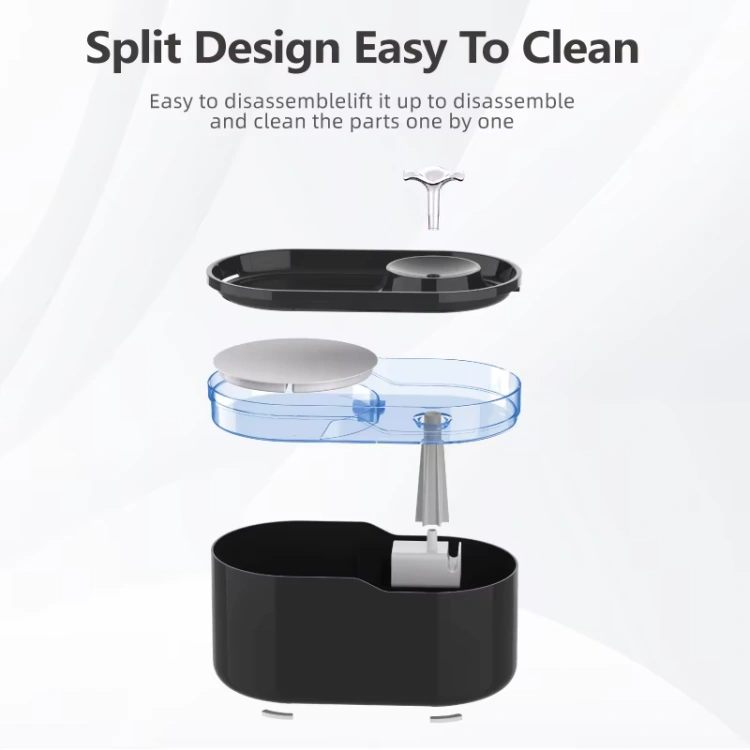
At Petrust, we approach fountain development as a complete product-structure problem. The drinking surface, reservoir, pump area, filter access, removable components, and assembly arrangement all need to be considered together. The specific design requirements depend on the fountain platform.
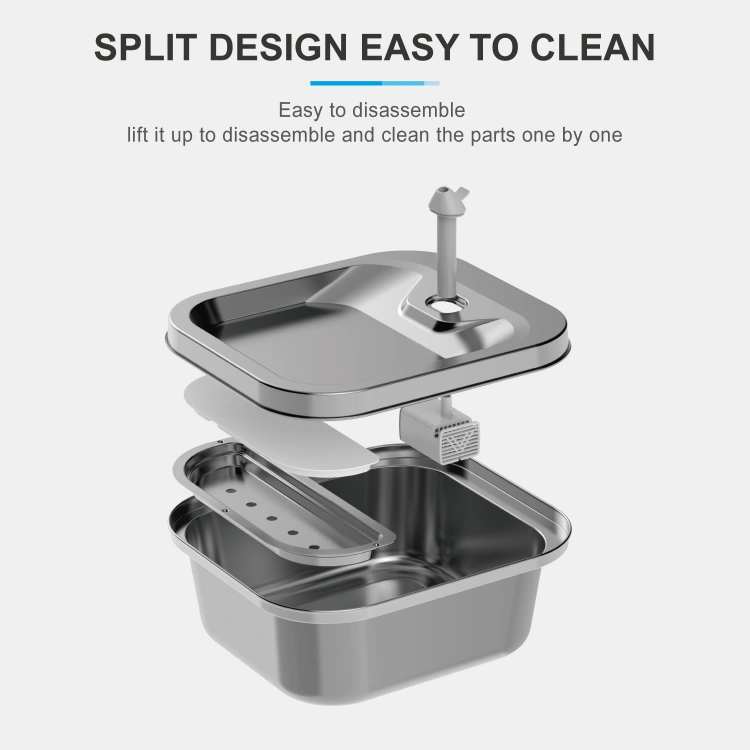
A stainless steel bowl cannot compensate for a poorly designed water path.
Durability: Stainless Steel Can Last Longer, But Only If the Design Is Right
Stainless steel is often associated with long-term durability. That association is understandable, but material comparisons become misleading when they ignore the complete product.
A fountain is exposed to water, repeated cleaning, handling, assembly, and everyday use. Different components experience different stresses.
Does Stainless Steel Really Last Longer Than Plastic?
Stainless steel offers useful characteristics, including rigidity and corrosion resistance under suitable conditions. However, it is not immune to damage. It can develop scratches, dents, discoloration, or corrosion under unsuitable material, processing, or environmental conditions.
Plastic behaves differently. Depending on the resin and design, components may experience scratching, cracking, deformation, or material degradation over time.
| Engineering consideration | Stainless steel | Plastic |
|---|---|---|
| Corrosion | Depends on grade, finish, and environment | Not subject to metallic corrosion |
| Surface damage | Can scratch or dent | Can scratch or develop visible wear |
| Impact behavior | May dent or deform | Depends on resin and structural design |
| Structural rigidity | Generally high at suitable thicknesses | Depends on geometry and material |
| Long-term appearance | Depends on finish and maintenance | Depends on resin, color, and surface condition |
The material properties have to be evaluated against the actual product requirements.
304 Stainless Steel: What Brands Should Know
304 stainless steel is commonly used where general-purpose corrosion resistance is required.
It can be a suitable option for pet fountain components, but simply writing “304 stainless steel” on a specification sheet does not guarantee the finished component will perform as expected.
Brands should also consider:
- Whether the grade matches the intended application
- Material thickness
- Surface finishing
- Forming and fabrication quality
- Welding and joining conditions
- Cleaning agents and operating environment
- Edge quality and finished surfaces
Even 304 stainless steel is not immune to corrosion under every condition.
Where Structural Problems Actually Begin
With stainless steel, attention should be paid to scratches, dents, edge quality, and deformation during handling or processing.
With plastic, structural details deserve particular attention. A housing may look acceptable as a sample but have weaknesses around clips, mounting points, thin sections, or areas exposed to repeated mechanical stress.
Wall thickness, reinforcing ribs, corner geometry, and stress concentration can all affect structural performance.
A more expensive resin cannot automatically rescue a poorly designed component. Likewise, a metal component with unsuitable thickness or poor finishing is not automatically durable.
At Petrust, material and structural decisions need to be considered as part of product development and manufacturing—not as isolated purchasing choices. Where a particular durability test is required, it should be defined for the actual product and supported by the corresponding test records.
A stronger material cannot rescue a weak product structure.
Cleaning and Dishwasher Use: Don't Confuse Easy-to-Clean with Dishwasher-Safe
Here is a question that sounds simple but causes plenty of confusion:
Are stainless steel pet fountains dishwasher-safe?
The answer depends on the component—not just the material.
Are Stainless Steel Pet Fountain Bowls Dishwasher-Safe?
A stainless steel bowl may be suitable for dishwasher cleaning, but the material alone does not establish compatibility. The actual construction, surface finish, joining details, and resistance to the cleaning conditions all matter.
A 2025 study in Heat and Mass Transfer examined surface texture and cleanability in 3D-printed stainless steel components. It found that post-processing and surface structure influenced soiling and cleaning performance.
The study also reported that residual microbial contamination in some investigated 3D-printed components remained higher than in conventionally manufactured reference pipes.
This is useful evidence that stainless steel surface condition and manufacturing method matter. It is not a dishwasher test of ordinary stamped pet fountain bowls, and it should not be presented as one.
Temperature, detergents, repeated washing, and component construction can all matter. Brands should verify dishwasher compatibility for the actual component before making a marketing claim.
Cleaning Access Often Matters More Than Material
A plastic fountain may have a straightforward structure with easily removable components and accessible surfaces. Another design may contain narrow corners, complicated joints, and difficult-to-reach areas.
The same is true of stainless steel products.
Think about what an owner actually needs to do during routine maintenance:
- Remove the drinking bowl.
- Empty the reservoir.
- Remove and clean the pump.
- Access the filter compartment.
- Clean internal water channels.
- Remove accumulated residue.
- Reassemble the product correctly.
If routine cleaning requires tools or involves several small, difficult-to-remove parts, the maintenance experience can quickly become frustrating.
This is why cleaning access should be considered during product development, not added as an afterthought.
Why the Entire Fountain Cannot Be Treated as Dishwasher-Safe
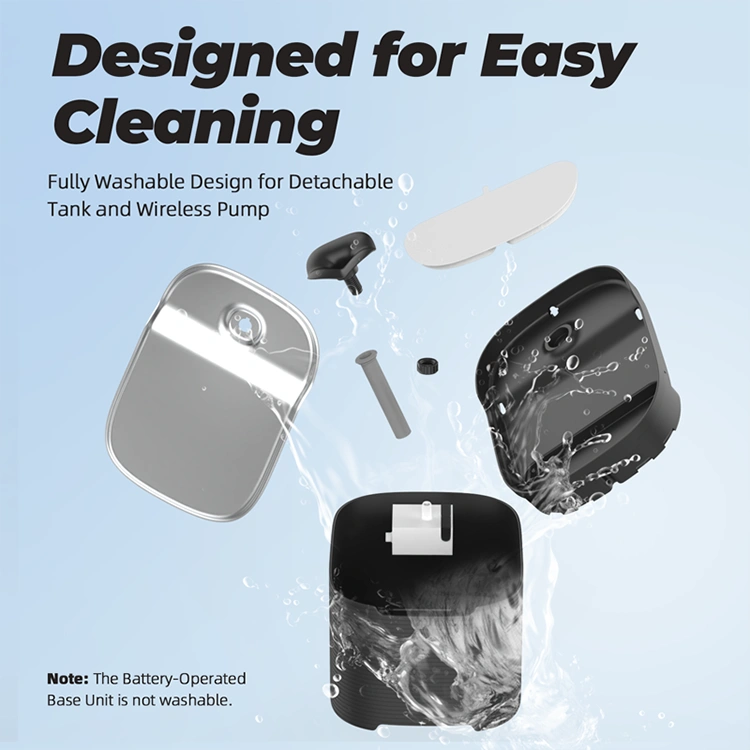
A stainless steel drinking bowl does not make the pump, motor, electronic control board, battery, or sensor components dishwasher-safe.
These components have different material and functional requirements. Even removable plastic parts need individual compatibility checks before dishwasher-safe claims are made.
Cleaning instructions should identify which components can be removed, which can be washed separately, which require hand cleaning, and how electrical components should be protected.
At Petrust, product architecture needs to account for how components are removed, accessed, cleaned, and reassembled. The instructions must match the actual product design.
The easiest fountain to clean is not necessarily the one with the most stainless steel. It is the one designed to come apart properly.
Weight and Shipping: The Cost Nobody Notices During Product Design
A stainless steel pet fountain may look excellent in a product presentation. But eventually, it has to leave the factory.
Material selection can influence product weight, packaging protection, carton configuration, and transportation requirements.
How Much Weight Does Stainless Steel Add?
It depends on the construction.
A stainless steel bowl does not necessarily make an entire fountain dramatically heavier. Its impact depends on component dimensions, material thickness, design, and how much of the product uses metal.
A small removable bowl and a fountain with extensive metal construction are two very different products. For an OEM project, compare actual product specifications rather than assuming all stainless steel models carry the same weight penalty.
Material is not the only design choice that affects a fountain’s weight and overall architecture. A cordless model introduces its own considerations around battery placement, charging structure, internal space, and portability, while a plug-in model follows a different design path.
If portability and product configuration are also part of your launch decision, comparing cordless and plug-in pet fountain designs may help prevent material and power-system choices from creating avoidable weight, packaging, or manufacturing trade-offs.
Product Weight Is Not the Same as Shipping Cost
Plastic can reduce net product weight and provide more flexibility for compact or portable designs. But a lighter product does not automatically cost less to ship.
There are several different measurements:
Net weight: The product itself.
Gross weight: The product plus its packaging.
Volumetric weight: A calculation based on package dimensions.
Master carton weight: The combined weight of packaged units in an outer carton.
Depending on the shipping method and carrier, freight may be charged using actual weight, dimensional weight, or whichever applicable measure is greater.
Packaging can change the result. A stainless steel bowl may need additional protection against scratches or dents. A plastic fountain may need protective inserts to prevent damage to clips, housings, or other components.
Carton Design Can Matter as Much as Material Choice
For an OEM fountain project, packaging considerations may include:
- Individual product dimensions
- Protective inserts
- Bowl and component placement
- Carton dimensions
- Units per master carton
- Pallet-loading efficiency
- Protection against movement and surface scratches
For Amazon FBA sellers, package dimensions and shipping weight may also influence fulfillment fees, depending on the applicable fee structure and product classification.
The final calculation should use actual packed-product specifications and current carrier or platform rules.
A lighter plastic product with oversized packaging may not be cheaper to ship than a compact stainless steel model. Likewise, a heavier product with efficient carton dimensions may still achieve reasonable freight economics.
A material upgrade that looks good on a product page can become an expensive decision once the cartons start moving.
BOM Cost vs Retail Price: Can Your Brand Recover the Stainless Steel Premium?
Now we get to the question that should have been asked at the beginning:
How much more does the stainless steel design actually cost, and can your brand recover that difference?
A material comparison that stops at raw material price is not particularly useful to an OEM buyer. The real comparison needs to include manufacturing processes and the economics of the finished product.
There is a bigger cost issue here: the factory quotation is only one part of the financial picture. Tooling, component processing, assembly, packaging, freight, import-related expenses, and channel costs can all change the economics of an OEM project.
Brands comparing more than just material options may also benefit from understanding how smart pet product manufacturing costs build up from factory pricing to landed cost, especially before treating the lowest unit quotation as the most profitable choice.
Why Stainless Steel Changes the BOM
Depending on the design,
A stainless steel fountain may involve:
- Stainless steel sheet or other metal stock
- Stamping and forming
- Welding or joining
- Surface finishing
- Additional protective packaging
- Assembly requirements
A plastic fountain may involve:
- Resin
- Injection-molded components
- Mold and tooling investment
- Surface finishing
- Integrated structural features
- Assembly and packaging
The final BOM depends on the product architecture, specifications, component count, and production volume.
The two manufacturing routes are different.
Stainless steel components may require cutting, stamping, forming, welding, polishing, or other surface treatments.
Plastic components are commonly produced through injection molding, where tooling investment and molding parameters influence the economics.
For plastic products, tooling can represent a significant upfront development cost. At suitable production volumes, that investment can be distributed across more units.
For stainless steel, the cost structure depends on material usage, component geometry, processing operations, and finishing requirements.
The correct comparison is between two complete manufacturing solutions that meet the same product requirements.
Separate Development Costs from OEM Unit Cost
When developing an OEM pet fountain, unit price can be influenced by:
- BOM specifications
- Material grade and thickness
- Processing complexity
- Tooling requirements
- Assembly labor
- Component count
- Quality requirements
- Order quantity
- Packaging configuration
A custom stainless steel design may have a different cost structure from an existing molded plastic platform. A customized plastic fountain may also require new tooling or structural changes that increase initial development investment.
For buyers, separate one-time development costs from recurring unit manufacturing costs. Otherwise, a project can look inexpensive at the quotation stage while requiring additional investment elsewhere.
Can a Higher Retail Price Cover the Extra Cost?
Let’s use a simplified example.
* The following figures are purely hypothetical and are used to illustrate the cost relationship between two product architectures. They are not Petrust quotations, actual project costs, or industry-average market prices.
| Cost or selling parameter | Plastic model | Stainless steel model |
|---|---|---|
| Retail price (illustrative) | $39.99 | $54.99 |
| OEM unit price (illustrative) | $12 | $17 |
| Additional OEM unit cost | — | +$5 |
At first glance, the stainless steel option looks attractive.
The retail price is $15 higher, while the OEM unit price is $5 higher. That leaves a theoretical $10 difference before additional packaging, freight, channel fees, advertising, returns, and other variable expenses.
It is not an additional $10 in net profit.
The additional retail revenue is not the same as additional profit. Retail price is also not the same as the brand’s actual net sales revenue. Discounts, refunds, marketplace adjustments, and channel arrangements can all affect what the brand retains.
To evaluate the decision, compare both products at the same sales volume and calculate the incremental economics:
Incremental Profit = Additional Net Revenue − Additional Total Cost
The additional total cost should include all relevant incremental costs associated with producing, selling, delivering, and supporting the upgraded product.
For a more useful comparison, brands should also consider contribution margin per unit:
Contribution Margin = Net Sales Revenue − Variable Costs
The exact calculation depends on the sales channel, tax treatment, discounts, advertising model, and other business expenses.
Calculate the Real Cost Beyond the Factory Quote
The factory quotation is only one part of the product economics.
A useful comparison should consider:
- OEM unit price
- Packaging cost
- International freight and import-related costs
- Warehousing and fulfillment
- Marketplace or distributor fees
- Advertising and promotional spending
- Expected warranty and after-sales expenses
This is how a brand moves from comparing factory quotations to understanding total landed cost and actual contribution margin.
A more expensive fountain can be commercially attractive if customers genuinely value the upgrade and the additional net revenue covers the extra costs.
But if the market does not support the higher selling price, the brand may simply be paying more to manufacture a product that is harder to sell profitably.
A higher retail price is not the same as a higher profit margin.
Premium Positioning: Does Stainless Steel Actually Help Your Brand Sell?
A product can be technically well made and still fail to justify its retail price.
For a pet brand, material selection influences how the product is presented and perceived in the market.
Stainless steel can communicate durability, cleanliness, and a more refined appearance. It may help differentiate a fountain from entry-level plastic models.
But material perception is only one part of perceived product value.
Customers may also care about:
- How the fountain looks in their home
- How easy it is to clean
- How quietly it operates
- How much water it holds
- How convenient it is to maintain
- Whether the overall design feels well made
Customers do not pay more simply because a manufacturer has used a more expensive material. They pay more when they believe the complete product offers something worth the additional price.
For a premium pet brand, stainless steel may support the product story. But the product still needs to deliver on that story.
Plastic may make more commercial sense when the brand prioritizes competitive retail pricing, lightweight construction, flexible molded designs, cost-efficient component integration, or a broader price-sensitive customer base.
There is nothing inherently wrong with a well-designed plastic fountain. If the target customer values convenience and functionality more than a metal appearance, plastic may be the better commercial decision.
A premium brand doesn’t need every component to be stainless steel. It needs every material choice to support the experience it promises.
The Third Option: Why a Hybrid Pet Fountain May Make More Sense
Brands often approach this decision as if they have only two options: stainless steel or plastic.
Product engineering does not have to work that way.
A hybrid pet fountain can combine materials according to the function of each component.
Stainless Steel Bowl with Plastic Base: A Practical Middle Ground
One possible architecture is a stainless steel drinking bowl combined with a molded plastic base.
This approach may provide:
- A stainless steel surface in a highly visible drinking area
- A plastic housing for structural integration
- Opportunities to control overall product weight
- More flexibility around pump and filter compartments
- A potentially more balanced material and processing cost
It can also support a retail product story that communicates material quality without requiring every component to be metal.
Whether it actually reduces cost or weight must be confirmed through the specific design and manufacturing quotation.
| Product component | Possible material | Design consideration |
|---|---|---|
| Drinking bowl | Stainless steel | Appearance, surface finish, removability |
| Outer housing | Plastic | Structural integration and weight |
| Pump compartment | Plastic | Access, fit, and maintenance |
| Internal supports | Plastic or metal | Mechanical requirements |
| Decorative cover | Stainless steel or plastic | Appearance and product positioning |
This is not a universal specification. The correct architecture depends on the fountain’s intended use, product design, manufacturing requirements, and target market.
The principle is simple: do not use an expensive material where it adds little practical or commercial value.
The Engineering Challenges of Hybrid Material Design
Combining stainless steel and plastic introduces its own design considerations. Different materials behave differently during manufacturing and use, so the interface between components needs attention.
This may include:
- Dimensional tolerances
- Fit and alignment
- Sealing structures
- Component retention
- Repeated removal and reassembly
- Surface contact and potential wear
- Long-term assembly stability
A stainless steel bowl that fits perfectly into a prototype housing may need additional attention when the product moves into mass production.
The final design must account for manufacturing tolerances and consistent assembly—not just the appearance of one sample.
This is also where the manufacturer’s actual engineering and production capabilities start to matter. A supplier may be able to produce a convincing prototype, but that alone does not establish whether its processes can maintain component fit, assembly consistency, and the required material specifications across production batches.
For brands moving from product concept to OEM production, it is worth understanding what to look for when choosing a pet water fountain manufacturer before committing to a design that depends on precise material interfaces.
What Needs to Be Defined Before a Hybrid Design Moves into Production?
For a hybrid fountain, the relevant manufacturing requirements should be clearly defined before mass production:
- Material specification: Confirm that the specified materials and component requirements are documented.
- Dimensional compatibility: Define the dimensions and tolerances of the metal and plastic components.
- Assembly and fit: Establish how parts should be assembled and positioned consistently.
- Sealing and water management: Identify the relevant interfaces and water-contact areas according to the product design.
- Cleaning and maintenance access: Confirm that components can be removed, cleaned, and reassembled as intended.
- Production consistency: Translate the approved design into appropriate incoming-material, first-piece, in-process, and finished-product inspection requirements.
At Petrust, we approach material selection as part of the complete OEM product-development and manufacturing discussion. The specific checks depend on the product architecture, but material specifications, component interfaces, assembly requirements, and inspection criteria should be defined before a design is treated as production-ready.
A prototype that looks right is not, by itself, proof of repeatable mass production.
The smartest material choice is often knowing where not to use the more expensive material.
Should Your Brand Pay More for Stainless Steel?
There is no single material that makes sense for every pet fountain brand. The decision depends on what you are trying to sell, who you are selling to, and whether the material creates enough additional value.
Material decisions become even more important when a brand is planning its first product range. Launching plastic, stainless steel, and hybrid versions at the same time may increase tooling, inventory, development, and operational complexity before demand has been validated.
For brands still deciding how many products and price points to introduce, a simpler approach to building a pet hydration product line can help clarify which product architecture deserves priority—and which upgrades can wait until the market proves there is demand.

Consider stainless steel when:
- Your brand has a clear premium positioning.
- Your target customers value the material and appearance.
- The product makes meaningful use of stainless steel.
- The finish and component quality support the intended retail price.
- Additional manufacturing and logistics costs can be recovered.
- The complete product experience justifies the premium.
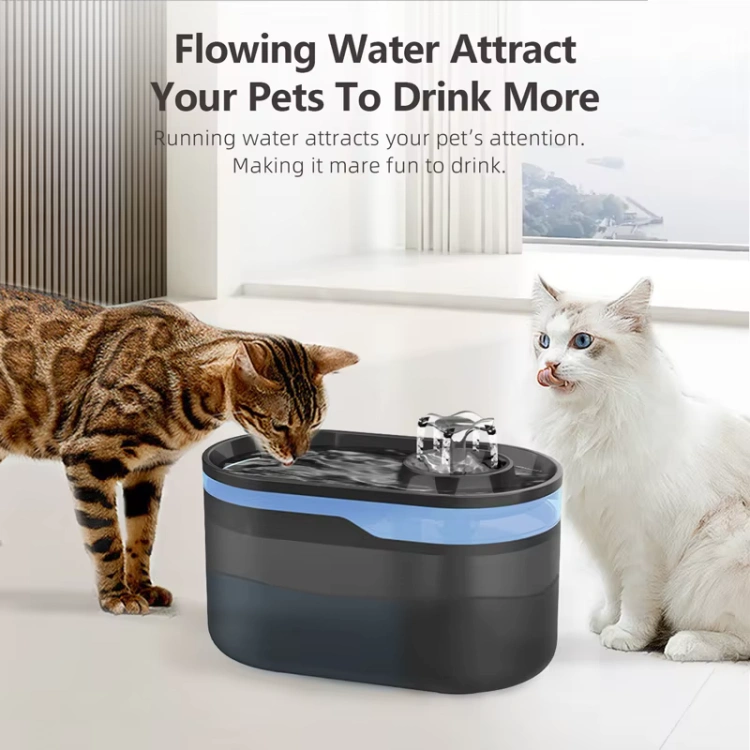
Consider plastic when:
- Initial development investment needs to remain controlled.
- Your target market is price-sensitive.
- Lightweight construction is important.
- The product requires complex molded geometry.
- A stainless steel upgrade would not create enough additional retail value.
For a new brand, it may be more important to validate the product concept, customer demand, and sales channel before investing in a more expensive material platform.
Consider a hybrid design when:
- You want a more premium visible drinking surface.
- You need to manage overall product weight.
- The housing needs flexible structural integration.
- You want to balance appearance and manufacturing economics.
- The component interfaces can be engineered for consistent assembly.
| Your business objective | Material direction to consider |
|---|---|
| Control initial development investment | Plastic |
| Offer a balance between appearance and cost | Hybrid |
| Build a premium material-led product | Stainless steel or hybrid |
| Improve perceived value without upgrading every component | Hybrid |
| Support a competitive retail price | Plastic or hybrid |
* These are starting points, not automatic answers. The final decision should be based on the actual product architecture, OEM quotation, packaging specifications, target retail price, and expected contribution margin.
Don’t pay more for stainless steel simply because it sounds premium. Pay more when the material improves something your customers actually value—and when your margins can support it.
The Right Material Is the One That Makes the Whole Product Work
Stainless steel can help a pet fountain look and feel more premium.
Plastic can offer lightweight construction, greater design flexibility, and opportunities for competitive manufacturing costs.
A hybrid structure may provide a practical balance between the two.
But no material wins simply because it costs more.
The decision affects more than the drinking bowl. It can influence the water path, cleaning experience, component structure, manufacturing process, packaging, shipping, target retail price, and expected margin.
At Petrust, we believe product development should start with the product you want to build and the market you want to serve—not with the most expensive material you can put into the BOM.
Maybe you don’t need the most expensive material. Maybe you need the material that makes the most sense for the product you’re trying to sell.
Material selection is a product economics decision.
Not Sure Which Material Fits Your Pet Fountain Project?
Choosing stainless steel, plastic, or a hybrid structure affects more than the product’s appearance. It can change your BOM, manufacturing process, packaging, shipping cost, and target retail margin.
At Petrust, we approach material selection as part of the complete OEM product-development process.
Tell us about your target market, expected retail price, preferred product architecture, and estimated order quantity. We can discuss which material direction makes sense for your project.
Material Selection · Product Architecture · MOQ · OEM Cost · Production Planning