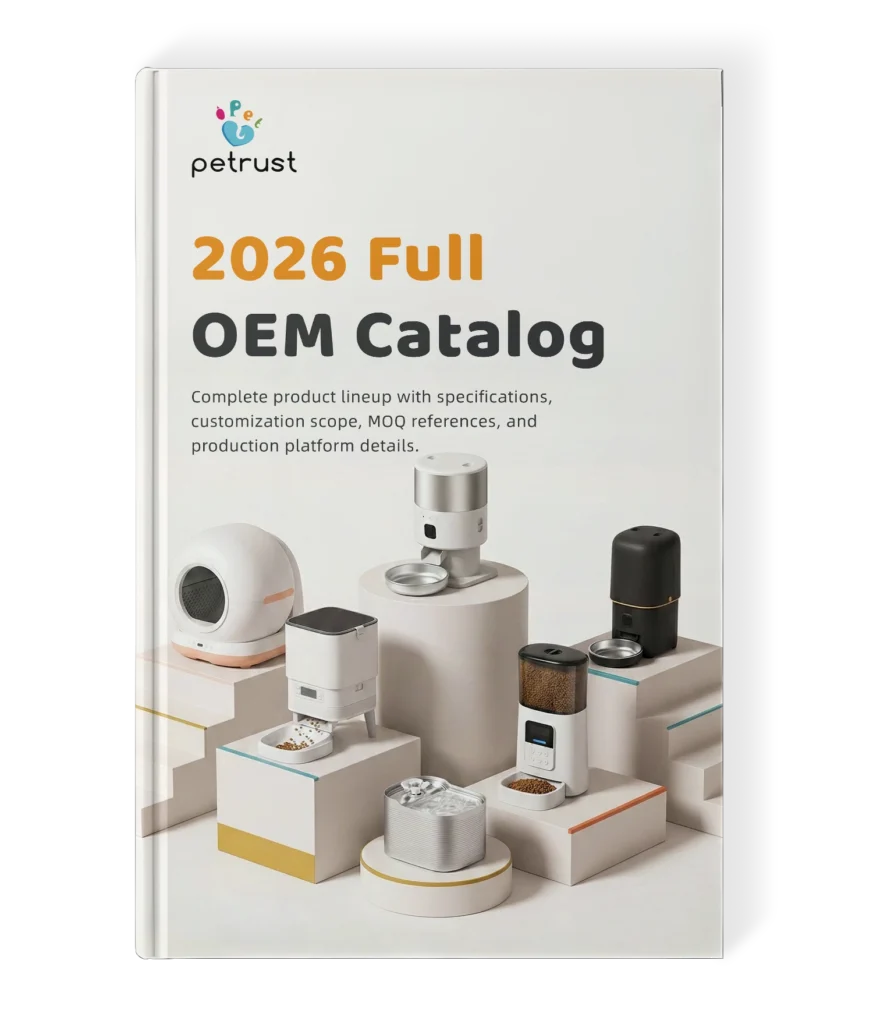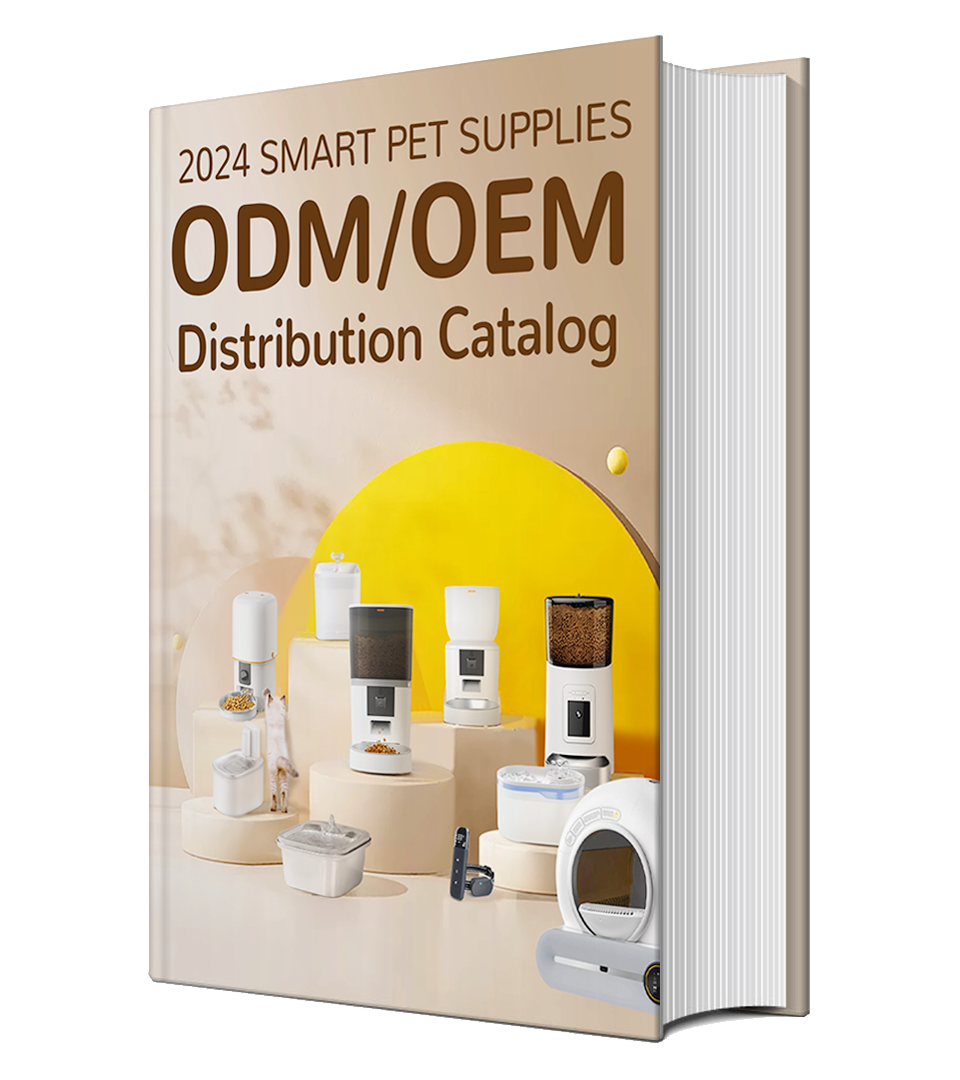

Three suppliers send you almost identical product catalogs.
All three reply quickly.
All three show professional factory photos.
All three provide attractive samples.
All three say:
“We support OEM projects.”
One supplier offers the lowest quotation.
Another promises the fastest delivery.
The third talks about engineering capability, product development, and long-term cooperation.
At first glance, choosing a manufacturer looks easy.
Compare the price.
Check the sample.
Place the order.
Move forward.
But experienced buyers know that the quotation stage is usually the easiest part of an OEM project.
The difficult part begins after the purchase order is signed.
That is when real manufacturing questions appear:
- Why does the production version look slightly different from the approved sample?
- Why does the app connection become unstable after thousands of units are shipped?
- Why does a component suddenly become unavailable?
- Why does the defect rate increase after market launch?
- Why does a small engineering change create unexpected certification problems?
- Who actually takes responsibility when something goes wrong?
These are not theoretical questions.
They are the daily realities of smart pet product manufacturing.
A smart feeder is not only a plastic container with a motor.
A smart cat litter box is not only a cleaning mechanism inside a housing.
A pet water fountain is not only a pump and a water tank.
Behind every connected pet product are multiple systems working together:
- mechanical design;
- electronic components;
- sensors;
- firmware;
- app communication;
- production processes;
- quality control;
- supplier coordination;
- compliance requirements.
A manufacturer may have a factory.
A manufacturer may have export experience.
A manufacturer may even create an excellent prototype.
But none of these automatically prove that the manufacturer is the right partner for your specific project.
The real question is not:
“Can this supplier make a pet product?”
The real question is:
“Can this manufacturer repeatedly deliver this specific product under controlled conditions, while taking responsibility when challenges appear?”
At Petrust, this is how we look at OEM projects.
We are not a third-party factory evaluation company standing outside the manufacturing process.
We are a smart pet product OEM/ODM manufacturer with our own factory operations, R&D, engineering teams, production capabilities, and mass production experience.
We have experienced the same realities buyers face:
- product requirements changing during development;
- engineering decisions affecting production;
- component availability influencing reliability;
- small details creating large quality consequences.
This is why we believe choosing a reliable pet product manufacturer is not about finding the cheapest supplier or the biggest factory.
It is about finding the manufacturer whose:
- product requirements changing during development;
- engineering decisions affecting production;
- component availability influencing reliability;
- small details creating large quality consequences.
A good supplier is not simply the company that wins the quotation.
A good supplier is the company that can own the work after the quotation.
Why Most Buyers Choose the Wrong Manufacturer
Most supplier selection mistakes do not happen because buyers ignore information.
They happen because buyers evaluate the wrong information.
Many sourcing decisions begin with visible factors:
- factory size;
- product catalog;
- quotation price;
- response speed;
- sample appearance;
- certification list.
These factors are easy to compare.
But the most important manufacturing risks are usually hidden.
A supplier can have:
- a large factory but limited engineering capability;
- many products but little experience with your category;
- attractive samples but weak production control;
- certifications but poor change management;
- low pricing but unclear responsibility.
This creates a common sourcing trap:
The supplier that looks strongest before production may not be the supplier that performs best during production.
This is why experienced buyers do not evaluate manufacturers only through catalogs, quotations, or factory photos.
Before sending money, they usually verify deeper signals:
- Is this company a real manufacturing entity or only a trading layer?
- Does the supplier actually control engineering decisions?
- Can previous production experience be verified?
- Are quality responsibilities clearly defined?
The difference between choosing a supplier and choosing a manufacturing partner often appears before the first payment is made.
For buyers who want to understand how experienced sourcing teams verify smart pet product manufacturers before making a commitment, a deeper look at how experienced buyers verify manufacturers before sending money can help reveal the evaluation points that are often missed during early supplier discussions.
The Perfect Sample Trap
One of the most common situations we see in OEM projects is this:
A buyer receives a sample.
The product looks excellent.
The photos are ready for marketing.
The functions work.
The supplier says:
“Mass production will be easy.”
The buyer feels confident.
Three months later:
- plastic color consistency becomes an issue;
- app connection problems appear;
- packaging does not survive transportation;
- component supply changes;
- customer complaints increase after launch.
What happened?
Was the supplier necessarily unreliable?
Not always.
The deeper issue is that prototype development and mass production solve different problems.
A prototype asks:
“Can we create this product?”
Mass production asks:
“Can we create the same product thousands of times with controlled quality?”
Those are completely different challenges.
A prototype may receive:
- additional engineering attention;
- manual adjustment;
- individual testing;
- extra inspection.
Production requires:
- controlled specifications;
- stable suppliers;
- documented processes;
- repeatable assembly;
- consistent testing.
This is why a good sample is a milestone, not a guarantee.
A professional buyer therefore treats sample approval as a verification stage, not the final decision.
Before moving toward mass production, it is important to confirm:
- whether the sample represents production reality;
- whether specifications are documented;
- whether critical components are stable;
- whether manufacturing processes can reproduce the approved version.
The purpose is not to reject samples.
The purpose is to understand what the sample proves — and what it does not prove.
Buyers who want a more detailed approach can review how to verify pet product samples before mass production, especially when evaluating whether a prototype can realistically become a stable commercial product.
The Lowest Price Can Become the Highest Cost
Another common mistake is choosing suppliers based mainly on quotation price.
A lower price is attractive.
Especially for startups, Amazon sellers, and new pet brands managing limited budgets.
But experienced buyers understand:
The cheapest quotation is not always the cheapest project.
A low initial price may create hidden costs later:
Including:
- defective products;
- replacement shipments;
- customer refunds;
- negative reviews.
Including:
- delayed launches;
- repeated modifications;
- communication delays.
Including:
- redesign;
- additional prototypes;
- unexpected engineering work.
Including:
- customer trust damage;
- poor market feedback;
- reduced repeat purchase.
The goal is not to avoid low-cost suppliers.
The goal is to understand what the quotation actually includes.
A professional manufacturer should help clarify:
- product assumptions;
- technical scope;
- testing requirements;
- production responsibilities;
- possible risks.
A quotation is not just a number.
It is a collection of manufacturing assumptions.
What Really Makes a Reliable Pet Product Manufacturer?
Many buyers ask:
“How do I know whether a pet product manufacturer is reliable?”
The mistake is expecting one simple answer.
Reliability is not a single certificate.
It is not determined by:
- factory area;
- years in business;
- number of products;
- response speed;
- lowest MOQ.
A reliable manufacturer is the result of alignment between five elements:
Does the manufacturer actually match your product requirements?
A factory experienced in standard pet accessories may not be suitable for:
- smart feeders;
- connected litter boxes;
- app-controlled devices;
- sensor-based products.
The right question is not:
“Does this company make pet products?”
The right question is:
“Does this company understand the technical and commercial challenges of my product?”
Can the manufacturer repeatedly produce the product under controlled conditions?
This includes:
- engineering capability;
- production preparation;
- tooling management;
- BOM control;
- quality processes;
- production testing.
A manufacturer should not only explain how a product is created.
It should explain how production consistency is maintained.
Can important claims be supported?
Experienced buyers do not select suppliers based on promises.
They look for evidence:
- previous production experience;
- testing records;
- engineering documents;
- quality procedures;
- traceability systems;
- change records.
Experience is not a sentence. Experience leaves evidence.
When problems happen, who owns the solution?
Real manufacturing always involves uncertainty:
- components change;
- suppliers adjust materials;
- firmware requires updates;
- production issues appear.
The question is not whether problems happen.
The question is: “Does the manufacturer have a process to solve them?”
Does the business model make sense?
A manufacturer may be technically capable but commercially unsuitable.
Consider:
- MOQ;
- investment level;
- production timeline;
- inventory risk;
- target market.
The best manufacturer is not always the cheapest.
It is the manufacturer whose capabilities and commercial conditions match the project.
Introducing the Petrust Project-Fit Manufacturer Evaluation Framework
After years of participating in smart pet product development, OEM projects, production preparation, and mass manufacturing, Petrust developed a simple principle:
Before choosing a manufacturer, first determine whether the manufacturer fits the project.
Many supplier evaluation systems focus on ranking companies.
We believe this approach has limitations.
A supplier is not simply “good” or “bad.”
A supplier can be:
- excellent for a private label project;
- unsuitable for a complex smart device;
- strong in production;
- weaker in product development;
- experienced in one category;
- inexperienced in another category.
The real question is:
Reliable for what project?
This is why Petrust uses the:
Petrust Project-Fit Manufacturer Evaluation Framework*
*This framework is not designed to judge competitors. It is not a public ranking system. It is a decision method created to help buyers and manufacturers understand whether a project is realistically matched with the right manufacturing capability.
The framework evaluates five decision gates:
Gate 1 — Project Fit
Does This Manufacturer Match Your Actual Project Requirements?
Before contacting suppliers, many buyers start with:
“Can you make this product?”
This question is too broad.
Almost every supplier will answer:
“Yes.”
The more important question is:
“Is this the type of project this manufacturer is built to support?”
Different projects require different manufacturing models.
A company developing a smart pet ecosystem has different requirements from a company launching a private label accessory.
Step 1: Define Your Product Complexity
Before choosing a manufacturer, identify what you are actually building.
A product may be:
Examples:
- existing product platform;
- logo customization;
- packaging adjustment.
Priority:
- speed;
- MOQ;
- cost efficiency.
Examples:
- existing platform with functional changes;
- appearance modification;
- software adjustment;
- market adaptation.
Priority:
- customization capability;
- engineering communication;
- validation process.
Examples:
- new structure;
- electronics;
- firmware;
- sensors;
- custom tooling;
- multiple prototype rounds.
Priority:
- engineering ownership;
- development capability;
- production preparation.
The more customized the project becomes, the more important manufacturing responsibility becomes.
Step 2: Match Product Category Experience
Not every pet product requires the same expertise.
A manufacturer producing simple pet accessories may not have the capability required for connected smart devices.
For smart pet products, evaluate whether the manufacturer understands:
| Product Category | Key Capabilities to Evaluate |
|---|---|
| Smart Pet Feeder | Feeding mechanism, motor control, portion accuracy, sensors, connectivity stability |
| Smart Cat Litter Box | Mechanical movement, safety systems, sensors, cleaning reliability, structural durability |
| Pet Water Fountain | Pump performance, filtration, waterproofing, power systems, cleaning design |
The purpose is not to require every manufacturer to perform every process internally.
Modern manufacturing often involves specialized cooperation.
The important question is:
Who controls the technical decisions and final product responsibility?
Step 3: Confirm Target Market Requirements
A manufacturer may be suitable for one market and unsuitable for another.
Before selecting a partner, clarify:
- Where will the product be sold?
- What certifications are required?
- What customer expectations exist?
- What support level is needed?
A smart pet product sold through Amazon may face different requirements from a product sold through retail channels.
Market expectations influence:
- product design;
- testing;
- packaging;
- documentation;
- after-sales requirements.
Step 4: Match Expected Volume With Manufacturing Reality
Volume expectations must match manufacturing economics.
A startup validating a new concept may need a different approach from an established brand preparing global distribution.
Evaluate:
- realistic first order quantity;
- future growth expectation;
- customization investment;
- production scalability.
A manufacturer that is perfect for a 500-unit validation project may not be the same manufacturer needed for 50,000-unit annual production.
Gate 1 Decision Question
Before moving forward, ask:
“Does this manufacturer fit the project we actually have, or are we trying to force the wrong supplier into the wrong role?”
This is the first question experienced buyers answer before discussing price.
Gate 2 — Manufacturing Capability
Can This Manufacturer Repeatedly Produce Your Product Under Controlled Conditions?
After confirming project fit, the next question is manufacturing capability.
This is where many buyers make a common mistake.
They ask:
“Can you make this product?”
Almost every supplier can answer:
“Yes.”
But this answer does not reveal enough.
A supplier may be able to create:
- one prototype;
- one showroom sample;
- one successful demonstration unit.
The real manufacturing question is:
“Can you repeatedly produce this product with stable quality, controlled processes, and predictable results?”
That is the difference between product creation and manufacturing capability.
A reliable pet product manufacturer is not defined only by what it can build once.
It is defined by whether it can control what happens after:
- 100 units;
- 1,000 units;
- 10,000 units;
- continuous production cycles.
Manufacturing Capability Is More Than Having a Factory
Many buyers begin factory evaluation with:“Does this supplier own a factory?”
This question matters.
But it is only the starting point.
A factory building proves manufacturing activity exists.
It does not automatically prove:
- engineering capability;
- production control;
- quality management;
- problem-solving ability;
- long-term OEM support.
A reliable smart pet product manufacturer needs capability across multiple layers:
However, one important distinction is often overlooked:
Having production equipment does not automatically mean having OEM capability.
Some suppliers can reproduce an existing product.
Fewer suppliers can participate in:
- product optimization;
- engineering decisions;
- component selection;
- production preparation;
- mass-production problem solving.
This difference becomes especially important for smart pet products because the final result depends on coordination between mechanical design, electronics, software, testing, and manufacturing processes.
Buyers evaluating suppliers should understand what separates a real OEM manufacturing partner from a supplier that mainly creates samples, because production capability is not measured only by what a factory can display — it is measured by what it can control.
The more customized the project becomes, the more important manufacturing responsibility becomes.
Can the manufacturer support:
- product structure optimization;
- material selection;
- design improvement;
- prototype iteration;
- engineering validation?
For smart products, evaluate:
- mechanical engineering;
- electronics engineering;
- firmware coordination;
- sensor integration;
- communication stability;
- functional testing.
A smart feeder, smart litter box, or smart fountain is not a collection of independent parts.
It is a system.
A change in one area may affect another.
For example:
A different motor supplier may influence:
- noise level;
- power consumption;
- feeding accuracy.
A different electronic component may influence:
- certification;
- reliability;
- product performance.
A firmware update may influence:
- app connection;
- user experience;
- hardware compatibility.
This is why smart pet product manufacturing requires system-level thinking.
Before mass production begins, a capable manufacturer should have systems for:
- technical drawings;
- product specifications;
- approved BOM;
- assembly instructions;
- testing standards;
- quality checkpoints.
Without controlled production preparation, the same product may become different products depending on:
- production batch;
- operator;
- component supplier;
- manufacturing timing.
Consistency does not happen automatically.
It is designed.
At Petrust, we learned an important manufacturing lesson:
A prototype proves that an idea is possible. A controlled production process proves that the idea can become a business.
During product development, many decisions appear small:
- changing a material;
- replacing a component;
- adjusting a structure;
- modifying firmware.
But in smart pet products, small decisions can create large consequences.
A component change may affect reliability.
A structural change may affect assembly.
A software adjustment may affect user experience.
This is why Petrust evaluates OEM projects from a manufacturing ownership perspective.
The question is not only: “Can we build this product?”
The more important question is: “What must remain controlled when this product becomes thousands of units?”
That is where real manufacturing capability begins.
Evaluate Engineering Capability With Specific Questions
One of the easiest ways to evaluate a manufacturer is to move away from general questions.
Avoid asking:
“Do you have an R&D team?”
This question often produces a simple:
“Yes.”
Instead ask:
- Who handles structural design?
- How are assembly issues optimized?
- How are durability risks evaluated?
- Who manages PCB requirements?
- How are components selected?
- How are electrical risks tested?
For connected products:
- Who controls firmware versions?
- How are software changes verified?
- How is compatibility tested?
Before mass production:
- Are production methods documented?
- Are testing procedures defined?
- Are manufacturing risks reviewed?
Specific answers reveal capability.
General statements only create impressions.
In-House Capability vs Controlled Cooperation
A common buyer question is:
“Does everything need to be produced in-house?”
The answer is:
Not necessarily.
Modern manufacturing often involves specialized cooperation.
A professional manufacturer may work with external partners for certain processes.
This is not automatically a weakness.
The real question is:
“Who controls the technical decisions, quality requirements, and final responsibility?”
A capable OEM partner should clearly explain:
- what processes are internal;
- what processes involve partners;
- how information is controlled;
- how quality is verified;
- who owns the final outcome.
The risk is not cooperation. The risk is unclear ownership.
Gate 3 — Evidence
Do the Manufacturer’s Claims Have Proof Behind Them?
Manufacturing promises are easy.
Evidence is harder.
A supplier may say:
- “We have many years of experience.”
- “We support OEM projects.”
- “We have strict quality control.”
- “We have developed many products.”
These statements may be true.
But experienced buyers ask:
“What evidence supports this claim?”
A professional supplier does not fear verification.
Because real capability leaves traces.
Verification does not mean creating unnecessary barriers between buyers and manufacturers.
It means reducing uncertainty before investment increases.
Experienced buyers often review:
- production capability;
- quality systems;
- process control;
- engineering resources;
- responsibility ownership.
A factory visit or audit is not simply about checking whether a building exists.
The real purpose is understanding whether the manufacturing system behind the product is reliable.
For buyers preparing supplier evaluations, reviewing the OEM risks that should be checked before trusting a pet product factory can provide a more structured way to identify potential problems before production begins.
Experience Is Not a Statement — Experience Leaves Evidence
When evaluating a pet product OEM manufacturer, buyers should connect:
Capability Claim → Evidence → Project Requirement
For example:
Claim:
“We have smart product experience.”
Evidence:
- previous similar projects;
- engineering records;
- testing documentation;
- production history.
Claim:
“We have quality control.”
Evidence:
- inspection procedures;
- testing records;
- defect handling process;
- traceability information.
Claim:
“We can support customization.”
Evidence:
- previous customization examples;
- engineering process;
- revision records.
The purpose is not to collect documents.
The purpose is to understand whether the manufacturer’s capability matches the risk level of your project.
What Evidence Should Buyers Verify?
Depending on product complexity, useful evidence may include:
- product specifications;
- approved samples;
- design records;
- revision history.
- production procedures;
- assembly instructions;
- testing methods;
- quality checkpoints.
- inspection records;
- failure analysis;
- corrective actions;
- batch information.
- prototype iterations;
- change management;
- technical validation.
For smart products, evidence becomes especially important because product performance depends on many interconnected systems.
A product photo proves appearance.
A sample proves one version worked.
But controlled manufacturing evidence proves repeatability.
Why Traceability Matters in Smart Pet Product Manufacturing
Smart products often involve:
- electronic components;
- software versions;
- multiple suppliers;
- continuous improvements.
Without traceability, problems become difficult to investigate.
A manufacturer needs to understand:
- which component was used;
- which production batch was affected;
- which revision was shipped;
- what changes occurred.
Research on product quality traceability has highlighted how knowledge-based tracing systems can improve visibility across the product lifecycle, especially when multiple production stages and quality information need to be connected.
This supports an important manufacturing principle: If you cannot trace a change, you cannot fully control its impact.
Gate 4 — Responsibility
When Something Goes Wrong, Who Owns the Problem?
This is the question that separates suppliers from manufacturing partners.
Almost every company looks professional when everything goes smoothly.
The real test begins when something fails.
A production problem appears.
A component changes.
A customer reports an issue.
A certification requirement changes.
A firmware update creates unexpected behavior.
Then the important question becomes:
“Who takes ownership?”
Communication Is Not the Same as Responsibility
Many suppliers emphasize:
- quick replies;
- friendly communication;
- sales support.
These are valuable.
But manufacturing problems require more.
A real solution requires:
1. Problem identification
What happened?
2. Impact evaluation
Which products, batches, or components are affected?
3. Root cause analysis
Why did it happen?
4. Corrective action
What will change?
5. Verification
How do we confirm the problem is solved?
Fast communication tells you someone responded.
Ownership tells you someone solved it.
At Petrust, we believe:
A manufacturer’s true capability is not measured when everything works. It is revealed when something needs to be fixed.
OEM projects are not perfect journeys.
Problems can happen.
The difference is how they are handled.
A responsible manufacturing partner should be able to explain:
- what happened;
- why it happened;
- what action is required;
- how recurrence will be prevented.
This is why Petrust focuses not only on product development but also on production responsibility.
Because a successful OEM relationship is not built on the assumption that nothing will go wrong.
It is built on confidence that problems can be controlled when they happen.
Supplier Selection Research: Why Evaluation Requires Multiple Criteria
Many buyers still search for one simple answer:
“Which supplier is the best?”
But supplier selection is rarely a single-factor decision.
Professional supplier evaluation usually considers multiple dimensions:
- technical capability;
- quality performance;
- delivery reliability;
- cost;
- strategic compatibility.
Academic research on supplier selection has consistently shown that supplier evaluation is a multi-criteria decision process rather than a simple price comparison.
This matches what experienced manufacturers see in practice:
- A supplier with the lowest price is not automatically the lowest-risk supplier.
- A supplier with the largest factory is not automatically the best project partner.
The right choice depends on project requirements.
Sample Trap — Why Good Samples Fail in Mass Production
A working sample is not a production guarantee.
A sample is exciting.
Especially for startups and new brands.
After months of discussion, seeing a physical product creates confidence.
But this is exactly where many buyers become overconfident.
A sample answers:
“Can this product concept work?”
Mass production asks:
“Can this product work consistently under controlled manufacturing conditions?”
These are different questions.
What a Sample Can Prove
A sample can prove:
- basic function;
- design direction;
- user experience;
- initial feasibility.
What a Sample Cannot Automatically Prove
A sample cannot automatically prove:
- production consistency;
- supplier stability;
- component availability;
- long-term reliability;
- batch-to-batch quality.
The Real Manufacturing Gap: Prototype vs Production
A prototype environment is flexible.
Production requires discipline.
During prototype development:
- engineers may manually adjust parts;
- individual units receive attention;
- problems are solved one by one.
During production:
thousands of units must follow the same process.
That requires:
- controlled specifications;
- stable suppliers;
- trained operators;
- testing standards;
- quality feedback loops.
This is why experienced buyers do not ask only:
“Does the sample work?”
They ask:
“What system will make the next 10,000 units behave the same way?”
Mass Production Reality
The factory challenge is not making one product — it is controlling variation.
Manufacturing is fundamentally about variation control.
Every production system faces variation:
- materials vary;
- components vary;
- human operations vary;
- suppliers change;
- environments change.
The purpose of manufacturing systems is not pretending variation does not exist.
The purpose is controlling it.
What Controls Mass Production Quality?
A reliable pet product manufacturer should have systems covering:
Specification Control
Clear definitions of:
- materials;
- dimensions;
- functions;
- performance requirements.
BOM Management
Control of:
- approved components;
- supplier information;
- revision status.
Process Control
Control of:
- assembly steps;
- testing methods;
- inspection points.
Quality Feedback Loop
Ability to:
- identify problems;
- analyze causes;
- improve processes.
Research on supply chain quality risk management has shown that proactive quality risk management and information integration play important roles in improving manufacturing quality performance.
This supports a practical manufacturing lesson:
Quality is not created only at final inspection. Quality is built through controlled processes.
At Petrust, our approach is simple:
A reliable OEM partner should not only show what has been produced.
It should explain:
- how the product is controlled;
- how changes are managed;
- how problems are solved;
- how quality is maintained during scale.
Because the biggest manufacturing risk is not always producing a bad product.
Sometimes it is producing a good product inconsistently.
Gate 5 — Commercial Fit
Does the Business Model Match the Manufacturing Reality?
A technically capable manufacturer can still be the wrong partner if the commercial model does not fit the project.
This is one of the areas where many OEM projects fail.
Not because the product idea is bad.
Not because the manufacturer cannot produce.
But because the expectations on both sides were never aligned.
A buyer expects:
- low MOQ;
- low price;
- fast development;
- deep customization;
- immediate production.
A manufacturer sees:
- engineering investment;
- tooling requirements;
- testing requirements;
- supply chain preparation;
- production risk.
Both sides may be discussing the same product.
But they are not always discussing the same project.
That is why experienced buyers evaluate commercial fit before committing.
The Lowest Unit Price Is Not Always the Lowest Project Cost
Many supplier comparisons start with:
| Supplier | Unit Price |
|---|---|
| Supplier A | $XX |
| Supplier B | $XX |
| Supplier C | $XX |
Then the buyer chooses the lowest number.
The problem?
The numbers may not represent the same assumptions.
One supplier may include:
- engineering support;
- testing;
- production preparation;
- quality control.
Another supplier may only provide:
- basic production;
- limited customization;
- standard manufacturing.
The cheaper quotation may simply include less responsibility.
A more meaningful evaluation considers:
Total Project Cost
Including:
Development Cost
- engineering;
- prototypes;
- tooling;
- design modification;
- testing.
Manufacturing Cost
- materials;
- labor;
- assembly;
- production inspection.
Risk Cost
- delays;
- redesign;
- defects;
- returns;
- customer complaints.
A product with a lower factory price may become more expensive if:
- quality problems appear after launch;
- production needs to be repeated;
- customers receive defective units;
- the brand reputation is damaged.
The goal is not choosing the highest-priced manufacturer.
The goal is choosing the manufacturer whose total value matches the project risk.
MOQ Should Match the Business Stage
MOQ is one of the first questions buyers ask:
“What is your MOQ?”
This makes sense.
But MOQ should not be viewed separately.
It should be connected with:
- product complexity;
- customization level;
- market validation;
- inventory risk.
For example:
A standard private label product may support lower customization and faster launch.
A customized smart pet device may require:
- tooling investment;
- engineering work;
- component commitments;
- production preparation.
In that case, MOQ is not only a factory preference.
It may reflect manufacturing economics.
A professional manufacturer should help explain:
- why the MOQ exists;
- what factors influence it;
- what alternatives may exist.
A Reliable Manufacturer Should Challenge Unrealistic Expectations
A supplier that agrees with every request may appear easy to work with.
But experienced manufacturers know:
Sometimes the most responsible answer is:
“This requirement needs to be reconsidered.”
For example:
A buyer wants:
- a completely customized smart litter box;
- very low MOQ;
- extremely low target cost;
- immediate delivery.
A responsible manufacturing partner should explain:
- what is technically realistic;
- what requires more investment;
- where risks exist.
A manufacturer that only says “yes” may create problems later.
Manufacturing partnership requires honest alignment.
However, commercial alignment is only the beginning of a successful OEM relationship.
Long-term cooperation also depends on how both sides manage:
- communication processes;
- supply chain stability;
- product improvements;
- quality expectations;
- future production scaling.
A supplier may successfully complete one order.
A true manufacturing partner needs systems that support repeated cooperation.
Buyers building a long-term smart pet product business can benefit from understanding how stable OEM supply chains are built between brands and Chinese manufacturers, because sustainable growth depends on more than completing the first shipment.
7 Signs You Should Not Move Forward With a Pet Product Manufacturer
Choosing a manufacturer is not only about identifying positive signals.
Experienced buyers also know when to stop.
The following warning signs do not automatically mean a supplier is unreliable.
They mean:
Important questions remain unanswered.
Red Flag 1 — Every Answer Is “No Problem”
At the beginning of a project, some buyers like suppliers who immediately say:
“No problem.”
It feels reassuring.
But experienced manufacturing teams know that complex products always have questions.
Real engineers think about:
- technical limitations;
- production risks;
- testing requirements;
- possible failure points.
A supplier that never discusses risks may not fully understand them.
A better answer sounds like:
“This is possible, but we need to confirm these points first.”
That shows manufacturing awareness.
Red Flag 2 — The Supplier Talks About Price Before Understanding the Product
Price matters.
But pricing before understanding requirements is often a warning sign.
A smart product quotation depends on:
- functions;
- materials;
- customization;
- certification;
- production process.
If a supplier immediately provides a price without understanding:
- product complexity;
- target market;
- technical requirements;
- the quotation may not represent the real project.
Red Flag 3 — The Supplier Cannot Explain Production Changes
Smart products change.
Components change.
Firmware changes.
Manufacturing processes improve.
The important question:
“How do you control changes?”
A manufacturer should understand:
- version management;
- validation;
- documentation;
- impact evaluation.
If the answer is unclear, production risk increases.
Red Flag 4 — The Supplier Shows Products but Cannot Explain Processes
A product catalog shows what exists.
It does not show how products are controlled.
Ask:
- How is quality checked?
- How are defects handled?
- How are production issues investigated?
- How are specifications controlled?
A manufacturer should be able to explain the process behind the product.
Red Flag 5 — The Supplier Avoids Technical Discussion
For smart pet products, technical discussion is unavoidable.
Be careful if every conversation stays around:
- price;
- delivery date;
- marketing photos.
A serious OEM discussion should include:
- structure;
- electronics;
- firmware;
- testing;
- production preparation.
Red Flag 6 — The Supplier Cannot Define Responsibility Boundaries
When multiple parties are involved, responsibility must be clear.
Ask:
- Who handles engineering changes?
- Who approves component replacements?
- Who investigates quality issues?
- Who manages corrective action?
If responsibility is unclear before production, it becomes more unclear after problems happen.
Red Flag 7 — The Supplier Promises Everything but Documents Nothing
Trust matters.
But manufacturing requires evidence.
Important claims should connect with:
- records;
- specifications;
- testing;
- previous experience.
A professional manufacturer does not need to prove everything immediately.
But it should understand why verification matters.
Before Contacting Any Manufacturer, Ask Yourself These Questions
Many buyers contact factories too early.
They have an idea.
They have a reference product.
They ask:
“How much does it cost?”
But better supplier conversations start with better project definition.
Before contacting a manufacturer, evaluate your own project first.
| Question | Why It Matters |
|---|---|
| Is this product standard, ODM, or fully customized? | Determines required manufacturing capability |
| Does the product include electronics, sensors, firmware, or an app? | Determines engineering requirements |
| Who is the target customer and market? | Influences design, compliance, and support expectations |
| What happens if defect rates increase after launch? | Determines risk tolerance |
| What certifications or compliance requirements are needed? | Determines testing capability |
| What production volume is realistic? | Determines factory matching |
| What level of customization is actually necessary? | Determines development investment |
A clear project does not guarantee success.
But an unclear project almost guarantees confusion.
A Manufacturer Should Not Be Judged Without Considering the Project
Many buyers create supplier scorecards.
They compare:
- factory size;
- price;
- certifications;
- years of experience;
- response speed.
These factors are useful.
But they should not replace project-fit evaluation.
A better approach is:
| Decision Gate | Key Question | What to Verify |
|---|---|---|
| Gate 1 — Project Fit | Is this manufacturer suitable for this product? | Product category, customization, market, volume |
| Gate 2 — Manufacturing Capability | Can this product be repeatedly produced? | Engineering, production, QC, process control |
| Gate 3 — Evidence | Can claims be proven? | Records, testing, specifications, traceability |
| Gate 4 — Responsibility | Who solves problems? | Ownership, corrective action, change management |
| Gate 5 — Commercial Fit | Does the business model work? | MOQ, cost, timeline, investment |
The purpose is not finding a perfect supplier.
Perfect suppliers do not exist.
In many cases, OEM failures do not come from one major mistake.
They usually come from a series of small decisions:
- choosing a supplier before defining requirements;
- focusing only on price;
- approving samples without production validation;
- ignoring responsibility boundaries;
- underestimating engineering complexity.
These mistakes are common because OEM projects involve many interconnected decisions.
Understanding the common OEM manufacturing mistakes that cause delays, quality problems, and unnecessary costs can help buyers avoid problems before they become expensive lessons.
Better Information Creates Better Manufacturing Decisions
A supplier cannot accurately evaluate a project with only:
“I need a smart pet product.”
Before requesting quotations, prepare a basic OEM brief.
It does not need to be perfect.
It needs to make your expectations clear.
1. Product Information
Include:
- reference products;
- target users;
- key functions;
- expected differentiation.
Example:
Not:
“Smart feeder.”
Better:
“Smart feeder for multi-cat households requiring app control, portion management, and camera monitoring.”
2.Manufacturing Model
Clarify:
Do you need:
- existing product customization;
- ODM;
- full OEM development?
Different models require different resources.
3. Market Information
Include:
- target country;
- sales channel;
- certification requirements;
- customer expectations.
A product designed for Amazon may require different preparation from retail distribution.
4. Technical Requirements
Include:
- required functions;
- important specifications;
- unresolved questions.
Good manufacturers can help refine unclear areas.
5. Commercial Information
Include:
- expected order quantity;
- target timeline;
- launch plan.
The more complete the information, the more meaningful the quotation becomes.
Choose the Manufacturer That Can Own the Work, Not Just Win the Quote
Choosing a reliable pet product manufacturer is not about finding:
- the biggest factory;
- the cheapest quotation;
- the fastest response;
- the most attractive sample.
Those things may influence the first impression.
They should not decide the final partnership.
The real decision is: Can this manufacturer take responsibility for the specific challenges your project will create?
A reliable manufacturing partner is the one whose:
- capabilities match your product requirements;
- processes support repeatable production;
- evidence supports important claims;
- engineering team can solve problems;
- commercial model supports your business.
The biggest sourcing mistake is not always choosing a bad manufacturer.
Sometimes it is choosing the right manufacturer for the wrong project.
A supplier experienced in simple pet accessories may not be the right partner for a connected smart device.
A factory with strong production capability may not be the right partner for a startup needing multiple development iterations.
A low-price supplier may not be the lowest-risk supplier.
This is why Petrust created the: Petrust Project-Fit Manufacturer Evaluation Framework
As a smart pet product OEM/ODM manufacturer, we understand that manufacturing responsibility means more than producing products.
It means:
- understanding requirements;
- controlling engineering decisions;
- managing production risks;
- maintaining quality during scale;
- solving problems when reality does not follow the plan.
Because real manufacturing is not about creating one successful sample.
It is about creating thousands of products that customers can trust.
The right manufacturer is not the one that only wins the quotation.
It is the one that can own the work after the quotation.
Planning a Smart Pet Product OEM Project?
If you already have:
- a product concept;
- a reference product;
- customization requirements;
- target market information;
- estimated order volume;
Petrust can help discuss:
- which manufacturing model fits your project;
- what engineering scope may be required;
- what risks should be evaluated before production;
- what preparation is needed before mass manufacturing.
A successful OEM project starts with the right questions before production begins.
Share your project requirements with Petrust and discuss the right path from concept to mass production.
FAQ — How to Choose a Reliable Pet Product Manufacturer
A reliable pet product manufacturer should be evaluated based on more than price and samples. Buyers should consider project fit, manufacturing capability, engineering support, production control, quality processes, evidence of previous experience, and responsibility when problems occur.
Not necessarily.
Having a factory proves manufacturing exists, but it does not automatically prove the company has the engineering capability, product development experience, quality systems, or project management ability required for your product.
The right manufacturer depends on your project requirements.
A sample proves that one product version works under specific conditions.
Mass production requires additional systems:
- specification control;
- BOM management;
- production testing;
- process control;
- quality feedback.
A successful prototype does not automatically guarantee production consistency.
Useful evidence may include:
- product specifications;
- testing records;
- production documentation;
- quality procedures;
- traceability information;
- previous project experience;
- change management processes.
The goal is not collecting documents.
The goal is confirming that capability matches your project risk.
Compare total project value instead of only factory price.
Consider:
- development investment;
- tooling;
- testing;
- certification;
- production lead time;
- defect risk;
- inventory exposure;
- long-term support.
The lowest quotation is not always the lowest project cost.
Prepare:
- product category;
- target market;
- customization level;
- required functions;
- certification needs;
- expected order quantity;
- launch timeline.
A clearer OEM brief allows manufacturers to provide more accurate recommendations.
Common warning signs include:
- every answer is “no problem” without discussion of risks;
- pricing is provided before understanding requirements;
- unclear responsibility for engineering issues;
- inability to explain production changes;
- lack of evidence supporting capability claims.
Experienced buyers evaluate not only what a supplier promises, but how the supplier thinks.