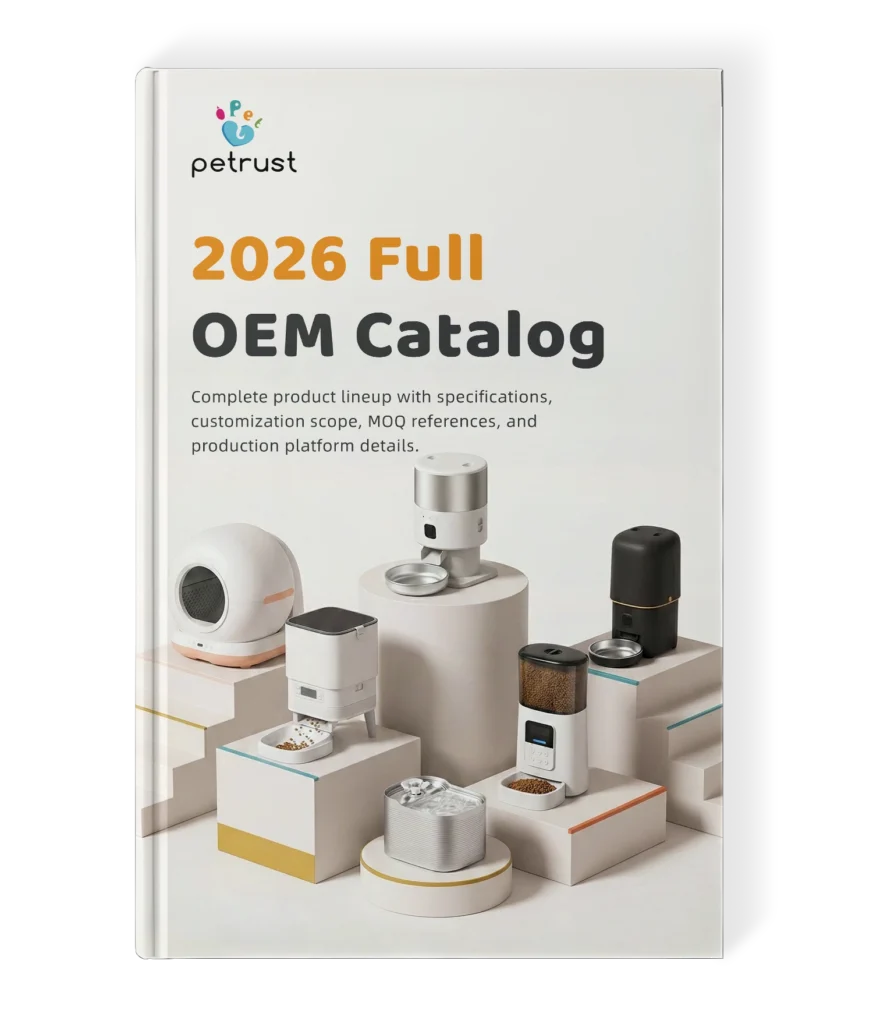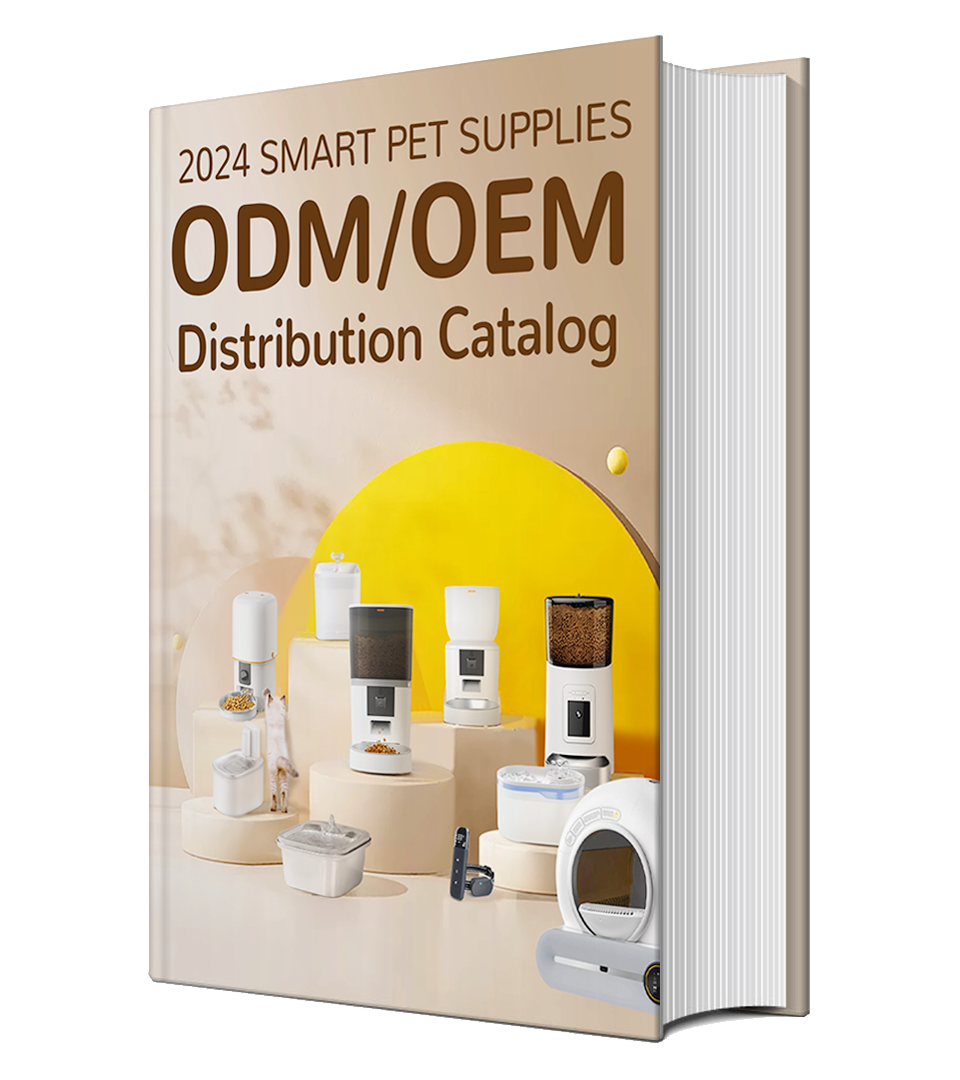

A pet product manufacturing model refers to the way a brand works with a factory to develop and produce products — typically through OEM, ODM, or private label manufacturing.
Launching a successful pet brand today requires more than just a great concept or appealing packaging. The U.S. pet industry alone exceeded $147 billion in spending, according to the American Pet Products Association, reflecting how rapidly the global market continues to expand.
For many founders, this growth is exciting — but it also brings complex decisions around manufacturing strategy, especially when your goal is to stand out with high-quality smart feeders, water fountains, or automatic litter boxes.
Through years of experience working with international pet brands, we’ve observed that over 70% of successful smart pet brands eventually transition from ODM to OEM development. This move allows brands to strengthen product innovation, establish long-term brand value, and maintain control over features that matter to pet owners.
This evolution mirrors a broader trend in smart pet product manufacturing, where differentiation and strategic control are increasingly vital.
For entrepreneurs, Amazon sellers, and startup founders looking to start a pet product brand, the most critical challenges often emerge after the concept stage. Questions arise like:
- How should I actually manufacture my product?
- Should I build a fully customized product from scratch?
- Is it smarter to modify an existing factory design?
- Could I simply rebrand an existing product to test market demand?
Decisions about how to manufacture pet products are not just operational — they are strategic. A carefully chosen manufacturing model influences market positioning, enables genuine product innovation, and lays the groundwork for a long-term competitive advantage.
Selecting the wrong pet product manufacturing model can lead to:
- Unexpected product development costs
- Delayed product launches
- Weak brand differentiation in crowded marketplaces
- Dependence on suppliers that constrain growth
Many global brands rush into production without fully assessing which manufacturing path suits their business stage. The consequences are often costly and frustrating, especially when trying to launch smart pet devices efficiently.
This guide is designed to help you navigate these critical choices by showing you how to:
- Understand the main types of pet product manufacturing
- Compare OEM vs ODM vs private label manufacturing
- Evaluate real costs, timelines, and risks
- Determine the best manufacturing option for startups and growing brands
Whether you are planning how to launch a pet product or preparing for large-scale production, your manufacturing strategy forms the backbone of long-term success.
You might find our complete guide to smart pet product OEM manufacturing helpful in mapping out the full development ecosystem and understanding what it takes to turn a concept into a reliable, scalable product line.
What Is a Pet Product Manufacturing Model? (And Why It Matters)
Choosing the right pet product manufacturing model is more than just a technical decision — it shapes your brand’s future, your product’s quality, and how customers experience your offerings. A manufacturing model defines the working relationship between your brand and the factory.
More specifically, it determines:
- Who controls the product development and design process
- Who owns the product’s intellectual property
- How much product customization is possible
- How the factory production process is structured
In practical terms, the manufacturing model dictates how you develop pet products with a factory partner.
Some brands opt for custom pet product manufacturing, designing every feature from scratch to stand out in a crowded market. Others favor faster solutions by modifying existing designs or simply adding branding to ready-made products.
Across the global pet industry, most companies rely on three primary approaches:
- OEM (Original Equipment Manufacturing)
- ODM (Original Design Manufacturing)
- Private Label Manufacturing
Understanding these options helps brands make smarter decisions when working with pet product factories and planning long-term strategies that support growth and differentiation.
Types of Pet Product Manufacturing Models Used in the Industry
Each manufacturing model provides a unique balance of speed, cost, customization, and control, and selecting the right one depends on your brand’s stage, goals, and resources. Knowing the differences ensures your approach aligns with both short-term launches and long-term vision.
OEM: A Pet Product Manufacturing Model Built for Custom Innovation
OEM (Original Equipment Manufacturing) represents the most advanced form of custom pet product manufacturing. In this model, products are developed specifically for your brand, giving you full control over:
- Product concept
- Technical features
- Industrial design
- Branding and packaging
- Intellectual property
Factories provide engineering and production support, but the final product belongs entirely to your brand. OEM is widely used for pet product OEM manufacturing of smart devices such as:
- Smart pet feeders
- Automatic litter boxes
- Smart water fountains
- Connected pet monitoring devices
A typical pet product manufacturing process for OEM involves:
- Product concept development
- Industrial design process
- Hardware and mechanical engineering
- Prototyping and testing
- Tooling and mold creation
- Certification and compliance
- Mass production on factory production lines
Because OEM allows full product customization, it is ideal for brands seeking long-term product innovation and strong brand differentiation. Close collaboration with your manufacturing partner is crucial, especially during engineering and prototyping stages.
ODM Manufacturing: Faster Product Launch With Existing Designs
ODM (Original Design Manufacturing) offers a faster path to market. In this model, the factory already owns the product design, while brands can still adjust elements such as:
- Logo branding
- Packaging
- Colors
- Minor functional modifications
This approach allows companies to develop pet products with a factory without heavy upfront product development costs. ODM is commonly used for:
- Standard pet feeders
- Basic water fountains
- Grooming devices
- Common pet accessories
For brands seeking how to launch a pet product quickly, ODM reduces complexity while allowing moderate customization. You might find our a practical breakdown of OEM vs ODM for pet product brands helpful when planning your entry strategy. However, because designs are often shared across brands, brand differentiation can be limited.
Private Label Manufacturing for Simple Pet Products
Private label manufacturing is the simplest and fastest route. Brands select products from a supplier’s catalog and apply their own branding. This model is common for:
- Pet toys
- Grooming tools
- Feeding bowls
- Accessories
Here, the supplier manages most of the factory production process, allowing the brand to focus on marketing and distribution. Private label products are useful for testing the market with minimal investment, but for smart devices or technology-driven products, they rarely offer sufficient differentiation.
Pet Product OEM vs ODM: Which One Is Better for Your Brand?
One of the most frequent questions in pet product manufacturing is whether to choose OEM or ODM. Each approach serves different strategic goals, and understanding these differences helps prevent costly mistakes during product development.
OEM Manufacturing
OEM manufacturing empowers brands to create a fully customized product with their factory partner. Key advantages include:
- Complete product customization
- Ownership of intellectual property
- Stronger brand differentiation
- Higher long-term product margins
OEM is ideal for smart pet feeders, automatic litter boxes, IoT pet devices, and premium electronics. The trade-off is that OEM generally requires higher development investment and longer product timelines.
ODM Manufacturing
ODM allows brands to enter the market more quickly. Factories own the product design, while brands can modify certain aspects, such as:
- Branding
- Packaging
- Color options
- Minor feature adjustments
This makes ODM suitable for brands wanting to launch products quickly while controlling development costs. For further insight, you might find how OEM vs ODM strategies affect cost and product differentiation helpful. The main limitation is that ODM products often face stronger competition due to design sharing.
Quick Comparison – OEM works best for brands seeking unique products and long-term growth, while ODM suits those prioritizing speed and lower development risk. Many brands begin with ODM as a first market entry strategy and transition to OEM once they scale.
Pet Product Manufacturing Model Comparison: Cost, Customization, and Control
When evaluating a pet product manufacturing model, focus on:
- Product development investment
- Level of customization
- Time to market
- Brand ownership and control
Research from the Massachusetts Institute of Technology emphasizes that these decisions directly affect competitiveness, operational efficiency, and long-term product differentiation.
| Manufacturing Model | Customization | Development Cost | Time to Market | Brand Control |
| OEM | High | High | Longer | Strong |
| ODM | Medium | Medium | Faster | Moderate |
| Private Label | Low | Low | Very Fast | Weak |
For brands aiming for long-term product development with manufacturers, OEM generally provides the most robust path to building defensible products and sustainable competitive advantages.
Pet Product Manufacturing Process (Step-by-Step Guide)
Many buyers curious about how to manufacture pet products are often surprised to realize that product development involves multiple, carefully coordinated engineering and production stages. Each stage contributes not only to product quality but also to the long-term success of your brand.
Knowing the pet product manufacturing process can help you plan more realistic product launches and anticipate challenges before they arise. You might find our guide on a detailed breakdown of the smart pet product development process helpful for a deeper dive into each stage.
While the exact steps vary depending on product type, most smart pet devices follow a similar factory production process, which ensures both safety and reliability.
Step 1 — Product Concept and Market Validation
Every great product begins with a clear concept. This stage involves defining the product idea and validating that there is genuine market demand. Brands analyze competitor offerings, identify gaps in features, and determine the right pricing strategy.
This step is critical: research from Harvard Business School shows that many product launches fail due to poor market validation or unclear positioning. Testing demand early helps avoid costly missteps.
Before committing resources to development, many brands validate their concept through competitor analysis and targeted market research. You can find our insights on how to validate a smart pet product idea before investing in development helpful in guiding this process.
Step 2 — Industrial Design and Engineering Development
Once the concept is validated, engineers and designers translate it into detailed specifications. This involves mechanical design, electronics architecture, and user experience planning.
For smart devices, firmware and mobile app integration plans are often finalized during this stage, ensuring your product functions seamlessly.
Step 3 — Prototyping and Product Testing
Prototypes are produced to verify both structure and functionality. This stage involves rigorous testing for durability, safety, and usability. Multiple prototype iterations are often needed to refine the design and ensure the product meets both technical and market expectations.
Step 4 — Tooling and Mold Manufacturing
After finalizing the design, factories create molds and tooling for mass production. This stage can take several weeks, depending on the complexity of the product, and is crucial for maintaining consistent quality across large production volumes.
Step 5 — Certification and Compliance
Smart pet devices often require certifications to comply with international standards, such as:
- CE
- FCC
- RoHS
These certifications confirm the product meets safety and regulatory requirements in target markets, protecting both your brand and your customers.
Step 6 — Mass Production and Quality Control
Once certifications are approved, full-scale production begins. Robust quality control systems monitor performance, assembly accuracy, and safety standards, ensuring each unit leaving the factory production process meets your brand’s expectations.
Pet Product Manufacturing Cost Comparison (Realistic Industry Ranges)
One of the first questions brands ask is:
“How much will product development cost?”
Costs vary based on product complexity and factory capability. Typical development investments for smart pet devices are:
| Manufacturing Model | Typical Development Cost |
| Private Label | $500 – $3,000 |
| ODM | $3,000 – $20,000 |
| OEM | $20,000 – $150,000+ |
OEM projects are more expensive because they include comprehensive product development, including:
- Industrial design
- Hardware engineering
- Firmware or app integration
- Tooling and mold manufacturing
- Safety testing and certification
- Prototype iterations
If you want a closer look at where these costs come from, you might find our guide on the real cost breakdown of developing a smart pet product in China helpful, detailing engineering, tooling, certification, and hidden development expenses.
Although more costly, OEM products often achieve stronger market positioning and higher margins because they offer unique features competitors cannot easily replicate. For brands scaling a pet product business, OEM investment is often strategic rather than purely a cost.
Manufacturing Timeline Comparison for Different Pet Product Manufacturing Models
Time-to-market is another essential consideration. Each manufacturing model demands different levels of product development and factory engagement.
Product Launch Timeline by Pet Product Manufacturing Model
| Manufacturing Model | Typical Timeline |
| Private Label | 2–6 weeks |
| ODM | 1–3 months |
| OEM | 4–9 months |
OEM requires additional time for prototyping, engineering iterations, and certification testing. You might find our article on a realistic timeline for developing an OEM smart pet feeder helpful in visualizing each stage in detail.
Slower timelines often translate into stronger product differentiation, helping your brand stand out in a competitive market.
Want to Develop a Custom Smart Pet Product?
Our engineering team has guided numerous global brands in creating OEM smart feeders, water fountains, and automatic litter boxes.
When evaluating different pet product manufacturing models, we can help you analyze:
Product feasibility
Development cost
Manufacturing timelineFeel free to contact us to discuss your project and see which approach aligns best with your product vision.
OEM vs ODM vs Private Label Decision Table (Buyer Checklist)
Choosing a manufacturing model largely depends on your business priorities. The following checklist highlights the main differences:
| Decision Factor | OEM | ODM | Private Label |
| Product Customization | Full customization | Moderate | Minimal |
| Development Cost | High | Medium | Low |
| Time to Market | Long | Medium | Fast |
| Intellectual Property | Brand owned | Factory owned | Supplier owned |
| Product Innovation | High Limited | High Limited | Very low |
| Best For | Long-term brand building | Long-term brand building | Faster product launch Market testing |
For brands focusing on long-term brand differentiation and product innovation, OEM generally provides the strongest competitive advantage.
How to Choose the Right Pet Product Manufacturing Model for Your Brand
There is no one-size-fits-all solution. The ideal pet product manufacturing model depends on:
- Your business stage
- Available budget
- Product complexity
- Long-term brand strategy
Manufacturing Model for Pet Startups Testing the Market
Founders planning to start a pet product brand often prioritize minimizing risk. Many begin with:
- ODM products
- Private label products
This approach allows them to validate customer demand before committing to full product development.
Manufacturing Model for Amazon Pet Brands Seeking Differentiation
Amazon sellers face intense competition, and relying solely on private label products can trigger price wars. Many successful sellers transition toward pet product OEM manufacturing to create unique features that improve reviews, listings, and margins.
Custom design enables stronger brand differentiation and helps maintain healthier profit margins.
Best Pet Product Manufacturing Model for Established Pet Brands
Established brands typically prioritize OEM development to build proprietary product portfolios and sustain long-term innovation. OEM allows brands to focus on:
- Unique product features
- Strong product innovation
- Scalable manufacturing systems
When scaling a pet product business, this level of control is essential to maintain consistent quality and protect brand reputation.
Decision Tree: Which Manufacturing Model Should You Choose?
Selecting the right pet product manufacturing model can feel overwhelming, especially when different options promise unique advantages. A simple approach is to follow a few guiding questions that align with your business goals.
Question 1
Do you want a completely unique product?
- YES → OEM
- NO → Continue
Question 2
Do you want to modify an existing design?
- YES → ODM
- NO → Private Label
Question 3
Is your priority speed or differentiation?
- Speed → Private Label
- Differentiation → OEM
This simple framework helps brands focus on what really matters: long-term growth, innovation, and market fit, rather than just short-term convenience.
Case Study: How a Pet Startup Chose the Right Pet Product Manufacturing Model
A European startup approached a manufacturer with an idea for a smart automatic cat feeder. Initially, they considered launching with a private-label product to save costs, thinking it would be the fastest route to market.
Market research, however, told a different story:
- Many identical products already existed
- Profit margins were extremely low
- Customer reviews highlighted missing features
Instead, the startup chose to invest in OEM product development with manufacturers. This approach allowed them to incorporate several innovations:
- Smart feeding schedules
- Anti-jam dispensing technology
- Mobile app control
Although development took six months, the final product achieved significant results:
- Stronger brand differentiation
- Higher retail price
- Better market positioning
This case demonstrates that the cheapest manufacturing option is rarely the most profitable. Strategic investment in the right pet product manufacturing model can deliver long-term value.
How to Evaluate a Pet Product Manufacturer Before Choosing a Production Model
Even the best pet product manufacturing model can fail if the factory lacks the right capabilities. Thorough evaluation before selecting a manufacturing partner can make the difference between a smooth launch and repeated setbacks.
Engineering Capability
Does the factory have the capacity for product development, engineering improvements, and prototyping? For complex products like smart feeders or automatic litter boxes, strong engineering support is non-negotiable.
Manufacturing Capacity
Reliable suppliers maintain stable production lines and scalable manufacturing systems. Verified factory capabilities, including production planning and component sourcing, indicate a partner you can trust for long-term growth.
Certification Experience
Smart pet devices often require regulatory approvals such as:
- CE
- FCC
- RoHS
Factories familiar with these certifications can significantly reduce delays and regulatory headaches.
Communication Transparency
Success in working with pet product factories depends on clear, proactive communication. Top suppliers share potential risks early during design and development stages, ensuring everyone stays aligned.
Factory Capability Evaluation Checklist (Free Download for Buyers)
Choosing the right manufacturing partner is just as critical as selecting the right manufacturing model. Experienced buyers focus on core capabilities before committing to a supplier. A simplified checklist commonly used by international pet brands includes:
- Engineering support for product development
- Prototyping capability
- Tooling and mold experience
- Stable production lines
- Quality control systems
- Certification experience
- Supply chain management
- Communication transparency
- After-sales technical support
Many professional buyers also conduct a full factory audit before finalizing a partnership. You might find our detailed Pet Product Factory Evaluation Checklist helpful for guiding this process, and our engineering team is available to assist with any questions.
Common Mistakes Buyers Make When Choosing a Pet Product Manufacturing Model
Costly mistakes are surprisingly common during manufacturing selection, especially for new brands entering the smart pet market. Many companies repeat the same early-stage errors, which are outlined in detail in our guide – 7 Common Mistakes New Pet Brands Make When Developing Smart Products. Some of the most frequent pitfalls include:
Choosing the Cheapest Option Instead of the Right Strategy
Private label is appealing for its low upfront cost, but it often leads to minimal brand differentiation and intense price competition.
Starting OEM Development Without Market Validation
Investing heavily in OEM development before confirming market demand can result in products that don’t resonate with customers, wasting both time and resources.
Ignoring Intellectual Property Ownership
When the factory owns the design, switching suppliers later becomes challenging, limiting flexibility and long-term growth.
Underestimating Development Timelines
Hardware products require multiple stages, including engineering, testing, and certification. Launching without adequate planning can delay your product by months, affecting market positioning and profitability.
Conclusion: The Best Pet Product Manufacturing Model Depends on Your Brand Strategy
Choosing the right pet product manufacturing model is a decision that can shape your brand’s future in the pet industry. The choice impacts not only development costs and timelines but also your long-term brand differentiation and market positioning.
A straightforward summary of each approach:
- Private Label → enables the fastest product launch with minimal development
- ODM → offers moderate customization while reducing early-stage investment
- OEM → provides the strongest brand differentiation and full control over intellectual property
For technology-driven products such as smart feeders or automatic litter boxes, investing in OEM development often lays a solid foundation for long-term innovation and growth.
Aligning your manufacturing strategy with your budget, product vision, and market positioning ensures your brand makes the most of every investment.
By carefully weighing these factors, your brand can make decisions that support sustainable growth while creating products that genuinely stand out in a crowded marketplace.
FAQ About Pet Product Manufacturing Models
What is the best manufacturing model for pet products?
The “best” option varies depending on your brand’s stage and goals. Startups often start with ODM or private label products to test market demand without high upfront costs.
Established brands frequently choose OEM to achieve stronger brand differentiation and ownership of intellectual property, which is crucial for long-term competitiveness.
Is OEM better than ODM?
OEM offers full product customization and intellectual property ownership, making it ideal for brands that want complete control and differentiation. ODM allows faster market entry using existing designs, which can save time and reduce risk.
Many brands find OEM more suitable for long-term strategic growth. You can also read our breakdown of how OEM vs ODM strategies affect cost and product differentiation, which you might find helpful in making this decision.
Can startups use OEM manufacturing?
Absolutely. Startups can start with smaller-scale OEM projects or partial customization to introduce unique products without building everything from scratch. This approach allows emerging brands to gradually scale while maintaining product innovation and brand differentiation.
What is private label pet product manufacturing?
Private label manufacturing involves selling existing supplier products under your own brand name. While it minimizes development efforts and allows for a quicker launch, it provides limited product differentiation.
For early-stage brands testing the market, it can be a practical starting point before investing in more complex OEM or ODM projects.
Need Help Choosing the Right Pet Product Manufacturing Model?
Developing a smart pet product can feel complex, and selecting between OEM, ODM, or private label often depends on multiple factors such as product complexity, budget, and long-term strategy. At Petrust®, we collaborate with global pet brands to bring smart pet devices to life, including:
- Automatic pet feeders
- Smart water fountains
- Self-cleaning litter boxes
Our engineering and manufacturing team can help you assess:
- Product feasibility
- Development cost estimation
- Realistic production timelines
- The most suitable pet product manufacturing model for your brand
You might find it helpful to discuss your product idea or manufacturing plan with our team, who can provide guidance tailored to your goals and resources. Contact the Petrust® team anytime to explore the approach that best supports your brand’s growth and innovation journey.