
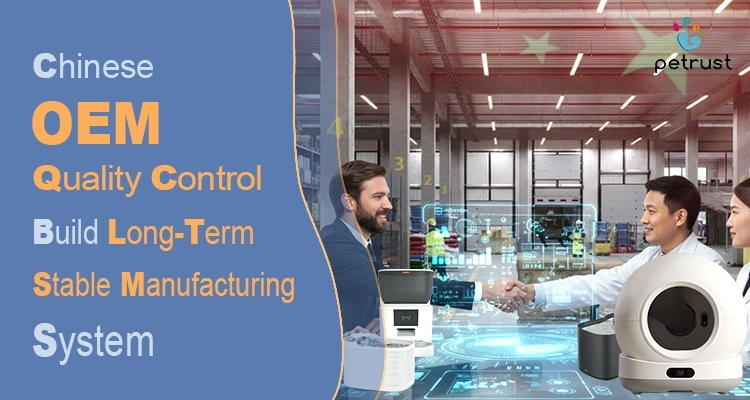
Ensuring consistent quality from your manufacturing partners often feels like one of the biggest challenges for global brands, and this is where Chinese OEM quality control becomes the foundation of any long-term, stable partnership.
Many buyers share the same quiet worry: “Will the quality stay the same six months from now? Will my supplier maintain standards once mass production begins?” These concerns are real, and acknowledging them is the first step toward building a manufacturing system that’s predictable, sustainable, and resistant to “quality fade.”
A recent case many buyers can relate to involved an overseas smart pet products brand that discovered a 12% failure rate only months after product launch. The root problem wasn’t a single mistake—it was an accumulation of issues across IQC, IPQC, and OQC checkpoints.
Beyond the financial strain, the brand faced ripple effects across customer satisfaction, retail partnerships, and market expansion plans. Situations like this remind us how essential it is to strengthen every layer of the supply chain.
This guide brings together practical methods to help overseas teams establish a long-term, stable manufacturing system in China, from factory audits and QC workflows to communication structures and supplier risk mitigation strategies.
Teams that work with experienced OEM partners such as Petrust® often mention how much more confident they feel when the manufacturing framework is predictable and transparent.
You can also find industry-recognized perspectives valuable — especially those emphasizing the importance of supply-chain quality control and supplier risk mitigation, as highlighted by the American Automotive Industry Quality Association.
To make implementation easier, you might find using the QC checklist template below helpful for building consistency into your own manufacturing process and strengthening quality assurance at every stage.
Chinese OEM Quality Control: Why It Matters for Long-Term Success
The Cost of Poor Quality in Chinese OEM Manufacturing
Chinese OEM quality control sits at the center of every stable manufacturing partnership, and many overseas buyers know this not just in theory, but from painful real-world lessons. When quality slips—even slightly—it isn’t just numbers on a QC report that take a hit. It’s your margins, your launch schedule, and the trust you’ve built with your customers.
Poor quality in OEM production can snowball quickly. Higher defect rates, rising return costs, and negative reviews create long-term damage that can overshadow even the strongest marketing efforts. Small inconsistencies in mass production consistency may seem harmless at first but often show up months later as warranty claims, product failures, or frustrated distributors asking for answers.
One global buyer of smart pet products experienced exactly this. Six months after launch, 12% of units failed during functional testing due to uneven IQC, IPQC, OQC processes for Chinese factories. Their team had invested heavily in brand building, yet quality issues still reached the market—an all-too-common scenario that reminds many buyers why strong QC systems shouldn’t be an afterthought.
Smooth cooperation with Chinese OEM manufacturers becomes far easier when quality is predictable. This is why many teams appreciate having a clear framework to reference, and you might find the QC checklist template below helpful for evaluating your own supply chain.
How Chinese OEM Quality Control Protects Your Brand
A reliable QC structure isn’t just a safeguard—it’s a strategic advantage. Strong Chinese OEM quality control ensures that every batch consistently meets China OEM production quality standards, regardless of production season, staff turnover, or component fluctuations.
This includes applying AQL standards, working with an OEM factory quality inspection checklist, and developing a quality assurance system that covers all stages from raw materials to final shipment.
When these controls are in place, your brand benefits in ways that go far beyond fewer complaints. Customer trust grows, your distributors feel supported, and your supplier relationships become more predictable. These gains ultimately shape the quality of long-term partnerships—especially for brands planning multi-year roadmaps.
If you want to start tracking supplier performance more strategically, you can download our QC checklist, which many buyers use as a baseline tool for their quality workflows.
Long-Term OEM Quality Control Systems in China
As your production volume increases, building durable systems becomes essential. A resource like long-term QC systems for OEM manufacturing in China offers a helpful overview of how global buyers can create year-over-year stability with their suppliers. Before diving deeper, it’s valuable to understand how day-to-day QC operations work inside Chinese factories.
IQC, IPQC, OQC: Step-by-Step QC Process in Chinese Factories
A complete QC ecosystem in China typically follows three structured stages:
- IQC (Incoming Quality Control) – Inspecting raw materials and components against supplier specifications.
- IPQC (In-Process Quality Control) – Monitoring production lines, verifying assembly accuracy, and ensuring process consistency.
- OQC (Outgoing Quality Control) – Conducting final inspections, confirming KPIs, and identifying defects before shipment.
A well-implemented IQC, IPQC, OQC process for Chinese factories helps ensure strong mass production consistency and minimizes the chance of issues escalating into large-scale failures. A 2025 empirical study “The Impact of Supply Chain Quality Management on Firm Performance in Manufacturing Business” found that manufacturers applying integrated supply chain quality management (SCQM) consistently outperform competitors in stability and efficiency.
Brands like Petrust® have applied this SCQM framework for years. Their smart pet tech lines maintain defect rates below 1%—a powerful example of how a disciplined system can deliver measurable long-term reliability.
Maintaining Consistent Product Quality Over Years
Keeping quality stable across multiple production cycles requires more than passing audits or inspecting one shipment. Long-term OEM success depends on continuous refinement. Many seasoned buyers focus on:
- Implementing continuous improvement initiatives
- Tracking defect rates and supplier performance metrics
- Updating the manufacturing SOP for each product line
- Maintaining a long-term quality management system for OEM products
With these practices, your products stay consistent even when production scales or suppliers transition to new equipment or teams. For buyers looking to deepen this long-term approach, maintaining stable product quality over years offers additional insights that many find valuable.
To apply these methods in your own workflow, you can use the QC checklist template below, which is designed to make long-term performance tracking easier and more transparent.
Chinese OEM Quality Control in Factory Audits and Re-Audits
How Often Should Buyers Conduct Factory Audits in China?
Chinese OEM quality control becomes far more predictable when factory audits happen at the right rhythm—not too infrequent to miss early risks, and not so overwhelming that suppliers feel micromanaged.
Many overseas buyers share the same concern: “How can I be confident that my supplier hasn’t quietly changed materials, processes, or staffing?” Regular audits help ease that anxiety and give you ongoing visibility before small deviations turn into costly defects.
To support how to ensure OEM quality in China, most procurement teams follow a steady audit cycle that looks like this:
- Initial audits before first production runs
- Follow-up audits every 6–12 months
- Spot checks during peak production periods
A well-structured approach makes these visits more effective. You might find a factory audits and re-audits guide helpful for organizing each inspection around real risk indicators such as supplier risk mitigation and production KPIs.
Insights from recent analysis of Chinese manufacturing supply chains show that resilience remains surprisingly low in many OEM factories, making ongoing audits a practical necessity rather than an optional step. This steady cadence creates a clear and collaborative environment where both sides stay aligned.
Common Quality Problems in Chinese OEM Factories and How to Avoid Them
Quality issues in OEM environments often share familiar patterns. Buyers frequently mention frustration when products from the same supplier show inconsistencies from batch to batch—especially during busy seasons. Many of these problems stem from internal gaps that factories may overlook, but buyers can proactively prevent.
Common issues include:
- Variability in assembly accuracy
- Misalignment with China OEM production quality standards
- Ineffective process standardization
- Poor documentation of QC processes
These risks become much more manageable when supported by strong systems: dual supplier strategies in China OEM, structured IQC/IPQC/OQC checks, and routine monitoring of defect rate control and supplier performance metrics.
You can use our factory audit checklist if you’d like a simple tool to track these issues during each evaluation—many procurement teams find it surprisingly effective at keeping suppliers accountable.
Building a Stable Manufacturing System with Chinese OEM Quality Control
A long-term manufacturing partnership shouldn’t feel unstable or unpredictable. Many global buyers want not only consistent output but also a relationship that grows more efficient over time.
You can find insights on building those relationships in our discussion on long-term partnership with Chinese OEM factories, which offers a helpful perspective on balancing reliability with cost control.
Supplier Development and Risk Mitigation in Chinese OEM Manufacturing
Behind every stable supply chain is a supplier development program that treats OEM factories not just as vendors, but as long-term collaborators. This shift in mindset helps smooth communication, reduces misunderstandings, and ensures that expectations stay realistic for both sides.
Effective supplier development often includes:
- Assessing suppliers using a factory audit checklist
- Setting clear production KPIs and AQL standards
- Providing training for manufacturing SOPs and quality expectations
Stronger partnerships also make it easier to implement risk mitigation in supply chain, ensuring production continuity even when unexpected disruptions occur.
According to the 2025 study “Procurement Optimization for Manufacturing Enterprises Considering Supply Chain Disruption Risks and Carbon Emissions”, companies that adopt diversified sourcing and risk-aware supplier development significantly reduce their exposure to supply interruptions—while still maintaining stable quality over time.
Dual Supplier Strategy to Maintain Quality in China
A growing number of global brands are moving away from single-source dependency because of rising geopolitical, logistic, and seasonal uncertainties. Implementing a dual supplier strategy in China gives your business breathing room, making it easier to manage risk without compromising efficiency.
Benefits include:
- Improved production reliability
- Reduced risk of quality fade in Chinese OEM factories
- Easier scalability for larger orders
Insights from global supply chain leaders surveyed in 2024 indicate that dual-sourcing strategies significantly enhance supplier flexibility and reduce the impact of disruptions—helping buyers maintain higher levels of stability while still optimizing costs.
Best QC Processes for Overseas Buyers to Ensure Chinese OEM Quality Control
Building dependable supply chains often comes down to how confidently you can manage Chinese OEM quality control across multiple factories, product lines, and production cycles.
Many overseas buyers share the same concern: quality can look stable during the first few batches, then unexpectedly slip once volume ramps up or suppliers shift internal priorities. A clear set of best QC processes for OEM buyers becomes the anchor that keeps your production quality predictable and your brand reputation intact.
A smooth transition into QC implementation usually begins with aligning expectations, both internally and with your suppliers. Once the groundwork is set, a strong checklist and consistent verification steps help turn abstract standards into repeatable actions your suppliers can follow every day.
How to Implement a QC Checklist Effectively
A well-designed QC checklist not only gives your suppliers clarity—it also gives you peace of mind. With the right structure, it becomes a shared reference point that reduces misunderstandings and reinforces accountability at every production stage.
You might find the following best practices helpful as you refine your own checklist:
- Customize the checklist for each product line
- Include checks for mass production consistency, defect rates, and supplier compliance
- Integrate IQC, IPQC, OQC process for Chinese factories into daily operations
Once both sides follow the same playbook, quality control transforms from a reactive task to a proactive, predictable routine.
Preventing Quality Fade After Year 1
Stability after the first production year isn’t automatic—it comes from ongoing, structured oversight. Many brands notice that the real challenge begins once initial excitement fades and suppliers settle into routine. This is why continuous alignment is key to preventing long-term drift in performance.
Here are practical steps that help maintain peak quality year after year:
- Conduct periodic factory audits and re-audits
- Track continuous improvement initiatives
- Adjust manufacturing SOPs based on production KPIs and supplier performance metrics
These practices collectively strengthen your system and prevent quality fade in Chinese OEM factories. You can also find more targeted methods under prevent quality fade after year 1 in Chinese factories, which many buyers consider useful when refining long-term supplier strategies.
Practical Tips to Integrate Chinese OEM Quality Control into Your Supply Chain
Embedding strong quality measures into your supply chain becomes much easier when you break the process into measurable actions. Subtle adjustments—like clearer SOPs, shared dashboards, or more transparent KPI reviews—can significantly improve how smoothly your suppliers operate and how consistently they deliver.
Monitoring KPI and Defect Rates for Stable Production
Reliable production starts with visibility. When you actively track the right indicators, you gain early signals of potential issues and can resolve them long before they impact your market performance.
Key metrics that help maintain mass production consistency include:
- Defect rate control for each production batch
- Monitoring supplier adherence to AQL standards
- Comparing production KPIs across suppliers
Over time, these metrics reveal patterns that guide smarter decision-making and better supplier management.
Leveraging SOPs and Process Standardization for Long-Term Quality
Standardization is often what turns “good quality” into “repeatable quality.” Suppliers work more efficiently when every step is documented, measurable, and aligned with your requirements.
To create a solid operational foundation:
- Maintain updated manufacturing SOPs
- Establish a quality assurance system across all suppliers
- Apply process standardization to minimize variability
You can implement these strategies more easily with resources like our OEM Factory Quality Inspection Checklist, which many buyers find helpful when comparing supplier capabilities or aligning internal QC teams.
Conclusion
Strong Chinese OEM quality control acts as the backbone of any reliable production ecosystem. With a clear strategy, structured processes, and supplier alignment, you’re far more likely to build a long-term, stable manufacturing system in China—one that scales with your business while protecting your brand reputation.
When you combine consistent audits, thoughtful SOP management, dual-supplier safeguards, and firm KPI tracking, you set the stage for predictable outcomes, lower risk, and true mass production consistency. Your QC framework becomes a strategic asset, not just a compliance requirement.
For practical next steps, you can download our QC checklist or contact our team to build a customized quality assurance system for your OEM products. These actions help strengthen supplier performance, safeguard your investment, and keep your production aligned with the highest China OEM production quality standards for the years ahead.