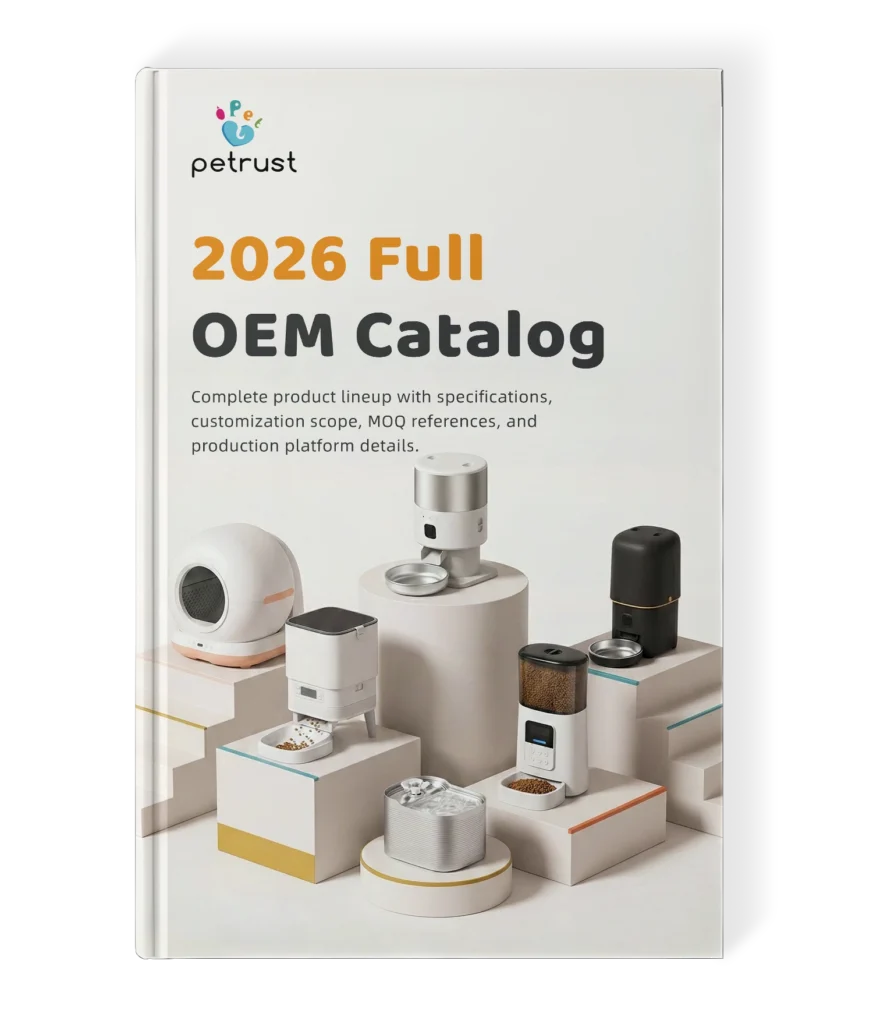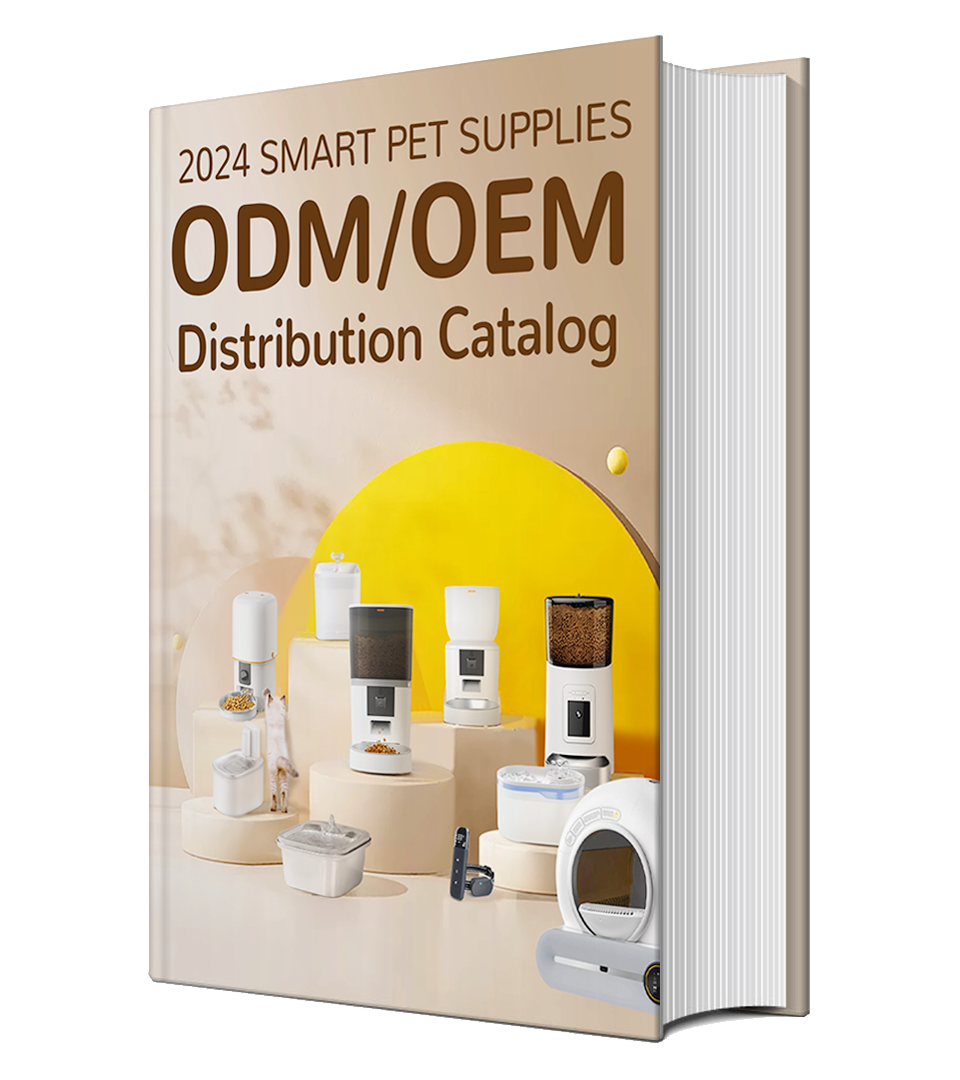

If you’re sourcing from automatic pet feeder manufacturers, the first assumption is usually that the process will be straightforward—find a supplier, confirm the price, place an order, and move into production. On paper, it looks efficient. In reality, this is often the stage where unexpected risks quietly begin to appear.
From a risk and cost perspective, the real challenge is rarely the unit price.
It’s what happens after production starts: inconsistent quality between batches, firmware instability that only appears after launch, app connectivity issues that frustrate end users, and return rates that slowly erode profit margins.
These problems don’t always show up in samples—but they almost always show up at scale.
And this is where many buyers underestimate the complexity of smart pet devices.
Unlike traditional pet products, smart feeders are not just hardware items. They combine electronics, firmware, app integration, and cloud connectivity, which means the capability of your supplier directly shapes your product’s reliability in the real world.
A small gap in engineering or testing can quickly turn into a long-term brand issue once customers start using the product daily.
At this stage, choosing an automatic pet feeder manufacturer in China is no longer just a sourcing task. It becomes a decision about your entire product architecture—how stable it is, how scalable it is, and how much risk you are willing to carry through each production cycle.
This is also where a broader understanding of the supply chain becomes essential.
Rather than simply listing suppliers, this guide is built to help you think more clearly about selection, risk, and long-term outcomes.
Ultimately, sourcing automatic feeders is not just about finding a factory—it’s about choosing a partner who can support your product beyond production, into real-world performance, customer experience, and long-term brand stability.
Why Automatic Pet Feeder Manufacturers Matter More Than You Think
When sourcing from automatic pet feeder manufacturers, many buyers initially focus on the obvious—price, sample appearance, and delivery timelines. From a procurement perspective, it feels like a straightforward comparison exercise.
But once production begins, the real differences between suppliers tend to show up in ways that are harder to predict: inconsistent batch quality, unstable app performance, delayed updates, or products that perform well in samples but fail under real-world usage.
From a risk and cost perspective, this is often where margins quietly disappear—not in the purchase order, but in the post-launch reality.
Hidden Risks Behind Low-Cost Suppliers
Lower quotations can feel reassuring at the early stage, especially for first-time importers trying to control budget and test market demand.
However, pricing alone rarely reflects the full picture of manufacturing capability.
Many cost advantages come with hidden trade-offs:
- No in-house R&D
- Weak quality assurance system
- Poor pet feeder quality control process
- Outsourced production → inconsistent quality
What looks like a 10% saving at the sourcing stage can later translate into significantly higher downstream costs—returns, replacements, support issues, and brand reputation damage that is far more expensive to repair than to prevent.
Why Smart Pet Feeder Manufacturing Is More Complex Than You Expect
Unlike traditional pet accessories, smart feeders sit at the intersection of hardware, software, and connected systems.
That complexity is often underestimated during early supplier selection.
A capable supplier is expected to handle more than just assembly.
Core capabilities typically include:
- IoT pet feeder manufacturer capabilities
- smart pet feeder app integration
- Stable firmware development for pet feeder
- Reliable cloud-based pet feeder system
These elements work together as one ecosystem. If even one layer is weak, the entire user experience can break down.
Industry guidance from the IoT Security Foundation consistently highlights that connected devices must integrate firmware security, cloud stability, and lifecycle update planning from the design phase—not as a post-production adjustment. In practical terms, this means supplier capability directly determines whether your product can evolve after launch or become obsolete quickly.
In many cases, the success of automatic pet feeder manufacturers is not defined by hardware quality alone, but by their ability to manage this full digital ecosystem.
Supply Chain Failures That Cost Brands Millions
In real sourcing scenarios, the most expensive problems rarely come from production itself—they come from coordination gaps across the supply chain.
Common issues include:
- Production delays due to poor production lead time planning
- Missing compliance & certification (e.g., CE FCC certification pet feeder)
- Weak packaging & branding → retail rejection
These challenges often surface late in the process, when timelines are already tight and market windows are narrowing.
According to the National Institute of Standards and Technology’s Supply Chain Risk Management framework, one of the leading causes of failure in modern manufacturing systems is a lack of end-to-end visibility and weak integration between product design, production, and compliance processes—especially in connected smart hardware categories.
This is why selecting automatic pet feeder manufacturers is not just a procurement step. It is a strategic risk decision that influences product stability, market readiness, and long-term scalability.
OEM vs ODM Automatic Pet Feeder Manufacturers: Which Model Fits Your Brand?
Once manufacturing risks are clear, the next step naturally becomes deciding how you want to work with your supplier.
This is where the OEM vs ODM smart pet products decision starts shaping your entire business structure.
OEM Automatic Pet Feeder Manufacturer Vs ODM Pet Feeder Supplier
At a fundamental level, the difference comes down to control versus speed.
- OEM: You control design, supplier manufactures
- ODM: Supplier provides ready-made design
Both models are widely used among automatic pet feeder manufacturers, but they serve very different business stages and risk profiles.
Private Label Vs Custom Development: What’s The Real Difference
As sourcing becomes more strategic, many brands also compare private label options with fully customized development paths.
Private label works well when speed and market testing are the priority. Custom development, on the other hand, is often chosen by brands aiming to build long-term differentiation and stronger pricing power.
Decision Matrix: Cost, Speed, Control
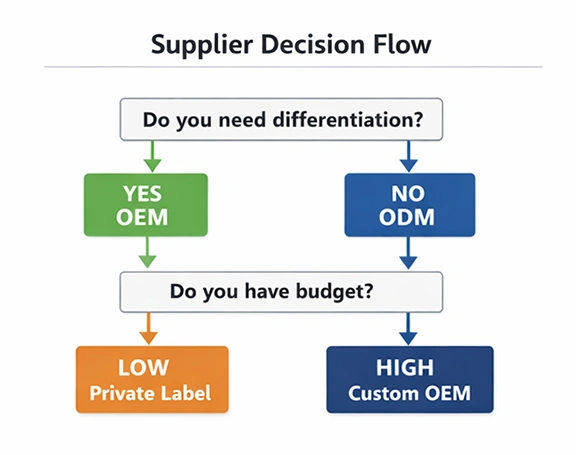
In practice, most successful brands working with automatic pet feeder manufacturers evolve across models over time—starting with speed, then gradually shifting toward control as the business matures
Best Automatic Pet Feeder Manufacturers in China (2026)
Not just because of price advantages, but because the ecosystem behind pet tech manufacturing has matured in a way that supports both scaling and innovation.
For brands planning to import automatic pet feeders from China, three advantages usually stand out early in the process:
- Mature supply chain
- Strong R&D capability
- Competitive pet feeder wholesale price
From a risk and cost perspective, this combination is exactly why China continues to dominate this category. But the real challenge is not availability—it’s selecting the right factory within a very wide capability range.
How to Compare Automatic Pet Feeder Manufacturers Objectively
Price is usually the easiest comparison point, but in practice, it is also the least reliable way to evaluate automatic pet feeder manufacturers.
What matters more is how stable and capable the supplier is when the product moves from sample stage to mass production.
A more practical evaluation framework looks like this:
- Technical capability (IoT / firmware / app)
- Supplier inspection for pet feeders
- Production stability
- Communication efficiency
This becomes especially important for a pet product distributor supplier or any brand planning to scale beyond small test orders.
At that stage, small inefficiencies in production or communication can quickly turn into larger delays and cost overruns.
Smart Pet Feeder Factory China: What Defines a Top-Tier Supplier
Not all factories operate at the same level, even if their product catalogs look similar.
A top-tier smart pet feeder factory China typically stands out in areas that are not immediately visible in pricing sheets.
Key indicators include:
- In-house firmware + app team
- Strong factory audit for smart pet products results
- Clear product lifecycle planning
- Full tooling / mold control
These capabilities often determine whether a factory can support long-term product evolution or only short-term assembly work.
From a technical and risk standpoint, this difference becomes very important once products scale internationally.
Chinese Pet Feeder Suppliers vs Global Alternatives
Sourcing decisions are often influenced by regional comparisons, especially for first-time buyers evaluating automatic pet feeder manufacturers globally.
For most buyers, China still represents the most balanced option when considering scalability, cost control, and production maturity.
Types of Automatic Pet Feeders You Can Source from Manufacturers
Once sourcing regions are clear, the next step is understanding product categories.
Different types of feeders require very different levels of engineering, software integration, and production capability from automatic pet feeder manufacturers.
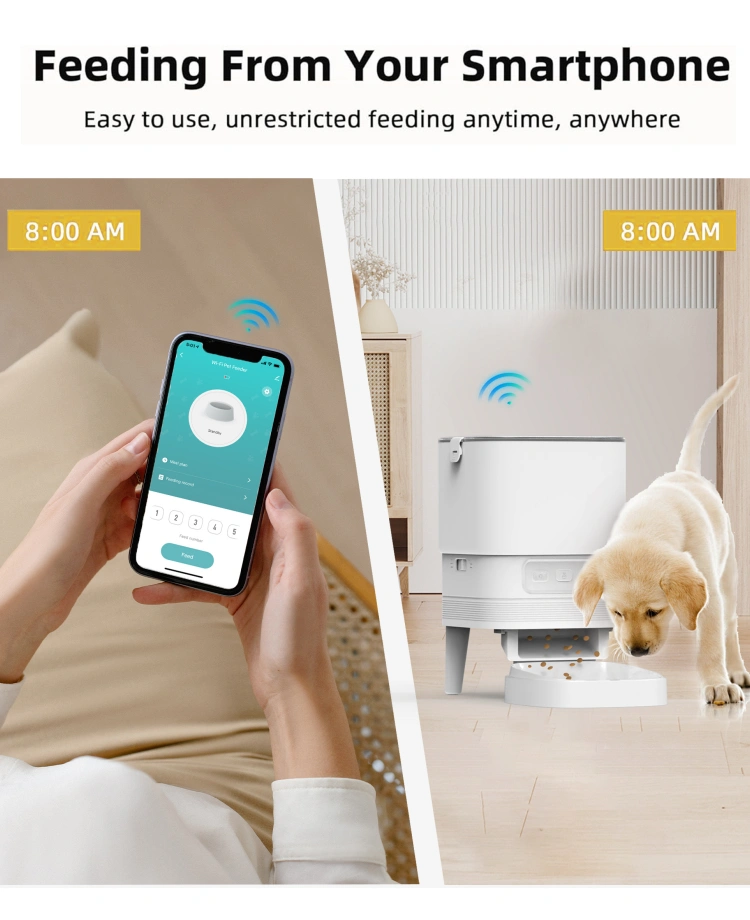
- Most popular segment
- Requires strong smart pet feeder app integration
This category relies heavily on stable connectivity and user experience. Even small app delays or syncing issues can directly affect customer satisfaction.
- Higher price point
- Requires advanced firmware + video capability
This segment introduces additional complexity in video transmission, storage, and real-time control systems, making supplier capability even more critical.

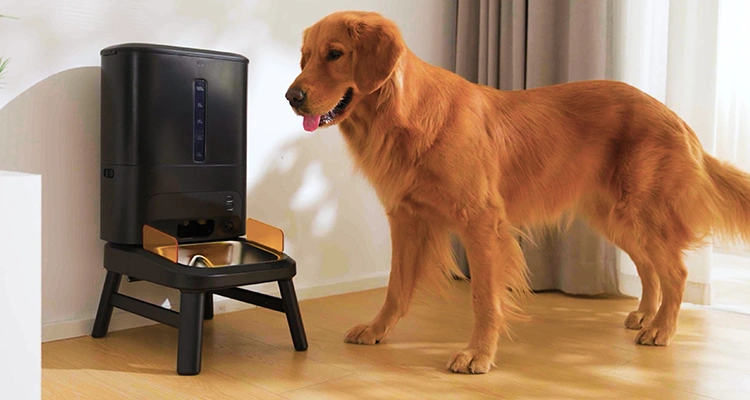
- Focus on hardware reliability
- Less software complexity
Here, mechanical design and durability matter more than digital features, especially for long-term feeding stability.
- Niche but growing
- Requires feeding logic optimization
This category depends on precise portion control and scheduling logic to manage multiple pets without conflicts.
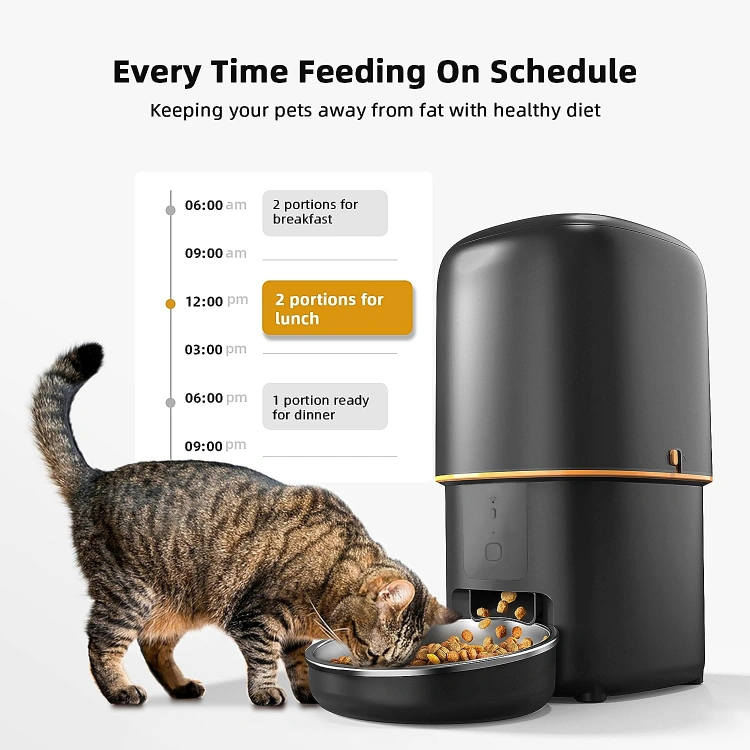
Automatic Pet Feeder Manufacturing Cost Breakdown (2026)
Before negotiating with automatic pet feeder manufacturers, understanding the cost structure is essential.
Many buyers focus only on unit price, but the real financial picture is much broader.
Pet Feeder Mold Cost & Tooling Investment
- Initial tooling / mold cost: $3,000–$15,000
- One-time but impacts long-term cost
This upfront investment often determines long-term pricing flexibility and product customization capability.
OEM Pet Feeder Price Per Unit Explained
Typical pet feeder wholesale price:
- Basic model: $15–25
- Smart WiFi model: $25–50
- Camera model: $50+
Unit price varies significantly depending on hardware complexity and software integration requirements.
Smart Feeder App Development Cost
- Basic app: $5,000–$15,000
- Advanced system (cloud + AI): higher
Software development is often underestimated, yet it plays a major role in overall product stability and user experience.
Certification (CE/FCC) and Compliance Cost
Compliance is mandatory for EU and US markets and includes compliance & certification testing.
As defined by the European Commission, CE marking is a legal requirement for many electronic consumer products entering the European market, ensuring compliance with safety, health, and environmental standards.
Failing certification doesn’t just delay shipping—it can block your entire market entry.
Estimate your landed cost in 3 minutes — including tooling, app, certification & hidden costs
Hidden Costs When Working with Automatic Pet Feeder Manufacturers
Some of the most important costs are not visible at the beginning of sourcing conversations with automatic pet feeder manufacturers.
Research from the Organisation for Economic Co-operation and Development on global value chains shows that modern manufacturing value is no longer defined only by production cost, but by how efficiently companies manage coordination, lifecycle responsibilities, and cross-border complexity.
Cost vs Risk Matrix
The real landed cost of automatic pet feeders is not unit price—it’s total risk-adjusted cost.
How to Choose a Reliable Automatic Pet Feeder Manufacturer
Before comparing quotes or shortlisting suppliers, it helps to pause and look at the bigger picture—what actually makes automatic pet feeder manufacturers reliable in real production conditions, not just on paper.
Many sourcing issues don’t come from obvious mistakes, but from small evaluation gaps at the very beginning.
Rather than focusing only on price or samples, the goal here is to understand capability, consistency, and long-term support—because these factors ultimately determine how your product performs in the market.
How to Find and Verify Automatic Pet Feeder Manufacturers
Finding suppliers is relatively easy today.
Verifying them is where real sourcing risk begins.
A more reliable approach usually includes:
- Use verified platforms + referrals
- Work with a pet product sourcing agent China if needed
- Request factory videos + audit reports
These steps help reduce uncertainty early in the process, especially when working with automatic pet feeder manufacturers for the first time.
Pet Feeder Factory Audit Checklist (What to Actually Check)
Factory visits or audits often reveal what product catalogs cannot show.
A structured checklist helps avoid missing critical details.
Key areas include:
- Production line
- QC process
- R&D team
- Certification
Each of these directly reflects how stable and scalable a supplier really is when working with automatic pet feeder manufacturers.
Reliable OEM Pet Feeder Supplier Evaluation Framework
Once basic checks are complete, a more structured scoring system helps bring objectivity into supplier comparison.
Supplier Scoring Model
Petrust® Supplier Risk Score™
Score = (Quality × 30%) + (R&D × 25%) + (Communication × 25%) + (Price × 20%)
Risk Level:
- 80–100 → Low Risk
- 60–79 → Medium Risk
- <60 → High Risk
This type of framework is especially useful when comparing multiple automatic pet feeder manufacturers side by side, where surface-level similarities can easily hide significant capability differences.
Pre-built scoring model used by 200+ buyers
Compare multiple suppliers, rank them instantly, and identify the lowest-risk partner
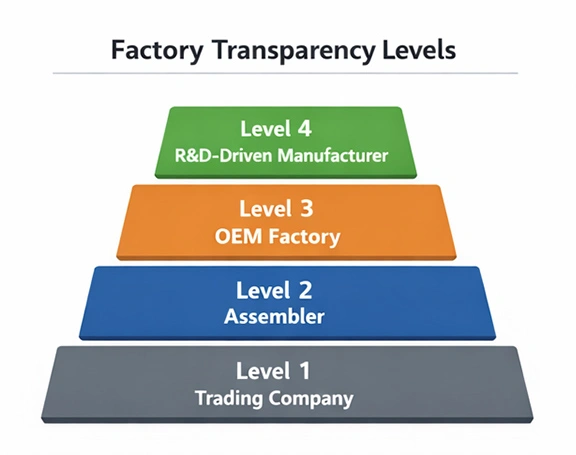
Factory Transparency Level
- Level 1 → Trading company
- Level 2 → Assembler
- Level 3 → OEM factory
- Level 4 → R&D-driven manufacturer
Especially useful if you’re an automatic pet feeder manufacturer for Amazon sellers
MOQ, Lead Time & Customization Options Explained
Once supplier capability is clearer, the next practical concerns usually come down to volume, timing, and flexibility.
These factors often determine whether a project can move forward smoothly or face unexpected delays.
Automatic Pet Feeder MOQ: What’s Reasonable
- Typical MOQ: 500–1000 units
This range reflects standard production efficiency for most automatic pet feeder manufacturers, especially when tooling and assembly lines are already set up.
Low MOQ Pet Feeder Supplier vs Hidden Risks
Lower MOQ options can seem attractive at first, especially for testing markets. However, they often come with trade-offs that are not always obvious initially:
- Higher unit price
- Limited customization
- Lower priority in production
From a risk and cost perspective, these trade-offs can affect scalability later in the product lifecycle.
Custom Logo & Packaging Options
Brand presentation plays a major role in differentiation, especially in competitive retail channels.
- Branding = key for differentiation
- Includes packaging & branding design
Red Flags When Working with Automatic Pet Feeder Manufacturers
Even experienced buyers can overlook early warning signs when evaluating automatic pet feeder manufacturers, especially when communication feels smooth at the beginning.
Unreliable Pet Feeder Supplier Warning Signs
- No clear QC process
- No R&D team
These indicators often suggest limited long-term capability rather than temporary operational gaps.
OEM Supplier Scam China: How It Happens
- Fake factory
- Trading company pretending to be manufacturer
These situations usually appear credible at first glance, which is why verification is so important before moving forward.
Pet Feeder Quality Issues and Root Causes
- Poor materials
- Weak QC
- No testing
These issues tend to surface only after mass production begins, when corrections become more expensive and time-consuming.
No In-House Firmware Team = Long-Term Risk
For smart pet devices, software support is just as important as hardware quality. Without firmware capability:
- No updates
- No bug fixes
- Product failure
This is one of the most overlooked risks when working with automatic pet feeder manufacturers, especially for smart or app-connected products.
China vs Vietnam vs Europe: Where to Manufacture Pet Feeders?
When evaluating automatic pet feeder manufacturers, one of the first strategic decisions is geography.
On paper, multiple regions look viable, but in practice, each one behaves very differently once production begins at scale.
From a risk, cost, and operational perspective, the country you choose doesn’t just affect unit price—it shapes your supply chain stability, product consistency, and how fast you can respond to market demand.
China Vs Vietnam Manufacturing Cost Comparison
At first glance, Vietnam often appears attractive due to lower labor costs.
However, cost alone rarely tells the full story when working with automatic pet feeder manufacturers.
- China → stable + scalable
- Vietnam → cheaper labor but limited ecosystem
China’s advantage lies in its complete ecosystem—electronics, plastics, firmware development, and assembly all working within a tightly integrated supply chain.
Vietnam is improving quickly, but for complex smart pet devices, the supporting infrastructure is still developing.
EU Pet Product Suppliers: Pros & Limitations
Europe is often associated with high standards and strong engineering quality.
That reputation is well earned—but it also comes with practical trade-offs.
- High quality
- High cost
- Less flexibility
For brands prioritizing premium positioning, EU suppliers can be a strong fit.
However, for automatic pet feeder manufacturers involving IoT, app integration, and fast iteration cycles, flexibility and cost structure often become limiting factors.
Best Country for Pet Product Manufacturing
When all variables are considered—cost efficiency, production maturity, and scalability—the conclusion for most buyers becomes relatively consistent:
This is especially true for brands planning long-term growth rather than one-time product launches.
Real Case Studies: Choosing the Right Pet Feeder Manufacturer
Theory helps, but real sourcing decisions often become clearer when you see how different strategies perform in actual market conditions.
These cases reflect common outcomes we’ve seen when working with automatic pet feeder manufacturers across different business models.
Case #1 – EU Brand (Revenue: $5M)
Problem:
- ODM product → no differentiation → trapped in price war
Decision:
- Switched to semi-custom OEM
- Invested $8,000 in tooling
Result:
- +27% margin
- 3× reorder rate
- Amazon return rate reduced from 12% → 4%
This case highlights a common turning point: moving away from pure ODM towards structured OEM customization often improves long-term pricing power and brand positioning.
Case #2 – Amazon Seller (Private Label)
Problem:
- Wanted fast launch with minimal upfront investment
Decision:
- Chose private label automatic pet feeder
Result:
- Launch in 45 days
- Initial success
- But faced heavy competition within 6 months
- Margin dropped by 18%
Fast execution created early momentum, but without differentiation, the product quickly became part of a crowded market. This is a common pattern in low-barrier private label strategies.
Case #3 – Startup Failure Case
Problem:
- Chose cheapest supplier (15% below market)
Decision:
- Skipped audit + no sample validation
Result:
- Defect rate: 9%
- Delayed launch by 3 months
- Lost key retail opportunity
This case shows how early-stage cost savings can quietly turn into much larger downstream losses when working with automatic pet feeder manufacturers without proper validation.
Lesson: Cheap supplier = expensive mistake
Quick Answers for Buyers
FAQs About Automatic Pet Feeder Manufacturers
Conclusion: Choose the Right Automatic Pet Feeder Manufacturer for Your Brand
At the final stage of decision-making, choosing between different automatic pet feeder manufacturers is rarely about finding the lowest price.
By this point, most experienced buyers already understand that cost alone doesn’t determine success.
What matters more is how well the manufacturer supports your long-term business goals.
A strong partnership is built on three key foundations:
- Reducing risk
- Controlling cost
- Building a scalable product
When these elements are aligned, the manufacturer becomes more than just a supplier—they become part of your brand’s growth system.
Before placing any order, it’s always worth validating assumptions with real samples.