
Import pet products from China often looks straightforward on the surface, yet many brands quickly realize how easy it is to lose control over cost, quality, and timelines once real orders begin.
Behind every successful shipment is a series of careful decisions—about suppliers, pricing, inspections, and logistics—that quietly determine whether a project becomes profitable or problematic.
Not every supplier in China is reliable.
Not every quote reflects your true cost.
And not every sample represents what you’ll receive in bulk production.
This gap between expectation and reality is where most buyers lose money.
Many brands step into global sourcing with confidence, only to encounter issues like poor quality bulk order China, unexpected hidden import costs from China, or even a full supplier scam China pet products situation.
These challenges aren’t rare—they’re part of the learning curve that every serious importer eventually faces.
A: The biggest risk lies in decision-making—choosing the wrong supplier, miscalculating costs, or skipping quality control—not in the importing process itself.
A: Landed cost includes product price, shipping, duties, inspection, and all additional expenses that impact your final margin. Many buyers underestimate their real landed cost pet products, which leads to pricing pressure later.
A: Sea: 25–40 days
Air: 5–10 days
A: Verify business licenses
Avoid unusually low prices
Use staged payments
A: Yes. Without inspection, buyers risk receiving defective products with little or no recourse after shipment.
Every sourcing journey starts from a different place. This guide is designed to meet the needs of serious buyers who are ready to build sustainable supply chains.
This guide is for:
- Pet brands importing from China
- Distributors scaling product lines
- Buyers sourcing OEM/ODM products
This guide is NOT for:
- Dropshipping beginners
- Small test buyers without QC processes
As you move forward, clarity becomes your biggest advantage. This guide is built to help you:
- avoid costly sourcing mistakes
- understand your real landed cost pet products
- choose reliable suppliers with confidence
We’re not here to sell you products.
We’re here to help you make safer, smarter sourcing decisions.
The Real Process to Import Pet Products from China (Step-by-Step Overview)
When brands begin to import pet products from China, the process often appears simple—almost like a checklist you just follow from start to finish.
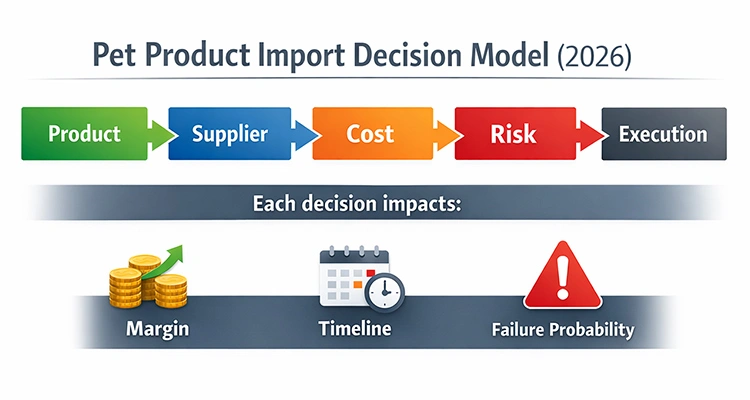
In reality, it behaves more like a decision-driven system, where each choice quietly shapes your profit margins, delivery timelines, and overall risk exposure.
Every step may look operational on paper, yet behind each one sits a series of judgments—about suppliers, costs, timelines, and quality—that ultimately determine whether your sourcing project succeeds or struggles.
What Most Buyers Miss When They Import Pet Products from China
Many importers don’t run into trouble because they lack information about the process. The steps themselves are widely available and easy to follow. The real challenge lies in the decisions made along the way.
What tends to get underestimated is how much impact small misjudgments can have once production begins. Common gaps include:
- Choosing the wrong product
- Misjudging supplier capability
- Ignoring supply chain risks
- Overlooking lead time and production timeline
Each of these decisions may seem manageable in isolation, but together they can create compounding issues—delays, unexpected costs, or quality inconsistencies that only surface when it’s too late to adjust.
The biggest mistake is often subtle: treating importing as a purely operational task, when in reality it requires a strategic mindset from the very beginning. That shift in perspective alone can dramatically change outcomes.
Want to see where buyers typically go wrong? → Top Mistakes When Importing Pet Products
This is also where real-world experiences tend to leave the strongest impression.
A European buyer followed the standard process but skipped supplier verification.
Result:
- Supplier disappeared after deposit
- 100% financial loss
Situations like this are not caused by complexity—they are caused by overlooked decisions that seemed minor at the time.
From Product Idea to Delivery: The Full Sourcing Workflow
Once the strategic layer becomes clear, the operational flow starts to make much more sense. The sourcing journey typically follows a structured path:
While this workflow looks straightforward, each step connects to deeper considerations—cost structures, supplier reliability, production stability, and compliance requirements.
As you move through this guide, these layers will become clearer, helping you build a sourcing process that feels less reactive and far more controlled.
Step 1: How to Choose the Right Product Before You Import
Before reaching out to any supplier, there’s one decision that quietly determines everything that follows—your product choice.
What product actually makes money?
It’s a simple question, yet many brands overlook it in the rush to follow trends. A product might look exciting on the surface, but long-term success depends on how well it performs across margins, logistics, and customer satisfaction. Taking a moment to evaluate this early often saves months of costly adjustments later.
Best-Selling vs Profitable Pet Products (What Actually Matters)
Trends can be tempting. They move fast, attract attention, and create urgency. Yet experienced buyers tend to look beyond popularity and focus on sustainability.
The best pet products to import are not always the most talked-about—they’re the ones that consistently deliver results:
- Stable demand
- Low return rate
- Manageable logistics cost
- Strong differentiation
While following pet product market trends can provide direction, profitability is ultimately shaped by execution—pricing strategy, positioning, and supply chain control.
What are the best pet products to import from China?
The best products are those with stable demand, manageable logistics cost, and high margin—not just trending items.
Want real product insights with margin logic? → Best-Selling Pet Products to Import from China (With Margins)
To make this more tangible, consider a common scenario.
A brand imported a trending smart toy.
Result:
- High return rate
- Low profit margin
Momentum alone didn’t translate into profitability. The missing piece was a deeper evaluation of product-market fit and operational costs.
Compliance Risks (CE, FCC & Pet Safety Standards)
Once the product direction becomes clearer, compliance quickly becomes the next critical layer—especially for brands entering regulated markets like the US or EU.
You must consider:
- compliance (CE / FCC / FDA)
- Electrical safety for smart devices
- Material safety for pet contact
Overlooking compliance often leads to consequences that are difficult to reverse:
- Shipment rejection
- Delays in customs clearance
- Unexpected import tax pet supplies USA / EU
These risks don’t just affect timelines—they directly impact cash flow and market entry opportunities.
Case: Choosing the Wrong Product That Failed in 3 Months
A distributor selected a trending automatic feeder without reviewing certification requirements.
Result:
- Failed compliance test
- Delayed launch
- Overstock inventory
The takeaway becomes clear over time: knowing how to choose pet products to sell carries far more weight than simply reacting to trends.
Need a structured approach? → How to Choose the Right Pet Product to Import (2026)
Step 2: How to Find Reliable Pet Product Suppliers in China to Import Successfully
With the right product defined, the next decision becomes even more critical—choosing the right supplier. This is where many sourcing journeys either stabilize or begin to drift off course.
Choosing the right partner often determines the outcome long before production even begins.
Not sure if your supplier is reliable? Request a quick supplier risk assessment before placing your order.
Pet Product Manufacturers vs Trading Companies: Key Differences
As you evaluate suppliers, one of the first distinctions to clarify is whether you’re working with a factory or a trading company. Each has its place, but their roles—and long-term impact—are very different.
- OEM pet products manufacturer China → better pricing, customization
- ODM pet products supplier → faster development, less flexibility
Not sure which model fits your brand? → OEM vs ODM for Pet Products: Which Is Better for Your Brand?
For brands focused on building long-term product lines, working directly with factories often provides greater control and consistency.
A buyer chose a trading company without factory oversight.
Result:
- Inconsistent product quality
- Delayed shipments
The initial convenience came at the cost of long-term reliability.
How to Verify Pet Product Suppliers in China (Checklist)
Once potential suppliers are shortlisted, verification becomes the foundation of risk control.
Before placing an order:
- Check business license
- Review production capability
- Validate packaging and QC processes
- Ask for past inspection report
This step acts as your first line of defense against a supplier scam China pet products scenario.
At the same time, communication often reveals more than documents.
Clear, consistent responses usually indicate structured internal processes—
something many buyers pay close attention to. → Supplier Communication Guide
Red Flags When Sourcing from China Suppliers
As conversations progress, certain signals tend to appear early. Recognizing them can prevent larger issues later.
Watch for:
- Unrealistically low pricing
- Poor communication
- Refusal to provide factory proof
- Vague production timeline
These are often early indicators of deeper sourcing risks.
Deep dive into warning signs → Red Flags When Choosing Pet Product Suppliers in China
And how to protect yourself → How to Avoid Scams When Sourcing from China
Supplier Risk Scoring Model (For Pet Product Buyers)
Selecting a supplier involves more than comparing quotes. Many experienced buyers rely on structured evaluation models to reduce uncertainty and make balanced decisions.
| Criteria | Weight | Key Question |
|---|---|---|
| Factory Verification | 25% | Do they own production facilities? |
| Communication Quality | 15% | Are responses clear and consistent? |
| Pricing Logic | 20% | Is pricing realistic, or suspiciously low? |
| QC System | 20% | Do they have inspection and quality control processes? |
| Delivery Reliability | 20% | Any history of delayed shipments? |
This approach shifts the focus from short-term pricing to long-term reliability.
Why it matters: Supplier transparency and verification play a crucial role in reducing sourcing risks. The OECD Supply Chain Resilience Review highlights that maintaining clear and verified supplier information, combined with risk-aware sourcing practices, helps buyers prevent costly delays and quality issues.
Step 3: MOQ, Pricing & Negotiation Strategy
MOQ is more than just a number—it can shape your entire sourcing strategy and protect both quality and cash flow.
Approaching it thoughtfully makes a big difference between smooth production and costly headaches.
MOQ Pet Products: What Suppliers Don’t Tell You
MOQ is influenced by several behind-the-scenes factors:
- Material sourcing
- Production efficiency
- Supplier capacity
Lowering MOQ too aggressively often leads to higher cost per unit after shipping—and sometimes hidden compromises in quality.
Want real negotiation tactics? → Pet Product MOQ Negotiation Guide
A buyer insisted on a very low MOQ.
Result:
- Supplier reduced quality
- Defect rate increased
This shows why a strategic approach to MOQ—rather than just pushing numbers—is key to maintaining consistency.
How to Negotiate MOQ with China Suppliers Without Losing Quality
Instead of insisting on a lower MOQ, you can:
- Ask for mixed SKUs to spread risk
- Negotiate phased orders over multiple shipments
- Align with the supplier’s production timeline to prevent rushed work
These subtle adjustments often protect quality while keeping initial orders manageable.
Pet Product Wholesale Pricing: Hidden Traps to Avoid
Attractive low prices can feel tempting, but they often hide risks:
- Lower material quality
- Weak quality control
- Delays from China suppliers
Learn how to secure your terms → Supplier Contract Guide When Buying from China
A clear understanding of costs, timelines, and hidden risks helps you avoid surprises and strengthen your supplier relationship.
Different brands have different priorities. Consider your next step:
- Want to find winning products? → Smart Pet Industry Rankings
- Want to reduce supplier risk? → Pet Product Manufacturer Guides
- Want to develop your own product? → Smart Pet Product Development
- Want to grow your pet business? → Pet Business Growth
This approach ensures that each action you take builds toward both reliability and long-term growth.
Step 4: Sample Evaluation (Where Most Buyers Lose Money)
Sample approval is one of the most overlooked yet critical steps in importing. Even a perfect sample can be misleading without proper evaluation.
Why Samples Don’t Match Bulk Orders
A common issue: sample not matching bulk production
The reasons are often subtle but significant:
- Different materials used in mass production
- Manual versus automated production processes
- Lack of standardized QC across production batches
Why does a sample differ from bulk production?
Because samples are often hand-made or produced under ideal conditions, while bulk production involves automated processes, cost optimizations, and materials substitutions that affect the final product.
How to Evaluate Pet Product Samples Like a Pro
A thorough evaluation should focus on:
- Functional testing
- Durability and wear resistance
- Internal structure and assembly
- Packaging quality
Full evaluation framework → How to Evaluate Pet Product Samples
Taking the time to evaluate samples carefully can prevent costly surprises later in production.
Case: Approved Sample vs 18% Defect Rate in Production
A buyer approved a sample that looked flawless. The bulk order revealed:
- 18% defect rate
- Failed retail launch
Lesson: Sample ≠ production reality.
See real failures and lessons: → Real Case: Failed Orders & What Went Wrong
Even experienced buyers can underestimate this step. By combining careful evaluation with strategic supplier collaboration, you can reduce risk and ensure smoother production.
Step 5: How to Calculate the Real Cost to Import Pet Products from China
A supplier’s quote rarely tells the whole story when you import pet products from China.
Many buyers feel confident about cost until they account for shipping, duties, inspection, and those sneaky hidden costs that quietly erode margins.
Paying attention to these details can make the difference between a profitable order and a costly mistake.
Many buyers think they understand cost—until they calculate it properly. Get a landed cost estimation before confirming your order.
Landed Cost = Product Cost + Shipping + Duties + Inspection + Hidden Cost Buffer (5–10%)
This model is widely used by professional sourcing managers.
A small investment in accurate landed cost calculation upfront can save thousands later and prevent unpleasant surprises once your shipment arrives.
What Is Landed Cost in Importing Pet Products?
Your real landed cost pet products includes:
- Product cost
- Shipping
- Duties
- Inspection
- Warehousing
Use a full breakdown model → Landed Cost Calculation for Pet Products
A brand miscalculated their landed cost:
- Ignored storage fees
- Ignored rework costs
Result:
- 22% margin loss
This shows that small omissions can have major consequences, emphasizing why precision matters in every calculation.
Hidden Costs When Importing from China (That Kill Your Margin)
Some of the most common hidden import costs from China that catch buyers off guard include:
- Rework due to defects
- Storage fees
- Delayed shipments
- Compliance adjustments
Even experienced buyers can underestimate these factors, making it crucial to integrate a risk buffer into your cost planning.
How to Accurately Estimate Cost to Import Pet Products from China
True profitability comes from considering all aspects: cost per unit after shipping, taxes, and a risk buffer for unexpected issues.
Overlooking these details creates a false sense of margin and can derail your business plan.
Duties explained in detail → Pet Product Import Duties & Taxes
Pet Product Import Cost Breakdown (2026 Data Insight)
One of the most common questions from buyers is:
“What is the real cost breakdown when importing pet products from China?”
Based on sourcing data from multiple orders, a typical cost structure is:
| Cost Component | % of Total Cost |
|---|---|
| Product Cost | 45% – 60% |
| Shipping & Logistics | 15% – 30% |
| Import Duties & Taxes | 5% – 15% |
| Quality Inspection | 2% – 5% |
| Hidden Costs & Risk Buffer | 5% – 10% |
Key Insight: Logistics and tariffs are highly variable and can significantly impact your landed cost. According to the World Tariff Profiles 2025 published by the World Trade Organization, import duties and trade policies vary widely across countries and sectors, influencing the total cost of imported goods.
Additionally, the WTO Tariff & Trade Data platform provides applied tariff rates and trade statistics for over 150 economies, helping buyers plan and budget for import duties accurately. Small investments in research can protect your margins and prevent unwelcome surprises at customs.
Step 6: Payment Methods & Risk Control When Buying from China
Payment terms are more than just a financial step—they represent your risk exposure.
Approaching payment strategically can protect your capital and maintain leverage over suppliers.
Payment Methods China Suppliers: TT vs LC vs Trade Assurance
Each payment method balances:
- Cost
- Risk
- Flexibility
Compare methods and risks → Payment Methods When Buying from China
A buyer paid 100% upfront.
Result:
- Supplier delayed shipment
- Buyer had no leverage to enforce delivery
This demonstrates why a thoughtful payment strategy is crucial, especially when dealing with unfamiliar suppliers.
Safe Payment Strategies to Avoid Supplier Risk
Best practices to reduce financial exposure include:
- Splitting payments
- Linking payment to milestones
- Avoiding full upfront payment
In combination with proper supplier verification and cost planning, these strategies help you maintain both control and confidence when you import pet products from China.
Step 7: Production & Quality Inspection
Quality assurance is not just a step—it’s the foundation of a successful import. Skipping inspection might seem like a shortcut, but it often leads to costly mistakes that could have been prevented.
When you import pet products from China, paying attention to inspection early can save both time and money.
Why Skipping Inspection Is the Most Expensive Mistake
No inspection = blind risk.
By skipping inspection, buyers leave themselves vulnerable to hidden issues that only appear after the products arrive.
Using a pre-shipment inspection checklist can help catch problems before they become losses.
Even experienced importers have learned the hard way that a small oversight can lead to rejected shipments and wasted resources.
Quality Inspection Checklist for Pet Product Orders
According to the International Organization for Standardization, consistent quality control systems are essential to ensure reliable manufacturing outcomes.
When evaluating your orders, inspection should include:
- Functionality
- Appearance
- Safety
- Packaging
A shipment was rejected due to overlooked quality issues, causing delays and extra costs that could have been avoided with proper checks.
Full inspection SOP → Quality Inspection for Pet Product Orders
Case: Shipment Rejected Due to Quality Failure
Some shipments fail completely when inspection is skipped. Common causes include:
- Poor assembly
- Missing QC verification
Result: total loss.
These scenarios highlight why inspection isn’t optional—it’s an essential safeguard.
Step 8: Shipping Pet Products from China (Sea vs Air vs Express)
Shipping isn’t just moving products—it’s managing cost, timing, and risk.
Choosing the right shipping method can protect your profit margin and ensure your products reach their destination safely.
Sea Freight vs Air Freight China: Cost vs Speed
- Sea → low cost, longer transit time
- Air → higher cost, faster delivery
Full comparison guide → Pet Product Shipping Guide (Sea vs Air vs Express)
A brand opted for air freight without necessity, leading to a 35% drop in profit margin. Balancing speed and cost is critical to protecting your bottom line.
How to Choose the Right Freight Forwarder in China
A reliable forwarder helps control:
- logistics cost
- Delivery timelines
- Documentation accuracy
You can use these criteria to select partners who truly support your sourcing strategy → Pet Product Logistics & Freight Forwarders
How Long Does Shipping from China Take?
Global shipping volatility continues to affect timelines and freight rates, according to UNCTAD.
Transit duration depends on:
- Shipping route
- Method of transport
- Port congestion
Container strategy → Container Shipping Guide for Pet Products can help you plan effectively, minimizing delays and cost overruns.
Step 9: Customs, Duties & Compliance Requirements
Importing is not complete until products clear customs without delays or penalties. Proper compliance ensures smooth delivery and avoids costly surprises.
How to Calculate Import Duties for Pet Products
Key elements to consider include:
- Tariff rates
- Product classification
- Destination country rules
Using a detailed breakdown can make cost estimation and planning much more accurate → Pet Product Import Duties & Taxes
A shipment faced delays and penalties because an incorrect HS code was used, illustrating how small mistakes can carry large consequences.
HS Code, Documentation & Customs Clearance Basics
Correct HS code assignment ensures smooth customs clearance, preventing unnecessary hold-ups or fines. Accurate documentation is just as crucial as correct product classification.
Compliance for Smart Pet Products (CE, FCC, RoHS)
Electronic and smart devices face additional scrutiny in global markets.
According to the European Commission, all electronic products sold in the EU must comply with stringent safety and regulatory standards. Smart devices need to meet:
- CE (EU)
- FCC (US)
- RoHS
Meeting these compliance requirements protects your brand, prevents returns, and ensures your products are trusted by international buyers.
Common Risks When You Import Pet Products from China
Bringing products from overseas always carries some uncertainty, and when you import pet products from China, small mistakes can quickly become costly setbacks.
Many buyers share the same challenges: trusting the wrong supplier, overlooking quality control, or underestimating the real landed costs.
Being aware of these risks and taking deliberate precautions is what separates smooth sourcing from frustrating failures.
Top Mistakes Importing Pet Products (Real Buyer Scenarios)
Common pitfalls include:
- Choosing the wrong supplier
- Ignoring QC
- Underestimating cost
Full list of mistakes:→ Top Mistakes When Importing Pet Products
A buyer skipped QC and neglected a formal contract. The result was product failure with no legal recourse—an experience that underscores the importance of diligence at every step.
How to Avoid Scams When Sourcing from China
Preventing supplier scam China pet products requires practical measures:
- Verifying credentials
- Avoiding suspicious pricing
Full anti-scam strategy → How to Avoid Scams When Sourcing from China
How to Reduce Sourcing Risks When You Import Pet Products from China
Building a strong sourcing strategy protects both your products and your margins:
- Diversify suppliers
- Implement QC procedures
- Plan for potential delays
Subtle planning at each stage can save headaches and maintain consistency for your brand.
Real Case Study: How a Pet Brand Reduced 27% Cost and Avoided a Failed Order
Initial issues:
- Overestimated margins
- Wrong supplier choice
Key problems:
- Hidden costs
- Poor QC
Solution:
- Recalculated real landed cost pet products
- Switched supplier
- Improved QC measures
Result:
- 27% cost reduction
- Stable supply chain
Want more real-world failures and fixes? → Real Case: Failed Orders & What Went Wrong
Import Pet Products Checklist
Before placing an order, confirm that:
- Product is validated
- Supplier is verified
- Cost is accurately calculated
- QC plan is in place
- Shipping is arranged
Download your sourcing SOP → Pet Product Import Checklist
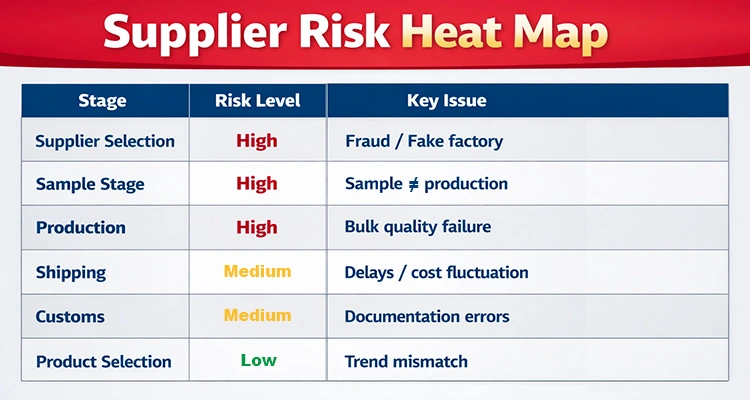
2026 Pet Product Import Risk Map (What Buyers Should Watch)
Not all risks carry the same weight. Here’s a simplified risk map drawn from real sourcing failures:
| Stage | Risk Level | Common Issue |
|---|---|---|
| Product Selection | Medium | Wrong product / non-compliance issues |
| Supplier Selection | High | Supplier scams or fraudulent offers |
| Sample Stage | High | Sample does not match bulk production |
| Production | High | Poor quality bulk order |
| Shipping | Medium | Delays from Chinese suppliers |
| Customs | Medium | HS code errors, incorrect duties, incomplete documentation |
Tip: Compliance and documentation errors are among the top causes of customs delays worldwide. The International Trade Administration highlights that misclassified HS codes and incomplete certificates are frequent reasons shipments are delayed or rejected.
Explore More: Build a Smarter Pet Product Business
Importing is only one piece of the puzzle in creating a successful pet product business.
To reduce risk, improve margins, and scale efficiently, you also need a broader perspective:
- Market demand
- Product innovation
- Supplier strategy
- Business growth models
At different stages, you need different types of support:
- Step 1: Understand the Market
- Step 2: Analyze Top Products
- Step 3: Validate Product Feasibility
- Step 4: Find Manufacturers
- Step 5: Import & Cost Control (you are in this stage)
- Step 6: Build Your Brand
Conclusion: Import Smarter, Not Cheaper
Is the cheapest smart pet product supplier the best option?
Rarely. Low-cost suppliers often carry higher risks, hidden costs, and lower long-term profitability. True profit comes from careful planning, not from chasing the lowest price.
Smart buyers prioritize:
- Risk control
- Cost accuracy
- Supplier reliability
Because in global sourcing:
- Profit is not made when you buy cheap
- Profit is made when you buy right
For guidance on evaluating suppliers, calculating real landed cost pet products, or reducing sourcing risks, Petrust® supports global brands with:
- OEM & private label pet products China
- Quality control systems
- Cost optimization strategies